
 April 23, 2026
  4 Min
4 Min  No Comment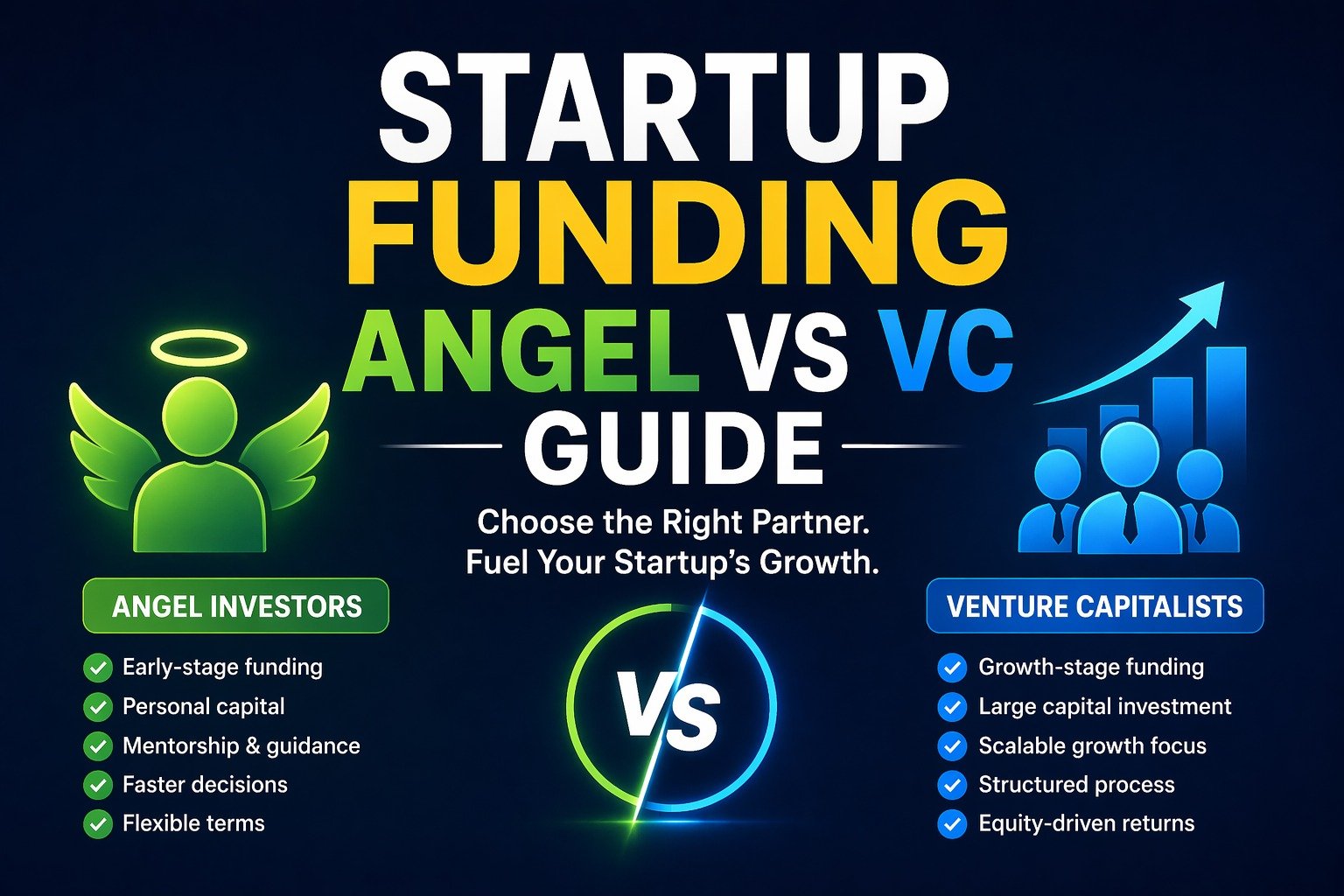
Every startup begins with an idea—but turning that idea into a successful business requires one crucial element: funding.
If you’re confused about startup funding angel vs venture capital vs bootstrapping, you’re not alone.
Many founders struggle to choose the right funding path. Should you raise money from investors? Or build slowly using your own funds? The decision you make can shape your startup’s future.
Let’s break it down in a simple, practical way so you can choose what works best for you.
Understanding Startup Funding Options
Before choosing, it’s important to understand the three major funding types:
- Angel Investment
- Venture Capital (VC)
- Bootstrapping
According to Startup India, India is now the third-largest startup ecosystem globally, with increasing access to diverse funding options.
However, each funding type comes with its own benefits, risks, and expectations.
Startup Funding Angel vs VC vs Bootstrapping Explained
Let’s simplify the startup funding angel vs VC vs bootstrapping comparison.
Angel Investors
Angel investors are individuals who invest their personal money in early-stage startups.
Key Features:
- Invest at early stages
- Offer mentorship and guidance
- Flexible investment terms
Best for:
Startups in idea or early development stage
Venture Capital (VC)
Venture capital firms invest larger amounts in startups with high growth potential.
Key Features:
- Large funding amounts
- Expect rapid growth and scalability
- Require equity and control
Best for:
Startups ready to scale quickly
Bootstrapping
Bootstrapping means funding your startup using personal savings or revenue.
Key Features:
- Full ownership and control
- No external pressure
- Slower growth
Best for:
Founders who prefer independence
How to Choose the Right Funding Option
Choosing the right funding depends on your startup’s stage and goals.
Ask yourself:
- Do you need quick scaling? → Go for VC
- Do you need guidance and early support? → Choose angel investors
- Do you want full control? → Opt for bootstrapping
You can explore structured startup support and funding guidance here:
https://onegrasp.com/startups/
Additionally, platforms like https://www.startupindia.gov.in/ and https://www.sidbi.in/ provide valuable funding schemes and support for startups in India.
Benefits of Choosing the Right College
Your college can play a major role in your startup journey.
Top institutions often:
- Offer incubation centers
- Provide mentorship and funding support
- Connect students with investors
- Encourage entrepreneurship
In fact, many successful Indian startups began in college ecosystems.
Tips to Choose the Right College
If you’re planning to build a startup, look for:
- Active startup incubators
- Industry collaborations
- Access to funding programs
- Strong alumni network
Moreover, colleges that support innovation help students turn ideas into real businesses.
Common Mistakes to Avoid
Many founders make critical funding mistakes.
Avoid these:
- Raising funds too early
- Choosing investors without alignment
- Giving away too much equity
- Ignoring profitability
- Not understanding funding terms
However, making informed decisions can help you avoid long-term problems.
Career Impact of Startup Funding Choices
Your funding choice affects your entire startup journey.
For example:
- Angel funding provides mentorship
- VC funding accelerates growth
- Bootstrapping builds financial discipline
Moreover, your experience as a founder—funded or not—adds immense value to your career.
Conclusion
Understanding startup funding angel vs VC vs bootstrapping is essential for every founder.
Each option has its advantages, and the right choice depends on your vision, risk appetite, and growth goals. The key is to stay informed, plan strategically, and execute with confidence.
Explore startup funding opportunities and guidance here:
https://onegrasp.com/startups/
👉 Start your career planning today with expert guidance and take the first step toward building a successful startup.
❓ FAQs
1. What is the difference between angel investors and VC?
Angel investors invest early with smaller amounts, while VCs invest larger amounts for scaling startups.
2. Is bootstrapping better than funding?
It depends. Bootstrapping offers control, while funding provides faster growth.
3. When should I approach investors?
When you have a validated idea and a clear business model.
4. Can students get startup funding?
Yes, many programs and incubators support student startups.
5. Which funding option is best for beginners?
Angel investment or bootstrapping is usually ideal for beginners.