April 23, 2026
  4 Min
4 Min  No Comment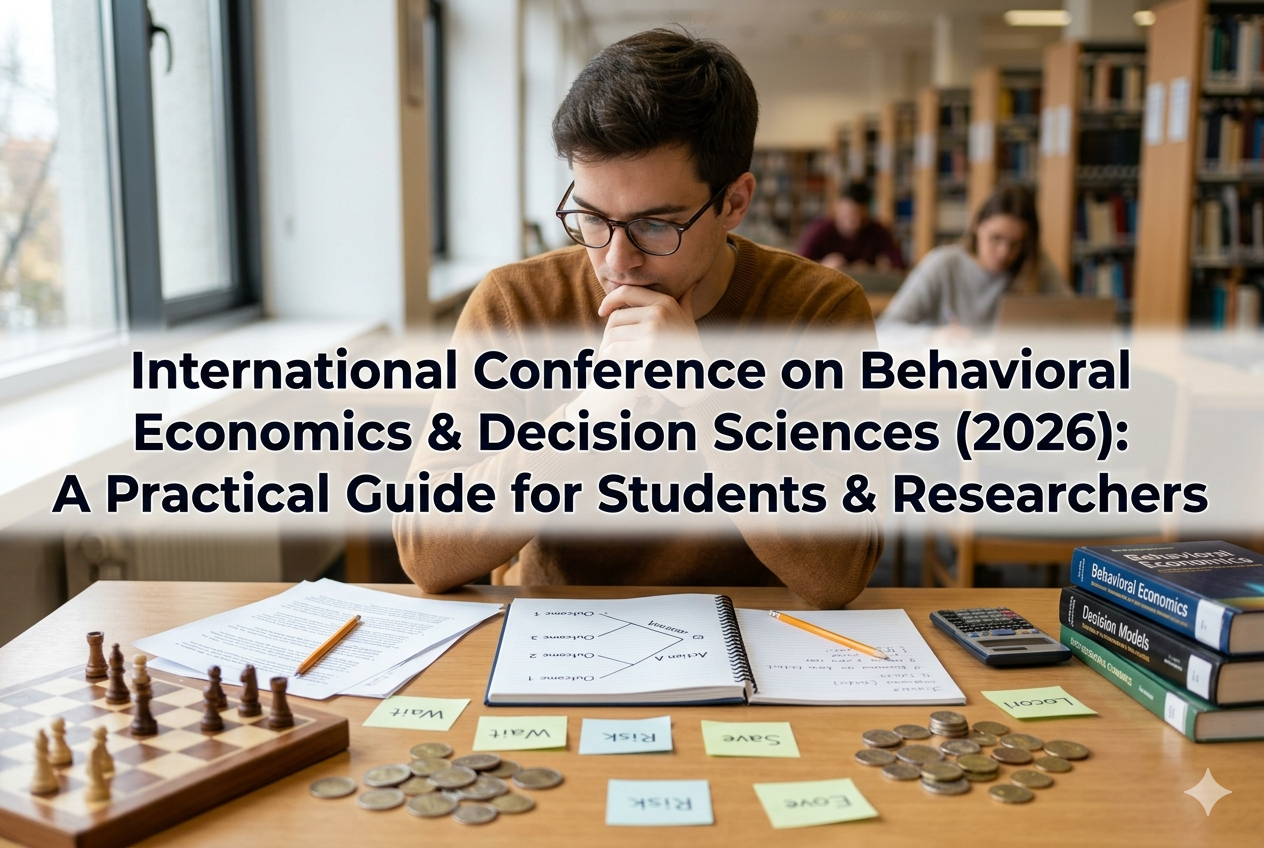
The 2026 behavioral economics conference offers students and researchers a practical platform to explore how real‑world decisions shape finance and policy.
Why Attend the Behavioral Economics Conference?
If you’ve ever wondered why people don’t always make “rational” financial decisions, you’re already thinking in the direction of behavioral economics.
This field sits right at the intersection of economics and psychology — and it’s becoming increasingly important in areas like finance, policymaking, marketing, and business strategy.
The International Conference on Behavioral Economics & Decision Sciences (2026) is designed for students and researchers who want to explore how human behavior actually influences economic decisions in the real world.
🎯 What This Conference Is About
Unlike traditional economics, behavioral economics focuses on:
- How people actually make decisions
- Why emotions and biases influence choices
- How policies can be designed around real human behavior
Decision sciences complements this by applying data, models, and analytics to improve decision-making processes.
📅 Conference Overview
- Mode: Virtual (Online)
- Who Can Attend:
- Students (UG, PG, PhD)
- Researchers
- Academicians
- Professionals
- Participation Options:
- Paper Presentation
- Listener / Attendee
👉 You can check full details or register here: https://onegrasp.com/conference-events/
📚 Key Topics Covered
The conference focuses on both theoretical and applied areas, including:
- Behavioral finance and investment decisions
- Cognitive biases in economic behavior
- Decision-making under uncertainty
- Consumer behavior and market psychology
- Experimental economics
- Data-driven decision sciences
These topics are highly relevant in today’s world where human behavior plays a major role in financial markets and policy outcomes.
🧑🎓 Who Should Attend?
This conference is a strong fit for:
- Economics and finance students
- Psychology students interested in decision-making
- MBA and business analytics aspirants
- Researchers working on behavioral studies
- Professionals in finance, consulting, or policy
Even if you’re new to the subject, attending can give you a clearer perspective on how theory applies to real-world scenarios.
📝 Call for Papers
You can participate by presenting research in areas such as:
- Behavioral finance
- Decision theory
- Economic psychology
- Market behavior analysis
- Data-driven decision models
Abstract Guidelines:
- 300–350 words
- Include title, author details, and keywords
🎁 Benefits of Attending
Here’s what you gain beyond just attending:
- Certificate of participation
- Exposure to international research standards
- Opportunity to present your work
- Better academic and professional profile
- Networking with global participants
💼 Why This Matters for Your Career
For Indian students, especially those planning to pursue higher studies abroad or enter finance and consulting roles, behavioral economics is becoming a valuable specialization.
Attending conferences helps you:
- Stand out in applications
- Build research exposure
- Understand practical applications of theory
🌐 Why Virtual Conferences Are Worth Considering
Virtual conferences have made global participation easier than ever:
- No travel or accommodation costs
- Access from anywhere
- Flexible learning environment
This makes them highly accessible, especially for students.
🔗 Explore More Opportunities
If you’re planning your academic or international journey, you can also explore:
These resources can help align your conference participation with future study goals.
❓ FAQs
Is this conference suitable for beginners?
Yes, beginners can attend as listeners and learn.
Do I need a research paper to participate?
No, presenting is optional.
Will I receive a certificate?
Yes, certificates are provided.
Is behavioral economics useful for careers?
Yes, especially in finance, consulting, and policy roles.
How can I register?
You can use the official event page link.
🚀 How to Participate
If you’re interested in understanding how real-world decisions are made — not just how they should be made — this is worth exploring.
👉 Register or explore events here: https://onegrasp.com/conference-events/
Final Thoughts
Behavioral economics is no longer a niche field — it’s becoming central to how businesses, governments, and financial systems operate.
If you’re looking to build a strong academic or career foundation, engaging with this field early can give you a real advantage.
Frequently Asked Questions
Is the behavioral economics conference suitable for beginners?
Yes, beginners can attend as listeners and gain foundational insights without presenting a paper.
Do I need to submit a research paper to participate?
No, presenting a paper is optional; you can join as an attendee or listener.
Will I receive a certificate of participation?
Yes, all participants receive a certificate that can be added to academic and professional profiles.
How can the conference benefit my career in finance or consulting?
It provides exposure to real‑world applications of behavioral economics, networking with experts, and a credential that strengthens job applications.
What are the costs of attending the virtual conference?
Since the event is online, there are no travel or accommodation expenses, making it an affordable option for students.