September 1, 2025
 4 Min
 No Comment

Investing in an MBA can significantly transform one's career trajectory, especially in terms of salary growth, leadership roles, and career opportunities after 5-10 years, but what does the latest data reveal about MBA career growth?
Many professionals invest lakhs into an MBA expecting massive career growth — but what actually happens long-term?
👉 The truth: An MBA can transform your career trajectory, but only if you use it strategically.
# How an MBA Impacts Career Growth After 5–10 Years: Latest Insights for 2026
An MBA is not just about your first job — its real value shows after 5–10 years in terms of salary growth, leadership roles, and career opportunities.
Let’s break down what actually happens.
📈 Salary Growth After MBA (5–10 Years)
One of the biggest reasons people pursue an MBA is salary growth — and the data clearly supports this.
- After 5 years: ₹15–25 LPA average
- Top performers: ₹30–60 LPA+ in consulting, tech, finance
- After 10 years: ₹25–80 LPA+ depending on role and industry
👉 In many cases, salaries double or triple within 5 years post-MBA
🚀 Career Growth Trajectory
🧑💼 First 2–3 Years
- Entry into managerial roles
- Roles: Analyst, Associate, Consultant
📊 4–5 Years
- Mid-level roles
- Team management begins
- Promotions start
👔 6–10 Years
- Leadership roles (Manager → Director → VP)
- Strategic decision-making
- High salary jump
👉 MBA helps you skip years of slow growth compared to non-MBA peers.
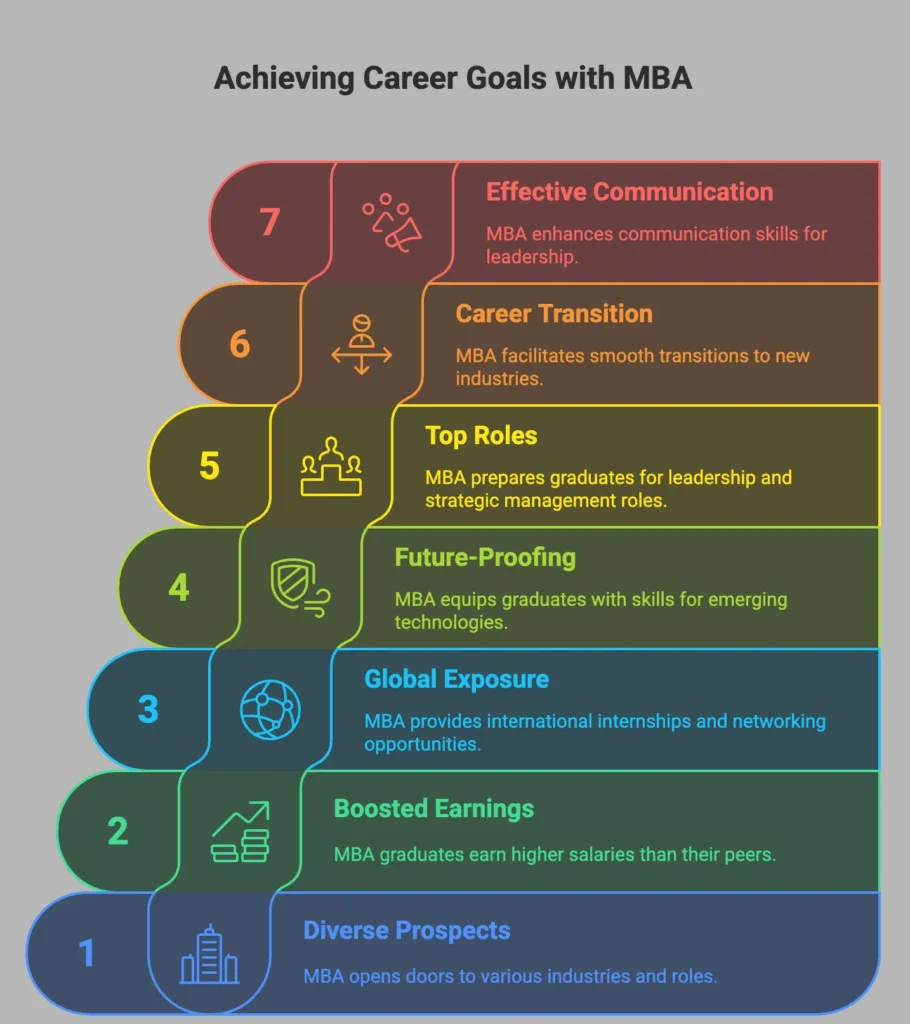
🎯 Key Career Advantages of MBA
1. Faster Promotions
MBA graduates often reach managerial roles 2–3 years faster than others.
2. Career Switching Power
- Move from IT → Consulting
- Engineering → Product Management
- Sales → Strategy
👉 MBA gives flexibility across industries.
3. Access to High-Paying Roles
Top roles after MBA:
- Management Consultant
- Product Manager
- Investment Banker
- Business Strategist
👉 These roles dominate high salary brackets.
4. Strong Professional Network
- Alumni networks
- Industry connections
- Referral opportunities
👉 This becomes extremely valuable after 5+ years.
🌍 Industry Trends in 2026
MBA careers are evolving fast:
- AI + Business roles (AI Strategy, Product roles)
- Data-driven decision-making roles
- ESG & Sustainability leadership roles
👉 Companies now prefer MBA + Tech skills combo
⚠️ Reality Check (Very Important)
MBA is NOT a magic solution ❌
Your growth depends on:
- College tier
- Skills & specialization
- Career decisions
- Industry demand
👉 Same MBA → very different outcomes for different people
💡 How to Maximize MBA ROI
To get maximum growth:
- Choose high-demand specialization (Finance, Product, Analytics)
- Switch roles strategically
- Build leadership skills
- Keep upskilling (AI, Data, Strategy)
📊 MBA vs Non-MBA Growth (Reality)
| Factor | MBA | Non-MBA |
|---|---|---|
| Salary Growth | Fast | Moderate |
| Promotions | Faster | Slower |
| Leadership Roles | Early | Late |
| Career Switch | Easy | Difficult |
👉 MBA acts as a career accelerator
To further accelerate career growth, MBA graduates can leverage their professional network by attending industry conferences, joining alumni groups, and engaging in online forums. This can help them stay updated on the latest trends and best practices in their field, while also opening up new opportunities for collaboration and advancement.
In addition to the technical skills and knowledge gained through an MBA program, it's also essential for graduates to develop soft skills like communication, teamwork, and leadership. These skills are highly valued by employers and can make a significant difference in an individual's ability to succeed in their career.
As the job market continues to evolve, MBA graduates must be prepared to adapt and pivot in response to changing industry demands. This may involve acquiring new skills, exploring new industries or roles, or even starting their own business. By being proactive and open to new opportunities, MBA graduates can stay ahead of the curve and achieve long-term career success.
Frequently Asked Questions
How does an MBA impact salary growth?
An MBA can lead to significant salary growth, with top performers earning ₹30-60 LPA+ in consulting, tech, and finance after 5 years.
What are the key career advantages of an MBA?
An MBA offers faster promotions, career switching power, access to high-paying roles, and a strong professional network.
How can I maximize my MBA ROI?
To get maximum growth, choose a high-demand specialization, switch roles strategically, build leadership skills, and keep upskilling in areas like AI, data, and strategy.
Is an MBA a guarantee of career success?
No, an MBA is not a magic solution, and growth depends on factors like college tier, skills, specialization, career decisions, and industry demand.
What are the latest industry trends in MBA careers?
MBA careers are evolving fast, with a growing demand for AI + business roles, data-driven decision-making roles, and ESG & sustainability leadership roles.