May 4, 2026
 3 Min
 No Comment

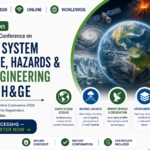
Earth system science studies how the atmosphere, hydrosphere, lithosphere, and biosphere interact as one connected system. With rising climate change impacts, natural disasters, and environmental stress, this field is becoming extremely important for global sustainability.
The Earth System Science Conference 2026 focuses on understanding Earth’s dynamic systems and developing scientific and engineering solutions for environmental challenges.
👉 Register here: https://onegrasp.com/events/physical-life-sciences/international-conference-on-earth-system-science-hazards-geoengineering/
👉 Explore more events:
https://onegrasp.com/events/
WHAT THIS CONFERENCE FOCUSES ON
The Earth System Science Conference focuses on climate systems, hazards, and geoengineering innovations.
Key focus areas include:
- Earth system processes and climate dynamics
- Natural hazards and disaster risk assessment
- Geoengineering and climate intervention strategies
- Environmental monitoring and predictive modeling
For global climate science research standards, refer to NASA Earth Science Division
👉 https://science.nasa.gov/earth-science/
For Earth system modeling research, explore NOAA Climate Program Office
👉 https://cpo.noaa.gov/
KEY TOPICS COVERED
- Climate change modeling and prediction
- Earth observation and satellite systems
- Disaster risk reduction and resilience planning
- Geoengineering and climate intervention
- Environmental hazard analysis
- Geospatial data and remote sensing
For advanced geoscience research, refer to USGS (U.S. Geological Survey)
👉 https://www.usgs.gov/
For climate risk and global policy studies, explore IPCC Reports
👉 https://www.ipcc.ch/
WHO SHOULD ATTEND
This Earth System Science Conference is ideal for:
- Earth science and geology students
- Environmental researchers
- Climate scientists and policymakers
- Geoengineering and sustainability experts
- Disaster management professionals
Even beginners can understand how Earth systems are studied and modeled.
CALL FOR PAPERS
Participants can submit research in:
- Climate system modeling
- Natural hazard prediction
- Geoengineering techniques
- Remote sensing and GIS analysis
Abstract Guidelines:
- 300–350 words
- Title, author details, keywords required
BENEFITS OF ATTENDING
- Certificate of participation
- Global Earth science exposure
- Academic paper presentation opportunity
- Research networking
- Career development support
WHY THIS CONFERENCE MATTERS
Earth systems are changing rapidly due to climate change and human activity.
This field helps:
- Predict natural disasters
- Improve climate resilience
- Develop geoengineering solutions
- Support sustainable environmental planning
For global climate action frameworks, explore UN Climate Change (UNFCCC)
👉 https://unfccc.int/
Careers include:
- Climate science and environmental research
- Geoscience and Earth modeling
- Disaster risk management
- Sustainability and policy planning
WHY VIRTUAL CONFERENCES ARE IMPORTANT
Virtual conferences allow:
- Global participation without travel
- Easy access to scientific knowledge
- Flexible learning for students and researchers
FINAL THOUGHTS
Earth System Science Conference 2026 provides a structured platform to understand climate change, hazards, and geoengineering.
It connects scientific research with real-world environmental challenges and future sustainability solutions.
FAQs
Yes, basic concepts are explained clearly.
No, you can attend as a listener.
Yes, participation certificates are provided.
Yes, especially in climate science, geology, and environmental research.
Use the official link above.