May 13, 2026
 4 Min
 No Comment
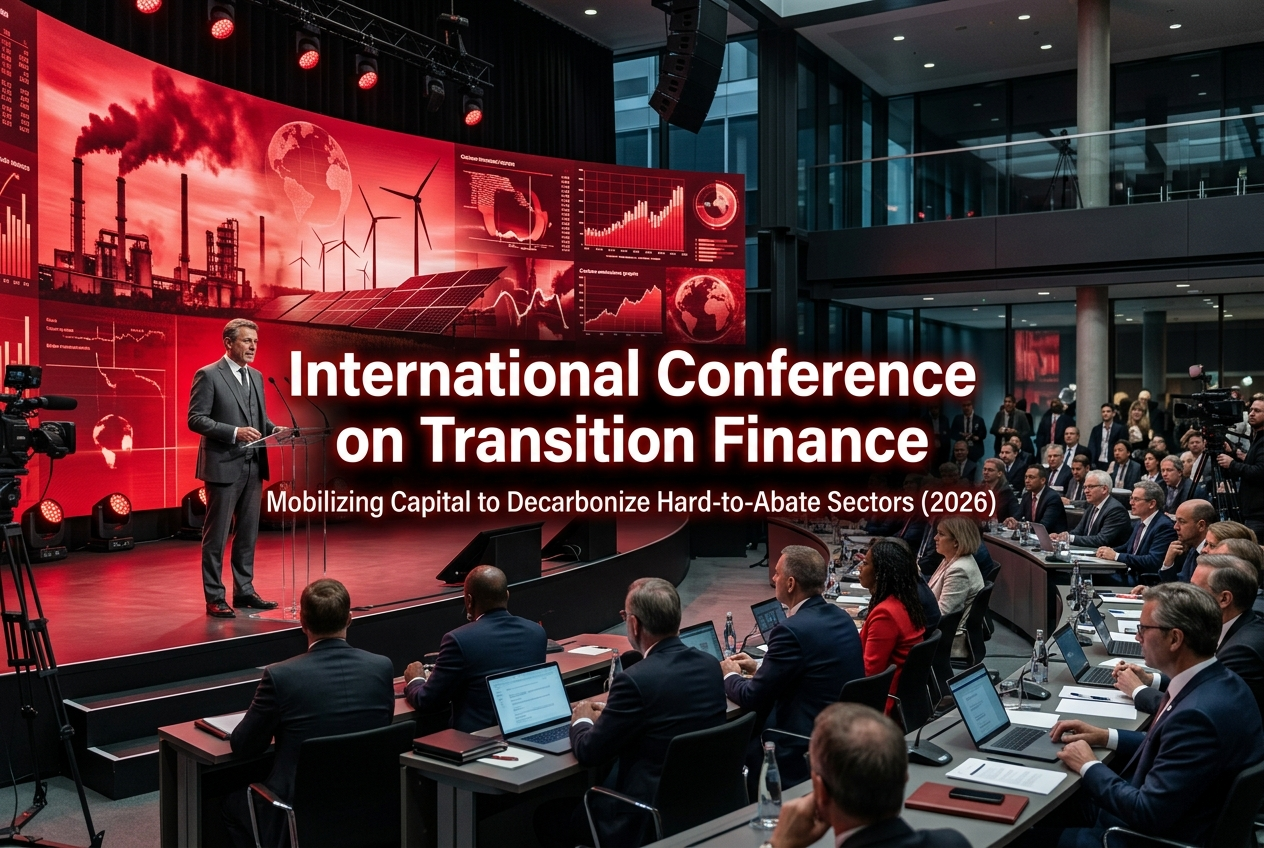
The Transition Finance Conference 2026 brings together scholars and industry leaders to discuss how capital markets can drive decarbonization in hard-to-abate sectors.
Why the Transition Finance Conference Matters
The global push toward net-zero emissions is reshaping financial systems and investment priorities. While renewable energy and clean technologies are advancing rapidly, several industries remain difficult to decarbonize due to their structural and operational complexity.
These industries are often referred to as “hard-to-abate sectors,” including steel, cement, aviation, shipping, and heavy manufacturing.
The International Conference on Transition Finance: Mobilizing Capital to Decarbonize Hard-to-Abate Sectors (2026) focuses on how financial systems can support the transformation of these critical industries.
Register here: https://onegrasp.com/events/business-economics/ic-on-transition-finance-mobilizing-capital-to-decarbonize-hard-to-abate-sectors/
Explore more academic and professional events here: https://onegrasp.com/events/
Participants interested in sustainability standards and global climate frameworks may also explore the United Nations Climate Change resources:
https://unfccc.int/
Researchers and professionals interested in technology, sustainability, and innovation may also explore IEEE:
https://www.ieee.org/
What This Conference Focuses On
This conference explores how capital markets and financial institutions can enable large-scale decarbonization.
Key focus areas include:
- Transition finance frameworks for high-emission industries
- Mobilization of capital for net-zero transformation
- Financing strategies for hard-to-abate sectors
- Role of ESG and sustainability-linked investments
Together, these themes focus on bridging the gap between traditional industries and a low-carbon future.
The conference also explores how governments, investors, and corporations can collaborate to accelerate climate transition goals.
Conference Overview
- Mode: Virtual (Online)
- Audience:
- Students
- Researchers
- Academicians
- Professionals
- Participation:
- Paper presentation
- Listener or attendee
Register or explore details here:
https://onegrasp.com/conference-events/transition-finance-mobilizing-capital-to-decarbonize-hard-to-abate-sectors/Explore more conferences and academic opportunities here: https://onegrasp.com/events/
Key Topics Covered
The conference typically includes discussions on:
- Climate transition finance models
- Investment strategies for decarbonization
- ESG frameworks for heavy industries
- Green bonds and sustainability-linked loans
- Policy mechanisms for industrial transition
- Risk assessment in climate-sensitive investments
These topics are central to global climate and financial policy discussions.
The conference may also discuss how financial institutions are adapting investment strategies to align with long-term sustainability objectives.
Participants interested in sustainable finance frameworks may also explore the Principles for Responsible Investment:
https://www.unpri.org/
Who Should Attend
This conference is suitable for:
- Finance and economics students
- Environmental studies and sustainability students
- MBA students specializing in finance or ESG
- Researchers in climate finance and policy
- Professionals in banking, investment, and consulting
Even beginners can benefit by understanding how finance supports climate transition.
Call for Papers
Participants can present research in areas such as:
- Transition finance models and frameworks
- Decarbonization strategies for heavy industries
- ESG investment structures
- Climate risk and financial modeling
Abstract Guidelines
- 300 to 350 words
- Include:
- Title
- Author details
- Keywords
Participants may also attend as listeners.
Researchers interested in global academic publishing may also explore:
https://www.springer.com/
Benefits of Attending
Attending this conference provides:
- Certificate of participation
- Exposure to global climate finance research
- Opportunity to present academic work
- Improved academic and professional profile
- Networking with international participants
Participants can also gain insight into how financial systems, sustainability policies, and investment strategies are evolving to support net-zero goals.
Why This Conference Matters
Hard-to-abate sectors represent a significant share of global emissions but are also essential to modern economies.
Transition finance plays a critical role in:
- Supporting industrial decarbonization
- Redirecting capital toward sustainable solutions
- Balancing economic growth with climate goals
- Reducing systemic climate risk
Understanding this area is essential for careers in:
- Sustainable finance and ESG investing
- Climate policy and regulation
- Investment banking and infrastructure finance
- Development economics and consulting
The conference also highlights how interdisciplinary collaboration between finance, sustainability, economics, and policy can accelerate global climate action.
Why Virtual Conferences Are Important
Virtual conferences provide:
- Global accessibility without travel costs
- Exposure to cutting-edge climate finance research
- Flexible participation for students and professionals
- Opportunities to connect with global experts and researchers
This makes complex sustainability topics more widely accessible.
How to Participate
If you are interested in how finance can drive decarbonization in high-emission industries, this conference provides a structured academic platform.
Register or explore details here:
https://onegrasp.com/conference-events/transition-finance-mobilizing-capital-to-decarbonize-hard-to-abate-sectors/
Explore more conferences and academic opportunities here: https://onegrasp.com/events/
Final Thoughts
Transition finance sits at the intersection of capital markets and climate action.
It determines how quickly and effectively the world can decarbonize industries that are essential but emissions-intensive.
This conference provides a clear framework to understand how financial systems are evolving to meet this challenge.
For students, researchers, and professionals interested in sustainable finance, ESG investing, climate policy, and industrial transformation, this conference offers valuable global exposure and academic insight into one of the most important economic transitions of the modern era.