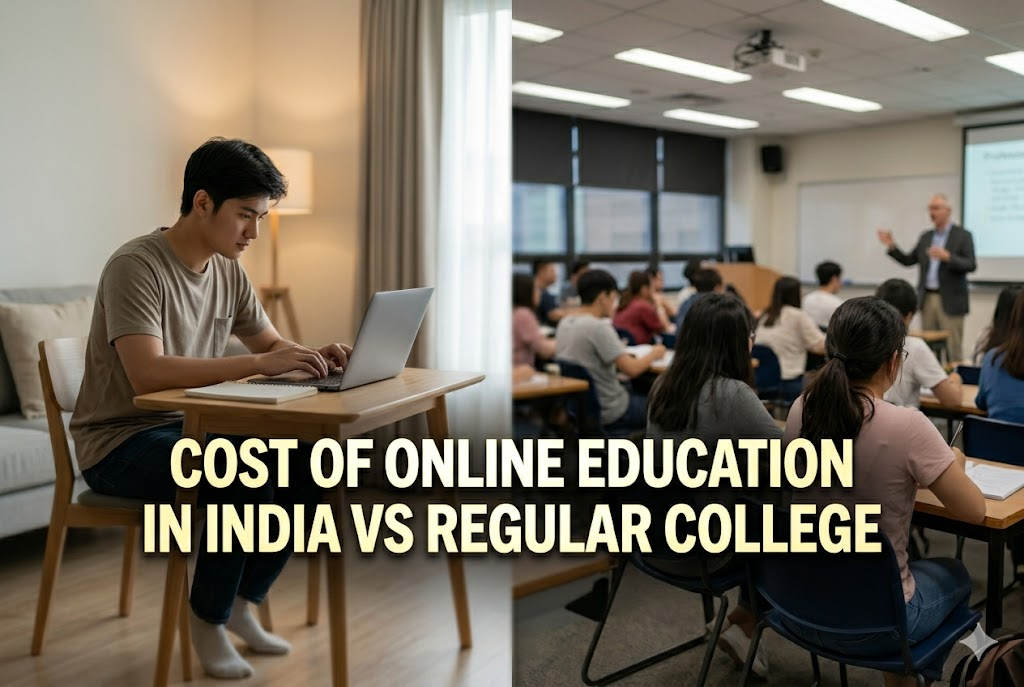
Higher education in India has become a major financial decision for students and families. Tuition fees continue rising, while living expenses in metro cities make traditional college education even more expensive.
At the same time, online education is rapidly becoming a mainstream alternative because it offers flexibility, lower fees, and the ability to study from anywhere.
This shift has led many students and working professionals to ask:
“Is online education actually cheaper and financially smarter than regular college?”
The answer is not always simple. While online learning often reduces costs significantly, regular colleges still provide benefits such as campus exposure, networking, and traditional placement ecosystems.
This guide provides a detailed comparison of online education regular college expenses in India for UG and PG programs in 2026.
According to education industry discussions and university trends, online education adoption in India continues increasing because students seek affordable and flexible learning pathways. (timesofindia.indiatimes.com)
Education is no longer just about earning a degree.
Students today must think about:
Return on investment (ROI)
Education loans
Career opportunities
Skill development
Long-term salary growth
Financial stability
As a result, comparing total education costs has become essential before making decisions.
For students exploring affordable learning pathways, certifications, and career-focused guidance, OneGrasp’s education resources also provide useful insights related to online learning and professional growth.
What Is Online Education?
Online education allows students to learn remotely using digital platforms.
Most online programs include:
Live virtual classes
Recorded lectures
Online assignments
Digital exams
Mobile learning apps
LMS-based learning systems
Students can study from home without relocating.
What Is Regular College Education?
Regular colleges involve physical classroom attendance and campus-based learning.
Students usually spend on:
Tuition fees
Hostel accommodation
Transportation
Food and living expenses
Campus activities
Printed materials
This creates significantly higher total investment in many cases.
Tuition Fee Comparison in India
The biggest difference between online and regular education appears in tuition fees.
Education Type
Average Fee Range
Online UG Degree
₹20K – ₹1.5L
Regular UG Degree
₹2L – ₹15L+
Online MBA
₹50K – ₹2L
Regular MBA
₹5L – ₹25L+
Top private colleges often charge premium fees because of infrastructure, campus facilities, and brand positioning.
Meanwhile, online universities reduce operational costs through digital delivery models.
Affordable universities such as IGNOU, Jain Online, and LPU Online continue attracting students seeking budget-friendly education. (onlineeducation.app)
Hidden Costs in Regular College Education
Many students underestimate additional expenses beyond tuition.
Hostel and Accommodation
Students relocating to cities often spend heavily on:
Hostels
PG rooms
Apartment rentals
Transportation Costs
Daily commuting or relocation significantly increases long-term expenses.
Food and Daily Living
Students spend continuously on:
Meals
Internet
Personal expenses
Social activities
Extra Academic Costs
Traditional colleges sometimes require additional spending on:
Printed books
Lab materials
Campus activities
These costs collectively increase financial pressure substantially.
Opportunity Cost: The Biggest Difference
Opportunity cost refers to income students sacrifice while studying full-time.
Regular College Students
Many traditional students cannot work full-time during education.
Online Learners
Online students can often:
Continue jobs
Freelance
Prepare for government exams
Build startups
Gain work experience simultaneously
This creates major financial advantages.
Online Education Regular College ROI Comparison
Factor
Online Education
Regular College
Tuition Fees
Lower
Higher
Flexibility
Very high
Moderate
Hostel Costs
None
High
Networking
Limited
Strong campus exposure
Opportunity Cost
Lower
Higher
Accessibility
Learn from anywhere
Location dependent
Financial Pressure
Lower
Higher
The better option depends on career goals and individual priorities.
Are Online Degrees Worth It in 2026?
In many cases, yes.
Online education now works especially well for:
Working professionals
Budget-conscious students
Government exam aspirants
Career switchers
Skill-focused learners
However, success still depends heavily on:
Skill development
Practical implementation
Networking
Communication ability
University reputation
A degree alone — online or offline — is rarely enough today.
When Regular Colleges Still Make More Sense
Traditional colleges still offer strong advantages in some situations.
Strong Campus Networking
Offline interaction often builds valuable long-term relationships.
Placement Ecosystems
Top colleges continue offering powerful placement opportunities.
Structured Learning Environment
Some students learn better in physical classroom settings.
Campus Experience
College life itself remains valuable for personal development and social exposure.
Therefore, regular colleges still justify higher costs for many students.
Expert Insight: ROI Matters More Than Raw Fees
One common mistake students make is comparing only tuition fees.
Smart learners evaluate:
Long-term salary growth
Placement quality
Skill development
Career adaptability
Financial pressure
Networking opportunities
For example:
An affordable online degree plus practical skills may outperform an expensive but outdated regular program.
Meanwhile, elite campus exposure may justify higher investment in certain industries.
Therefore, education decisions should focus on total ROI rather than only initial expenses.
According to workforce trend research from McKinsey Career Insights, adaptability and continuous learning are becoming major drivers of long-term career success.
Latest Trends and Updates
Online education adoption is increasing rapidly because students seek affordability, flexibility, and lower financial pressure.

Hybrid learning models combining online flexibility with occasional offline interaction are becoming increasingly popular.

Working professionals are driving major growth in online MBA, MCA, and certification programs.

AI-powered learning systems and mobile-first education platforms are improving online learning experiences significantly.

Students are becoming more ROI-focused, comparing career outcomes and long-term financial impact before choosing universities.
Real-Life Example: Comparing Two Students
Ravi joined a traditional MBA program in a metro city with total expenses crossing ₹14 lakh including hostel and living costs.
Meanwhile, Meera pursued an online MBA while continuing her corporate job.
By graduation:
Ravi gained stronger campus networking but also large education loans.
Meera saved significant money while simultaneously building work experience.
Both paths created opportunities — but the financial outcomes differed greatly based on personal goals and lifestyle choices.
Their experiences show why education decisions should align with long-term strategy rather than trends alone.
Common Mistakes Students Should Avoid
Choosing Based Only on Brand Name
Expensive branding does not automatically guarantee better outcomes.
Ignoring Hidden Costs
Hostel, transport, and living expenses matter significantly.
Assuming Online Degrees Have No Value
Many UGC-approved online programs now provide strong industry recognition.
Not Researching ROI Properly
Students should evaluate career outcomes — not just fees.
Beginner vs Smart Student Approach
Beginner Approach
Smart Student Approach
Focuses only on college reputation
Evaluates ROI carefully
Ignores hidden expenses
Calculates total investment
Depends only on degree
Builds practical skills
Follows trends blindly
Aligns education with goals
Chooses emotionally
Makes strategic decisions
Pros and Cons of Online Education
Pros
Cons
Lower costs
Requires self-discipline
Flexible schedules
Limited campus networking
Work while studying
Placement support varies
Accessible from anywhere
Less physical interaction
Lower financial pressure
Quality differs by platform
Pros and Cons of Regular Colleges
Pros
Cons
Strong campus networking
High tuition fees
Better social interaction
Hostel and living expenses
Structured environment
Higher financial pressure
Strong placement ecosystems
Less flexibility
Full college experience
Higher opportunity cost
What to Do Next (Actionable Steps)
Before choosing online or regular education:
Calculate total expenses realistically
Compare long-term ROI
Research university credibility
Analyze placement support
Consider financial responsibilities
Evaluate learning style honestly
Focus on future skill demand
Most importantly, avoid choosing based only on social pressure or advertisements.
Quick Checklist
Compare tuition fees
Calculate hidden expenses
Verify accreditation
Research placements
Analyze opportunity cost
Evaluate flexibility
Compare ROI carefully
Build practical skills
Conclusion
The debate around online education regular college costs is no longer simply about cheap versus expensive education. Instead, it is about flexibility, ROI, financial sustainability, and future career adaptability.
Online education offers major advantages in affordability, accessibility, and flexibility, making it highly attractive for modern learners and working professionals.
Meanwhile, regular colleges still provide valuable campus experiences, networking opportunities, and structured learning environments — especially in reputed institutions.
In 2026, the smartest students are not choosing based only on trends or fees. They are carefully evaluating which education path best supports their long-term career goals, financial realities, and future growth opportunities.
FAQs
Yes, online education is usually much more affordable because it reduces tuition and living expenses.
Yes, UGC-approved online degrees are valid for jobs and higher education.
It depends on career goals, university quality, networking needs, and financial situation.
Yes, online education is designed to support flexible schedules.
Top-tier regular colleges often offer stronger campus placements, but online programs are improving rapidly.

 May 20, 2026
 7 Min
 No Comment