Education is evolving faster than ever before. Universities, schools, researchers, and policymakers are no longer relying solely on traditional examinations to measure learning outcomes. Instead, modern education systems are embracing data-driven assessment models, adaptive testing technologies, and evidence-based evaluation frameworks. This growing transformation has made the assessment evaluation educational measurement field one of the most influential areas in global education research today.
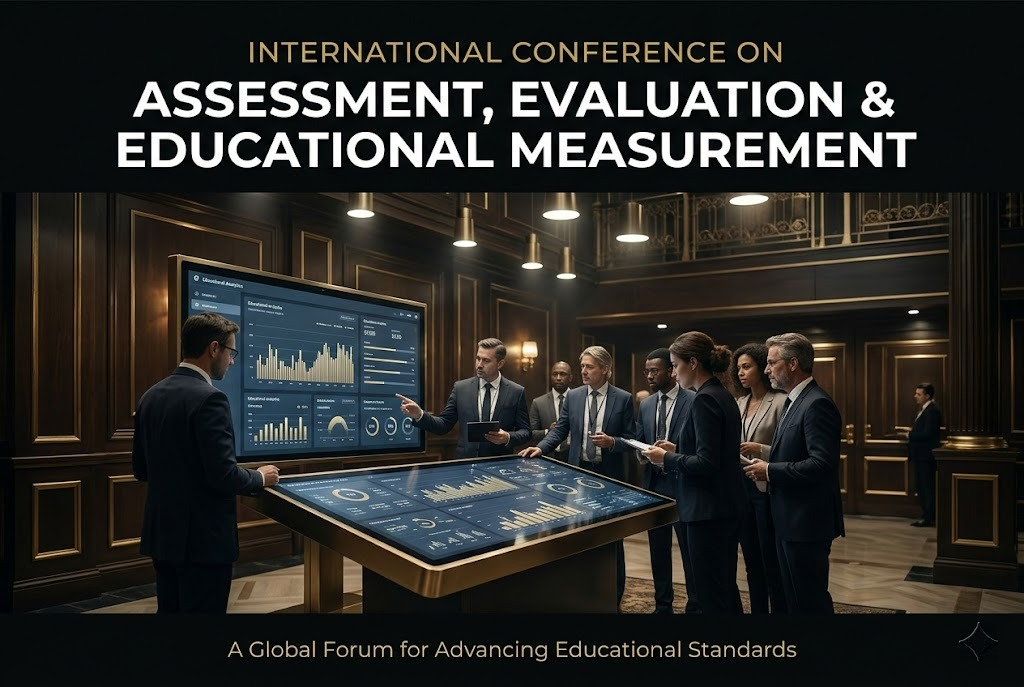
The International Conference on Assessment, Evaluation & Educational Measurement provides a valuable academic platform where educators, researchers, scholars, and professionals can explore the future of learning assessment and educational analytics. As educational institutions increasingly integrate AI tools, digital classrooms, and performance-based evaluation systems, conferences like this help bridge the gap between theory, innovation, and practical implementation.
Why Assessment and Educational Measurement Matter Today
Educational measurement has become essential for improving learning quality, student outcomes, and institutional accountability.
Modern educational systems depend on reliable assessment frameworks to identify student strengths, learning gaps, and curriculum effectiveness. According to UNESCO research, data-informed education systems improve learning outcomes by enabling targeted interventions and personalized instruction.
In recent years, schools and universities have shifted toward competency-based learning models. This means assessment is no longer just about grades—it is about measuring critical thinking, creativity, communication, and real-world problem-solving abilities.
Moreover, digital transformation has accelerated the demand for scalable and intelligent evaluation systems. AI-assisted grading, learning analytics dashboards, and adaptive testing platforms are now widely discussed within global education conferences and research communities.
education systems worldwide are investing heavily in learning analytics and digital evaluation strategies to improve academic performance and accessibility.
What the Conference Focuses On
The International Conference on Assessment, Evaluation & Educational Measurement focuses on modern educational assessment systems, research methodologies, academic performance analysis, and innovation in evaluation practices.
The conference typically covers topics such as:
Educational assessment methodologies
Learning analytics and student performance tracking
Digital assessment technologies
Curriculum evaluation frameworks
Psychometric analysis and measurement theory
AI in education assessment
Data-driven academic decision-making
Educational policy and quality assurance
These discussions help participants understand how educational institutions can improve fairness, reliability, and effectiveness in student evaluation systems.
How Virtual Academic Conferences Are Transforming Research
Virtual conferences have completely changed how researchers collaborate globally.
Traditional academic events often required expensive travel, accommodation, and visa arrangements. However, online conferences now allow researchers, educators, and students from different countries to participate without major financial barriers.
This accessibility is especially important for early-career researchers and postgraduate students who want exposure to international academic discussions.
A report published by Harvard Business Review highlighted how virtual collaboration environments are becoming increasingly effective for knowledge exchange and interdisciplinary innovation: https://hbr.org/2020/06/what-it-takes-to-run-a-great-virtual-meeting
In addition, online academic conferences provide flexible participation options such as:
Live paper presentations
Virtual keynote sessions
Online networking opportunities
Listener participation
Digital certificate access
As a result, academic knowledge becomes more inclusive and globally connected.
Assessment Evaluation Educational Measurement in Modern Education
Assessment evaluation educational measurement systems now influence almost every level of education.
Universities use analytics to predict student success rates. Schools apply formative assessments to personalize teaching approaches. Governments rely on educational measurement data to shape policy reforms and curriculum standards.
Meanwhile, EdTech companies are developing intelligent systems that automate testing, evaluate learning behavior, and improve assessment accuracy.
For example, adaptive learning platforms can now adjust exam difficulty levels based on student performance patterns in real time. This creates more accurate evaluations compared to traditional static examinations.
technology-enabled education systems are expected to play a major role in improving global learning outcomes over the next decade.
Call for Papers and Research Opportunities
One of the most valuable aspects of this conference is the opportunity for researchers to present original academic work.
Participants can typically submit papers in areas such as:
Educational psychology and testing
Student performance analytics
Educational statistics
AI-powered assessment tools
Learning outcome measurement
Curriculum assessment systems
Evaluation methodologies in higher education
Abstract Submission Guidelines
Researchers are generally encouraged to submit:
A 300–350 word abstract
Author details
Research keywords
Clear research objectives and findings
Even participants who do not wish to present papers can still attend as listeners and gain valuable insights from expert discussions.
Who Should Attend This Conference
This conference is suitable for:
Education researchers
Teachers and academic faculty
PhD scholars
Curriculum developers
Educational policymakers
Learning analytics specialists
Educational technology professionals
Students interested in research careers
Beginners can also benefit significantly because many sessions introduce foundational concepts alongside advanced research discussions.
Expert Insight / Analysis
Educational assessment is no longer just an academic process—it has become a strategic decision-making tool.
Institutions now use assessment data to improve retention rates, optimize curriculum design, and enhance institutional rankings. Furthermore, governments increasingly depend on educational measurement systems to evaluate national learning standards.
The rise of AI in education has also created new challenges regarding fairness, bias, and transparency in evaluation systems. Conferences like this help researchers address ethical concerns while exploring innovative solutions.
Long-term, the integration of AI-driven educational measurement systems could redefine how global education operates.
Latest Trends / Updates
AI-powered assessment systems are becoming more common in universities and online learning platforms.

Adaptive testing technologies now personalize question difficulty based on student performance patterns.

Learning analytics dashboards are helping educators track student engagement in real time.

Many institutions are integrating predictive analytics to identify at-risk students earlier.

Digital credentialing and competency-based assessment models are rapidly replacing traditional grading systems.

Remote assessment security technologies, including AI proctoring tools, continue to evolve globally.
Common Mistakes to Avoid
Many first-time conference participants make avoidable mistakes that reduce the quality of their submissions and networking opportunities.
Common issues include:
Submitting vague research abstracts
Ignoring formatting requirements
Using weak research methodology
Failing to connect research with practical implications
Avoiding networking sessions
Researchers can improve their conference experience by preparing concise presentations, understanding current trends, and actively engaging with other participants.
Real-Life Example / Mini Case Study
A mid-sized university in Southeast Asia recently introduced predictive learning analytics to monitor student engagement and academic performance.
By analyzing attendance patterns, assignment submissions, and assessment scores, the institution identified students at risk of failing early in the semester.
As a result, academic advisors provided targeted interventions, mentoring support, and personalized learning assistance. Within one academic year, student retention rates reportedly improved by nearly 18%.
This example demonstrates how educational measurement systems can directly influence institutional success and student achievement.
Traditional vs Modern Educational Assessment
Traditional Assessment
Modern Educational Measurement
Static examinations
Adaptive digital testing
Manual grading systems
AI-assisted evaluation
Limited feedback
Real-time analytics
Focus on memorization
Focus on competencies
Delayed performance tracking
Instant performance insights
Pros and Cons of Virtual Academic Conferences
Pros
Cons
Global accessibility
Limited face-to-face interaction
Lower participation cost
Time zone challenges
Flexible attendance
Potential technical issues
Wider networking opportunities
Reduced informal discussions
Easier student participation
Digital fatigue
Beginner vs Expert Comparison
Beginner Approach
Expert Approach
Focuses only on attendance
Focuses on networking and publishing
Limited preparation
Strategic research presentation
Passive learning
Active collaboration
Basic topic understanding
Deep interdisciplinary analysis
Minimal engagement
Builds long-term academic partnerships
What to Do Next
If you are planning to participate in the conference, start preparing early.
The International Conference on Assessment, Evaluation & Educational Measurement represents far more than a standard academic gathering. It reflects the growing global need for smarter, fairer, and more data-driven education systems.
As technology reshapes classrooms and learning environments worldwide, educational assessment has become central to improving academic quality and student success. Conferences like this provide researchers, educators, and professionals with a meaningful platform to exchange ideas, explore innovation, and shape the future of education.
Whether you are a student, researcher, policymaker, or academic professional, participating in this conference can expand your understanding of modern educational evaluation systems while opening doors to valuable global collaborations.
FAQs
Yes, beginners can attend and learn foundational concepts related to educational assessment and evaluation systems.
Yes, participants may join as listeners without submitting research papers.
Yes, certificates are generally provided to registered participants.

 May 22, 2026
 8 Min
 No Comment