Economic transformation is no longer driven only by financial growth. Today, societies worldwide are facing interconnected challenges related to inequality, sustainability, globalization, digital disruption, climate change, public policy, and social development. Governments, researchers, economists, and policymakers increasingly recognize that long-term progress depends on balancing economic growth with social well-being and sustainable development.
As global economies evolve rapidly, the economics development studies society field has become one of the most important interdisciplinary areas of modern research and policy analysis.
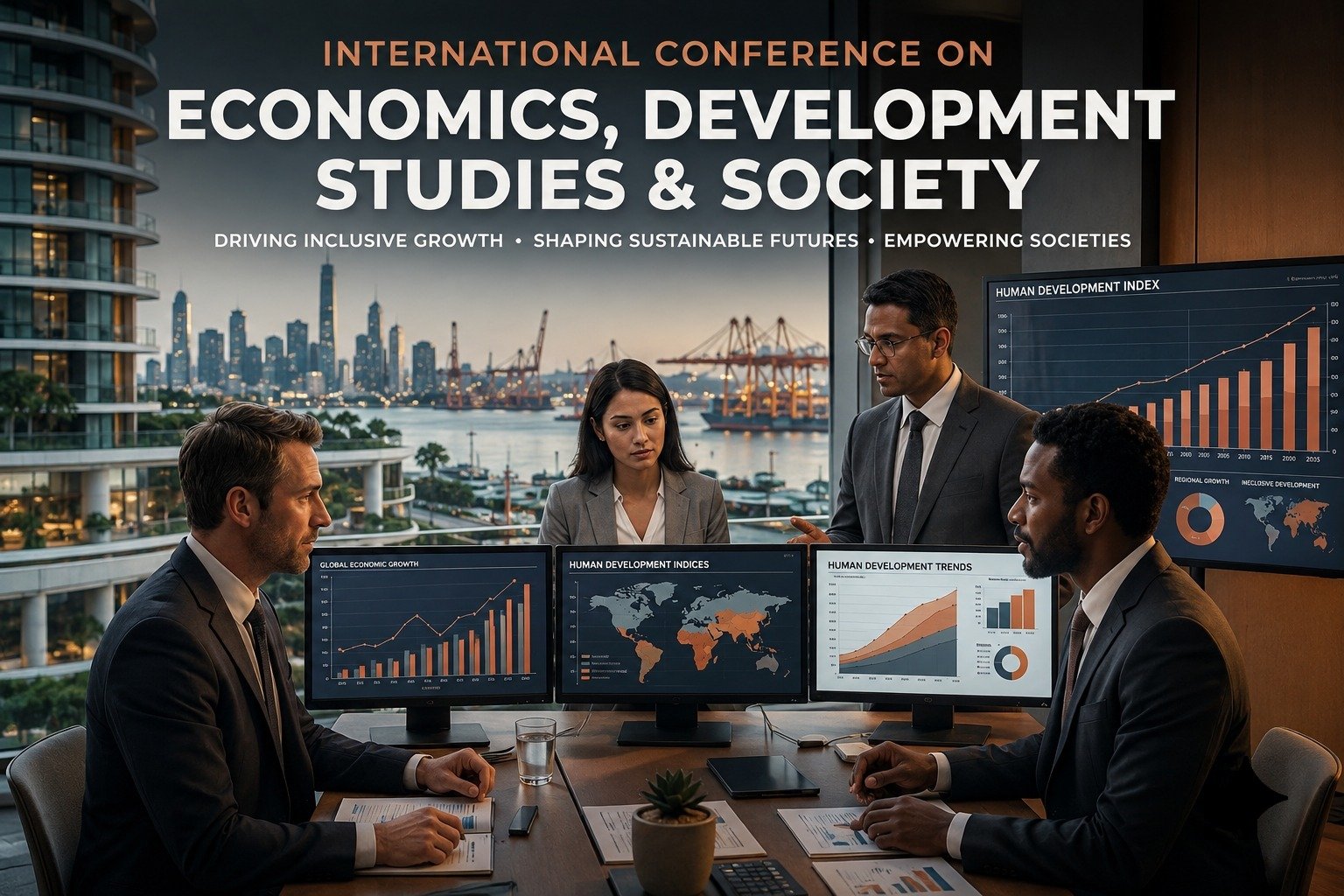
The International Conference on Economics, Development Studies & Society provides a global academic platform where economists, researchers, social scientists, policymakers, educators, and development professionals can discuss economic sustainability, public policy innovation, social transformation, and inclusive development strategies.
Explore more international academic events here: OneGrasp Events
The conference promotes interdisciplinary collaboration while encouraging research-driven solutions for sustainable economic development and societal progress.
Why Economics and Development Studies Matter Today
Modern economies are increasingly shaped by technological innovation, globalization, sustainability challenges, and social policy reforms.
Traditional economic models focused mainly on production, trade, and market growth. However, modern development studies now integrate broader issues such as:
Social equity
Poverty reduction
Environmental sustainability
Digital economies
Public health systems
Education access
Governance and policy frameworks
According to the World Bank, sustainable development requires integrated economic and social strategies that improve long-term living standards while addressing inequality and environmental challenges.
As a result, economics and development studies are becoming increasingly important for governments, businesses, NGOs, and international institutions worldwide.
What the Conference Focuses On
The International Conference on Economics, Development Studies & Society focuses on economic systems, development policy, sustainability frameworks, social transformation, and interdisciplinary research.
Key conference themes often include:
Development economics and sustainability
Public policy and governance
Poverty and inequality studies
Globalization and international trade
Economic resilience and recovery
Social entrepreneurship and innovation
Sustainable urban and rural development
Digital economies and financial inclusion
Education, healthcare, and development
Climate economics and green policy
These discussions help researchers and policymakers better understand how economic systems influence social and environmental outcomes.
Economics Development Studies Society and Global Transformation
The economics development studies society field has evolved significantly due to rapid technological, political, and environmental changes.
Traditional economic development strategies often emphasized industrial growth and infrastructure expansion. However, modern development frameworks now prioritize inclusive growth, sustainability, social justice, and resilience.
Today’s economic research increasingly integrates:
Data-driven policymaking
Artificial intelligence and economic forecasting
Sustainable development goals (SDGs)
Digital transformation strategies
Climate adaptation economics
Behavioral economics
Social impact measurement
For example, governments now use AI-assisted economic modeling systems to improve policy planning, labor market analysis, and financial forecasting.
According to research from the United Nations Development Programme (UNDP), sustainable economic development requires stronger integration between economic policy, environmental sustainability, and social inclusion.
This interdisciplinary approach is reshaping economic planning and public policy worldwide.
The Growing Role of Sustainability in Economic Development
Sustainability is becoming one of the defining priorities in modern economic systems.
Governments and institutions increasingly recognize that economic growth without environmental and social responsibility creates long-term instability.
Modern development studies now focus heavily on:
Green economic transitions
Renewable energy investment
Circular economy systems
Sustainable urban planning
Climate adaptation strategies
Social inclusion policies
Responsible resource management
According to the International Monetary Fund (IMF), climate change and environmental risks are becoming major economic challenges affecting global financial systems and long-term development.
As a result, sustainable economic policy is now central to international development planning.
Why Society and Public Policy Are Central to Development
Economic growth alone does not guarantee societal progress.
Development studies increasingly emphasize the importance of:
Healthcare accessibility
Education systems
Gender equality
Community development
Employment opportunities
Democratic governance
Social protection systems
For example, countries investing in education, healthcare, and digital infrastructure often experience stronger long-term economic resilience and social stability.
Meanwhile, public policy research is becoming increasingly data-driven through AI analytics, demographic modeling, and digital governance systems.
This is why interdisciplinary collaboration between economists, sociologists, policymakers, and sustainability experts is becoming increasingly important.
Why Virtual Conferences Are Important for Economic Research
Virtual conferences have transformed global collaboration in economics and development studies research.
Previously, many international academic conferences required expensive travel and limited participation opportunities. Today, online conferences allow economists, researchers, policymakers, students, and professionals worldwide to collaborate more effectively.
This accessibility is especially valuable for:
Graduate students
Early-career researchers
Policy professionals
NGO representatives
Researchers from developing countries
Interdisciplinary social scientists
Virtual academic events also encourage global discussions about economic inequality, sustainability, public policy, and development innovation.
According to the Harvard Business Review, digital collaboration systems continue improving global knowledge-sharing and interdisciplinary research networking.
As a result, virtual conferences are becoming increasingly important for international academic and policy collaboration.
Call for Papers and Research Opportunities
The conference provides opportunities for participants to present original research, policy analysis, economic models, and development strategies.
Researchers can typically submit papers in areas such as:
Development economics
Public policy and governance
Economic inequality
Sustainable development
International trade and globalization
Financial inclusion systems
Digital economies
Climate and environmental economics
Social innovation and entrepreneurship
Community and regional development
Abstract Submission Guidelines
Participants are generally encouraged to submit:
A 300–350 word abstract
Author details and affiliations
Keywords
Research objectives and findings
Submissions commonly undergo peer-review evaluation processes before acceptance. Participants may also attend as listeners without presenting papers.
Who Should Attend This Conference
This conference is valuable for professionals and researchers working across economics, development studies, public policy, sustainability, and social science sectors.
It is especially suitable for:
Economists
Development researchers
Public policy professionals
Social scientists
Sustainability experts
NGO representatives
Government researchers
Graduate students and PhD scholars
International development specialists
Even beginners can benefit because many sessions introduce foundational concepts related to economics, development policy, and sustainability research.
Expert Insight / Analysis
Economic development is increasingly connected to sustainability, digital transformation, and social inclusion.
Experts now recognize that future economic systems must balance growth with resilience, environmental responsibility, and equitable social outcomes.
Meanwhile, AI-driven economic forecasting, digital finance systems, and sustainable investment strategies are reshaping public policy and economic planning worldwide.
However, long-term development also depends heavily on governance quality, institutional trust, education systems, and community engagement.
Countries and institutions investing in interdisciplinary development research today may gain major advantages in economic resilience and sustainable growth.
Latest Trends / Updates
AI-powered economic forecasting systems are improving policy analysis and financial planning capabilities.

Digital finance and financial inclusion technologies are expanding access to banking and economic participation worldwide.

Green economy strategies and climate-focused investments are becoming central to global development policies.

Data-driven governance and smart public policy systems are improving social program efficiency.

Remote work, digital education, and online entrepreneurship are reshaping labor markets and economic structures.

Sustainable Development Goals (SDGs) continue influencing international economic planning and policy frameworks.
Common Mistakes to Avoid
Many researchers and policymakers make avoidable mistakes when approaching economic development and social policy research.
Common issues include:
Ignoring sustainability factors
Weak data analysis frameworks
Limited interdisciplinary collaboration
Overlooking local community perspectives
Focusing only on economic growth metrics
Poor policy implementation planning
Researchers and institutions can improve outcomes by combining economic analysis with social, environmental, and governance considerations.
Real-Life Example / Mini Case Study
A regional government launched a digital financial inclusion initiative designed to improve banking access in underserved rural communities.
Initially, adoption rates remained low due to limited digital literacy and infrastructure gaps.
The government collaborated with economists, technology providers, and community organizations to develop financial education programs and mobile banking systems.
Within three years, access to financial services increased significantly while local entrepreneurship and economic participation improved.
This example demonstrates how interdisciplinary economic and social policy strategies can create meaningful development outcomes.
Traditional Development Models vs Modern Sustainable Development
Traditional Development Models
Modern Sustainable Development
Focus on GDP growth only
Focus on inclusive sustainability
Centralized policymaking
Community-driven development
Limited environmental planning
Climate-conscious strategies
Traditional financial systems
Digital finance integration
Short-term economic planning
Long-term resilience frameworks
Pros and Cons of Virtual Economics Conferences
Pros
Cons
Global accessibility
Reduced face-to-face networking
Lower participation costs
Time zone challenges
Easier international collaboration
Limited informal interaction
Wider student participation
Technical connectivity issues
Faster knowledge exchange
Reduced physical engagement
Beginner vs Expert Approach in Development Research
Beginner Approach
Expert Approach
Focuses mainly on economic theory
Integrates policy and sustainability
General development discussions
Specialized socioeconomic analysis
Limited data interpretation
Advanced policy modeling
Basic economic indicators
Multi-dimensional development metrics
Passive conference participation
Strategic interdisciplinary collaboration
What to Do Next
If you are interested in economics, development studies, sustainability, or public policy research, begin preparing early for conference participation.
The International Conference on Economics, Development Studies & Society highlights the growing importance of interdisciplinary economic research in shaping sustainable and inclusive global development.
As economies continue adapting to technological disruption, climate challenges, and social transformation, development studies and policy innovation will remain essential for long-term progress. Conferences like this provide valuable opportunities for academic collaboration, policy discussion, and global research exchange.
Whether you are an economist, policymaker, researcher, sustainability expert, student, or development professional, participating in this conference can deepen your understanding of modern economic systems while connecting you with a global network of interdisciplinary researchers and policy innovators.
FAQs
Yes, beginners can participate and learn foundational concepts related to economics, sustainability, development policy, and social research.
Yes, participants may join as listeners without presenting papers.
Topics include development economics, sustainability, public policy, globalization, climate economics, and social innovation.
Development studies help address global challenges related to inequality, sustainability, governance, and long-term economic resilience.

 May 22, 2026
 9 Min
 No Comment