June 1, 2026
 10 Min
 No Comment
Money is no longer just physical currency exchanged across counters. Today, payments happen instantly through mobile devices, banking is increasingly digital, and artificial intelligence is helping financial institutions make smarter decisions. This rapid transformation has created an exciting era of FinTech Digital Payments Innovation, where technology and finance are converging to redefine how the global economy operates.
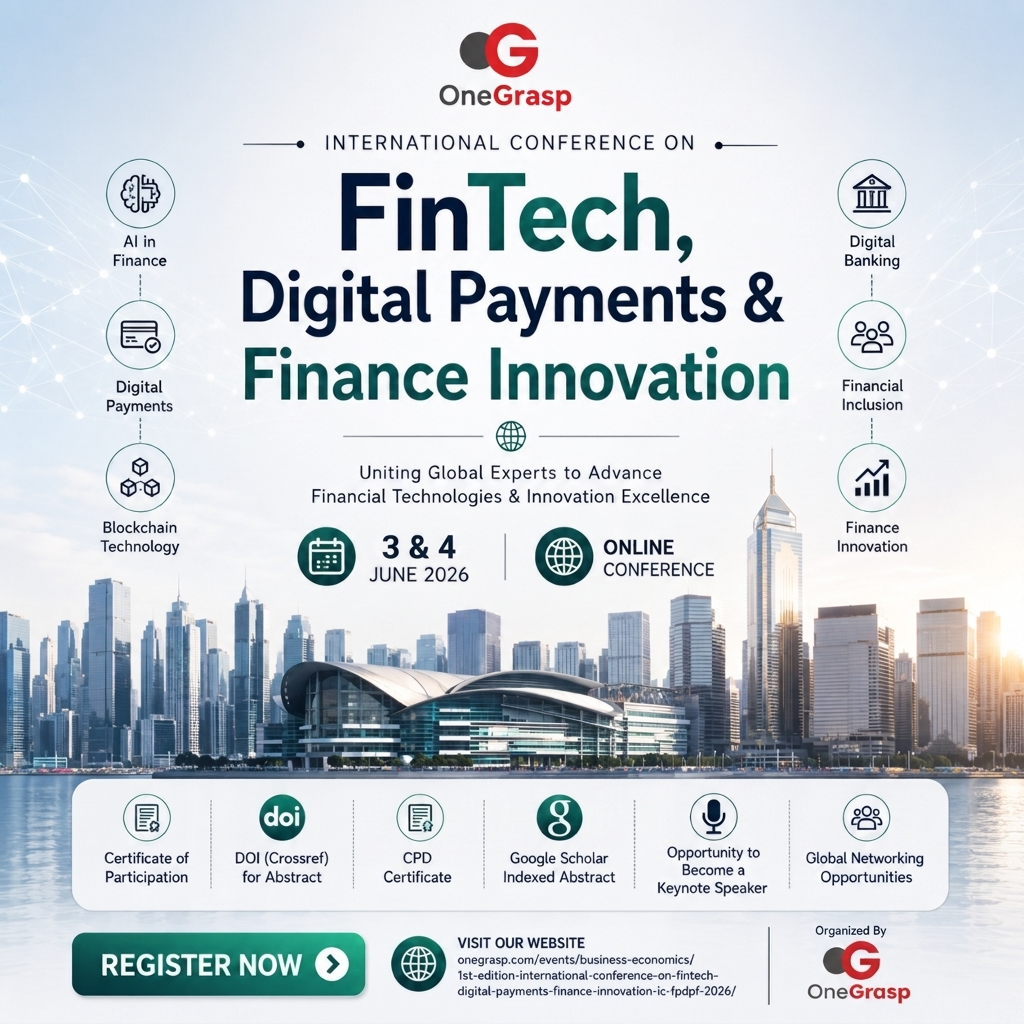
The 1st Edition International Conference on FinTech, Digital Payments & Finance Innovation (IC-FPD&PF-2026) provides an international platform for researchers, students, academicians, professionals, entrepreneurs, and policymakers to discuss the latest developments shaping the future of finance. As financial ecosystems continue to evolve, understanding emerging technologies and their impact has become essential for both academic research and industry practice.
Participants interested in joining the conference can explore the official registration page here:
Whether you are conducting research on blockchain, exploring AI-powered banking solutions, studying financial inclusion, or working on next-generation payment systems, this conference offers valuable opportunities to learn, collaborate, and contribute to the future of digital finance.
What Is the IC-FPD&PF-2026 Conference?
IC-FPD&PF-2026 is an international conference dedicated to advancing research and innovation in financial technology, digital payments, banking transformation, and finance innovation.
The conference brings together experts from finance, technology, economics, business, and policy domains to discuss the challenges and opportunities emerging from digital transformation in financial services.
As digital payments become increasingly common worldwide, organizations are investing heavily in technologies that improve transaction speed, security, accessibility, and customer experience. This conference serves as a forum for sharing cutting-edge research, innovative solutions, and practical insights that can influence the future direction of the financial sector.
The event welcomes both paper presenters and listeners, making it accessible to experienced researchers as well as newcomers interested in learning about modern financial technologies.
Why FinTech and Digital Payments Matter Today
FinTech and digital payment technologies are transforming the way individuals, businesses, and governments interact with financial systems.
According to research published by McKinsey, digital financial adoption has accelerated significantly over recent years as consumers increasingly prefer online and mobile financial services. Financial institutions are investing billions of dollars annually in digital transformation initiatives to remain competitive in an evolving marketplace.
Moreover, the World Economic Forum has consistently highlighted financial inclusion and digital finance as critical drivers of economic growth and sustainable development.
Traditional financial systems often face challenges such as limited accessibility, high transaction costs, and lengthy processing times. FinTech solutions address these issues by providing:
- Faster transactions
- Improved accessibility
- Enhanced customer experiences
- Lower operational costs
- Greater financial inclusion
As a result, digital finance is becoming a key pillar of modern economies worldwide.
Conference Themes and Research Areas
The conference covers a broad range of topics related to financial innovation and digital transformation.
Key research themes include:
Financial Technology Innovation
Exploration of new technologies disrupting traditional financial services and creating innovative business models.
Digital Payment Systems
Research focused on payment infrastructure, digital wallets, real-time payments, mobile transactions, and payment security.
Artificial Intelligence in Finance
Applications of AI and machine learning in fraud detection, customer service, investment management, credit assessment, and risk analysis.
Blockchain and Distributed Ledger Technology
Studies on decentralized finance, cryptocurrency ecosystems, smart contracts, and secure transaction frameworks.
Open Banking and Financial Ecosystems
Analysis of collaborative financial models that encourage innovation through secure data sharing.
Regulatory Technology (RegTech)
Technological solutions designed to improve regulatory compliance, reporting efficiency, and risk management.
Cybersecurity and Financial Protection
Research addressing data security, fraud prevention, digital identity verification, and financial infrastructure resilience.
Financial Inclusion and Sustainable Finance
Strategies for expanding access to financial services while supporting economic and social development goals.
FinTech Digital Payments Innovation and Economic Development
FinTech Digital Payments Innovation has become a powerful driver of economic growth and financial inclusion across both developed and emerging economies.
Millions of individuals worldwide remain underbanked or unbanked. Digital payment platforms and mobile financial services are helping bridge this gap by offering affordable and accessible financial solutions.
According to the World Bank, digital financial services play an important role in reducing poverty and promoting economic participation. By lowering transaction barriers and expanding access to banking services, technology creates opportunities for entrepreneurship and economic mobility.
Furthermore, digital payments improve transparency, reduce cash-handling costs, and enhance efficiency for businesses and governments alike.
Emerging Technologies Reshaping Finance
Several breakthrough technologies are driving the next wave of financial innovation.
Artificial Intelligence
AI is transforming financial operations through intelligent automation, predictive analytics, fraud detection, and personalized customer experiences.
Blockchain Technology
Blockchain offers decentralized and transparent transaction systems capable of improving trust, security, and efficiency.
Cloud Computing
Financial institutions are increasingly adopting cloud infrastructure to improve scalability, reduce costs, and accelerate innovation.
Big Data Analytics
Organizations are using data-driven insights to improve decision-making, customer segmentation, and risk assessment.
Embedded Finance
Financial services are increasingly integrated directly into digital platforms, enabling seamless customer experiences.
These technologies collectively represent a significant shift toward more agile, intelligent, and customer-centric financial ecosystems.
Opportunities for Researchers, Students, and Professionals
IC-FPD&PF-2026 provides substantial academic and professional development opportunities.
Researchers can:
- Present original findings
- Receive expert feedback
- Expand academic networks
- Publish and showcase research
Students can:
- Learn about emerging financial technologies
- Engage with experts
- Explore research opportunities
- Build academic confidence
Professionals can:
- Discover industry trends
- Identify collaboration opportunities
- Explore innovative solutions
- Strengthen professional networks
The conference creates an environment where knowledge exchange can lead to meaningful collaborations and future innovations.
Expert Insight: The Long-Term Impact of Financial Innovation
The future of finance will likely be shaped by deeper integration between artificial intelligence, digital identity systems, decentralized finance platforms, and real-time payment infrastructures.
One major challenge facing policymakers is balancing innovation with regulation. As financial technologies evolve, governments must ensure consumer protection, cybersecurity, and market stability without restricting innovation.
Meanwhile, sustainable financial systems require broader collaboration between technology developers, regulators, financial institutions, and researchers.
Conferences such as IC-FPD&PF-2026 play a crucial role in facilitating these conversations and helping stakeholders prepare for future challenges.
Latest Trends & Updates
The global fintech industry continues to experience rapid expansion as organizations invest heavily in digital transformation initiatives. Digital-first banking models are becoming mainstream, particularly among younger consumers who prefer mobile-centric financial experiences.
Artificial intelligence is increasingly being adopted for fraud detection, customer service automation, personalized financial recommendations, and risk management. Financial institutions are leveraging machine learning models to improve operational efficiency while enhancing customer satisfaction.
Digital public infrastructure initiatives are gaining momentum worldwide. Governments are investing in digital identity systems, interoperable payment networks, and secure data-sharing frameworks that support inclusive financial ecosystems.
Responsible innovation has become a major focus area for regulators and industry leaders. Discussions around ethical AI, algorithmic transparency, data privacy, and consumer protection are influencing future regulatory frameworks.
Blockchain technology continues to evolve beyond cryptocurrency applications. Financial organizations are exploring distributed ledger solutions for cross-border payments, smart contracts, trade finance, and digital asset management.
Research in open banking, embedded finance, decentralized finance, and sustainable fintech solutions is expanding rapidly. These areas are expected to generate significant innovation opportunities over the coming decade.
Real-Life Example: A FinTech Research Success Story
Consider a doctoral researcher studying mobile payment adoption in rural communities.
Despite conducting extensive research, the researcher struggled to connect findings with broader industry trends and policy discussions. By participating in an international fintech conference, they presented their work, received feedback from financial technology experts, and engaged with policymakers interested in financial inclusion initiatives.
As a result, the researcher refined their methodology, expanded their professional network, and later collaborated on a larger research project involving digital financial services. The conference experience ultimately strengthened both the academic quality and practical relevance of their work.
This example illustrates how participation in specialized conferences can create valuable opportunities for growth and impact.
Traditional Finance vs Modern FinTech Systems
| Traditional Finance | Modern FinTech Systems |
|---|---|
| Manual processing | Automated workflows |
| Limited accessibility | Global digital access |
| Slow transactions | Real-time payments |
| Higher operational costs | Greater efficiency |
| Physical infrastructure dependence | Cloud-based systems |
| Limited personalization | AI-driven experiences |
Beginner vs Expert Perspective in FinTech Research
| Beginners | Experts |
|---|---|
| Focus on individual technologies | Focus on ecosystem impact |
| Basic understanding of fintech tools | Deep understanding of financial systems |
| Technology-centric view | Socio-economic perspective |
| Limited research scope | Interdisciplinary analysis |
| Short-term observations | Long-term strategic insights |
Pros and Cons of Participating in FinTech Conferences
| Pros | Cons |
|---|---|
| Exposure to global research | Requires time commitment |
| Networking opportunities | Abstract preparation needed |
| Professional recognition | Competitive research environment |
| Knowledge sharing | Continuous learning required |
| Career development | Initial learning curve for newcomers |
Common Mistakes to Avoid
Submitting Weak Abstracts
Many participants submit abstracts that lack clear objectives or research significance. Ensure your submission clearly communicates contribution and relevance.
Ignoring Interdisciplinary Perspectives
FinTech intersects with economics, technology, regulation, and social sciences. Broader perspectives often strengthen research quality.
Focusing Solely on Technology
Technology alone does not determine success. Consider user behavior, policy implications, and business impacts.
Overlooking Sustainability Considerations
Modern financial systems increasingly emphasize inclusion, ethics, and sustainability alongside innovation.
Poor Networking Preparation
Many attendees miss opportunities by failing to engage with peers and experts. Prepare discussion points and actively participate.
What to Do Next
If you are interested in participating in IC-FPD&PF-2026:
- Review the conference themes carefully.
- Identify a relevant research topic.
- Conduct a thorough literature review.
- Prepare a strong abstract submission.
- Register early to secure participation.
- Develop a professional presentation.
- Engage with researchers and industry experts.
You can begin the registration process through the official conference registration page:
Quick Checklist
✓ Identify a suitable research topic
✓ Review conference themes
✓ Draft and refine abstract
✓ Verify submission requirements
✓ Complete registration
✓ Prepare presentation materials
✓ Plan networking opportunities
✓ Stay updated on fintech trends
Conclusion
The financial industry is undergoing one of the most significant transformations in modern history. Emerging technologies such as artificial intelligence, blockchain, digital payments, and open banking are redefining how financial services are delivered and experienced worldwide.
The 1st Edition International Conference on FinTech, Digital Payments & Finance Innovation (IC-FPD&PF-2026) offers an important platform for exploring these developments, sharing research, and connecting with experts who are shaping the future of finance. Whether you are a student beginning your academic journey, a researcher seeking collaboration, or a professional navigating digital transformation, the conference provides meaningful opportunities for learning and growth.
As financial innovation continues to accelerate, staying informed and engaged is becoming increasingly important. Participating in conferences like IC-FPD&PF-2026 can help individuals and organizations better understand emerging trends, contribute valuable insights, and prepare for the future of global finance.
To learn more or secure your participation, visit the official registration page:
Frequently Asked Questions
The conference is suitable for students, researchers, academicians, finance professionals, technology experts, policymakers, and entrepreneurs.
Yes. Both beginners and experienced professionals can benefit from the conference through learning and networking opportunities.
No. Participants may join as listeners or attendees without presenting a paper.
Yes. Certificates are typically provided to conference participants.
The conference provides research exposure, networking opportunities, knowledge sharing, and professional development benefits.