From understanding climate change and natural hazards to exploring the geological history of distant planets, geosciences play a crucial role in shaping humanity’s future. As scientific tools become more advanced and space exploration expands beyond Earth, researchers are uncovering new insights about planetary systems, environmental processes, and the dynamic forces that influence both our planet and the wider solar system. The Geosciences Planetary Systems Conference provides a unique platform where Earth scientists, planetary researchers, geologists, environmental experts, and space scientists collaborate to address some of the most pressing scientific questions of our time.
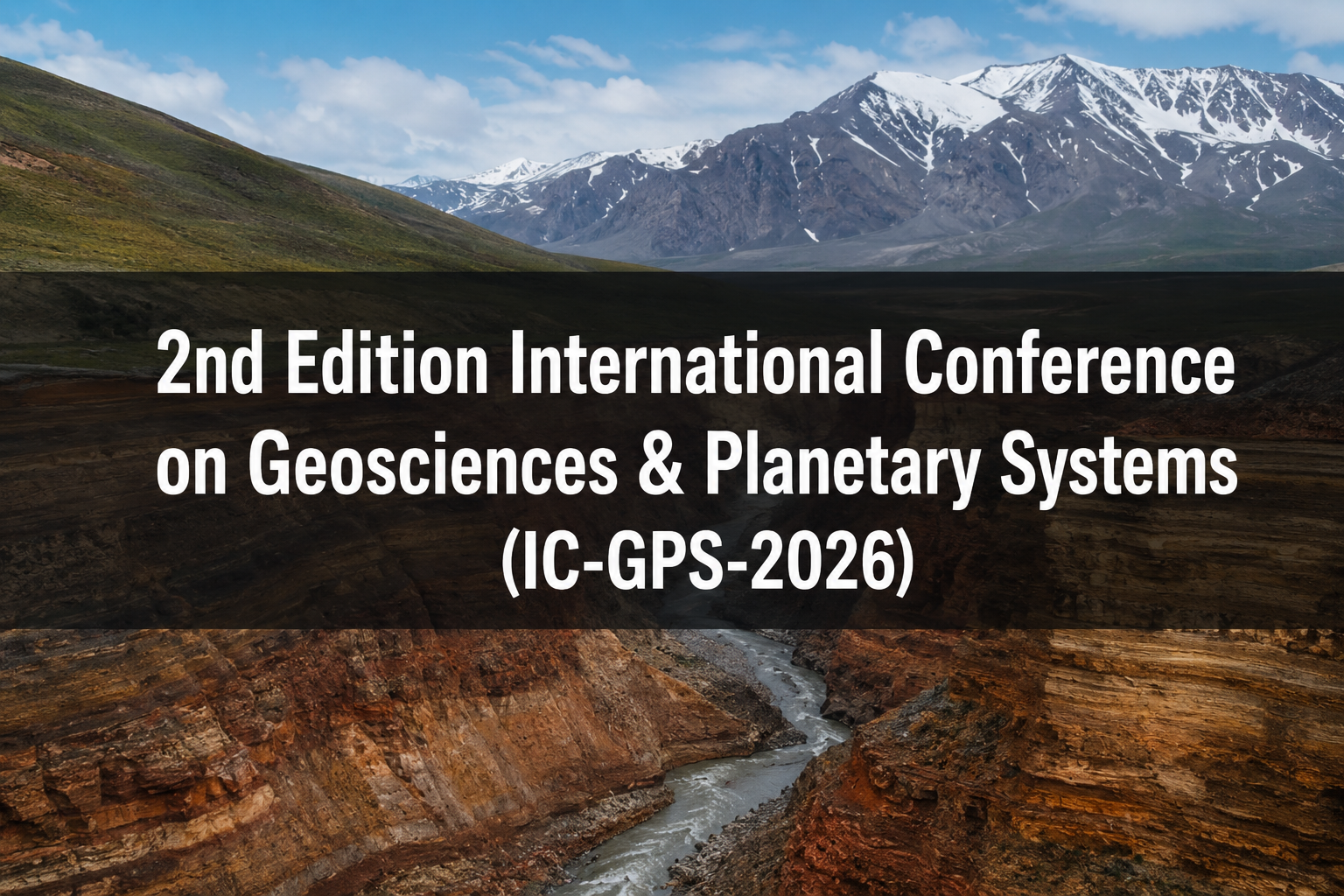
The 2nd Edition International Conference on Geosciences & Planetary Systems (IC-GPS-2026) brings together global experts to discuss advancements in geology, geophysics, climate science, planetary exploration, remote sensing, environmental sustainability, and Earth system research.
As environmental challenges and planetary exploration initiatives continue to grow in importance, this conference offers a valuable opportunity to explore cutting-edge discoveries and emerging technologies that are transforming geoscience research worldwide.
Direct Answer: IC-GPS-2026 is an international conference focused on geosciences, planetary science, climate systems, geology, environmental research, and space exploration.
The conference provides a multidisciplinary platform where researchers and professionals can exchange ideas, present scientific findings, and discuss innovative approaches to understanding Earth and planetary systems.
With increasing global interest in climate resilience, sustainable resource management, and planetary exploration, conferences like IC-GPS-2026 are becoming more important than ever.
Why Geosciences Planetary Systems Conference Matters Today
Direct Answer: Geosciences help society understand Earth’s processes, manage natural resources, mitigate environmental risks, and support planetary exploration.
According to the United Nations, climate change, environmental sustainability, and disaster resilience remain critical global priorities requiring scientific collaboration and innovation.
https://www.un.org/climatechange
Meanwhile, planetary science is expanding rapidly as international space agencies pursue missions to the Moon, Mars, asteroids, and beyond. These efforts are generating valuable insights into planetary formation, evolution, and habitability.
As a result, geoscience and planetary research continue to influence policy decisions, technological advancements, and sustainable development strategies worldwide.
Geosciences Planetary Systems Conference Research Areas
Direct Answer: The conference covers diverse research areas across Earth sciences and planetary studies.
Major themes include:
Geology and Earth Systems
Geophysics
Climate Science
Environmental Geoscience
Planetary Geology
Remote Sensing
Earth Observation Technologies
Natural Hazard Assessment
Hydrology and Water Resources
Ocean Sciences
Atmospheric Sciences
Planetary Exploration
Space Geoscience
Sustainable Resource Management
Environmental Monitoring
These topics reflect the increasing integration of Earth and planetary sciences in addressing scientific and societal challenges.
Climate Change and Earth System Science
Direct Answer: Earth system science helps researchers understand interactions between the atmosphere, oceans, land, and living organisms.
Climate change research remains one of the most significant areas of geoscience investigation. According to the Intergovernmental Panel on Climate Change (IPCC), understanding Earth’s systems is essential for developing effective climate adaptation and mitigation strategies.
https://www.ipcc.ch/
Researchers are increasingly using advanced climate models, satellite observations, and artificial intelligence to improve predictions and support evidence-based policymaking.
Consequently, geoscience research plays a vital role in building a more resilient and sustainable future.
Planetary Exploration and the Search for New Discoveries
Direct Answer: Planetary science explores the formation, evolution, and characteristics of planets, moons, and other celestial bodies.
Recent missions have significantly expanded our understanding of:
Mars geology
Lunar resources
Asteroid composition
Planetary atmospheres
Exoplanet systems
Space weather phenomena
Organizations such as NASA and the European Space Agency (ESA) continue investing in ambitious planetary exploration programs.
These missions provide valuable scientific data while inspiring future generations of researchers and explorers.
Geospatial Technologies and Remote Sensing Innovations
Direct Answer: Remote sensing technologies are transforming how scientists monitor Earth and planetary environments.
Applications include:
Climate monitoring
Disaster management
Agricultural assessment
Urban planning
Resource exploration
Environmental conservation
Advanced satellite systems and geospatial analytics enable researchers to collect large-scale data with unprecedented accuracy and efficiency.
As technology continues evolving, geospatial science is becoming increasingly important across scientific, governmental, and industrial sectors.
Geosciences Planetary Systems Conference and Sustainable Development
Direct Answer: Geoscience research contributes directly to sustainability, environmental protection, and resource management.
Geoscientists support sustainable development through:
Water resource management
Natural hazard mitigation
Environmental monitoring
Climate adaptation strategies
Sustainable mining practices
Renewable energy resource assessment
According to the World Economic Forum, environmental sustainability and resilience remain critical priorities for governments and organizations worldwide.
https://www.weforum.org/
The conference provides opportunities to discuss innovative solutions that balance economic development with environmental stewardship.
Opportunities for Researchers, Students, and Professionals
Direct Answer: IC-GPS-2026 offers opportunities for networking, collaboration, publication, and professional development.
Participants can:
Present research findings
Learn from international experts
Explore emerging technologies
Build interdisciplinary collaborations
Discover funding opportunities
Gain exposure to global research initiatives
Students and early-career researchers can benefit from interacting with experienced scientists working on some of the world’s most important environmental and planetary challenges.
Participation provides numerous advantages for academic and professional growth.
Benefits include:
Enhanced research visibility
Global networking opportunities
Access to emerging technologies
Collaboration possibilities
Professional recognition
Career advancement opportunities
As environmental and planetary research continue expanding globally, demand for geoscience expertise remains strong across academia, government agencies, and industry.
Expert Insight / Analysis
From an expert perspective, the future of geosciences will be defined by interdisciplinary collaboration, technological innovation, and sustainability-focused research.
Climate challenges, resource management concerns, and planetary exploration initiatives require scientists from diverse disciplines to work together. Advances in artificial intelligence, remote sensing, and computational modeling are enabling researchers to analyze complex Earth and planetary systems more effectively than ever before.
The long-term significance of IC-GPS-2026 lies in its ability to facilitate collaboration among experts addressing global environmental and scientific challenges. Many future breakthroughs in sustainability and planetary exploration will emerge from these interdisciplinary partnerships.
Latest Trends & Updates
Artificial intelligence is increasingly being used to improve climate modeling, geological analysis, and environmental monitoring.

Satellite-based Earth observation systems are providing more accurate data for disaster response, agricultural planning, and climate research.

Planetary exploration programs are expanding as international space agencies pursue new missions to the Moon, Mars, and other celestial bodies.

Digital geoscience platforms are enabling researchers to process and analyze massive datasets generated by remote sensing technologies.

Climate resilience research is becoming a major priority as governments and organizations seek evidence-based adaptation strategies.

Advanced geospatial analytics are helping scientists better understand environmental changes and resource management challenges.

Interdisciplinary research combining geosciences, data science, and planetary exploration is accelerating scientific discovery and innovation.
Real-Life Example / Mini Case Study
Consider a university research team studying groundwater sustainability in drought-prone regions.
Initially, the team relied on traditional field surveys to assess water resources. After participating in an international geoscience conference, they learned about advanced satellite monitoring technologies and geospatial analytics.
By integrating these tools into their research, the team improved groundwater mapping accuracy and developed better resource management recommendations for local communities. Their findings later contributed to regional sustainability planning efforts.
This example highlights how conference participation can drive innovation and create real-world impact.
Traditional Geoscience vs Modern Geoscience
Traditional Geoscience
Modern Geoscience
Manual field surveys
Satellite-based monitoring
Limited datasets
Big data analytics
Localized observations
Global Earth observation systems
Reactive environmental assessment
Predictive modeling
Isolated research disciplines
Interdisciplinary collaboration
Beginner vs Expert Comparison
Beginners
Experts
Learn Earth science fundamentals
Conduct advanced interdisciplinary research
Study individual processes
Analyze entire Earth systems
Use basic analytical tools
Apply AI and advanced modeling
Focus on observations
Develop predictive frameworks
Understand concepts
Influence policy and decision-making
Pros and Cons
Pros
Cons
Access to cutting-edge research
Requires technical knowledge
Global networking opportunities
Time commitment
Exposure to emerging technologies
Competitive academic environment
Collaboration possibilities
Extensive preparation
Professional development
Broad subject complexity
Common Mistakes to Avoid
Many participants fail to maximize conference benefits due to avoidable mistakes.
One common error is focusing exclusively on a single specialization while ignoring interdisciplinary developments.
Another mistake is neglecting emerging technologies such as AI and remote sensing that are rapidly transforming geoscience research.
Some researchers fail to connect scientific findings with practical sustainability applications.
Others overlook networking opportunities that can lead to valuable collaborations and research partnerships.
What to Do Next (Actionable Steps)
Review conference themes carefully.
Identify relevant research interests.
Prepare an abstract or presentation.
Study recent developments in geosciences.
Register early for participation.
Explore remote sensing and geospatial technologies.
✔ Follow climate and planetary science developments
✔ Explore geospatial technologies
✔ Attend networking sessions
✔ Connect with experts
✔ Prepare presentation materials
✔ Pursue collaboration opportunities
Conclusion
The 2nd Edition International Conference on Geosciences & Planetary Systems (IC-GPS-2026) provides a valuable platform for advancing scientific understanding of Earth, planetary systems, and environmental sustainability.
As global challenges related to climate change, resource management, and planetary exploration continue evolving, interdisciplinary research and international collaboration will become increasingly important. IC-GPS-2026 brings together experts from diverse fields to share knowledge, develop innovative solutions, and shape the future of geoscience research.
For researchers, students, educators, and professionals seeking to contribute to Earth and planetary science, IC-GPS-2026 offers an exceptional opportunity to learn, collaborate, and drive meaningful scientific progress.

 June 11, 2026
 9 Min
 No Comment