Forests, agricultural landscapes, and natural resources are among the most valuable assets supporting global environmental health, food security, biodiversity, and economic development. As climate change, population growth, land degradation, and resource scarcity continue to create new challenges, innovative solutions in forestry, horticulture, and resource management have become increasingly important.
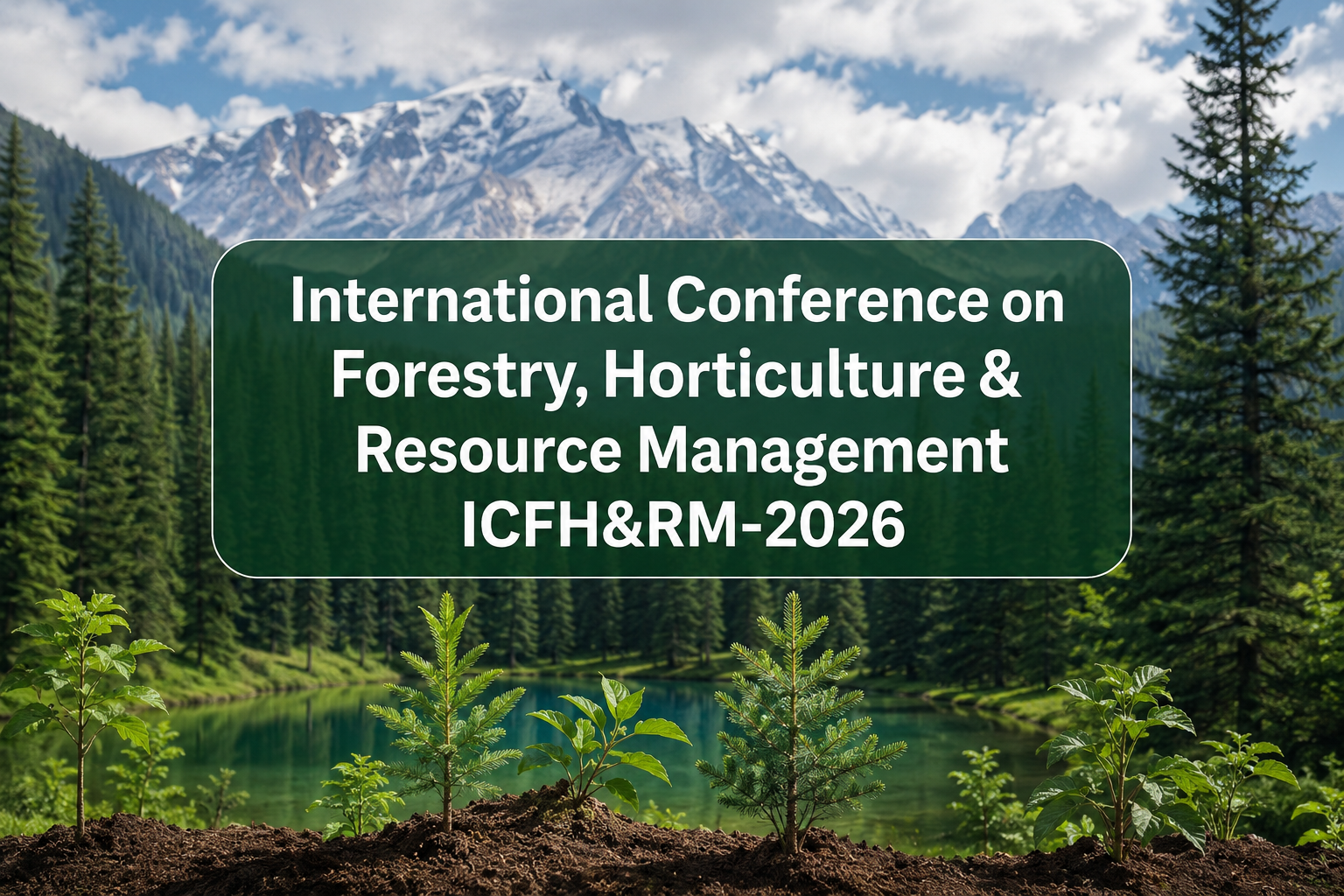
The Forestry Horticulture Resource Management conference, officially known as the International Conference on Forestry, Horticulture & Resource Management (ICFH&RM-2026), provides an international platform for researchers, scientists, policymakers, environmental professionals, educators, and students to discuss emerging developments shaping sustainable ecosystem management.
The conference encourages interdisciplinary collaboration aimed at balancing environmental conservation, agricultural productivity, biodiversity protection, and sustainable resource utilization.
The International Conference on Forestry, Horticulture & Resource Management (ICFH&RM-2026) focuses on sustainable forestry, horticultural innovation, biodiversity conservation, climate resilience, ecosystem restoration, and efficient natural resource management.
The conference serves as a knowledge-sharing platform where experts explore scientific advancements, policy frameworks, and practical strategies for managing forests, agricultural systems, and natural resources sustainably.
Topics span multiple disciplines including forestry science, horticultural technologies, ecosystem restoration, conservation biology, environmental policy, precision agriculture, and climate adaptation.
As environmental pressures continue to intensify worldwide, the conference provides valuable opportunities to develop collaborative solutions that support both ecological integrity and economic development.
Forestry, horticulture, and resource management play critical roles in climate mitigation, food production, biodiversity conservation, sustainable livelihoods, and ecosystem resilience.
According to the United Nations, forests cover approximately 31% of the Earth’s land area and provide essential ecosystem services that support billions of people globally.
https://www.un.org/sustainabledevelopment
Forests act as carbon sinks, regulate water cycles, protect soil health, and preserve biodiversity. Similarly, horticulture contributes significantly to nutrition, food security, rural development, and sustainable agriculture.
Meanwhile, effective resource management helps ensure long-term availability of land, water, energy, and biological resources.
As a result, integrated approaches to forestry and resource management have become central to achieving global sustainability goals.
Forestry Horticulture Resource Management Research Themes
These topics highlight the interconnected nature of environmental sustainability and resource stewardship.
Forestry and Climate Change: A Critical Relationship
Featured Snippet Answer
Forests play a vital role in mitigating climate change by absorbing carbon dioxide, protecting biodiversity, and supporting ecosystem resilience.
Climate change remains one of the greatest environmental challenges facing humanity.
According to the Intergovernmental Panel on Climate Change (IPCC), forests are essential for reducing greenhouse gas concentrations and maintaining ecological stability.
Forestry researchers increasingly focus on:
Carbon sequestration
Forest resilience
Reforestation programs
Climate-smart forestry
Sustainable harvesting practices
These initiatives contribute to both environmental protection and sustainable economic development.
Consequently, forestry research is becoming increasingly important for achieving global climate objectives.
Sustainable Horticulture and Food Security
Featured Snippet Answer
Sustainable horticulture improves food production while minimizing environmental impacts through efficient resource use and innovative cultivation practices.
The global demand for fruits, vegetables, medicinal plants, and ornamental crops continues to increase.
Modern horticultural systems increasingly incorporate:
Precision irrigation
Controlled environment agriculture
Organic production methods
Integrated pest management
Water-efficient technologies
According to the Food and Agriculture Organization (FAO), sustainable agricultural practices are essential for feeding a growing global population while protecting natural resources.
These innovations help improve productivity while reducing environmental pressures.
Technology and Smart Resource Management
Featured Snippet Answer
Advanced technologies are transforming forestry and resource management through data-driven monitoring, predictive analytics, and precision decision-making.
Digital transformation is creating new opportunities across environmental management sectors.
Emerging technologies include:
Technology
Application
Remote Sensing
Forest Monitoring
GIS Mapping
Land Use Planning
Drones
Crop Assessment
Artificial Intelligence
Predictive Analytics
IoT Sensors
Environmental Monitoring
Satellite Imaging
Resource Management
These tools enable more efficient management of ecosystems and natural resources.
According to the World Economic Forum, digital technologies are increasingly supporting sustainable development and environmental resilience.
Participation in ICFH&RM-2026 provides research exposure, professional networking, publication opportunities, and insights into emerging sustainability challenges.
Attendees can benefit from:
International research visibility
Academic collaboration
Industry engagement
Professional networking
Publication opportunities
Career advancement
Knowledge exchange
Students and early-career researchers gain valuable opportunities to connect with experts and explore interdisciplinary research pathways.
Professionals benefit from learning about emerging technologies, policy developments, and sustainability strategies influencing environmental management worldwide.
Expert Insight: The Future of Sustainable Resource Management
The future of forestry and resource management will depend on balancing environmental protection with growing economic and societal demands.
Several major trends are expected to shape the next decade:
Climate-resilient forestry systems
Nature-based solutions
Regenerative agriculture
Circular bioeconomy models
Carbon markets
Smart environmental monitoring
Biodiversity restoration initiatives
The OECD highlights that sustainable resource management will play a crucial role in supporting long-term economic resilience and environmental stability.
Research presented at conferences such as ICFH&RM-2026 can directly influence policies, conservation strategies, and sustainable development initiatives.
Latest Trends & Updates
Artificial intelligence is increasingly being applied to forestry and environmental monitoring. Machine learning models help predict wildfire risks, assess forest health, and optimize conservation planning.
Climate-smart agriculture continues to gain momentum worldwide. Researchers are developing adaptive farming systems that improve productivity while reducing environmental impacts and enhancing resilience to climate variability.
Digital public infrastructure is supporting more efficient natural resource management. Governments and organizations increasingly utilize digital platforms for environmental monitoring, land management, and sustainability reporting.
Nature-based solutions have emerged as a central strategy for addressing climate challenges. Reforestation, ecosystem restoration, and sustainable land management initiatives are receiving significant investment from governments and international organizations.
Global sustainability policies continue evolving rapidly. International commitments related to biodiversity conservation, carbon neutrality, and sustainable development are influencing research priorities and funding opportunities across forestry and horticulture sectors.
Real-Life Example: A Community Agroforestry Initiative
Consider a university research team working with rural communities facing declining soil fertility and reduced agricultural productivity.
Initially, the project focused on improving crop yields through conventional agricultural practices. After participating in an environmental sustainability conference, the team integrated agroforestry principles, combining trees with agricultural crops.
The new approach improved soil health, increased biodiversity, enhanced water retention, and diversified income sources for local farmers.
As a result, the project attracted support from environmental organizations and became a model for sustainable rural development.
This example demonstrates how interdisciplinary knowledge gained through conferences can generate practical solutions with measurable community impact.
Traditional Resource Management vs Sustainable Resource Management
Traditional Resource Management
Sustainable Resource Management
Short-term extraction
Long-term stewardship
Limited ecosystem focus
Ecosystem-based approach
Resource consumption
Resource regeneration
Sector-specific planning
Integrated planning
Reactive management
Adaptive management
Beginners vs Experts
Beginners
Experts
Learn conservation concepts
Design ecosystem strategies
Focus on individual resources
Manage interconnected systems
Study environmental issues
Develop policy solutions
Analyze local impacts
Address global sustainability challenges
Understand techniques
Drive systemic innovation
Pros and Cons of Conference Participation
Pros
Cons
Global networking
Time commitment
Research exposure
Travel expenses
Publication opportunities
Competitive submissions
Professional recognition
Preparation requirements
Collaboration opportunities
Intensive schedules
Career development
Learning curve for newcomers
Common Mistakes to Avoid
Submitting Weak Research Abstracts
Clearly communicate objectives, methodology, findings, and significance.
Ignoring Interdisciplinary Perspectives
Environmental challenges require expertise across forestry, agriculture, ecology, economics, and policy.
Overlooking Sustainability Metrics
Quantifiable environmental outcomes strengthen research impact.
Focusing Only on Technical Solutions
Successful resource management also requires social, economic, and policy considerations.
Poor Networking Preparation
Identify key researchers and organizations before attending the conference.
What To Do Next
To maximize conference participation:
Review conference themes carefully.
Identify relevant research topics.
Conduct a literature review.
Prepare a strong abstract.
Register before deadlines.
Participate in technical sessions.
Attend networking events.
Follow emerging sustainability research.
Quick Checklist
✔ Select a research topic
✔ Prepare an abstract
✔ Review submission guidelines
✔ Register early
✔ Prepare presentation materials
✔ Research keynote speakers
✔ Build networking goals
✔ Follow sustainability trends
Conclusion
The International Conference on Forestry, Horticulture & Resource Management (ICFH&RM-2026) addresses some of the most important environmental and sustainability challenges facing the modern world. By bringing together researchers, professionals, policymakers, and students, the conference fosters collaboration and innovation across forestry, horticulture, conservation, and resource management disciplines.
As climate change, biodiversity loss, and resource pressures continue to shape global priorities, the insights shared at ICFH&RM-2026 can contribute to more resilient ecosystems, sustainable communities, and environmentally responsible development. Whether you are a researcher, practitioner, or student, this conference offers valuable opportunities to learn, collaborate, and make a meaningful impact on the future of sustainable resource management.

 June 8, 2026
  8 Min
8 Min  No Comment