The world’s oceans cover more than 70% of Earth’s surface, regulate climate systems, support biodiversity, provide food security, and sustain millions of livelihoods. Yet oceans face unprecedented challenges, including climate change, marine pollution, habitat degradation, overfishing, and rising sea levels. These complex issues require innovative scientific research, international collaboration, and sustainable policy solutions.
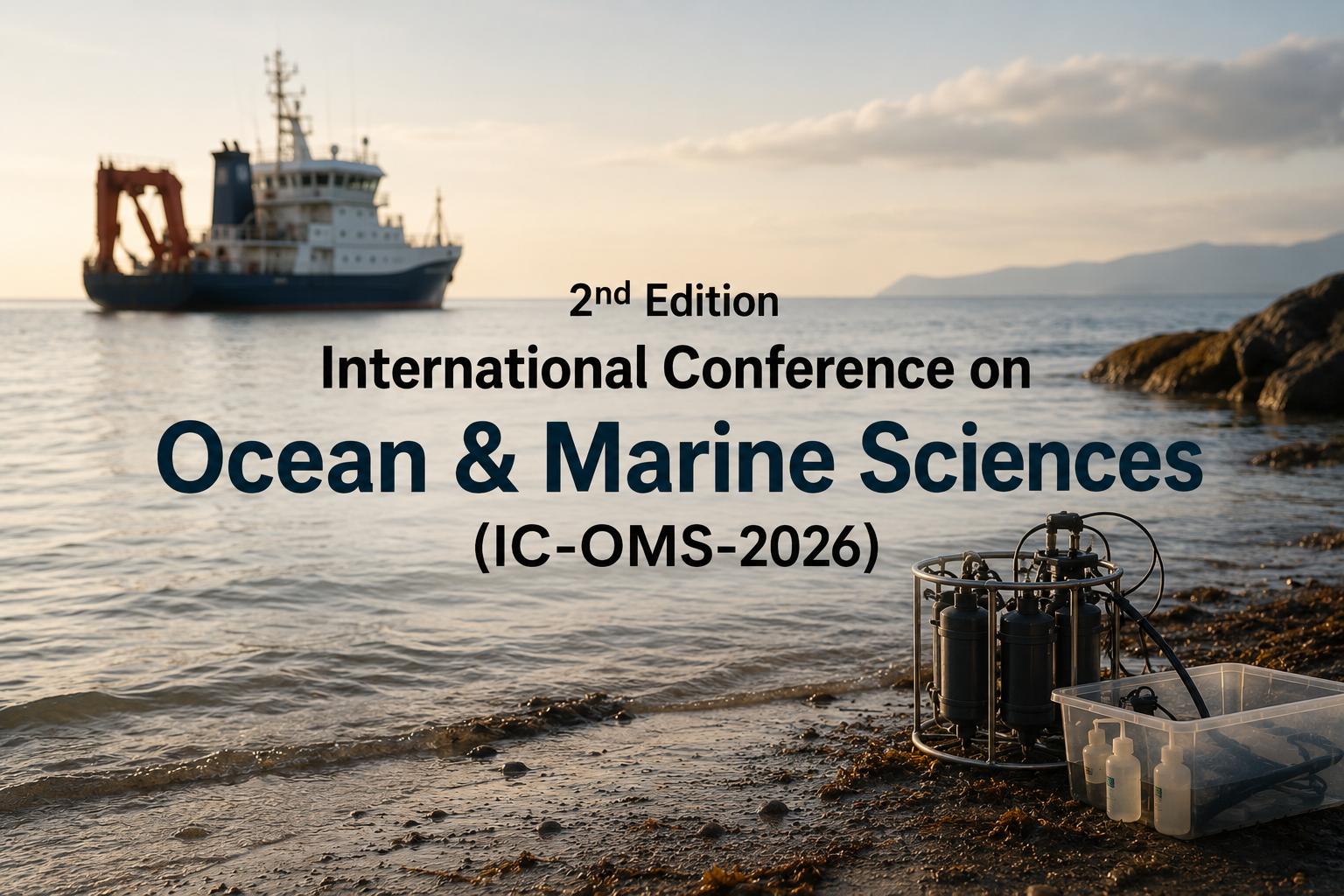
The Ocean Marine Sciences Conference represented by the 2nd Edition International Conference on Ocean & Marine Sciences (IC-OMS-2026) aims to bring together researchers, marine scientists, environmental experts, policymakers, educators, and students to discuss the latest developments in oceanography, marine ecology, conservation, and sustainable ocean management.
Researchers and participants can register through the official conference page:
The conference serves as a global platform for advancing knowledge and collaboration in marine and ocean sciences. As nations increasingly recognize the importance of sustainable ocean management, scientific research plays a critical role in guiding policy decisions and conservation strategies.
Global marine science initiatives increasingly focus on biodiversity conservation, marine pollution control, climate resilience, and sustainable blue economy development. These priorities continue to shape research agendas worldwide. (ou.ac.lk)
Why Ocean Science Matters More Than Ever
Healthy oceans are essential for maintaining ecological balance and supporting human well-being.
According to the United Nations Sustainable Development Goals initiative, protecting marine ecosystems is fundamental to sustainable development and global environmental stability.
Economic opportunities through fisheries and tourism
Biodiversity conservation
Coastal protection from extreme weather events
However, increasing environmental pressures demand stronger scientific understanding and evidence-based solutions.
Major Research Themes at the Ocean Marine Sciences Conference
IC-OMS-2026 is expected to attract research across a broad range of marine science disciplines.
Important areas include:
Oceanography and Climate Science
Marine Biodiversity Conservation
Marine Pollution and Waste Management
Coastal Ecosystem Protection
Fisheries and Aquaculture
Marine Biotechnology
Blue Economy Development
Marine Environmental Monitoring
Ocean Governance and Policy
Remote Sensing Applications
Marine Resource Management
Climate Change Adaptation
These topics align closely with global priorities in ocean sustainability and marine ecosystem protection. Similar international marine science conferences have increasingly emphasized climate resilience, biodiversity conservation, marine governance, and sustainable resource management. (ou.ac.lk)
Ocean Marine Sciences Conference and Climate Change Research
Climate change remains one of the most important drivers of marine ecosystem transformation.
Ocean warming, sea-level rise, coral bleaching, ocean acidification, and changing marine biodiversity patterns are affecting ecosystems worldwide. International marine science research increasingly focuses on understanding these changes and developing adaptation strategies. (efstm.com)
The World Economic Forum has highlighted the importance of ocean health in addressing global climate challenges.
Researchers attending IC-OMS-2026 can contribute valuable insights into climate resilience, marine conservation, and sustainable ocean management.
The Rise of the Blue Economy
The concept of the Blue Economy has gained significant attention among governments, businesses, and research institutions.
The Blue Economy promotes sustainable use of ocean resources while supporting economic growth, employment opportunities, and environmental conservation.
Key sectors include:
Sustainable Fisheries
Marine Renewable Energy
Coastal Tourism
Maritime Transportation
Marine Biotechnology
Ocean Observation Technologies
As countries invest in ocean-based industries, research on sustainability and responsible resource management becomes increasingly important.
Marine Technology Transforming Ocean Research
Technological innovation is revolutionizing marine science.
Advanced tools now enable researchers to study oceans more accurately and efficiently than ever before.
Emerging technologies include:
Autonomous Underwater Vehicles (AUVs)
Remote Ocean Sensors
Satellite Monitoring Systems
Artificial Intelligence for Marine Data Analysis
Ocean Mapping Technologies
Smart Fisheries Management Systems
Marine Robotics
These technologies are helping scientists monitor environmental changes, track biodiversity, and improve conservation strategies.
Opportunities for Researchers and Students
International conferences provide valuable opportunities for professional growth.
Participants can:
Present original research
Receive expert feedback
Build international collaborations
Explore publication opportunities
Learn emerging methodologies
Network with marine science professionals
Discover interdisciplinary research opportunities
For students and early-career researchers, conferences often serve as launching points for future academic and professional success.
Expert Insight: The Future of Ocean Science and Sustainability
The future of marine science will depend on collaboration across scientific disciplines, governments, industries, and communities.
Researchers increasingly recognize that solving marine challenges requires integrated approaches combining ecology, technology, economics, governance, and policy.
Future priorities will likely include:
Climate-resilient marine ecosystems
Sustainable fisheries management
Ocean carbon monitoring
Marine biodiversity restoration
Blue economy innovation
Ocean data integration
The OECD continues to emphasize the importance of science-driven policies for sustainable ocean economies and marine governance.
Artificial intelligence is increasingly being used to analyze large-scale oceanographic datasets, helping scientists identify patterns related to climate change, marine biodiversity, and ecosystem health.
Blue economy initiatives are expanding globally as governments seek sustainable ways to balance economic growth with marine conservation objectives.
Advanced satellite monitoring systems now provide near real-time information on ocean temperatures, sea-level changes, marine pollution, and fisheries activities.
Marine conservation research is focusing more heavily on ecosystem restoration projects, including coral reef rehabilitation, mangrove protection, and blue carbon initiatives.
Global policy discussions are placing greater emphasis on marine governance, sustainable fisheries management, and international cooperation to address transboundary environmental challenges.
Researchers are also exploring innovative applications of marine biotechnology, including pharmaceuticals, biofuels, and environmentally sustainable industrial materials.
Real-Life Example
Consider a doctoral researcher studying coral reef resilience in coastal ecosystems.
After presenting findings at an international marine sciences conference, the researcher receives feedback from oceanographers, climate scientists, and conservation experts. This leads to a collaborative project involving satellite monitoring and AI-based reef health analysis.
Within two years, the project contributes to improved conservation planning and attracts funding for expanded marine ecosystem restoration initiatives.
This example demonstrates how conference participation can generate real-world environmental impact while advancing scientific careers.
Traditional Marine Research vs Modern Ocean Science
Traditional Marine Research
Modern Ocean Science
Localized studies
Global monitoring systems
Manual data collection
Automated sensors and AI
Limited datasets
Big data analytics
Single-discipline research
Interdisciplinary collaboration
Reactive conservation
Predictive ecosystem management
Beginner vs Expert Perspective
Beginners
Experts
Focus on individual species
Focus on ecosystems
Basic data collection
Advanced data integration
Local environmental issues
Global sustainability challenges
Limited policy understanding
Governance and policy expertise
Single-discipline research
Interdisciplinary approaches
Pros and Cons of Conference Participation
Pros
Cons
International networking
Time commitment
Research visibility
Registration costs
Expert feedback
Competitive submissions
Publication opportunities
Preparation requirements
Career advancement
Learning curve for newcomers
Common Mistakes to Avoid
One common mistake is focusing solely on scientific findings without considering policy implications and practical applications.
Researchers should also avoid weak literature reviews, unclear methodologies, and insufficient data validation.
Another frequent issue is overlooking interdisciplinary perspectives. Modern marine science increasingly intersects with climate science, economics, governance, and technology.
Finally, many participants fail to maximize networking opportunities, missing valuable collaborations that could support future research.
What to Do Next
Review conference themes carefully.
Identify a suitable research topic.
Conduct a comprehensive literature review.
Prepare a strong abstract.
Complete registration early.
Develop presentation materials.
Follow emerging marine science trends.
Engage actively with researchers and experts.
Quick Checklist
✔ Select research topic
✔ Prepare abstract
✔ Review submission guidelines
✔ Register early
✔ Update literature review
✔ Prepare presentation
✔ Practice communication skills
✔ Network with experts
Conclusion
The 2nd Edition International Conference on Ocean & Marine Sciences (IC-OMS-2026) arrives at a critical moment for global ocean sustainability. As climate change, marine pollution, and biodiversity loss continue to affect marine ecosystems, the need for high-quality research and international collaboration has never been greater.
For researchers, students, environmental professionals, and policymakers, the conference offers a valuable opportunity to share knowledge, explore innovative solutions, and contribute to a more sustainable future for our oceans. By bringing together expertise from multiple disciplines, IC-OMS-2026 can help advance scientific understanding and support meaningful action toward healthier marine ecosystems worldwide.
FAQs
Marine scientists, oceanographers, researchers, environmental professionals, policymakers, educators, and students.
Yes. Students are encouraged to attend, present research, and interact with experts.

 June 12, 2026
 7 Min
 No Comment