May 22, 2026
 9 Min
 No Comment
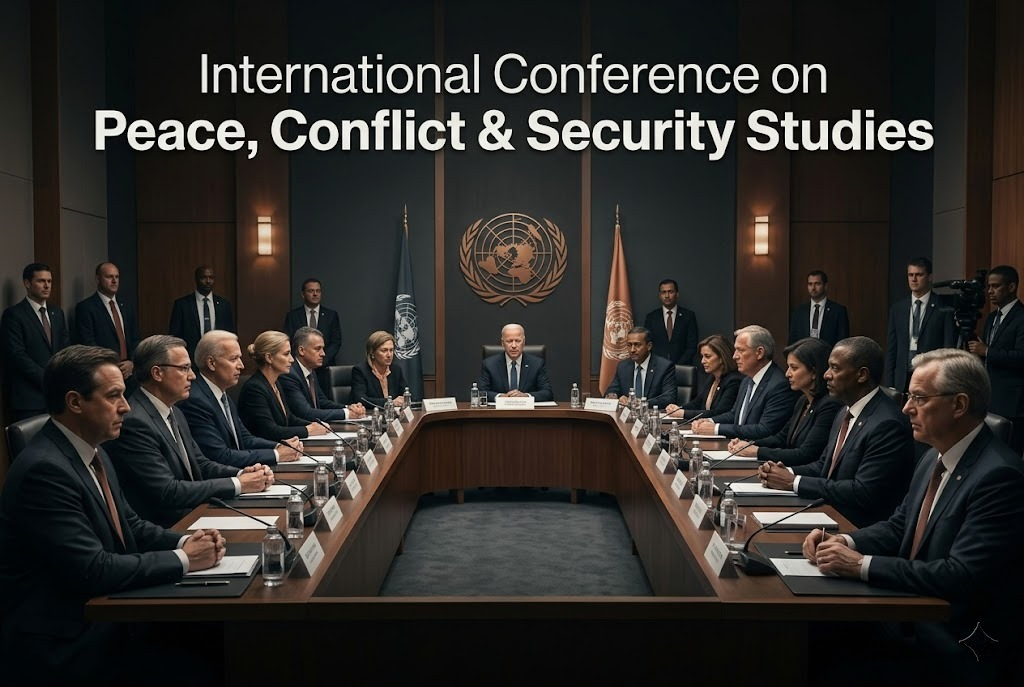
In an increasingly interconnected yet politically complex world, peace, security, and conflict resolution have become central priorities for governments, international organizations, researchers, and civil societies. Global challenges such as armed conflicts, cyber threats, political instability, terrorism, migration crises, climate-related security risks, and geopolitical tensions continue reshaping international relations and public policy.
Today, the peace conflict security studies field plays a vital role in understanding how societies can prevent violence, strengthen diplomacy, improve global cooperation, and promote sustainable peace.
The International Conference on Peace, Conflict & Security Studies provides a global academic platform where researchers, policymakers, diplomats, security experts, educators, humanitarian professionals, and international relations scholars can discuss emerging security challenges, conflict transformation, peacebuilding strategies, and global governance systems.
Official registration page: https://onegrasp.com/events/social-sciences-humanities/international-conference-on-peace-conflict-security-studies/
Explore more international academic conferences here: OneGrasp Events
The conference encourages interdisciplinary dialogue and collaborative research aimed at promoting peace, human security, ethical governance, and international stability.
Why Peace, Conflict, and Security Studies Matter Today
Modern societies face increasingly complex security challenges that go beyond traditional military conflicts.
Today’s global security landscape includes issues such as:
- Geopolitical tensions
- Cybersecurity threats
- Terrorism and extremism
- Humanitarian crises
- Refugee and migration challenges
- Climate security risks
- Economic instability
- Information warfare
- Political polarization
- Human rights violations
Peace and security studies help researchers and policymakers better understand how conflicts emerge and how sustainable peace can be achieved through diplomacy, governance, negotiation, and international cooperation.
According to the United Nations Peacebuilding Initiatives, sustainable peace requires inclusive governance, social justice, economic stability, and long-term conflict prevention strategies.
As a result, interdisciplinary peace and security research is becoming increasingly important for governments, international organizations, universities, and policy institutions worldwide.
What the Conference Focuses On
The International Conference on Peace, Conflict & Security Studies focuses on conflict analysis, peacebuilding, diplomacy, governance, strategic studies, and global security systems.
Key conference themes often include:
- International relations and diplomacy
- Peacebuilding and conflict resolution
- Global governance and security policy
- Human rights and humanitarian law
- Cybersecurity and digital security
- Political violence and extremism
- Climate change and security
- Migration and refugee studies
- Defense and strategic studies
- Mediation and negotiation frameworks
These discussions help scholars and policymakers better understand how collaborative global efforts can strengthen international peace and security.
Peace Conflict Security Studies in a Changing World
The peace conflict security studies field has evolved significantly due to globalization, digital transformation, and shifting geopolitical dynamics.
Traditional security studies often focused mainly on military power and interstate conflict. However, modern security research increasingly includes:
- Human security frameworks
- Cyber warfare analysis
- Environmental security
- Public health crises
- Economic security
- Information warfare
- AI and autonomous defense systems
- Social resilience and community security
For example, cybersecurity threats now affect governments, businesses, infrastructure systems, and democratic institutions worldwide.
According to the World Economic Forum Global Risks Reports, cyberattacks, misinformation, geopolitical tensions, and climate-related risks are among the most significant global threats facing societies today.
This evolving security landscape is reshaping international relations and public policy research globally.
The Growing Importance of Peacebuilding and Diplomacy
Peacebuilding and diplomacy remain essential tools for reducing conflict and strengthening global cooperation.
Modern peacebuilding strategies increasingly emphasize:
- Community reconciliation
- Inclusive governance
- Human rights protection
- Social justice systems
- Conflict prevention mechanisms
- International mediation
- Economic stabilization
- Education and peace culture
Meanwhile, diplomatic collaboration plays a major role in resolving international disputes, humanitarian crises, and regional conflicts.
For example, peace negotiations and multilateral agreements often help reduce violence and improve international cooperation between states and organizations.
According to the International Crisis Group, preventive diplomacy and conflict mediation are becoming increasingly important for managing complex global security risks.
As a result, peacebuilding expertise is highly valuable across diplomacy, governance, humanitarian work, and international policy sectors.
Why Human Security and Ethics Are Critical
Modern security studies increasingly focus on protecting individuals and communities rather than only national borders.
Human security research commonly examines:
- Food and water security
- Public health protection
- Economic resilience
- Community safety
- Gender-based violence prevention
- Human rights systems
- Humanitarian response frameworks
Meanwhile, ethical governance and accountability are becoming central priorities in global security policy discussions.
For example, ethical debates around surveillance technologies, AI-powered military systems, and digital privacy are influencing international policy development worldwide.
This broader human-centered approach is reshaping how researchers and governments define security in the modern era.
Why Virtual Conferences Are Important for Global Security Research
Virtual conferences have transformed global collaboration in peace, conflict, and security studies research.
Previously, many international conferences required expensive travel and limited participation opportunities. Today, online conferences allow researchers, diplomats, students, humanitarian workers, and policymakers worldwide to collaborate more effectively.
This accessibility is especially valuable for:
- International relations scholars
- Policy researchers
- Peacebuilding organizations
- Humanitarian professionals
- Graduate students and PhD scholars
- Researchers from conflict-affected regions
Virtual academic events also improve interdisciplinary dialogue around diplomacy, cybersecurity, governance, conflict resolution, and humanitarian policy.
According to research discussions within international policy communities, digital collaboration platforms are expanding access to global peace and security scholarship.
As a result, virtual conferences are becoming increasingly important for international security and governance research.
Call for Papers and Research Opportunities
The conference provides opportunities for participants to present original research, policy analysis, peacebuilding frameworks, and strategic studies research.
Researchers can typically submit papers in areas such as:
- International relations
- Conflict transformation
- Peacebuilding and mediation
- Security policy and governance
- Cybersecurity studies
- Humanitarian intervention
- Refugee and migration policy
- Counterterrorism and extremism
- Human rights and global justice
- Defense and strategic analysis
Abstract Submission Guidelines
Participants are generally encouraged to submit:
- A 300–350 word abstract
- Author details and affiliations
- Keywords
- Research objectives and findings
Submissions commonly undergo peer-review evaluation before acceptance. Participants may also attend as listeners without presenting research papers.
Who Should Attend This Conference
This conference is valuable for professionals and researchers working across international relations, diplomacy, public policy, defense studies, governance, and humanitarian sectors.
It is especially suitable for:
- International relations scholars
- Diplomats and policymakers
- Security analysts
- Humanitarian professionals
- Political scientists
- Peacebuilding organizations
- Graduate students and PhD scholars
- Human rights researchers
- Governance experts
Even beginners can benefit because many sessions introduce foundational concepts related to peacebuilding, security systems, diplomacy, and conflict analysis.
Expert Insight / Analysis
Global security challenges are becoming increasingly interconnected due to technological change, geopolitical competition, economic instability, and environmental risks.
Experts now recognize that sustainable peace requires more than military strength. Long-term stability depends heavily on inclusive governance, economic opportunity, education, social trust, and international cooperation.
Meanwhile, cybersecurity, AI systems, misinformation campaigns, and climate-related risks are reshaping traditional security strategies worldwide.
However, successful peacebuilding also requires ethical leadership, multilateral diplomacy, humanitarian collaboration, and preventive conflict management frameworks.
Institutions investing in interdisciplinary peace and security research today may significantly influence future international stability and global governance systems.
Latest Trends / Updates
Cybersecurity and digital warfare research are becoming major priorities in modern security studies.

AI-assisted defense systems and autonomous technologies are reshaping strategic military planning globally.

Climate security and environmental migration research are gaining increasing international attention.

Hybrid warfare and misinformation campaigns are influencing political stability and democratic systems.

Virtual diplomacy and online peacebuilding initiatives are improving international collaboration opportunities.

Human-centered security frameworks are expanding beyond traditional military-focused approaches.
Common Mistakes to Avoid
Many researchers and policymakers make avoidable mistakes when approaching peace and security studies.
Common issues include:
- Overreliance on military-focused analysis
- Ignoring social and economic factors
- Weak interdisciplinary collaboration
- Limited cultural understanding
- Poor conflict prevention planning
- Underestimating cybersecurity threats
Researchers and institutions can improve outcomes by integrating diplomacy, ethics, governance, technology, and human security perspectives.
Real-Life Example / Mini Case Study
A regional organization launched a peacebuilding initiative aimed at reducing tensions between neighboring communities affected by political conflict.
Initially, negotiations struggled due to distrust and misinformation spread through digital platforms.
The organization partnered with local educators, community leaders, and media specialists to improve communication, public dialogue, and community engagement.
Within two years, local cooperation improved while violent incidents declined significantly.
This example demonstrates how interdisciplinary peacebuilding approaches can strengthen long-term conflict resolution and community resilience.
Traditional Security Models vs Modern Human Security Approaches
| Traditional Security Models | Modern Human Security Approaches |
|---|---|
| Military-focused protection | Human-centered security systems |
| State-centric analysis | Community resilience frameworks |
| Reactive conflict response | Preventive peacebuilding strategies |
| Physical border security | Cyber and digital security integration |
| Isolated defense planning | Multidisciplinary collaboration |
Pros and Cons of Virtual Security Conferences
| Pros | Cons |
|---|---|
| Global accessibility | Reduced face-to-face diplomacy |
| Lower participation costs | Time zone coordination challenges |
| Easier interdisciplinary collaboration | Limited informal networking |
| Wider participation from conflict regions | Technical connectivity issues |
| Flexible academic engagement | Reduced physical workshops |
Beginner vs Expert Approach in Security Research
| Beginner Approach | Expert Approach |
|---|---|
| Focuses mainly on military theory | Integrates diplomacy and governance |
| Limited geopolitical analysis | Advanced strategic frameworks |
| Basic conflict discussions | Multidisciplinary peacebuilding |
| Passive conference participation | Strategic global networking |
| General security awareness | Deep policy and risk analysis |
What to Do Next
If you are interested in peacebuilding, diplomacy, conflict resolution, or international security research, begin preparing early for conference participation.
Actionable next steps include:
- Select a focused security research topic
- Study modern geopolitical and cybersecurity trends
- Explore peacebuilding and governance frameworks
- Prepare a concise research abstract
- Participate in virtual networking sessions
- Collaborate with interdisciplinary researchers
Official registration page: Register for the Conference
Explore additional international conferences here: Explore More Events
Quick Checklist
- Choose a focused peace or security topic
- Review modern geopolitical trends
- Study conflict resolution frameworks
- Prepare a strong abstract
- Participate in networking discussions
- Explore interdisciplinary collaboration
- Follow submission guidelines
- Connect with global policy researchers
Conclusion
The International Conference on Peace, Conflict & Security Studies highlights the growing importance of interdisciplinary research in shaping peaceful, secure, and resilient global societies.
As geopolitical tensions, cybersecurity threats, humanitarian crises, and environmental risks continue influencing international relations, peace and security studies will remain essential for strengthening diplomacy, conflict prevention, and sustainable global cooperation. Conferences like this provide valuable opportunities for academic collaboration, strategic dialogue, and international policy exchange.
Whether you are a diplomat, researcher, humanitarian professional, policymaker, student, governance expert, or security analyst, participating in this conference can deepen your understanding of modern global security systems while connecting you with a worldwide network of peacebuilding and international relations professionals.
FAQs
Yes, beginners can participate and learn foundational concepts related to peacebuilding, diplomacy, governance, and security studies.
Yes, participants may join as listeners without presenting papers.
Topics include international relations, cybersecurity, conflict resolution, peacebuilding, diplomacy, and humanitarian policy.
These fields help societies address global conflicts, improve diplomacy, strengthen governance, and promote sustainable international stability.
Official registration link: Conference Registration Page