May 22, 2026
 9 Min
 No Comment
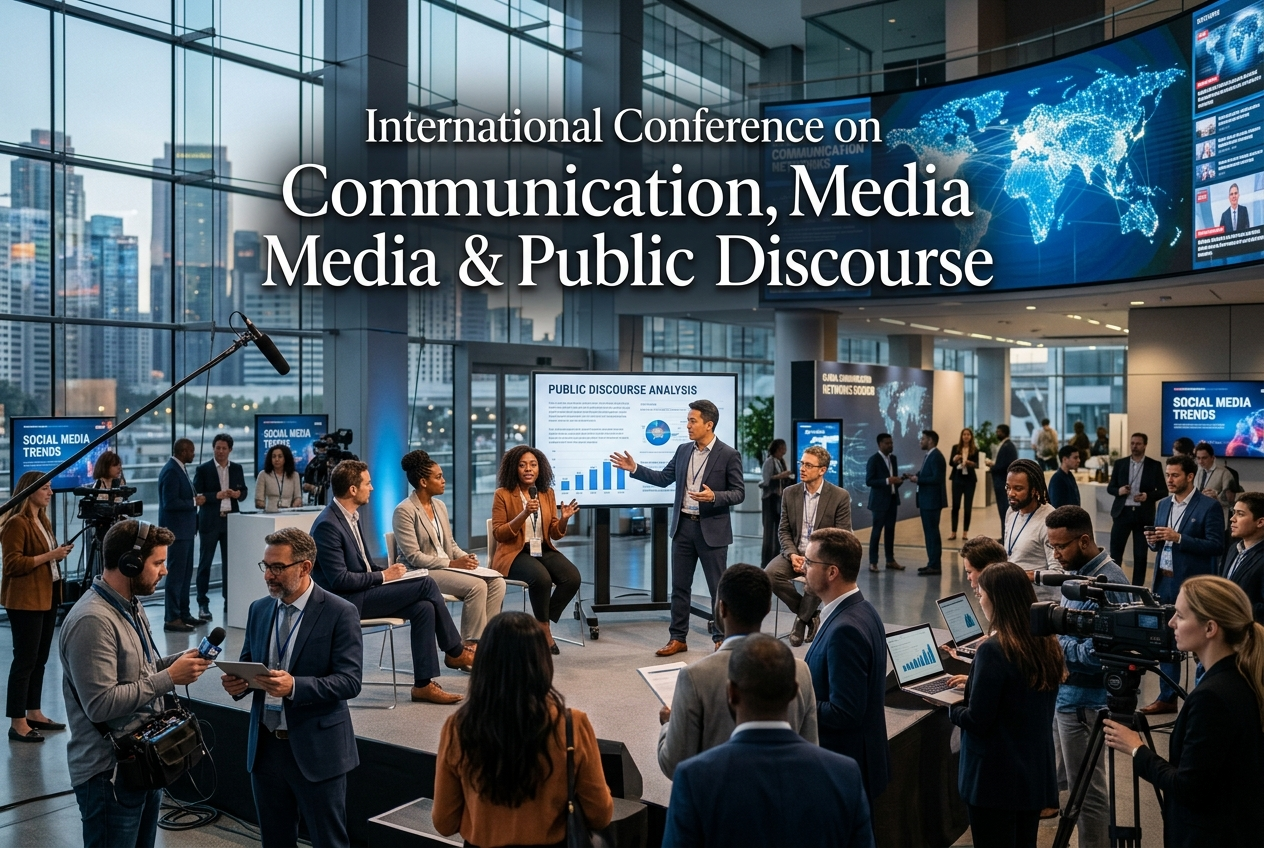
In today’s digital-first world, communication and media influence nearly every aspect of society. From political campaigns and social movements to digital journalism, artificial intelligence, and social media narratives, public discourse now evolves faster than ever before. Information spreads globally within seconds, shaping opinions, behaviors, public trust, and democratic systems.
As media ecosystems become increasingly complex, the communication media public discourse field has emerged as one of the most important interdisciplinary areas of modern research and societal analysis.
The International Conference on Communication, Media & Public Discourse provides a global academic platform where researchers, journalists, educators, media professionals, communication scholars, policymakers, and digital innovators can discuss the evolving relationship between communication, technology, ethics, and society.
Official registration page: https://onegrasp.com/events/social-sciences-humanities/international-conference-on-communication-media-public-discourse/
Explore more international academic events here: OneGrasp Events
The conference encourages critical reflection, interdisciplinary collaboration, and ethical approaches to communication research in the digital age. (Onegrasp)
Why Communication, Media, and Public Discourse Matter Today
Communication technologies are transforming politics, education, journalism, marketing, entertainment, and public dialogue at an unprecedented pace.
Modern societies increasingly rely on digital communication platforms for:
- News consumption
- Public debate
- Political participation
- Brand communication
- Social activism
- Community engagement
- Educational content
- Crisis communication
However, the rapid expansion of digital media has also introduced challenges related to misinformation, media bias, censorship, AI-generated content, privacy concerns, and declining public trust.
According to the Pew Research Center, social media platforms and digital news ecosystems significantly influence public opinion and information consumption worldwide.
As a result, communication and media studies are becoming increasingly important for understanding how societies process information and shape public narratives.
What the Conference Focuses On
The International Conference on Communication, Media & Public Discourse focuses on media systems, digital communication, journalism, public dialogue, ethical communication, and emerging communication technologies.
Key conference themes often include:
- Communication theory and media research
- Digital journalism and emerging platforms
- Social media influence and public opinion
- Political communication and media ethics
- Artificial intelligence and communication
- Crisis communication and risk perception
- Public relations and strategic communication
- Cultural narratives and identity in media
- Freedom of expression and accountability
- Media literacy and audience participation
The conference also encourages interdisciplinary analysis connecting communication research with technology, psychology, sociology, governance, and digital innovation. (Onegrasp)
Communication Media Public Discourse in the Digital Era
The communication media public discourse field has evolved dramatically because of social media, AI systems, digital platforms, and mobile technologies.
Traditional media systems once depended heavily on newspapers, television, and radio broadcasting. Today, digital platforms such as streaming services, podcasts, online journalism, and social media dominate information sharing.
Modern communication research increasingly explores:
- AI-generated content
- Algorithmic media systems
- Audience behavior analytics
- Digital misinformation
- Influencer culture
- Online identity formation
- Media trust and transparency
For example, AI-powered recommendation systems now shape how billions of users consume news, entertainment, and political information.
According to the Reuters Institute for the Study of Journalism, audience trust in digital media remains one of the most significant challenges facing journalism and communication industries globally.
This transformation is reshaping journalism, advertising, public relations, and democratic communication systems worldwide.
The Growing Influence of Artificial Intelligence in Media
Artificial intelligence is rapidly transforming communication and media industries.
Modern AI-driven communication systems now support:
- Automated news generation
- Personalized content recommendations
- Speech recognition systems
- Social media analytics
- Digital advertising optimization
- Chatbots and virtual assistants
- AI-assisted video editing
- Audience sentiment analysis
Meanwhile, AI-generated content raises important ethical questions related to misinformation, bias, authenticity, and transparency.
According to discussions from global media and communication conferences, AI ethics and responsible digital communication are becoming central research priorities for journalists, educators, and policymakers. (Onegrasp)
As a result, media literacy and ethical AI communication are increasingly important in modern society.
Why Media Ethics and Public Trust Are Critical
Public trust in media systems has become a major global concern.
Modern communication research often examines:
- Misinformation and fake news
- Political polarization
- Media manipulation
- Digital censorship
- Information transparency
- Fact-checking systems
- Ethical journalism standards
Meanwhile, audiences increasingly expect accurate, transparent, and responsible communication from news organizations, governments, and digital platforms.
For example, crisis communication during public emergencies depends heavily on public trust, reliable information systems, and ethical media reporting.
According to the UNESCO Media and Information Literacy Program, media literacy education is essential for improving critical thinking and combating misinformation in digital societies.
This growing focus on ethics and transparency is reshaping modern journalism and communication education.
Why Virtual Conferences Are Important for Media Research
Virtual conferences have transformed global collaboration in communication and media studies research.
Previously, many international conferences required expensive travel and limited participation opportunities. Today, online conferences allow journalists, researchers, students, educators, and communication professionals worldwide to collaborate more effectively.
This accessibility is especially valuable for:
- Early-career researchers
- Media professionals
- Independent journalists
- Graduate students
- Communication educators
- Researchers from developing regions
Virtual academic events also improve interdisciplinary collaboration between media researchers, policymakers, technologists, psychologists, and communication strategists.
According to research discussions within communication and media communities, digital academic events are expanding access to global media research and interdisciplinary networking opportunities. (Onegrasp)
As a result, virtual conferences are becoming increasingly important for communication and journalism research worldwide.
Call for Papers and Research Opportunities
The conference provides opportunities for participants to present original research, media analysis, communication frameworks, and digital innovation studies.
Researchers can typically submit papers in areas such as:
- Communication theory
- Media ethics and regulation
- Political communication
- Digital journalism
- AI and communication technologies
- Social media and public opinion
- Crisis communication
- Media literacy and education
- Strategic communication and branding
- Visual storytelling and film studies
Abstract Submission Guidelines
Participants are generally encouraged to submit:
- A 300–350 word abstract
- Author details and affiliations
- Keywords
- Research objectives and findings
Submissions commonly undergo double-blind peer-review evaluation processes before acceptance. Participants may also attend as listeners without presenting papers. (Onegrasp)
Who Should Attend This Conference
This conference is valuable for professionals and researchers working across journalism, communication, media studies, digital technology, education, and public policy sectors.
It is especially suitable for:
- Journalists and editors
- Media researchers
- Communication scholars
- Public relations professionals
- Digital marketers
- Policy analysts
- Educators and students
- AI and media researchers
- Social media strategists
Even beginners can benefit because many sessions introduce foundational concepts related to media systems, public communication, and digital ethics.
Expert Insight / Analysis
Communication and media systems are increasingly shaping democratic participation, social trust, economic behavior, and global cultural narratives.
Experts now recognize that responsible communication is essential for protecting democratic systems, improving media literacy, and reducing misinformation risks.
Meanwhile, AI-generated media, algorithm-driven platforms, and immersive digital experiences are transforming how audiences consume information worldwide.
However, long-term communication sustainability also depends heavily on ethical journalism, transparent governance, digital literacy education, and responsible platform regulation.
Institutions investing in interdisciplinary communication research today may significantly influence the future of global information systems and public discourse.
Latest Trends / Updates
AI-generated media content is rapidly transforming journalism, advertising, and audience engagement strategies.

Short-form video platforms and creator-driven media ecosystems continue reshaping digital communication trends.

Media literacy programs are becoming increasingly important in schools and higher education systems.

Data-driven journalism and audience analytics are improving investigative reporting capabilities.

Virtual and hybrid media conferences are expanding global academic collaboration opportunities.

Ethical AI regulation and digital misinformation prevention are becoming major priorities in communication policy discussions.
Common Mistakes to Avoid
Many communication professionals and researchers make avoidable mistakes when approaching media studies and public discourse analysis.
Common issues include:
- Ignoring media ethics considerations
- Weak fact-checking practices
- Overreliance on social media algorithms
- Limited audience analysis
- Poor digital literacy frameworks
- Lack of interdisciplinary collaboration
Researchers and professionals can improve outcomes by combining ethical communication practices, critical analysis, technological awareness, and audience-centered strategies.
Real-Life Example / Mini Case Study
A digital news organization launched an AI-assisted content recommendation system designed to improve audience engagement.
Initially, user interaction increased significantly. However, researchers discovered that the algorithm unintentionally amplified sensational content and political polarization.
The organization collaborated with communication researchers, journalists, and AI specialists to redesign the recommendation system with transparency guidelines and ethical moderation frameworks.
Within months, audience trust improved while content diversity and factual reporting increased significantly.
This example demonstrates how ethical communication strategies can improve digital media systems and public trust.
Traditional Media Systems vs Modern Digital Communication
| Traditional Media Systems | Modern Digital Communication |
|---|---|
| Centralized broadcasting | Decentralized digital platforms |
| Limited audience interaction | Real-time audience engagement |
| Manual news distribution | AI-assisted content delivery |
| Scheduled programming | On-demand media consumption |
| Traditional journalism models | Influencer and creator ecosystems |
Pros and Cons of Virtual Media Conferences
| Pros | Cons |
|---|---|
| Global accessibility | Reduced face-to-face networking |
| Lower participation costs | Time zone challenges |
| Easier interdisciplinary collaboration | Technical connectivity issues |
| Wider student participation | Limited informal interaction |
| Flexible learning opportunities | Reduced in-person media workshops |
Beginner vs Expert Approach in Communication Research
| Beginner Approach | Expert Approach |
|---|---|
| Focuses mainly on media theory | Integrates ethics and technology |
| Limited audience analysis | Advanced communication analytics |
| General journalism discussions | Specialized digital media strategies |
| Passive conference participation | Strategic academic networking |
| Basic social media awareness | Deep platform and AI understanding |
What to Do Next
If you are interested in communication, journalism, digital media, or public discourse research, begin preparing early for conference participation.
Actionable next steps include:
- Select a focused media research topic
- Study emerging digital communication trends
- Explore AI and media ethics frameworks
- Prepare a concise research abstract
- Participate in virtual networking sessions
- Collaborate with interdisciplinary researchers
Official registration page: Register for the Conference
Explore additional international conferences here: Explore More Events
Quick Checklist
- Choose a focused communication topic
- Review digital media trends
- Study media ethics frameworks
- Prepare a strong abstract
- Participate in networking discussions
- Explore interdisciplinary collaboration
- Follow submission guidelines
- Connect with global media researchers
Conclusion
The International Conference on Communication, Media & Public Discourse highlights the growing importance of interdisciplinary communication research in shaping ethical, transparent, and responsible information systems.
As digital technologies, AI platforms, and social media ecosystems continue transforming global communication, media studies and public discourse research will remain essential for understanding information ethics, public trust, and democratic engagement. Conferences like this provide valuable opportunities for academic collaboration, professional networking, and global knowledge exchange.
Whether you are a journalist, communication scholar, educator, policymaker, media strategist, student, or digital researcher, participating in this conference can deepen your understanding of modern communication systems while connecting you with a global network of media and communication professionals.
FAQs
Yes, beginners can participate and learn foundational concepts related to communication, journalism, media systems, and public discourse.
Yes, participants may join as listeners without presenting papers.
Topics include digital journalism, AI communication, media ethics, political communication, public relations, and social media research.
These fields help societies understand information systems, digital influence, public trust, and ethical communication challenges.
Official registration link: Conference Registration Page