June 12, 2026
 6 Min
 No Comment
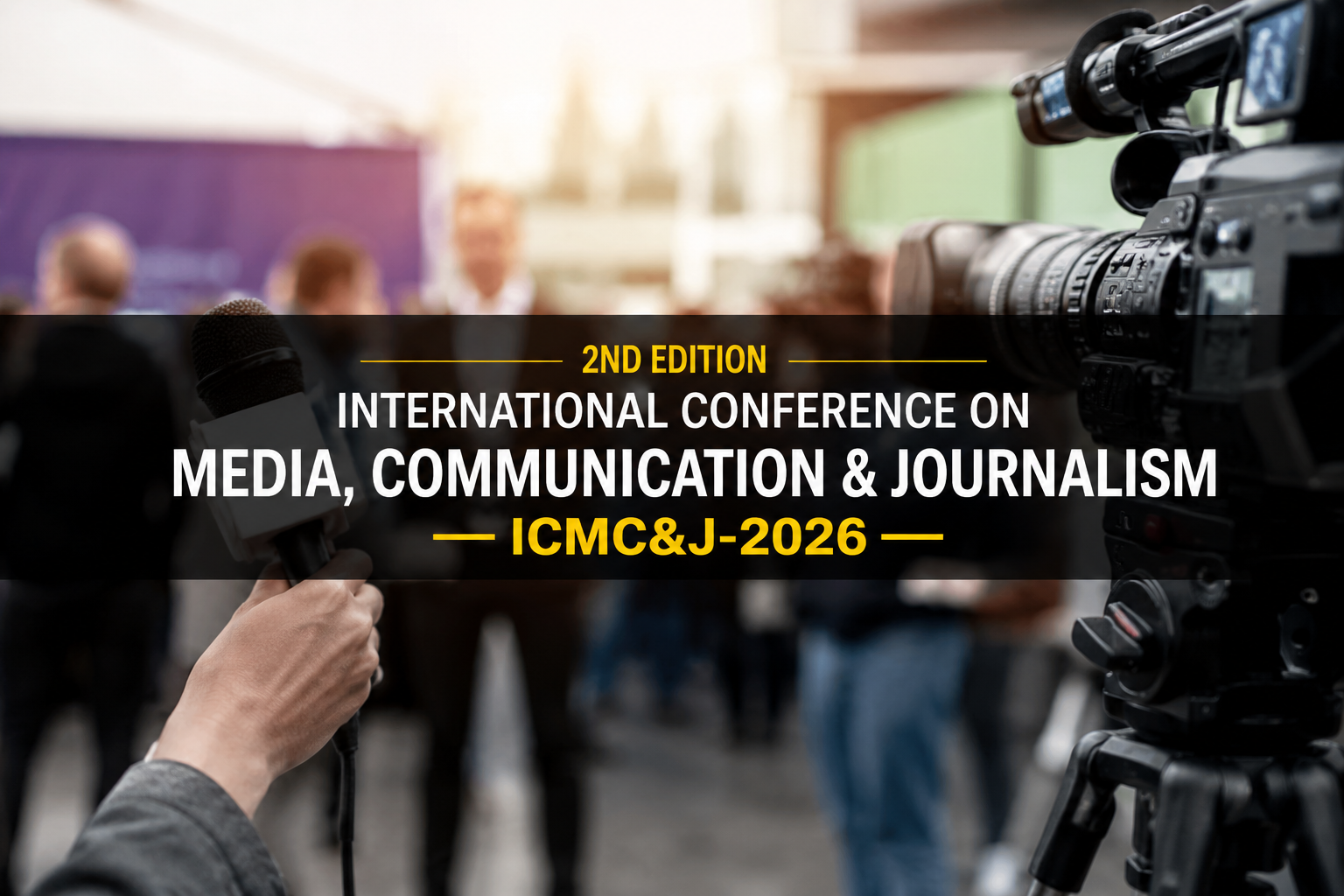
In an era where digital platforms shape public discourse and artificial intelligence is transforming how information is produced and consumed, the Media Communication Journalism Conference has become more relevant than ever. Researchers, academics, journalists, communication professionals, and students are increasingly seeking platforms where they can exchange ideas, present research, and explore emerging trends that influence society.
The 2nd Edition International Conference on Media, Communication & Journalism (ICMC&J 2026) offers exactly that opportunity. As media ecosystems evolve rapidly, conferences like ICMC&J 2026 provide a valuable space to discuss ethical journalism, digital transformation, media literacy, communication technologies, and the future of public engagement.
Register for ICMC&J 2026
Researchers and participants can register through the official conference page:
What Is the ICMC&J 2026 Conference About?
The 2nd Edition International Conference on Media, Communication & Journalism (ICMC&J 2026) is an academic and professional gathering designed to bring together researchers, scholars, educators, journalists, and industry professionals to discuss contemporary challenges and opportunities in media and communication.
Beyond research presentations, the conference serves as a platform for collaboration, interdisciplinary learning, and knowledge exchange across diverse communication-related disciplines.
Why the Media Communication Journalism Conference Matters Today
The conference addresses critical issues shaping the future of media, including digital transformation, misinformation, ethical journalism, AI-driven content creation, and public trust.
According to the World Economic Forum (https://www.weforum.org/), misinformation and disinformation remain among the major societal challenges worldwide. Meanwhile, organizations such as UNESCO (https://www.unesco.org/) continue emphasizing the importance of media literacy and responsible journalism in democratic societies.
As a result, conferences that explore these topics are increasingly important for researchers and practitioners alike.
Conference Themes and Research Areas
ICMC&J 2026 is expected to encourage discussions across multiple media and communication disciplines.
Potential research areas include:
- Digital Journalism
- Media Ethics
- Communication Technologies
- Social Media Research
- Public Relations
- Strategic Communication
- Political Communication
- Media Psychology
- AI in Journalism
- Media Literacy
- Communication Policy
- Cross-Cultural Communication
These themes reflect the growing intersection between technology, society, and information systems.
Media Communication Journalism Conference and Digital Transformation
Digital transformation is fundamentally changing how news is produced, distributed, and consumed.
According to McKinsey (https://www.mckinsey.com/), organizations across industries continue investing heavily in digital capabilities to improve engagement and operational efficiency.
In journalism and communication, digital transformation includes:
- AI-assisted reporting
- Automated content generation
- Data journalism
- Mobile-first publishing
- Audience analytics
- Multimedia storytelling
Researchers attending ICMC&J 2026 can gain valuable insights into how these developments are reshaping media ecosystems globally.
Opportunities for Researchers and Students
The conference provides opportunities for publication, networking, collaboration, and academic visibility.
For students and early-career researchers, participation can help:
- Improve research presentation skills
- Receive expert feedback
- Build professional networks
- Explore future research directions
- Discover publication opportunities
Many successful academic careers begin with conference participation and scholarly engagement.
Expert Insight: The Future of Media and Journalism Research
Media research is increasingly moving toward interdisciplinary approaches that combine communication theory, technology studies, public policy, and behavioral science.
Harvard Business Review (https://hbr.org/) frequently highlights how emerging technologies influence information consumption patterns and organizational communication strategies.
The future of journalism will likely depend on balancing technological innovation with ethical responsibility. Researchers who understand both dimensions will be well-positioned to contribute meaningful solutions to global communication challenges.
[Latest Trends & Updates]
Artificial intelligence is rapidly transforming newsroom operations, content recommendation systems, and audience engagement strategies. Researchers are increasingly examining how AI affects journalistic integrity and editorial decision-making.
Governments worldwide are introducing new regulations related to digital platforms, content moderation, and AI governance. These developments are creating fresh research opportunities in communication policy and media law.
Digital public infrastructure initiatives are expanding access to information services and online communication tools. Scholars are exploring how these systems impact democratic participation and public trust.
Responsible innovation has become a major focus area, with growing attention on transparency, accountability, and ethical design principles within media technologies.
Emerging research directions include synthetic media, immersive journalism, virtual reality storytelling, algorithmic accountability, and the role of AI in combating misinformation.
Real-Life Example
Consider a doctoral student researching misinformation on social media during election periods. After presenting preliminary findings at an international communication conference, the student receives feedback from senior scholars, establishes collaborative research partnerships, and ultimately publishes the work in a peer-reviewed journal.
This type of professional growth demonstrates the long-term value of conference participation.
Traditional Media vs Digital Media Innovation
| Traditional Media | Digital Media Innovation |
|---|---|
| One-way communication | Interactive engagement |
| Fixed publishing cycles | Real-time publishing |
| Limited analytics | Data-driven insights |
| Geographic limitations | Global reach |
| Static content formats | Multimedia storytelling |
Beginner vs Expert Research Perspective
| Beginners | Experts |
|---|---|
| Focus on individual tools | Focus on systems and impact |
| Narrow research scope | Interdisciplinary analysis |
| Limited methodology | Advanced mixed methods |
| Short-term findings | Long-term societal implications |
Pros and Cons of Participating
| Pros | Cons |
|---|---|
| Global networking | Registration costs |
| Research visibility | Preparation time |
| Academic collaboration | Competitive environment |
| Professional development | Travel requirements for onsite events |
Common Mistakes to Avoid
One common mistake is submitting abstracts that lack clear research objectives. Another is focusing solely on technology while ignoring social and ethical implications.
Researchers should also avoid poor networking preparation. Reviewing participant backgrounds and conference themes beforehand can significantly improve the value gained from participation.
What to Do Next
- Review the conference themes carefully.
- Prepare a strong research abstract.
- Complete registration early.
- Conduct a thorough literature review.
- Prepare presentation materials in advance.
- Engage actively in networking sessions.
- Follow current media and communication trends.
Quick Checklist
✔ Review conference guidelines
✔ Prepare abstract
✔ Register early
✔ Update literature review
✔ Prepare presentation
✔ Network with peers
✔ Follow emerging research trends
Conclusion
The Media Communication Journalism Conference represented by ICMC&J 2026 arrives at a critical moment for the media and communication landscape. As digital transformation, AI adoption, and information governance continue to reshape society, the need for thoughtful research and informed discussion has never been greater.
Whether you are a student, researcher, journalist, or communication professional, participating in ICMC&J 2026 offers valuable opportunities for learning, collaboration, and professional growth. By engaging with emerging ideas and connecting with experts from around the world, participants can contribute to building a more informed, ethical, and innovative communication future.
FAQs
Researchers, academics, journalists, students, communication professionals, and industry experts.
Yes. Students are encouraged to attend, present research, and engage with experts.
Participation options vary, and attendees should review official conference guidelines.
Yes. Networking is one of the major benefits of international conferences.
It can improve visibility, expand professional networks, strengthen research skills, and create collaboration opportunities.