The global food industry is undergoing one of the most significant transformations in its history. Rising populations, changing consumer preferences, climate challenges, food security concerns, and rapid technological advancements are driving unprecedented innovation across the food sector. The Food Technology Innovation Conference serves as a critical platform for researchers, industry professionals, food scientists, policymakers, and entrepreneurs seeking solutions to these complex challenges.
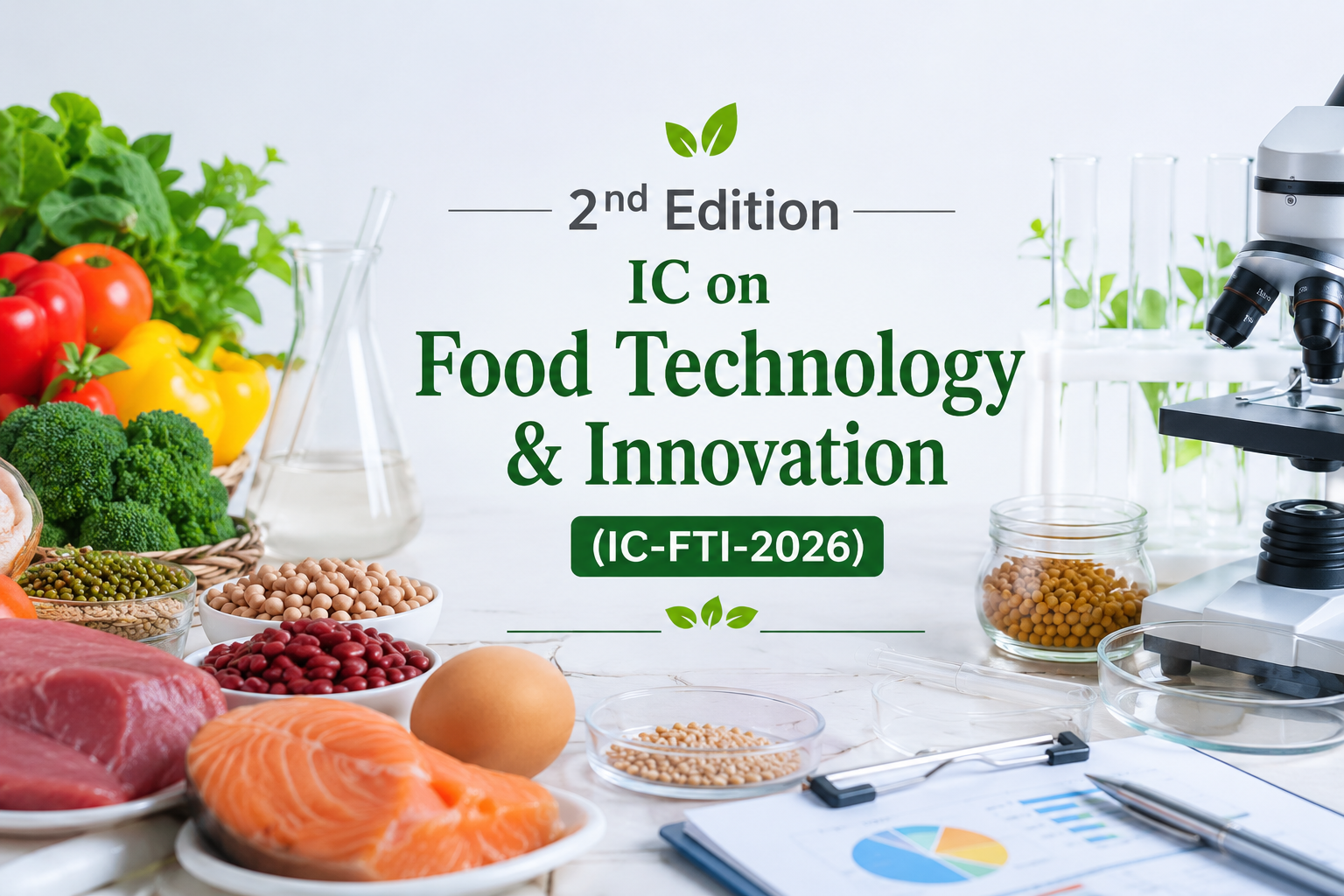
The 2nd Edition International Conference on Food Technology & Innovation (IC-FTI-2026) brings together leading experts from academia and industry to discuss emerging technologies, sustainable food systems, advanced processing methods, food safety innovations, and the future of global nutrition.
As consumers increasingly demand healthier, safer, and more sustainable food products, the importance of scientific research and technological innovation continues to grow. This conference provides an opportunity to explore groundbreaking developments that are reshaping food production, distribution, and consumption worldwide.
Direct Answer: IC-FTI-2026 is an international conference focused on food technology, food science, innovation, sustainability, nutrition, food safety, and advanced food processing systems.
The conference provides a platform for researchers, food manufacturers, nutrition experts, agricultural scientists, policymakers, and entrepreneurs to exchange knowledge and discuss emerging trends shaping the future of food.
Modern food technology conferences increasingly emphasize interdisciplinary collaboration involving food science, biotechnology, engineering, artificial intelligence, sustainability, and public health.
Direct Answer: Food technology plays a crucial role in ensuring food security, improving nutrition, reducing waste, and creating sustainable food systems.
According to the Food and Agriculture Organization (FAO), global food production must continue evolving to meet the nutritional needs of a growing population while minimizing environmental impact.
https://www.fao.org/
Moreover, advances in food technology are helping industries improve efficiency, enhance food safety, reduce resource consumption, and develop innovative products that address changing consumer demands.
Research and innovation have become essential for creating resilient food systems capable of supporting long-term global development.
Food Technology Innovation Conference Research Areas
Direct Answer: The conference covers a broad range of topics related to food science, processing technologies, sustainability, and nutrition.
Major themes include:
Food Processing Technologies
Food Safety and Quality Assurance
Sustainable Food Systems
Food Biotechnology
Nutrition Science
Functional Foods
Alternative Proteins
Food Packaging Innovations
Food Supply Chain Management
Smart Food Manufacturing
Food Waste Reduction
Agricultural Technology
Precision Agriculture
Food Microbiology
Consumer Food Trends
These research areas continue expanding as technological innovations transform every stage of the food value chain.
Sustainable Food Systems and Global Food Security
Direct Answer: Sustainable food systems aim to provide nutritious food while minimizing environmental impact and supporting economic viability.
Food security remains a major global challenge. The United Nations continues to emphasize sustainable agriculture and responsible food production as essential components of global development goals.
https://www.un.org/sustainabledevelopment/
Key sustainability priorities include:
Reducing food waste
Improving agricultural productivity
Conserving natural resources
Promoting climate-resilient farming
Enhancing supply chain efficiency
As a result, food technology is increasingly focused on balancing productivity with environmental responsibility.
Emerging Technologies Transforming the Food Industry
Direct Answer: New technologies are revolutionizing food production, processing, and distribution.
Innovations gaining attention include:
Artificial Intelligence in food manufacturing
Smart sensors for quality monitoring
Robotics in food processing
Precision fermentation
Blockchain-enabled food traceability
Digital agriculture systems
Automated food safety monitoring
According to industry analyses from organizations such as McKinsey & Company, digital transformation is becoming a major driver of competitiveness across food and agriculture sectors.
https://www.mckinsey.com/
These technologies are helping businesses improve efficiency while maintaining high standards of quality and safety.
Food Safety, Quality, and Consumer Trust
Direct Answer: Food safety remains one of the most important priorities for consumers, regulators, and industry stakeholders.
Advances in food technology are enabling:
Faster contamination detection
Improved traceability systems
Enhanced quality assurance
Real-time monitoring
Predictive risk management
Consumers increasingly demand transparency regarding ingredient sourcing, production methods, and sustainability practices. Consequently, food companies are investing heavily in technologies that strengthen trust and accountability.
Alternative Proteins and Future Nutrition
Direct Answer: Alternative proteins are emerging as a significant area of innovation within the global food industry.
Researchers are exploring:
Plant-based proteins
Cultivated meat technologies
Precision fermentation
Insect protein applications
Sustainable protein production systems
These innovations seek to address growing demand for protein while reducing environmental pressures associated with conventional food production.
The field continues attracting significant investment from governments, research institutions, and private-sector organizations worldwide.
Opportunities for Researchers, Students, and Industry Professionals
Direct Answer: IC-FTI-2026 provides opportunities for networking, research dissemination, collaboration, and professional growth.
Participants can:
Present scientific research
Learn about industry innovations
Connect with global experts
Explore collaborative projects
Discover funding opportunities
Gain insights into emerging trends
For students and early-career professionals, conferences often provide valuable exposure to industry leaders and cutting-edge research.
Participation offers numerous professional advantages.
Benefits include:
Increased research visibility
Industry networking opportunities
Exposure to emerging technologies
Professional development
Publication opportunities
Access to interdisciplinary collaboration
As food systems become increasingly technology-driven, professionals with expertise in food innovation are becoming highly sought after across academia and industry.
Expert Insight / Analysis
From an expert perspective, the future of food will be defined by the integration of sustainability, technology, nutrition, and consumer-centered innovation.
Historically, food innovation focused primarily on increasing production. Today, the industry faces a broader challenge: producing safe, nutritious, affordable, and environmentally sustainable food for a growing global population.
The long-term significance of IC-FTI-2026 lies in its ability to bring together experts from diverse disciplines to address these interconnected challenges. Innovations discussed at conferences like this often influence future research priorities, industry investments, and public policy decisions.
Latest Trends & Updates
Artificial intelligence is increasingly being used to optimize food production, predict consumer preferences, and improve supply chain efficiency.

Precision fermentation technologies are gaining momentum as companies develop sustainable alternatives to traditional animal-derived ingredients.

Food traceability systems powered by blockchain technology are helping improve transparency and strengthen consumer trust.

Alternative protein research continues expanding as demand grows for sustainable and environmentally responsible nutrition solutions.

Smart packaging innovations are enhancing food safety, extending shelf life, and reducing waste across global supply chains.

Personalized nutrition technologies are emerging, enabling consumers to receive dietary recommendations tailored to individual health needs.

Sustainability-driven innovation is influencing every aspect of food production, from agricultural practices to packaging and distribution systems.
Real-Life Example / Mini Case Study
Consider a startup focused on reducing food waste through smart packaging technology.
Initially, the company struggled to identify effective monitoring solutions. After participating in an international food technology conference, the founders connected with researchers specializing in sensor technologies and food preservation.
Through collaboration, they developed intelligent packaging capable of monitoring freshness and reducing unnecessary food disposal. The innovation attracted investor interest and eventually expanded into multiple markets.
This example demonstrates how conferences can facilitate innovation, partnerships, and real-world impact.
Traditional Food Systems vs Modern Food Innovation
Traditional Food Systems
Modern Food Innovation
Manual monitoring
AI-powered monitoring
Limited traceability
Blockchain-enabled transparency
Reactive quality control
Predictive analytics
Conventional packaging
Smart packaging solutions
Standardized production
Data-driven optimization
Beginner vs Expert Comparison
Beginners
Experts
Learn food science fundamentals
Develop innovative food systems
Focus on individual technologies
Analyze entire food ecosystems
Study existing processes
Create future-ready solutions
Understand food safety basics
Lead interdisciplinary innovation
Explore research findings
Drive industry transformation
Pros and Cons
Pros
Cons
Access to cutting-edge research
Requires preparation
Industry networking opportunities
Time commitment
Exposure to emerging technologies
Competitive environment
Professional development
Broad subject coverage
Collaboration possibilities
Rapidly evolving field
Common Mistakes to Avoid
Many participants fail to maximize conference benefits due to avoidable mistakes.
One common error is focusing solely on technical innovations while ignoring consumer needs and sustainability considerations.
Another mistake is neglecting networking opportunities that could lead to valuable collaborations.
Some researchers also overlook regulatory developments that influence food innovation and commercialization.
Others fail to connect scientific findings with practical industry applications.
What to Do Next (Actionable Steps)
Review conference themes carefully.
Identify relevant research interests.
Prepare an abstract or presentation.
Study emerging food technologies.
Register early for participation.
Follow industry developments.
Network with researchers and professionals.
Explore sustainability-focused innovations.
Attend technical sessions and workshops.
Continue professional engagement after the conference.
The 2nd Edition International Conference on Food Technology & Innovation (IC-FTI-2026) serves as an important platform for exploring the future of food science, sustainability, nutrition, and technological advancement.
As the world faces growing challenges related to food security, environmental sustainability, and changing consumer expectations, innovation will play a crucial role in shaping resilient and efficient food systems. Conferences such as IC-FTI-2026 provide opportunities to share knowledge, build collaborations, and accelerate the development of solutions that can benefit both industry and society.
For researchers, students, entrepreneurs, and food industry professionals seeking to stay at the forefront of innovation, IC-FTI-2026 offers a valuable opportunity to learn, connect, and contribute to the future of food.
Food scientists, researchers, nutrition experts, industry professionals, policymakers, entrepreneurs, educators, and students interested in food innovation.
Topics include food technology, food safety, sustainability, nutrition, biotechnology, alternative proteins, and food processing innovations.Topics include food technology, food safety, sustainability, nutrition, biotechnology, alternative proteins, and food processing innovations.
No. Both newcomers and experienced professionals can benefit from participation.
The conference provides networking opportunities, research visibility, collaboration possibilities, and exposure to emerging industry trends.

 June 11, 2026
 8 Min
 No Comment