June 12, 2026
 8 Min
 No Comment
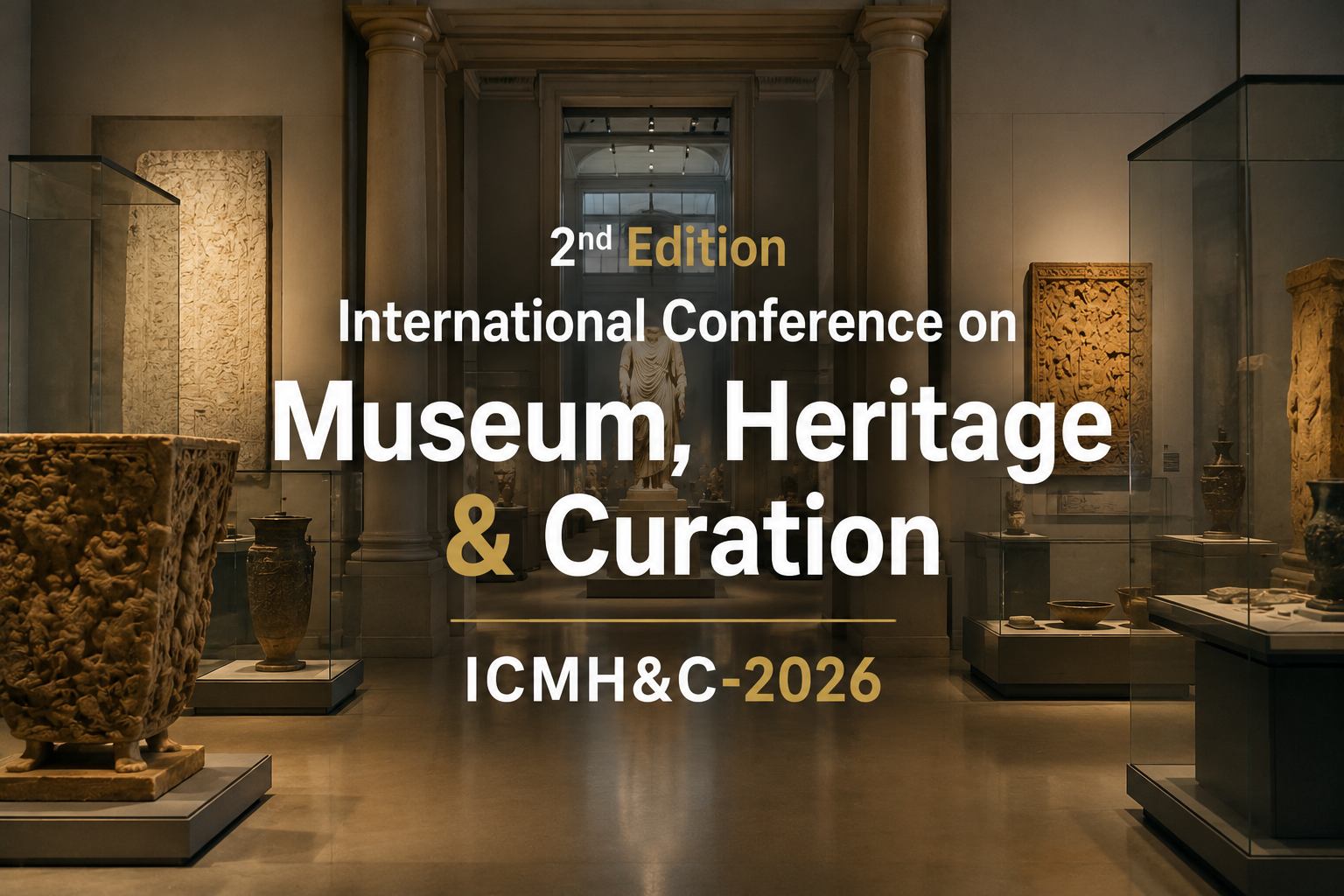
Museums are no longer simply places where historical objects are displayed behind glass cases. Today, they serve as dynamic centers of education, cultural dialogue, community engagement, digital innovation, and heritage preservation. As societies face rapid technological change, globalization, and evolving cultural identities, museums and heritage institutions play an increasingly important role in safeguarding collective memory and interpreting the past for future generations.
The Museum Heritage Curation Conference represented by the 2nd Edition International Conference on Museum, Heritage & Curation (ICMH&C-2026) provides an important platform for researchers, museum professionals, curators, historians, cultural heritage experts, educators, and students to discuss emerging challenges and opportunities in heritage management and museum practice.
Participants interested in joining the conference can register through the official conference page:
Register Here: https://onegrasp.com/events/arts-culture-communication/2nd-edition-international-conference-on-museum-heritage-curation-icmhc-2026/
Understanding the Purpose of ICMH&C-2026
The conference aims to bring together scholars and practitioners working across museums, heritage conservation, cultural preservation, curatorial studies, archaeology, history, and digital heritage.
Modern museums are increasingly expected to do more than preserve artifacts. They must engage diverse audiences, incorporate technology, support inclusive narratives, and contribute to sustainable cultural development. Contemporary heritage conferences worldwide increasingly focus on heritage management, museum innovation, community participation, and digital interpretation strategies. (Conference Locate (Clocate))
ICMH&C-2026 provides a valuable opportunity to explore these topics while fostering international collaboration among researchers and cultural professionals.
Why Museums and Heritage Preservation Matter Today
Museums preserve cultural memory, protect historical knowledge, and help societies understand their identities.
According to the global museum community represented by International Council of Museums, museums play a vital role in preserving, conserving, and sharing cultural heritage for present and future generations. (ICOM ICMAH)
In addition, heritage institutions contribute significantly to:
- Cultural education
- Community engagement
- Tourism development
- Historical research
- Social inclusion
- Sustainable development
As a result, strengthening museum management and heritage curation practices has become an international priority.
Key Themes of the Museum Heritage Curation Conference
ICMH&C-2026 is expected to attract research contributions from multiple disciplines connected to heritage and museum studies.
Major themes include:
- Museum Studies and Museology
- Cultural Heritage Management
- Heritage Conservation
- Curatorial Practice
- Museum Education
- Digital Heritage
- Community Engagement
- Archaeological Heritage
- Museum Collections Management
- Heritage Interpretation
- Cultural Tourism
- Intangible Cultural Heritage
- Sustainable Heritage Management
- Museum Innovation and Technology
Similar international heritage conferences have increasingly emphasized digital heritage, public engagement, museum education, and sustainable conservation approaches. (eunicegypt.org)
Museum Heritage Curation Conference and Digital Transformation
Digital transformation is reshaping museums across the world.
From virtual exhibitions and interactive displays to AI-assisted cataloging and digital archives, technology is changing how museums preserve and present cultural heritage.
Recent research on museum knowledge systems highlights the growing importance of integrating digital collections, structured data, and advanced information technologies to improve accessibility and interpretation of museum resources. (arXiv)
Modern museums are increasingly adopting:
- Virtual Reality Experiences
- Augmented Reality Exhibitions
- Digital Archives
- AI-Powered Collection Management
- Interactive Learning Platforms
- Online Heritage Repositories
These innovations are helping institutions reach wider audiences while preserving valuable cultural assets.
The Growing Importance of Heritage Conservation
Cultural heritage faces numerous threats, including climate change, urban development, conflict, environmental degradation, and resource limitations.
Consequently, conservation professionals are developing new approaches that combine traditional preservation methods with advanced technologies. International heritage initiatives increasingly emphasize digital documentation, GIS applications, conservation science, and sustainable heritage management. (eunicegypt.org)
Effective heritage conservation requires collaboration among historians, archaeologists, architects, curators, policymakers, and local communities.
This interdisciplinary perspective is becoming a defining characteristic of modern heritage management.
Opportunities for Researchers, Curators and Students
International conferences provide significant opportunities for professional development and academic growth.
Participants can:
- Present original research
- Receive expert feedback
- Build international collaborations
- Discover publication opportunities
- Learn emerging methodologies
- Expand professional networks
- Explore interdisciplinary perspectives
For students and early-career researchers, conferences often provide valuable exposure to global developments in museum studies and heritage management.
Museum Heritage Curation Conference and Sustainable Development
Cultural heritage contributes directly to sustainable development by supporting education, tourism, community identity, and cultural resilience.
The United Nations recognizes culture and heritage as important components of sustainable communities.
United Nations Sustainable Development Goals
Modern heritage management increasingly focuses on balancing preservation goals with economic development, community participation, and environmental sustainability. Heritage-focused conferences frequently emphasize the relationship between cultural preservation and sustainable development objectives. (Conference Locate (Clocate))
Expert Insight: The Future of Museums and Heritage Curation
The future of museums will likely be defined by accessibility, inclusivity, technology, and community engagement.
Traditional museum models focused primarily on collections. However, contemporary institutions increasingly emphasize visitor experiences, participatory interpretation, and social relevance. Museum studies research continues to demonstrate a shift toward audience-centered approaches and innovative curatorial practices. (Interpret Europe)
Future priorities are expected to include:
- Digital Heritage Integration
- Inclusive Storytelling
- Community-Centered Curation
- AI-Assisted Collection Management
- Sustainable Conservation Practices
- Global Cultural Collaboration
Researchers contributing to these areas will help shape the next generation of museums and cultural institutions.
Latest Trends & Updates
Digital heritage initiatives are rapidly expanding as museums digitize collections to improve accessibility and long-term preservation. Institutions worldwide are investing in advanced collection management systems and virtual exhibition platforms.
Artificial intelligence is increasingly being used to catalog artifacts, analyze historical records, and improve visitor engagement through personalized experiences. These technologies are helping museums manage growing digital collections more efficiently.
Community-led curation has become a major trend in museum practice. Institutions are involving local communities, indigenous groups, and underrepresented voices in exhibition development and heritage interpretation.
Sustainability has emerged as a key focus area for heritage organizations. Museums are exploring environmentally responsible conservation techniques, energy-efficient facilities, and sustainable exhibition design.
Immersive technologies such as virtual reality, augmented reality, and interactive storytelling platforms are transforming how visitors experience cultural heritage, making exhibitions more engaging and accessible.
Global discussions on repatriation, cultural ownership, and ethical stewardship continue to influence museum policies and curatorial practices, creating important new research opportunities.
Real-Life Example
Imagine a university researcher studying community participation in heritage preservation.
After presenting research at ICMH&C-2026, the researcher receives feedback from museum directors, curators, and heritage specialists from different countries. This interaction leads to a collaborative project involving local communities and museums to document intangible cultural heritage through digital storytelling platforms.
Within a year, the project attracts funding and becomes a model for community-centered heritage preservation. This example demonstrates how conference participation can transform academic research into meaningful social impact.
Traditional Museum Models vs Modern Museum Innovation
| Traditional Museums | Modern Museums |
|---|---|
| Object-centered displays | Visitor-centered experiences |
| Static exhibitions | Interactive exhibitions |
| Limited accessibility | Digital accessibility |
| One-way communication | Community engagement |
| Physical collections only | Physical and digital collections |
Beginner vs Expert Perspective
| Beginners | Experts |
|---|---|
| Focus on collections | Focus on visitor impact |
| Basic preservation concepts | Integrated heritage management |
| Limited technology use | Digital transformation strategies |
| Local perspective | Global heritage perspective |
| Individual projects | Collaborative ecosystem thinking |
Pros and Cons of Conference Participation
| Pros | Cons |
|---|---|
| International networking | Time commitment |
| Research visibility | Registration expenses |
| Expert feedback | Competitive submissions |
| Publication opportunities | Preparation effort |
| Career advancement | Learning curve for newcomers |
Common Mistakes to Avoid
Many researchers focus exclusively on artifact preservation while overlooking audience engagement and interpretation.
Another common mistake is ignoring digital transformation trends. Museums increasingly rely on technology-driven solutions for collection management and public engagement.
Participants should also avoid weak interdisciplinary connections. Heritage management often benefits from perspectives in history, archaeology, education, technology, tourism, and public policy.
Finally, failing to prepare for networking opportunities can reduce the long-term value of conference participation.
What to Do Next
- Review conference themes carefully.
- Identify a relevant heritage or museum research topic.
- Conduct a comprehensive literature review.
- Prepare a strong abstract submission.
- Register before the deadline.
- Develop presentation materials early.
- Follow emerging museum technology trends.
- Engage actively with fellow participants.
Quick Checklist
✔ Select research topic
✔ Prepare abstract
✔ Review submission guidelines
✔ Complete registration
✔ Update literature review
✔ Prepare presentation
✔ Research keynote speakers
✔ Network with professionals
Conclusion
The 2nd Edition International Conference on Museum, Heritage & Curation (ICMH&C-2026) arrives at a time when museums and cultural institutions are redefining their roles in society. As digital technologies, sustainability initiatives, and community-centered approaches reshape heritage management, the conference offers a valuable platform for sharing knowledge and exploring innovative solutions.
For researchers, curators, students, and heritage professionals, ICMH&C-2026 provides an opportunity to engage with global experts, discover emerging trends, and contribute to the future of cultural preservation. By bringing together diverse perspectives and interdisciplinary expertise, the conference can help strengthen efforts to protect and interpret humanity’s shared heritage for generations to come.
FAQs
Researchers, museum professionals, curators, historians, archaeologists, educators, cultural heritage experts, and students.
Yes. Students are encouraged to present research, attend sessions, and interact with experts in museum and heritage studies.
Museum studies, heritage management, conservation, digital heritage, museology, cultural tourism, and community engagement are all relevant areas.
Digital heritage improves accessibility, preservation, research opportunities, and public engagement with cultural resources.
It can increase research visibility, strengthen professional networks, improve collaboration opportunities, and support future publication prospects.