Agriculture is entering a new era driven by genomics, biotechnology, artificial intelligence, and precision breeding techniques. As the global population continues to grow and climate challenges intensify, scientists and agricultural researchers are under increasing pressure to develop crop varieties that are more productive, resilient, and sustainable.
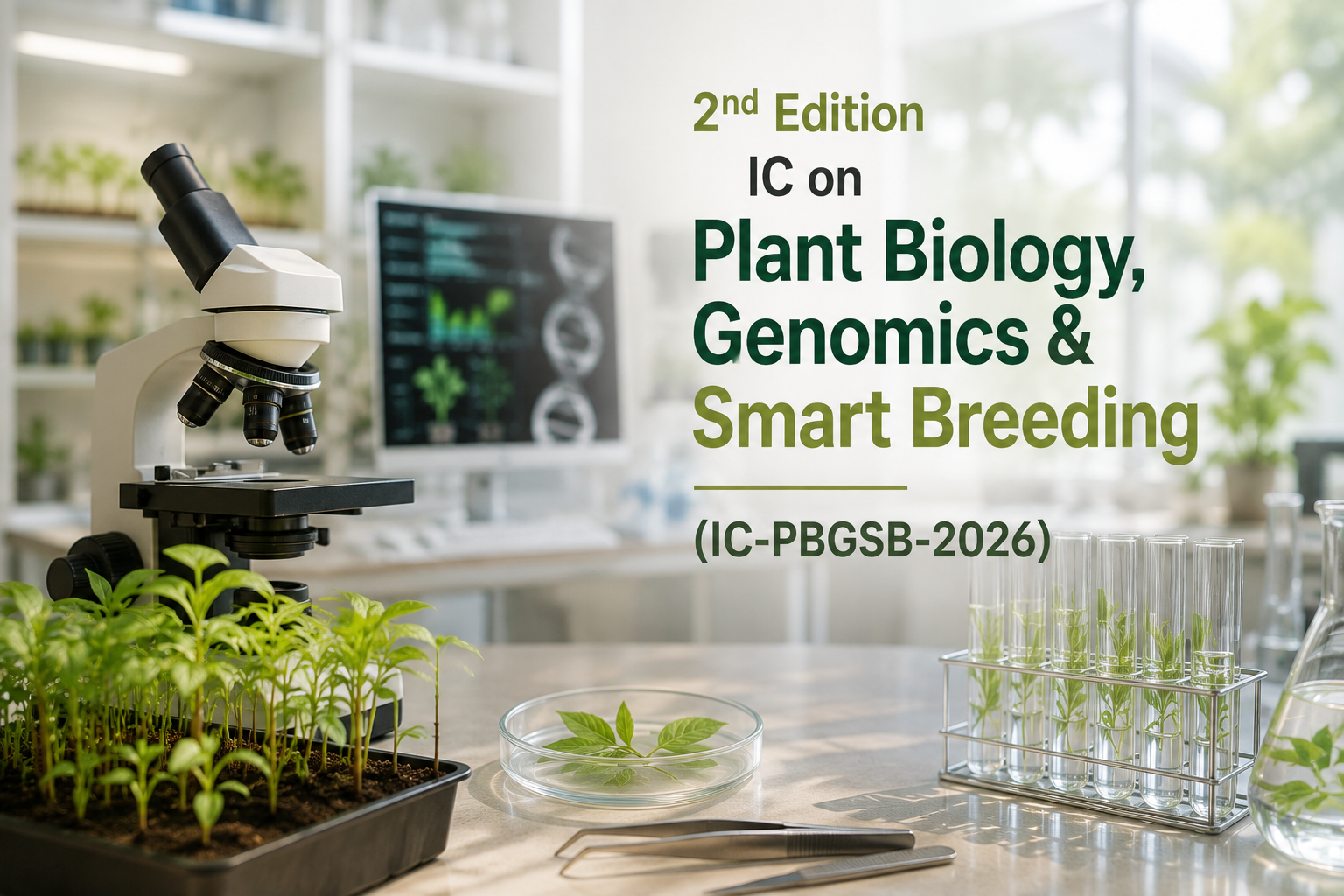
The Plant Biology Genomics Breeding field has become one of the most transformative areas of agricultural science, enabling researchers to unlock genetic insights that can accelerate crop improvement and strengthen food security worldwide. The 2nd Edition International Conference on Plant Biology, Genomics & Smart Breeding (IC-PBGSB-2026) offers a valuable platform for researchers, plant scientists, breeders, geneticists, agricultural professionals, and students to exchange knowledge and explore emerging innovations shaping the future of agriculture.
Interested participants can register through the official conference page:
Agricultural systems worldwide face complex challenges, including climate change, water scarcity, soil degradation, pest resistance, and growing food demand. Traditional breeding methods remain valuable, but modern genomics and biotechnology are enabling scientists to develop improved crop varieties faster and more accurately than ever before.
IC-PBGSB-2026 aims to create a collaborative environment where experts can discuss breakthroughs in plant biology, genetics, molecular breeding, crop improvement, and sustainable agricultural systems.
The conference encourages interdisciplinary dialogue among researchers working across genomics, breeding technologies, biotechnology, bioinformatics, and agricultural innovation.
Why Plant Biology and Genomics Matter Today
Plant biology provides the scientific foundation for understanding how plants grow, adapt, and respond to environmental conditions. Genomics takes this understanding further by examining the genetic architecture that controls important agricultural traits.
According to the Food and Agriculture Organization (FAO), global food production may need to increase significantly over the coming decades to meet future demand while maintaining environmental sustainability.
Genomics-based research helps scientists identify genes associated with:
Drought tolerance
Disease resistance
Yield improvement
Nutritional quality
Heat stress adaptation
Pest resistance
These discoveries are transforming agricultural research and enabling more efficient crop development strategies.
Major Research Themes at the Plant Biology Genomics Breeding Conference
IC-PBGSB-2026 is expected to attract contributions from a wide range of plant science disciplines.
Key research areas include:
Plant Genetics and Genomics
Crop Improvement Technologies
Molecular Plant Biology
Precision Breeding
Smart Breeding Strategies
Genome Editing
Plant Biotechnology
Bioinformatics Applications
Sustainable Agriculture
Crop Stress Physiology
Agricultural Genomics
Plant-Microbe Interactions
Seed Technology
Climate-Resilient Crops
These themes reflect the growing integration of biology, data science, and breeding technologies in modern agriculture.
Plant Biology Genomics Breeding and Global Food Security
Food security remains one of the most pressing global challenges.
Climate change, population growth, and environmental pressures are increasing the need for crops capable of maintaining productivity under challenging conditions.
Research supported by organizations such as the United Nations highlights the importance of sustainable agricultural innovation in achieving long-term food security goals.
Genomics-assisted breeding allows researchers to identify beneficial genetic traits and accelerate the development of improved crop varieties, helping farmers adapt to changing environmental conditions.
The Rise of Smart Breeding Technologies
Smart breeding combines advanced genomic tools, computational analytics, and modern breeding methodologies to improve breeding efficiency.
Several technologies are transforming crop improvement:
Marker-Assisted Selection
Genomic Selection
CRISPR-Based Gene Editing
High-Throughput Phenotyping
Artificial Intelligence Applications
Precision Agriculture Integration
Digital Breeding Platforms
These technologies reduce breeding cycles and improve the accuracy of selecting desirable plant traits.
As a result, researchers can develop improved crop varieties faster than traditional breeding methods alone.
Technology is becoming a major driver of agricultural transformation.
According to reports from organizations such as the World Economic Forum, digital technologies and biotechnology are expected to play critical roles in building resilient and sustainable food systems.
These advancements are helping researchers improve agricultural productivity while reducing environmental impacts.
Opportunities for Researchers and Students
International conferences provide valuable opportunities for professional growth and scientific collaboration.
Participants can:
Present innovative research findings
Receive expert feedback
Build international research networks
Explore publication opportunities
Learn advanced methodologies
Identify collaboration prospects
Gain insights into emerging technologies
For students and early-career researchers, conferences often serve as important gateways to academic and industry opportunities.
Expert Insight: The Future of Plant Science and Crop Improvement
The future of agriculture will increasingly depend on the ability to combine biological knowledge with advanced technologies.
Plant scientists are moving toward integrated breeding systems that leverage genomics, artificial intelligence, environmental data, and predictive analytics.
Future priorities are expected to include:
Climate-resilient crop development
Sustainable breeding systems
Improved nutritional traits
Resource-efficient agriculture
Genome-assisted breeding
Data-driven crop improvement
Researchers contributing to these areas will play a vital role in addressing future food security and sustainability challenges.
Latest Trends & Updates
Artificial intelligence is increasingly being integrated into plant breeding programs, helping researchers analyze large genomic datasets and identify promising genetic traits more efficiently.
Genome editing technologies such as CRISPR continue to expand their applications in crop improvement, enabling precise modifications that support disease resistance and climate adaptation.
Climate-smart agriculture has become a major focus area, with researchers developing crop varieties capable of thriving under drought, heat stress, and changing environmental conditions.
High-throughput phenotyping platforms are improving researchers’ ability to measure plant characteristics at scale, accelerating breeding cycles and improving selection accuracy.
Digital agriculture tools are creating new opportunities to combine field data, genomics, and predictive modeling for more effective crop management strategies.
Global investment in agricultural biotechnology and genomic research continues to grow as governments and private organizations prioritize food security and sustainable farming systems.
Real-Life Example
Consider a research team working on drought-resistant rice varieties.
Using genomic selection and advanced data analytics, researchers identified genetic markers associated with improved drought tolerance. After presenting their findings at an international plant science conference, they collaborated with experts from multiple countries to refine breeding strategies.
Within a few years, the project contributed to the development of improved rice lines capable of maintaining productivity under water-limited conditions. The collaboration also led to additional funding and scientific publications.
This example demonstrates how conferences can accelerate innovation and foster meaningful research partnerships.
Traditional Breeding vs Smart Breeding Technologies
Traditional Breeding
Smart Breeding Technologies
Longer breeding cycles
Faster development timelines
Manual trait selection
Genomics-assisted selection
Limited data integration
Data-driven decisions
Lower precision
High precision breeding
Slower adaptation
Rapid innovation
Beginner vs Expert Perspective
Beginners
Experts
Focus on plant traits
Focus on genetic architecture
Basic breeding knowledge
Advanced genomics expertise
Limited data use
Large-scale data integration
Individual experiments
Systems-level approaches
Traditional methods
Technology-enabled innovation
Pros and Cons of Conference Participation
Pros
Cons
Global networking opportunities
Registration costs
Research visibility
Preparation effort
Expert feedback
Competitive submissions
Publication possibilities
Time commitment
Collaboration opportunities
Learning curve for newcomers
Common Mistakes to Avoid
Many researchers focus solely on laboratory findings without considering practical agricultural applications.
Another common mistake is neglecting bioinformatics and data analysis skills, which are increasingly important in modern genomics research.
Participants should also avoid weak literature reviews and poorly defined research objectives.
Finally, failing to engage with interdisciplinary experts can limit opportunities for collaboration and innovation.
What to Do Next
Review conference themes carefully.
Select a relevant research topic.
Conduct a comprehensive literature review.
Prepare a strong abstract.
Register before deadlines.
Develop presentation materials.
Follow emerging genomics research.
Build connections with researchers and industry experts.
Quick Checklist
✔ Select research topic
✔ Conduct literature review
✔ Prepare abstract
✔ Register early
✔ Update research findings
✔ Prepare presentation
✔ Follow genomics trends
✔ Network with experts
Conclusion
The 2nd Edition International Conference on Plant Biology, Genomics & Smart Breeding (IC-PBGSB-2026) arrives at a critical time for global agriculture. As climate change, resource constraints, and food security challenges continue to grow, scientific innovation will play a central role in developing resilient and sustainable agricultural systems.
For researchers, students, plant breeders, and agricultural professionals, the conference offers an exceptional opportunity to explore cutting-edge developments, build valuable collaborations, and contribute to the future of crop improvement. Through interdisciplinary dialogue and knowledge sharing, IC-PBGSB-2026 can help advance agricultural science and support sustainable food production for future generations.

 June 12, 2026
 8 Min
 No Comment