May 23, 2026
 7 Min
 No Comment
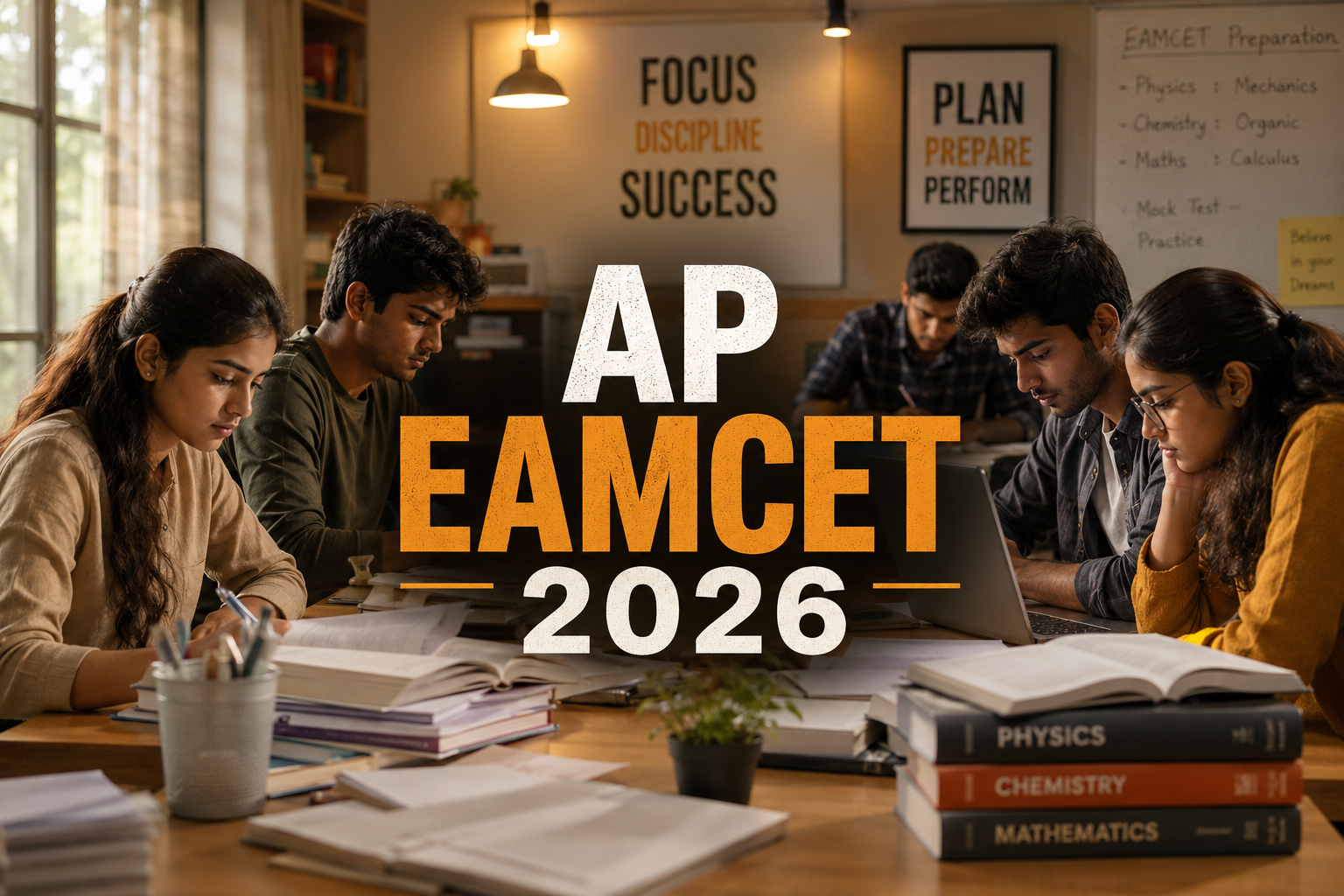
Every year, lakhs of engineering and pharmacy aspirants across Andhra Pradesh wait anxiously for one examination season that can shape their future. The AP EAMCET 2026 exam is already becoming one of the most discussed entrance tests among students, parents, and coaching institutes. With increasing competition, changing exam trends, and rising demand for top engineering colleges, preparing strategically is no longer optional — it is essential.
What makes this exam particularly important is the growing number of students targeting branches like Computer Science, Artificial Intelligence, Data Science, and Electronics. Meanwhile, colleges are also adapting to industry demands, making AP EAMCET more relevant than ever for career-focused students.
According to the Andhra Pradesh State Council of Higher Education (APSCHE), more than 3 lakh students typically appear for EAMCET-related streams every year. That number continues to grow as engineering and technology careers expand rapidly across India.
For official notifications and updates, students should regularly check the APSCHE portal: https://cets.apsche.ap.gov.in
Why the AP EAMCET 2026 Exam Matters More Than Ever
The AP EAMCET 2026 exam is not just another entrance test. It acts as the gateway to some of Andhra Pradesh’s most respected engineering, agriculture, and pharmacy colleges.
Over the last few years, the technology industry has transformed dramatically. According to research from McKinsey on future workforce trends:
https://www.mckinsey.com
India’s demand for skilled engineers in AI, cloud computing, automation, and cybersecurity is increasing steadily. Therefore, students entering engineering programs today are preparing for careers that may dominate the next decade.
In addition, many colleges now offer specialized programs in emerging fields such as:
- Artificial Intelligence
- Machine Learning
- Robotics
- Cybersecurity
- Internet of Things (IoT)
As a result, securing a strong EAMCET rank can significantly influence career opportunities later.
AP EAMCET 2026 Exam Pattern and Expected Changes
Students often make the mistake of focusing only on syllabus completion while ignoring the structure of the exam itself. Understanding the pattern is equally important.
Here is the expected structure based on recent trends:
| Section | Questions | Marks |
|---|---|---|
| Mathematics | 80 | 80 |
| Physics | 40 | 40 |
| Chemistry | 40 | 40 |
The examination is expected to remain computer-based with multiple-choice questions.
Meanwhile, experts predict a stronger focus on conceptual clarity rather than direct formula-based questions. This shift aligns with national-level entrance exam trends observed in exams like JEE Main.
According to educational insights shared by the National Testing Agency:
https://nta.ac.in
modern entrance exams increasingly emphasize analytical thinking and application-based learning.
Best Preparation Strategy for AP EAMCET 2026 Exam
One of the biggest myths among students is that studying longer automatically guarantees a better rank. In reality, smart preparation matters far more.
A successful preparation strategy usually includes:
Strong Concept Building
Students who understand concepts deeply perform better in difficult or twisted questions. Instead of memorizing formulas blindly, focus on understanding their practical application.
Daily Mock Tests
Mock tests improve:
- Time management
- Accuracy
- Speed
- Confidence under pressure
Moreover, they help identify weak topics early.
Revision Cycles
Top rankers often revise the same topics multiple times. Consistent revision improves memory retention and reduces exam anxiety.
PYQs and Trend Analysis
Previous Year Questions help students understand recurring concepts and question styles. Many toppers solve at least 10 years of papers before the exam.
Common Mistakes Students Should Avoid
Many talented students lose marks due to avoidable errors rather than lack of preparation.
Here are some common mistakes:
| Mistake | Impact |
|---|---|
| Ignoring NCERT basics | Weak conceptual foundation |
| Overusing multiple study materials | Confusion and burnout |
| Skipping mock analysis | Repeating the same mistakes |
| Poor time management | Incomplete paper |
| Last-minute cramming | Increased stress and lower retention |
However, students who maintain consistency and follow a structured plan often outperform those relying on shortcuts.
AP EAMCET 2026 Exam Preparation Timeline
A proper timeline can dramatically improve efficiency.
6–8 Months Before Exam
- Complete core syllabus
- Build subject fundamentals
- Start basic mock tests
3–4 Months Before Exam
- Increase test frequency
- Focus on weak subjects
- Begin full-length practice papers
Last 30 Days
- Revision only
- Avoid new topics
- Improve speed and accuracy
This stage is crucial because many students panic unnecessarily. Meanwhile, calm and disciplined revision often produces better outcomes than aggressive studying.
Expert Insight: The Real Competition Is Strategy
The competition in AP EAMCET is no longer about who studies hardest. It is about who studies smartest.
Educational analysts believe the gap between average and top-ranking students usually comes down to:
- Better revision systems
- Consistency
- Smart question selection
- Reduced negative stress
- Efficient mock analysis
Interestingly, students who focus heavily on Mathematics often gain a major advantage because it carries the highest weightage.
Furthermore, many experts recommend limiting study resources instead of continuously switching between books, YouTube channels, and coaching materials.
According to educational performance research published by Harvard Business Review on learning efficiency:
https://hbr.org
consistent focused learning produces significantly better long-term retention than overloaded multitasking approaches.
Latest Trends and Updates
The AP EAMCET ecosystem is evolving rapidly due to digital learning and AI-driven education tools.

Many coaching institutes now use AI-based mock test analytics to track student performance patterns and predict weak areas. Students are also increasingly relying on adaptive learning apps for personalized preparation schedules.

Another major trend is the rise of hybrid preparation models, where students combine online learning with offline coaching support. This approach improves flexibility while reducing travel time.

In addition, engineering colleges are expanding seats in AI, Data Science, and Cybersecurity branches due to growing industry demand. As a result, students are prioritizing skill-oriented branches over traditional choices.

Experts also expect counselling processes to become more digitized and transparent in 2026, making document verification and option entry faster for students across Andhra Pradesh.
Real-Life Example: How Strategic Preparation Changed a Student’s Rank
A student from Vijayawada struggled initially with Physics and Chemistry while preparing for EAMCET. Instead of increasing study hours aggressively, he focused on solving targeted mock tests daily and analyzed his mistakes carefully.
Over six months, he reduced careless errors significantly and improved time management. Eventually, he secured a rank within the top 5000 and gained admission into a reputed engineering college specializing in Computer Science.
His success was not based on studying 15 hours daily. It came from disciplined planning, revision, and smart execution.
Beginner vs Expert Preparation Approach
| Beginner Approach | Expert Approach |
|---|---|
| Random studying | Structured planning |
| Multiple resources | Limited trusted materials |
| Passive reading | Active problem-solving |
| Fear-based preparation | Strategy-based preparation |
| Ignoring analytics | Tracking performance data |
This difference becomes extremely important during the final months of preparation.
Pros and Cons of the AP EAMCET System
| Pros | Cons |
|---|---|
| Affordable state-level admission route | High competition |
| Access to reputed colleges | Pressure on students |
| Wide branch availability | Rank-based seat limitations |
| Computer-based transparent system | Coaching dependency for many students |
| Good career opportunities | Stress during counselling season |
What to Do Next After Starting Preparation
Students preparing for AP EAMCET 2026 should immediately focus on:
- Creating a realistic timetable
- Identifying weak subjects
- Taking weekly mock tests
- Revising NCERT concepts
- Tracking performance regularly
In addition, students should avoid comparing preparation styles constantly with others. Personalized strategies usually work better.
Quick Checklist Before the Exam Season
- Complete syllabus at least once
- Revise formulas regularly
- Solve previous year papers
- Practice full-length mocks
- Improve speed and accuracy
- Sleep properly before exams
- Keep counselling documents ready
Conclusion
The AP EAMCET 2026 exam represents far more than a competitive test — it is a gateway to future opportunities in engineering, technology, pharmacy, and innovation-driven careers. With increasing competition and evolving exam patterns, students must move beyond outdated preparation methods and focus on strategic, concept-based learning.
Success in EAMCET rarely comes from last-minute effort. Instead, it comes from consistency, smart revision, mock test analysis, and emotional discipline throughout the preparation journey.
Students who prepare early, stay focused, and adapt to modern learning trends will place themselves in a significantly stronger position when results and counselling season arrive. The goal is not simply clearing the exam — it is building the foundation for a long-term successful career.
Frequently Asked Questions
The exam is expected to remain moderate, with stronger emphasis on conceptual understanding and application-based questions.
Typically, over 2–3 lakh students participate across engineering, agriculture, and pharmacy streams.
NCERT forms the foundation, especially for Physics and Chemistry. However, additional mock practice is highly recommended.
Mathematics carries the highest weightage with 80 questions in the engineering stream.
Yes. Many students succeed through disciplined self-study, mock tests, and consistent revision.