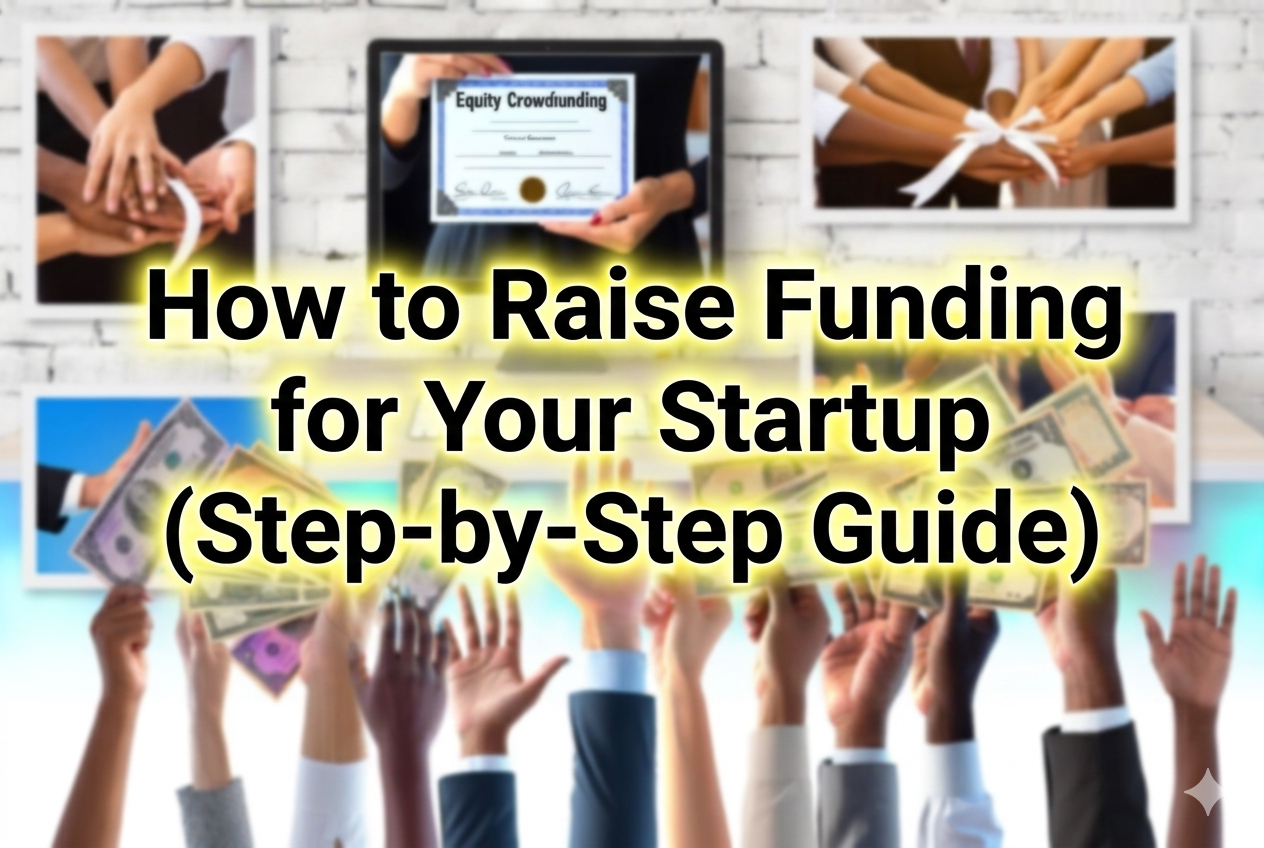
Raising funding is one of the most important milestones in a startup journey. It helps founders scale faster, hire talent, improve products, and expand into new markets. However, securing investment is not easy without proper preparation and strategy.
Understanding Startup Funding Step by Step helps entrepreneurs navigate investors, valuation, pitch decks, and fundraising stages effectively.
In 2026, startup funding is becoming more competitive and data-driven, with investors focusing heavily on profitability, unit economics, and long-term scalability.
Warm introductions often lead to better funding opportunities than cold emails.
Step 7: Pitch to Investors
Once ready, founders pitch their startup to investors.
A strong pitch should:
Be clear and concise
Focus on problem and solution
Show traction and growth
Highlight scalability
Confidence and clarity are key during investor meetings.
Step 8: Negotiate Terms and Deal Structure
If investors show interest, founders must negotiate deal terms carefully.
Important aspects include:
Equity percentage
Valuation
Board control
Exit expectations
Funding milestones
Proper negotiation ensures long-term business stability.
Step 9: Close the Funding Round
After agreement, legal documentation is completed.
This includes:
Term sheets
Shareholder agreements
Compliance paperwork
Once completed, funds are transferred to the startup account.
Step 10: Use Funds Strategically
Funding should be used wisely for growth.
Key areas include:
Product development
Marketing and customer acquisition
Hiring talent
Scaling operations
Poor fund management can quickly lead to cash burn issues.
Expert Insight and Analysis
Experts believe that fundraising is not just about ideas but about execution capability and clarity of vision.
Many startups fail to raise funds because they:
Lack traction
Have unclear business models
Overestimate valuation
Do not understand investor mindset
Successful founders focus on:
Building measurable traction
Showing strong unit economics
Demonstrating scalability
Maintaining financial discipline
Investors increasingly prefer startups with clear revenue paths instead of purely idea-based pitches.
Latest Startup Funding Trends in 2026
Startup funding landscape in 2026 is evolving rapidly due to economic shifts, AI adoption, and investor caution.
One major trend is increased focus on profitability. Investors are no longer funding startups based only on growth metrics; they are prioritizing sustainable revenue models and strong unit economics.
AI-powered startups are attracting significant funding due to automation potential, cost efficiency, and global scalability.
Another trend is smaller but more frequent funding rounds. Instead of large risky investments, investors prefer milestone-based funding structures.
Early-stage investors are also becoming more data-driven, using AI tools to analyze startup performance, market trends, and customer behavior before investing decisions.
Secondary investments are increasing, allowing early investors and employees to gain liquidity without waiting for IPOs.
Global investors are actively investing in Indian startups due to strong digital adoption and expanding startup ecosystems.
In 2026, startups that demonstrate strong execution, disciplined spending, and clear monetization strategies are receiving higher funding confidence.
Common Funding Mistakes Founders Make
Raising money without validation
Overvaluing early-stage startups
Weak pitch deck structure
Ignoring investor feedback
Poor financial planning
What Startup Founders Should Do Next
Validate product before fundraising
Build strong MVP and traction
Prepare a professional pitch deck
Research suitable investors
Focus on sustainable growth metrics
Conclusion
Understanding Startup Funding Step by Step is essential for entrepreneurs aiming to scale their businesses in 2026.
Funding is not just about raising money but about building trust, demonstrating execution ability, and presenting a scalable business model.
Startups that focus on validation, traction, financial discipline, and clear communication are more likely to secure investment successfully and grow sustainably.
FAQs
Validating your idea and building an MVP.
No, many startups grow through bootstrapping.
Traction, scalability, and strong business models.
Early-stage investment to help startups develop and grow.
It varies from weeks to several months depending on investor interest.

 May 12, 2026
 5 Min
 No Comment