For thousands of Indian students, studying in Germany is no longer just a dream — it has become one of the smartest global education decisions of this decade. Germany combines world-class universities, affordable education, cutting-edge industries, and long-term career opportunities in a way very few countries can match.
Whether you want to pursue:
Engineering
Artificial Intelligence
Data Science
Healthcare
Business
Automotive Technology
Renewable Energy
Germany offers a powerful mix of academic quality and practical career exposure.
The Dream study Germany plan process has become increasingly popular in 2026 because students are now focusing more on:
Return on investment
Affordable international education
Global employability
Long-term immigration opportunities
Work-life balance
Unlike countries where tuition fees alone can create years of financial pressure, Germany allows students to build global careers with significantly lower education costs.
According to the DAAD Germany Official Website, Germany remains one of the world’s leading destinations for international students because of its strong research ecosystem and affordable public education system.
However, successful study planning requires much more than simply applying to universities.
Students who prepare strategically usually experience smoother admissions, visa approvals, financial management, and career outcomes later.
Why Germany Has Become a Global Education Powerhouse
Germany’s education system is deeply connected with industry, innovation, and research.
The country is globally respected for:
Engineering excellence
Industrial manufacturing
Automotive technology
Scientific research
AI and automation
Sustainability innovation
Meanwhile, Germany’s economy remains Europe’s largest, creating strong demand for skilled graduates across multiple sectors.
Major advantages include:
Affordable public universities
Strong employment opportunities
High global degree recognition
Access to European job markets
Excellent infrastructure
Safe student environment
This combination makes Germany especially attractive for Indian students seeking both quality education and long-term career growth.
Step 1: Choose the Right Course and Career Goal
One of the biggest mistakes students make is selecting courses without understanding market demand.
Instead of choosing randomly, students should align their studies with:
Career goals
Industry demand
Future job opportunities
Skill shortages
High-demand fields in Germany currently include:
Computer Science
Artificial Intelligence
Cybersecurity
Mechanical Engineering
Automotive Engineering
Renewable Energy
Data Science
Healthcare Technology
Students should research:
Curriculum structure
Internship opportunities
Industry partnerships
Placement support
before applying.
Step 2: Research Public vs Private Universities
Germany offers both:
Public universities
Private universities
Public universities are especially popular because many charge:
Low tuition fees
Only semester contributions
Average semester contribution:
150\text{ EUR to }350\text{ EUR per semester}
Private universities may charge significantly higher fees but sometimes offer:
Smaller class sizes
Strong industry networking
Specialized MBA programs
Flexible admission processes
Popular German universities include:
Technical University of Munich
RWTH Aachen
Heidelberg University
University of Stuttgart
TU Berlin
According to the Study in Germany Official Portal, Germany offers hundreds of English-taught programs for international students.
Step 3: Understand the Total Cost of Studying in Germany
Many students wrongly assume Germany is completely free.
In reality, students still need to plan for:
Living expenses
Blocked account funds
Accommodation
Health insurance
Visa costs
Flight tickets
Average yearly living costs:
11,904\ \text{EUR annually}
Monthly expenses typically include:
Expense Category
Estimated Monthly Cost
Accommodation
€300–€800
Food
€150–€300
Insurance
€120–€150
Transportation
€30–€80
Miscellaneous
€100–€250
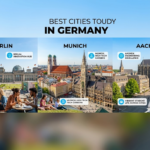
Cities like Munich and Frankfurt are significantly more expensive than:
Leipzig
Dresden
Aachen
Magdeburg
Choosing the right city can dramatically reduce total costs.
Step 4: Prepare for German Student Visa Requirements
Germany maintains a structured visa system for international students.
Key requirements usually include:
University admission letter
Blocked account proof
Health insurance
Academic documents
APS certificate (for Indian students)
Passport and visa forms
The blocked account is one of the most important financial requirements.
Students generally need:
11,904\ \text{EUR in blocked account funds}
According to the German Federal Foreign Office, students must prove sufficient financial resources before visa approval.
Starting documentation early is extremely important because visa processing times can vary during peak intake seasons.
Step 5: Learn German — Even If Your Course Is in English
This is one of the smartest long-term investments students can make.
While many master’s programs are taught in English, German language skills still improve:
Daily life
Part-time job opportunities
Networking
Internships
Long-term career growth
Even basic German communication can significantly improve your experience.
Students aiming for long-term careers in Germany should ideally target:
A1–A2 before arrival
B1–B2 during studies
German fluency becomes especially important in:
Manufacturing
Healthcare
Automotive sectors
Consulting
Administrative roles
Step 6: Build Career Readiness Before Graduation
Germany strongly values practical experience.
Students who focus only on academics often struggle later compared to those who:
Gain internships
Build technical projects
Attend networking events
Secure working student roles
Popular student work opportunities include:
HiWi research jobs
Working student positions
Technical internships
Startup collaborations
Many graduates receive full-time offers through internship pathways.
Expert Insight: Germany Rewards Strategic Students
Germany’s education system is highly rewarding for students who prepare carefully.
The students who usually succeed most are those who:
Research industries early
Build technical specialization
Learn German gradually
Network actively
Manage finances carefully
Meanwhile, students who assume admission alone guarantees success often face avoidable challenges.
Germany’s system rewards:
Independence
Planning
Practical skills
Adaptability
This is why long-term preparation matters more than short-term excitement.
Latest Trends and Updates
Germany is rapidly expanding opportunities in AI, renewable energy, cybersecurity, semiconductor manufacturing, and automation industries, creating strong future demand for skilled international graduates.

English-taught master’s programs continue increasing across public universities, especially in STEM and technology-focused disciplines.

Meanwhile, Germany’s startup ecosystem in Berlin, Munich, and Hamburg is attracting more international students interested in entrepreneurship and technology careers.

Digital visa systems, online application portals, and fintech-based blocked account services are also simplifying the international student onboarding process.

At the same time, rising housing demand in major cities is making early accommodation planning more important than ever for incoming students.
Real-Life Example: How Strategic Planning Changed the Outcome
Sneha wanted to pursue a master’s degree abroad but worried about high tuition fees in countries like the USA and UK.
Instead of rushing applications, she spent six months:
Researching universities
Learning basic German
Understanding visa rules
Planning finances carefully
She eventually selected a public university in Aachen with strong AI research opportunities.
During her studies, she secured:
A working student role
Technical internships
Industry networking connections
By graduation, she transitioned smoothly into a full-time AI engineering role in Germany.
Her success came not from luck, but from strategic planning long before departure.
Germany has become one of the best global destinations for ambitious students seeking affordable education, international exposure, and strong long-term career opportunities.
However, success in Germany is not only about university admission.
Students who:
Plan finances carefully
Learn German gradually
Build practical skills
Gain internships
Prepare strategically
usually experience the strongest academic and career outcomes.
Your dream to study in Germany becomes realistic when preparation meets opportunity.
FAQs
Yes. Germany offers affordable education, strong career opportunities, and globally respected universities.
Most public universities charge very low tuition fees, though students still pay living expenses.
Not always for English-taught programs, but German skills significantly improve daily life and job opportunities.
Students typically need funds for blocked accounts, living expenses, insurance, and relocation costs.
Yes. Germany offers strong employment opportunities, especially in STEM and technology sectors.

 May 19, 2026
 7 Min
 No Comment