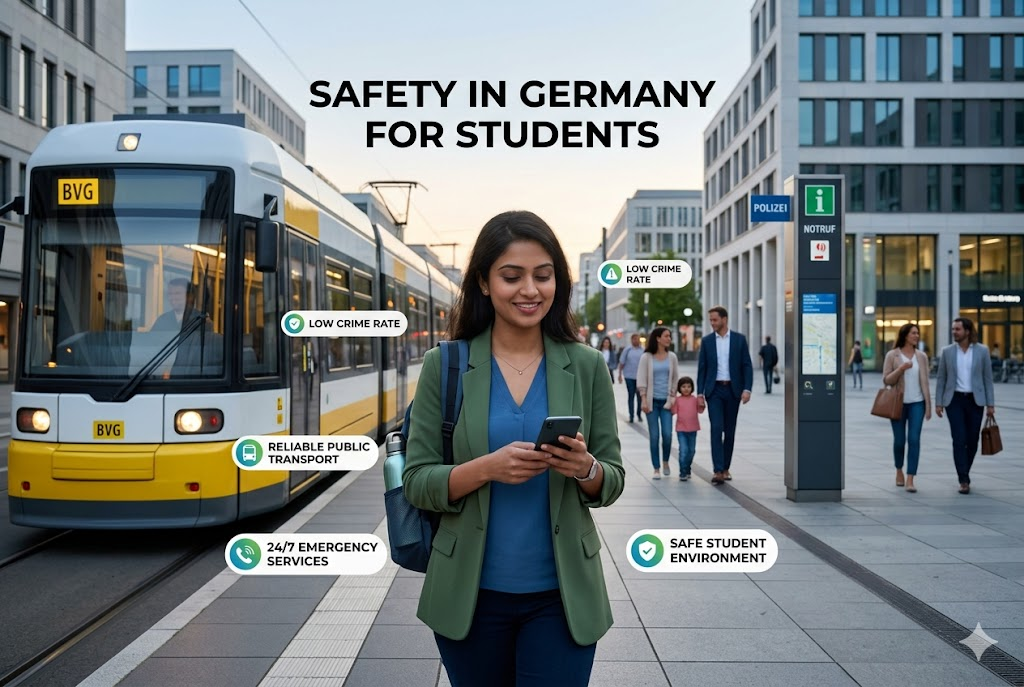
Germany is one of the most popular study destinations in the world, especially for Indian students, thanks to its high-quality education system, affordable public universities, and strong job opportunities. But one of the most important questions students ask before moving abroad is:
Is Germany safe for international students?
The Germany student safety guide topic is crucial because safety is not just about crime rates — it includes daily life security, transportation safety, housing, women’s safety, and how comfortable international students feel in a new culture.
Overall, Germany is widely considered one of the safest countries in Europe. However, like any developed nation, it still has challenges that students should understand realistically.
According to the Federal Criminal Police Office Germany (BKA), Germany maintains relatively low violent crime rates compared to global averages, especially in major student cities.
Yes, Germany is generally very safe for international students.
Most students experience:
Safe public transport
Well-organized cities
Low violent crime rates
Strong legal enforcement
Reliable emergency services
Major student cities like:
Munich
Heidelberg
Stuttgart
Freiburg
Aachen
are considered among the safest urban areas in Europe.
However, petty crimes like pickpocketing can still occur in busy areas such as:
Train stations
Tourist zones
Festivals
Public events
Safety in Germany is more about awareness than fear.
Safety in Germany Student Cities
Different cities offer different safety experiences.
Munich
Munich is often ranked as one of the safest large cities in Germany.
Very low violent crime
Clean and organized public transport
Strong police presence
It is highly preferred by international students.
Berlin
Berlin is safe overall, but:
Bigger population
More nightlife activity
Slightly higher petty theft cases
Students need basic awareness in crowded places.
Frankfurt
Frankfurt is a financial hub:
Safe business districts
Busy central station area
Higher transient population
Still safe, but requires standard caution.
Heidelberg
Heidelberg is:
A small student-friendly city
Extremely safe
Calm environment
Popular among international students.
Germany Student Safety Guide: Public Transport
Germany has one of the best public transport systems in the world.
Trains, buses, and trams are:
Reliable
Well-monitored
Frequently used by students at all hours
Night travel safety:
Generally safe in cities
Well-lit stations
Security presence in major hubs
However, basic precautions are recommended:
Avoid empty train compartments late at night
Keep belongings close
Stay aware in crowded stations
Women Safety in Germany
Germany is considered relatively safe for women compared to many countries.
Most women experience:
Independent travel
Late-night commuting
University life without major safety concerns
However, like anywhere:
Avoid isolated areas at night
Stay aware in crowded nightlife zones
Use trusted transport options
Universities also provide:
Emergency contacts
Student support services
Safety awareness programs
Crime Rate and Reality Check
Germany has:
Low violent crime rates
Moderate petty crime levels in urban areas
Common issues include:
Pickpocketing in crowded places
Bicycle theft in cities
Minor scams targeting tourists
Serious crimes against students are rare.
According to European safety data summarized by Statista Crime Reports Europe, Germany consistently ranks safer than many other major study destinations globally.
Emergency Services in Germany
Germany has strong emergency response systems.
Important numbers:
Police: 110
Emergency ambulance/fire: 112
Services are:
Fast
Professional
Widely available
Most cities also have:
24/7 hospital access
Student emergency support systems
University helplines
Housing Safety for Students
Student housing in Germany is generally safe, especially in:
University dormitories
Student residences
Shared apartments (WG)
Safety tips:
Verify landlords before signing contracts
Use official student housing portals
Avoid cash-only rental scams
Register address legally (Anmeldung)
Housing scams are rare but can happen in competitive cities like Berlin.
Cultural Safety and Social Comfort
Germany is:
Multicultural
Open to international students
Structured and rule-based society
However, students may experience:
Cultural differences in communication
More direct language style
Less informal social interaction initially
This is not a safety issue, but it affects comfort and adaptation.
Germany Student Safety Guide: Nightlife and Social Life
Nightlife in Germany is vibrant, especially in cities like Berlin and Munich.
Safety tips:
Travel in groups when possible
Use official taxis or public transport
Avoid accepting drinks from strangers
Stay aware in crowded clubs
Most incidents are related to alcohol or careless behavior rather than crime.
Expert Insight: Why Germany Feels Safer Than Many Countries
Germany feels safe because of:
Strong rule enforcement
Efficient public systems
High public awareness
Organized city infrastructure
Unlike many countries, safety is not only police-dependent — it is system-driven.
However, students should understand:
Safety is not zero-risk anywhere
Awareness is still necessary
Cultural adaptation improves safety experience
Latest Trends and Updates
Germany is investing further in smart surveillance systems, digital policing tools, and improved public transport security to enhance urban safety.

International student numbers are increasing, leading universities to expand dedicated safety and support services for foreign students.

Cities are also focusing on safer cycling infrastructure, better lighting in public areas, and improved late-night transport options.

At the same time, awareness campaigns about pickpocketing and housing scams are being strengthened in major student cities.

Overall, Germany continues to maintain a strong global safety reputation while modernizing urban security systems.
Real-Life Example: Student Safety Experience
An Indian student named Ananya moved to Munich for her master’s degree.
Her experience:
Used public transport daily without issues
Walked alone during evenings safely
Faced only minor pickpocket warning in crowded metro once
She followed basic precautions:
Kept phone secured
Avoided isolated routes at night
Stayed aware in crowded places
Her overall experience was safe and stable, with no major incidents during her studies.
Germany is one of the safest and most stable countries for international students, offering secure living conditions, strong public systems, and well-organized cities.
While no country is completely risk-free, Germany’s safety level is high when compared globally.
Students who:
Stay aware
Follow basic precautions
Choose safe housing
Understand local systems
usually experience a smooth and secure student life.
In Germany, safety is not about fear — it is about awareness, structure, and responsible living.
FAQs
Yes, Germany is considered one of the safest countries for international students with low violent crime rates.
Yes, but students should be cautious in crowded areas due to petty theft risks.
Yes, Germany is generally safe for women, especially in major student cities.
Mostly petty crimes like pickpocketing and bicycle theft in urban areas.
Yes, it is reliable and widely used, including at night in most cities.

 May 19, 2026
 7 Min
 No Comment