May 20, 2026
 6 Min
 No Comment
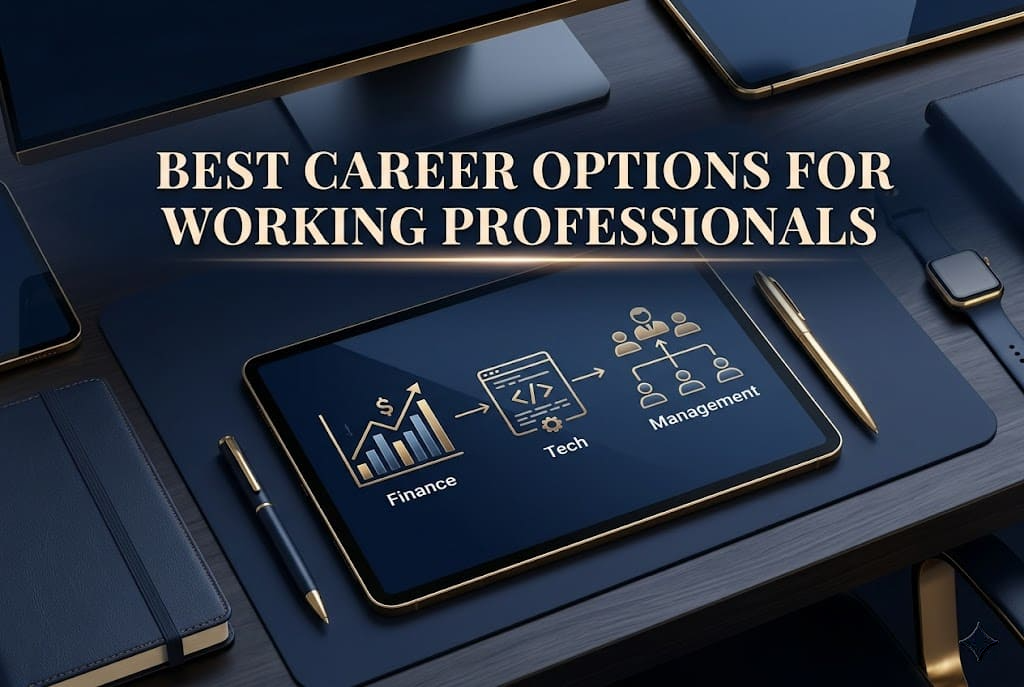
The professional world is changing faster than ever before. Industries are evolving, automation is reshaping job roles, and companies increasingly value adaptability over traditional experience alone. As a result, many employees are asking an important question:
“What are the best career options for working professionals today?”
Whether someone wants a higher salary, better work-life balance, remote opportunities, career security, or a complete career switch, the answer depends on future-ready skills and market demand.
This guide explores the best career options professionals should consider in 2026, including high-growth industries, skill-based opportunities, and strategic career transition paths.
According to workforce insights from LinkedIn Workforce Reports, skills related to AI, analytics, communication, cybersecurity, and digital business are among the fastest-growing globally.
Why Working Professionals Are Changing Careers
Career changes are no longer unusual. In fact, continuous upskilling has become a necessity rather than an option.
Professionals now switch careers because of:
- Salary stagnation
- Automation risks
- Burnout
- Lack of growth opportunities
- Remote work preferences
- Industry decline
- Desire for flexibility
Meanwhile, online learning and remote work have made career transitions more accessible than ever before.
For professionals exploring learning opportunities, certifications, and career guidance, OneGrasp’s education resources provide useful insights into future-ready education and skill development.
Best Career Options Professionals Should Consider in 2026
The best careers today combine strong demand, scalability, flexibility, and long-term relevance.
Data Analytics and Business Intelligence
Data-driven decision-making is now essential across industries.
Professionals skilled in:
- SQL
- Power BI
- Excel analytics
- Tableau
- Business reporting
continue to see strong demand globally.
This field suits professionals from commerce, engineering, finance, and operations backgrounds.
Artificial Intelligence and Prompt Engineering
AI-related careers are growing rapidly because businesses increasingly automate workflows and digital processes.
Popular AI-focused career paths include:
- Prompt engineering
- AI content strategy
- Machine learning support
- AI automation consulting
- AI operations management
According to McKinsey & Company AI Insights, organizations adopting AI strategically are significantly increasing productivity and operational efficiency.
Digital Marketing
Digital marketing remains one of the most flexible and accessible career options.
Professionals can specialize in:
- SEO
- Social media marketing
- Paid advertising
- Content strategy
- Email marketing
- Performance marketing
This field also supports freelancing, agency work, and entrepreneurship.
Cybersecurity
Cybersecurity continues to offer strong job stability because cyber threats are increasing globally.
Companies actively hire professionals skilled in:
- Ethical hacking
- Security operations
- Network security
- Cloud security
- Risk management
This career path offers excellent long-term demand.
Cloud Computing
Cloud platforms such as AWS, Azure, and Google Cloud are now critical business infrastructure tools.
Cloud professionals work in:
- DevOps
- Infrastructure management
- Cloud architecture
- System administration
This sector continues to provide high-paying opportunities worldwide.
Product Management
Product managers bridge business strategy, technology, and customer experience.
Professionals with communication, leadership, and analytical abilities often transition successfully into this field.
Best Career Options Professionals Can Start Without Quitting Jobs
Many professionals fear career changes because they cannot stop earning immediately.
Fortunately, several modern career paths support gradual transitions.
| Career Option | Can Start Part-Time? | Remote Friendly? |
|---|---|---|
| Digital Marketing | Yes | Yes |
| Content Writing | Yes | Yes |
| Data Analytics | Yes | Yes |
| Graphic Design | Yes | Yes |
| Freelancing | Yes | Yes |
| Online Tutoring | Yes | Yes |
| AI Prompt Engineering | Yes | Yes |
This flexibility allows professionals to upskill while maintaining financial stability.
Expert Insight: Why Skills Matter More Than Degrees Today
Modern hiring trends increasingly prioritize practical ability over formal qualifications alone.
For example:
- A marketer with strong SEO results may outperform MBA candidates
- A developer with GitHub projects may stand out more than theoretical learners
- A data analyst with dashboards and portfolio work often gains faster opportunities
This shift explains why certification programs, online learning, and portfolio-based hiring are growing rapidly.
However, soft skills remain equally important.
Professionals who combine:
- Communication
- Adaptability
- Technical knowledge
- Strategic thinking
- Emotional intelligence
will remain highly valuable even in AI-driven workplaces.
Latest Trends and Updates
AI-assisted workflows are becoming standard across marketing, software, finance, customer support, and business operations.

Remote and hybrid work opportunities continue expanding globally, allowing professionals to work for international companies from India.

Micro-certifications and skill-based hiring are reducing dependence on traditional long-term degrees in many industries.

Freelancing and creator-based careers are growing rapidly because digital platforms now provide global income opportunities.

Professionals are increasingly combining multiple skills such as AI + marketing, analytics + business strategy, or design + coding to improve career competitiveness.
Real-Life Example: Career Transition Through Upskilling
Sandeep worked in a traditional sales role for nearly seven years but experienced limited salary growth.
Instead of quitting immediately, he spent evenings learning digital marketing and analytics through affordable online certifications. Gradually, he built freelance experience managing social media campaigns for local businesses.
Within one year, he transitioned into a performance marketing role with significantly better salary growth and remote work flexibility.
His success came from strategic upskilling while maintaining financial stability.
Common Mistakes Professionals Make During Career Transitions
Chasing Trends Blindly
Not every popular field matches individual strengths or interests.
Learning Without Practice
Watching tutorials alone rarely creates employable skills.
Expecting Instant Results
Career transitions require patience, experimentation, and consistency.
Ignoring Networking
Professional relationships often create hidden opportunities.
Focusing Only on Salary
Long-term growth, flexibility, and skill relevance matter equally.
Beginner vs Strategic Professional Mindset
| Beginner Mindset | Strategic Professional Mindset |
|---|---|
| Wants quick salary jumps | Focuses on long-term growth |
| Learns randomly | Builds structured skills |
| Depends only on degrees | Builds portfolios and projects |
| Fears industry changes | Adapts continuously |
| Works alone | Builds professional networks |
Pros and Cons of Career Switching
| Pros | Cons |
|---|---|
| Better income opportunities | Learning curve |
| Improved work flexibility | Temporary uncertainty |
| Future-ready skill development | Requires discipline |
| Remote work possibilities | Competitive market |
| Greater career satisfaction | Time management challenges |
What to Do Next (Actionable Steps)
If you are planning career growth or transition:
- Identify future-proof industries
- Choose one skill path strategically
- Build practical projects
- Learn consistently alongside work
- Improve communication and networking
- Create LinkedIn and portfolio presence
- Gain freelance or internship exposure
Most importantly, start small but remain consistent.
Quick Checklist
- Research market demand
- Identify transferable skills
- Learn industry tools
- Build portfolio projects
- Improve communication skills
- Stay updated with trends
- Network actively
- Track measurable progress
Conclusion
The best career options for working professionals in 2026 are no longer limited to traditional corporate ladders. Today’s fastest-growing opportunities combine technology, adaptability, creativity, and continuous learning.
Whether someone chooses AI, analytics, cybersecurity, digital marketing, cloud computing, or freelancing, the real competitive advantage comes from consistent skill-building and strategic execution.
Professionals who remain flexible, curious, and willing to evolve will continue creating opportunities regardless of market changes.
Career growth today is less about staying in one fixed role forever — and more about continuously adapting to the future of work.
FAQs
AI, data analytics, digital marketing, cybersecurity, and cloud computing are among the best career options.
Yes, many modern career paths allow gradual transitions through online learning and part-time projects.
AI, cybersecurity, cloud computing, and analytics currently show very strong long-term demand.
Yes, practical certifications combined with portfolio projects can significantly improve career opportunities.
Skills related to AI tools, analytics, communication, automation, and digital business are highly valuable for future careers.