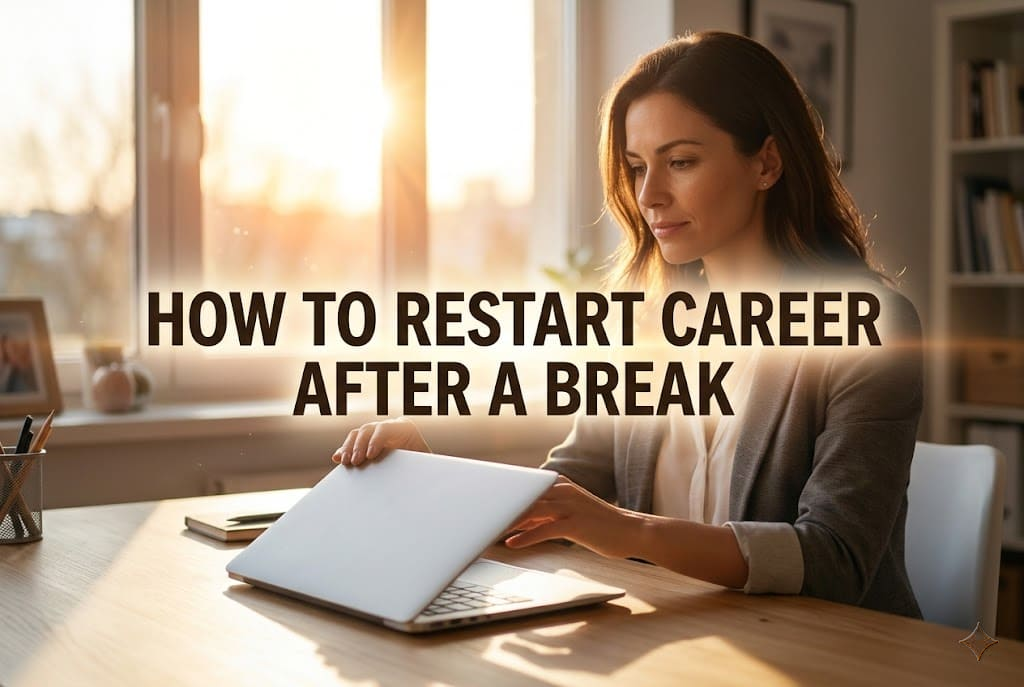
Taking a career break is far more common today than many people realize. Some professionals step away due to family responsibilities, health issues, higher education, burnout, relocation, entrepreneurship, or personal challenges. However, returning to work afterward often feels intimidating. Learning how to restart career after break successfully can help professionals rebuild confidence and create strong long-term opportunities again.
One of the biggest fears people experience after a career gap is the belief that they have “fallen behind.” In reality, career breaks do not automatically destroy professional potential. What matters most is how individuals position themselves when they return.
Today’s job market is increasingly skill-driven and adaptable. Employers now understand that career journeys are rarely perfectly linear. In fact, many professionals return stronger because breaks often improve maturity, resilience, and clarity.
According to workplace studies discussed by Harvard Business Review, professionals who re-enter the workforce successfully often demonstrate high adaptability and motivation.
Professionals planning career comebacks and future-ready growth strategies can also explore guidance through OneGrasp Career Insights.
In India especially, many women pause careers due to caregiving responsibilities. Meanwhile, professionals across industries increasingly take breaks for upskilling or personal growth.
A career gap is not necessarily a weakness if explained strategically.
Accept That Career Breaks Are Normal
The first and most important step is changing your mindset.
Many professionals returning after a break feel:
Guilty
Insecure
Outdated
Less competitive
However, modern employers increasingly value:
Adaptability
Emotional maturity
Communication ability
Problem-solving skills
Practical expertise
A career gap alone rarely disqualifies capable candidates.
Instead of apologizing excessively for the break, professionals should focus on demonstrating readiness and value.
Update Your Skills Before Returning
Industries evolve quickly, especially in technology, finance, marketing, and digital business.
Therefore, upskilling becomes essential before restarting a career.
Useful areas for upskilling include:
Digital tools
AI fundamentals
Data analytics
Communication skills
Industry software
Project management
Online certifications
Online learning platforms make it easier than ever to rebuild professional relevance.
According to LinkedIn Learning, continuous learning significantly improves employability and workplace adaptability.
Start With Small Professional Steps
Many professionals assume they must immediately secure a full-time high-level role after returning.
However, gradual re-entry often works better.
Smart Restart Options
Restart Strategy
Benefit
Freelancing
Builds confidence and portfolio
Part-time work
Reduces pressure
Internships
Refreshes industry exposure
Consulting projects
Rebuilds credibility
Remote work
Offers flexibility
Small wins help rebuild momentum faster.
Rebuild Your Resume Strategically
A career gap should be explained honestly but confidently.
Instead of hiding the gap:
Mention productive activities
Highlight certifications
Include freelance work
Showcase volunteer projects
Focus on transferable skills
Example
Instead of writing:
“Career gap due to personal reasons”
consider:
“Focused on family responsibilities while completing certifications in digital marketing and project management.”
Framing matters significantly.
Networking Becomes Extremely Important
Many professionals returning after breaks underestimate networking.
Professional connections can help through:
Referrals
Mentorship
Industry insights
Freelance opportunities
Hidden job openings
LinkedIn has become especially valuable for career restarts.
Professionals exploring career rebuilding strategies and future-ready skill development can also find resources through OneGrasp Professional Growth Resources.
Confidence Matters More Than Perfection
One of the biggest barriers during career comebacks is self-doubt.
Many returning professionals compare themselves unfairly with peers who remained continuously employed.
However, confidence grows through action, not waiting.
Important mindset shifts include:
Accept imperfect beginnings
Focus on progress
Avoid excessive comparison
Celebrate small improvements
Stay adaptable
Most successful career comebacks happen gradually.
Learn Modern Hiring Expectations
Today’s hiring process differs from older recruitment methods.
Companies increasingly evaluate:
Skills
Portfolio quality
Communication
Practical problem-solving
Digital literacy
Adaptability
This shift actually benefits many returning professionals because skill-based hiring is growing faster than purely experience-based hiring.
Expert Insight / Analysis
One of the biggest changes in modern careers is that professional journeys are becoming increasingly non-linear.
Earlier generations often stayed in one company or career track for decades. Today, career breaks, transitions, freelancing, and multiple career shifts are increasingly normal.
Experts now focus more on “career resilience” than uninterrupted employment history.
This means employers increasingly value:
Adaptability
Learning ability
Emotional intelligence
Communication
Growth mindset
Another important trend is flexible work culture.
Remote work, hybrid jobs, freelancing, and contract-based opportunities are creating more accessible entry points for returning professionals than ever before.
Common Mistakes to Avoid
Many professionals unintentionally make career comeback harder.
Common mistakes include:
Waiting too long to restart
Hiding career gaps dishonestly
Applying without updating skills
Losing professional networks
Comparing excessively with others
Expecting immediate senior roles
Another major mistake is believing confidence must return before taking action.
In reality, confidence usually grows after consistent effort and progress.
Latest Trends / Updates
Remote work opportunities are making career restarts easier for professionals seeking flexible schedules.

Companies are increasingly valuing skill-based hiring instead of focusing only on continuous employment history.

Women returnship programs are expanding across major Indian companies and multinational organizations.

AI-powered hiring platforms are placing more emphasis on practical skills and portfolio strength.

Freelancing and contract work are becoming popular pathways for rebuilding professional experience after career breaks.

Online certifications and digital upskilling are helping professionals re-enter industries faster than traditional education alone.
Real-Life Example / Mini Case Study
Consider the example of Sneha, a software professional from Pune.
After taking a four-year break to focus on parenting responsibilities, she initially struggled with confidence and feared her technical skills had become outdated.
Instead of applying immediately for senior roles, she began by completing online cloud computing and testing certifications while freelancing part-time for small startups.
Over time, her confidence and portfolio improved. Within two years, she secured a full-time remote QA automation role with a growing technology company.
Her journey demonstrates that strategic upskilling and gradual re-entry can rebuild careers successfully.
Pros and Cons of Restarting Career After a Break
Pros
Cons
Fresh perspective and maturity
Confidence challenges initially
Opportunity to realign career goals
Skill gaps may exist
Improved adaptability
Competitive job market
Flexibility through remote work
Salary negotiation may be harder initially
Increased focus and clarity
Requires patience and consistency
Beginner vs Expert Career Comeback Approach
Beginner Thinking
Expert Thinking
Feels ashamed about career gap
Explains gap confidently
Waits for perfect readiness
Starts gradually
Focuses only on past experience
Builds new relevant skills
Applies randomly
Uses strategic networking
Fears rejection excessively
Treats rejection as learning
Best Strategies to Restart Career Faster
Returning professionals can improve success chances through practical steps:
Update industry knowledge.
Learn one future-ready skill.
Build a LinkedIn presence.
Start with flexible opportunities.
Reconnect with old professional contacts.
Practice interview communication.
Stay consistent despite setbacks.
Small actions create momentum over time.
Quick Checklist
Accept career break confidently
Update technical and communication skills
Refresh resume and LinkedIn profile
Build portfolio or certifications
Start networking actively
Apply strategically
Stay patient and adaptable
Conclusion
Restarting a career after a break can feel challenging, but it is far from impossible. In today’s evolving job market, adaptability, continuous learning, and confidence matter more than maintaining a perfectly uninterrupted career timeline.
The key is to focus on rebuilding momentum gradually instead of expecting immediate perfection. Small professional steps, updated skills, networking, and strategic positioning can create powerful long-term career opportunities again.
Whether your break lasted months or several years, your professional journey is still valuable. With patience and consistent effort, career comebacks are absolutely achievable. Platforms like OneGrasp can also help professionals stay updated with career insights, skill development, and future-ready opportunities in India.
FAQs
Yes. Many professionals successfully restart careers after multi-year gaps through upskilling, networking, and gradual re-entry.
Explain honestly and confidently while emphasizing learning, responsibilities, and readiness to return professionally.
Digital literacy, communication, industry-specific tools, analytics, AI basics, and project management are highly valuable.
Increasingly yes. Many organizations now focus more on skills and adaptability than uninterrupted employment history.
Yes. Freelancing helps rebuild confidence, practical experience, and professional credibility.

 May 23, 2026
 7 Min
 No Comment