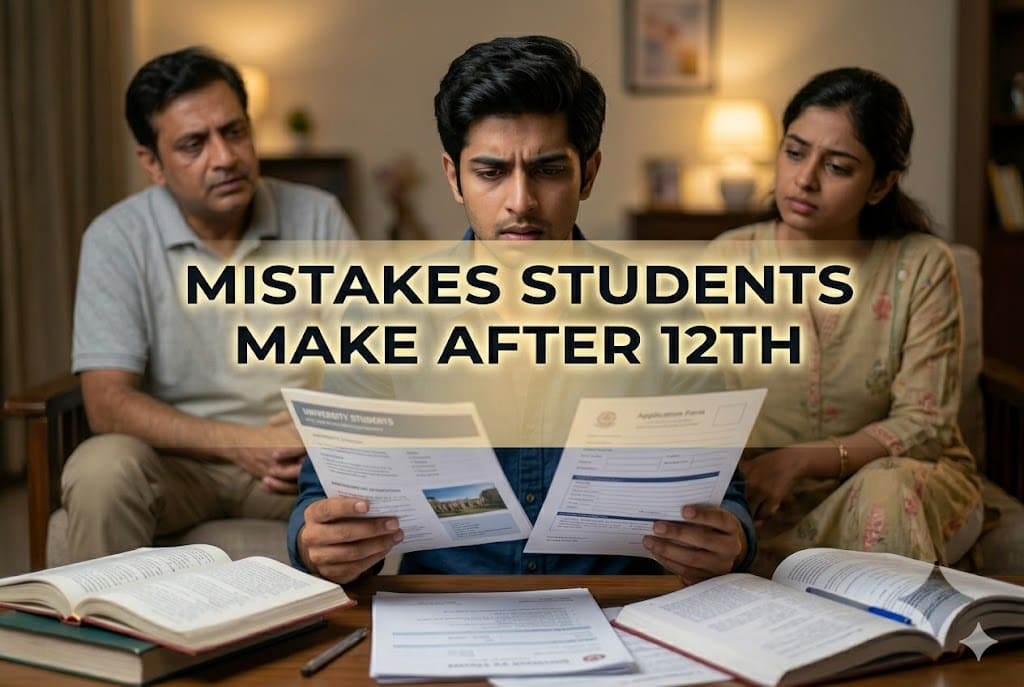
Finishing Class 12 feels like a huge achievement. For many students, it is also the beginning of one of the most confusing phases of life. Suddenly, everyone starts giving advice — parents, relatives, friends, coaching institutes, and even social media influencers. In this pressure-filled environment, many young people make serious mistakes after 12th students often regret later in their careers.
The reality is that the decisions made immediately after 12th can shape education, confidence, career direction, finances, and long-term growth opportunities. However, most students are never properly taught how to make smart career decisions.
Some choose courses blindly because friends are joining them. Others follow outdated career paths without understanding industry changes. Many students ignore their strengths completely and later struggle with dissatisfaction, low motivation, or limited career growth.
According to career trend discussions by World Economic Forum, rapid technological change is transforming the future job market faster than traditional career planning systems can adapt.
Students exploring career planning, online education, and future-ready skills can also discover practical guidance through OneGrasp Career Insights.
Choosing Courses Without Understanding Career Scope
One of the most common mistakes students make is selecting degrees without researching future career opportunities.
Many students ask:
“Which course is popular?”
“Which degree gives quick jobs?”
“What are my friends choosing?”
instead of asking:
“What skills will be valuable in the future?”
“Does this field match my strengths?”
“What kind of work lifestyle do I want?”
Example
Weak Decision Approach
Smart Decision Approach
Following trends blindly
Researching industry demand
Choosing based on pressure
Choosing based on strengths
Ignoring future skills
Studying long-term growth
Career decisions should always balance passion, skills, and market demand.
Ignoring Skill Development
Another major mistake is believing degrees alone guarantee success.
Today’s employers increasingly value:
Practical skills
Communication ability
Problem-solving
Digital literacy
Adaptability
Students who ignore skill-building often struggle later even after completing degrees.
For example, a student with strong projects, internships, and practical exposure may outperform someone with only academic scores.
Following Peer Pressure
Many students choose streams and colleges simply because friends are choosing them.
This creates long-term problems because every individual has different:
Interests
Learning styles
Career goals
Strengths
Personality traits
Common Peer Pressure Decisions
Pressure-Based Choice
Better Independent Choice
“My friends chose engineering”
Research personal suitability
“Everyone is doing MBA”
Evaluate long-term goals
“This course is trending online”
Verify career opportunities
Independent decision-making is extremely important after 12th.
Ignoring Financial Planning
Students often focus only on admission without understanding total education costs.
Many families later struggle with:
High tuition fees
Hostel costs
Relocation expenses
Education loans
Hidden charges
Students should calculate total ROI carefully before selecting colleges or courses.
Professionals and students researching affordable education and career planning can also explore guidance through OneGrasp Education Resources.
Choosing Colleges Only Based on Advertisements
Aggressive marketing often influences students heavily.
Some colleges promise:
Guaranteed placements
High salary packages
International opportunities
Premium campus life
However, students should verify:
Accreditation
Placement records
Faculty quality
Industry reputation
Alumni outcomes
before taking admissions.
Ignoring Emerging Career Opportunities
Many students still focus only on traditional careers without exploring modern opportunities.
India’s future job market is expanding rapidly in areas such as:
AI and data analytics
Cybersecurity
Digital marketing
UI/UX design
Content creation
Cloud computing
Renewable energy
According to workforce insights from McKinsey & Company, digital transformation is reshaping skill demand globally.
Students who stay updated gain significant long-term advantages.
Not Learning Communication Skills
Technical knowledge alone is no longer enough.
Many talented students struggle professionally because of weak:
Communication
Confidence
Networking
Presentation skills
Strong communication improves:
Interviews
Internships
Leadership opportunities
Workplace growth
Students should begin improving these abilities early.
Depending Entirely on Parents or Relatives
Family guidance can be helpful, but blindly following others without self-analysis often creates dissatisfaction.
Parents may sometimes recommend careers based on:
Old industry realities
Social prestige
Stability fears
Personal experiences
However, modern industries evolve rapidly.
Students should combine family advice with:
Research
Career counselling
Skill assessments
Industry trends
Expert Insight / Analysis
One of the biggest shifts in India’s career landscape is that adaptability is becoming more important than fixed career plans.
Experts increasingly believe students should focus less on “safe careers” and more on “future-ready skills.”
Another important trend is career flexibility.
Earlier, people often worked in one industry for decades. Today, professionals frequently change roles, industries, and skill areas throughout their careers.
Therefore, students should prioritize:
Learning ability
Curiosity
Problem-solving
Digital literacy
Emotional intelligence
instead of depending only on degrees.
Experts also emphasize that self-awareness is one of the most underrated career advantages.
Students who understand their strengths early usually make smarter long-term decisions.
Common Mistakes to Avoid
Here are some major mistakes students should actively avoid after 12th:
Choosing careers blindly
Ignoring practical skills
Following social pressure
Selecting fake colleges
Avoiding career research
Depending only on marks
Ignoring communication skills
Delaying career planning
Small mistakes at this stage can create long-term career frustration later.
Latest Trends / Updates
AI and automation are rapidly changing future job opportunities across India.

Skill-based hiring is becoming more important than traditional degrees alone.

Students are increasingly choosing flexible online learning and hybrid education models.

Digital portfolios, internships, and project-based learning are gaining stronger employer attention.

Career opportunities in AI, cybersecurity, analytics, and digital business are expanding rapidly.

Companies increasingly value adaptability, communication, and problem-solving skills alongside academic qualifications.
Real-Life Example / Mini Case Study
Consider the example of Rahul, a commerce student from Hyderabad.
After 12th, he joined an engineering course simply because most of his friends selected it. However, he struggled with interest and motivation throughout the program.
During college, he discovered a strong interest in digital marketing and content strategy through online projects. Eventually, he completed certifications, built freelance experience, and transitioned into a digital marketing career.
Although successful later, Rahul often says he would have saved years of confusion if he had explored his strengths earlier instead of following peer pressure.
His story reflects the reality faced by many Indian students today.
Pros and Cons of Early Career Decisions
Pros
Cons
Early planning creates direction
Wrong decisions may create stress
Skill-building starts earlier
Social pressure affects judgment
Better long-term preparation
Lack of career awareness
Financial planning becomes easier
Students may rush decisions
More confidence about future
Industry trends change rapidly
Beginner vs Expert Career Planning Mindset
Beginner Thinking
Expert Thinking
Chooses based on popularity
Researches future demand
Focuses only on degrees
Builds practical skills
Avoids self-analysis
Understands strengths clearly
Depends on others completely
Makes informed decisions
Ignores industry trends
Studies future opportunities
What Students Should Focus on After 12th
Students should prioritize:
Self-awareness
Career research
Skill development
Communication improvement
Practical learning
Networking
Future industry awareness
Long-term career success depends heavily on adaptability and continuous learning.
Quick Checklist
Research career options properly
Understand personal strengths
Verify college credibility
Learn practical skills
Improve communication
Avoid blind peer pressure
Stay updated with future careers
Conclusion
The period immediately after 12th is one of the most important transition phases in a student’s life. While pressure, confusion, and uncertainty are common, smart decisions made during this stage can create enormous long-term advantages.
Students should avoid rushing into careers blindly and instead focus on understanding themselves, researching opportunities, and building future-ready skills. In today’s rapidly evolving economy, adaptability, practical learning, and continuous growth matter more than ever.
The smartest students are not necessarily those with perfect marks — they are the ones who stay curious, learn continuously, and make informed decisions. Platforms like OneGrasp can also help students stay updated about career planning, education trends, and future opportunities in India.
FAQs
Choosing courses without understanding career opportunities and personal strengths is one of the biggest mistakes.
No. Skills, communication, adaptability, and practical experience are equally important today.
Students should research industries, understand strengths, explore internships, and seek proper guidance.
Yes. Online learning can help students build future-ready skills alongside formal education.

 May 23, 2026
 7 Min
 No Comment