June 8, 2026
 7 Min
 No Comment
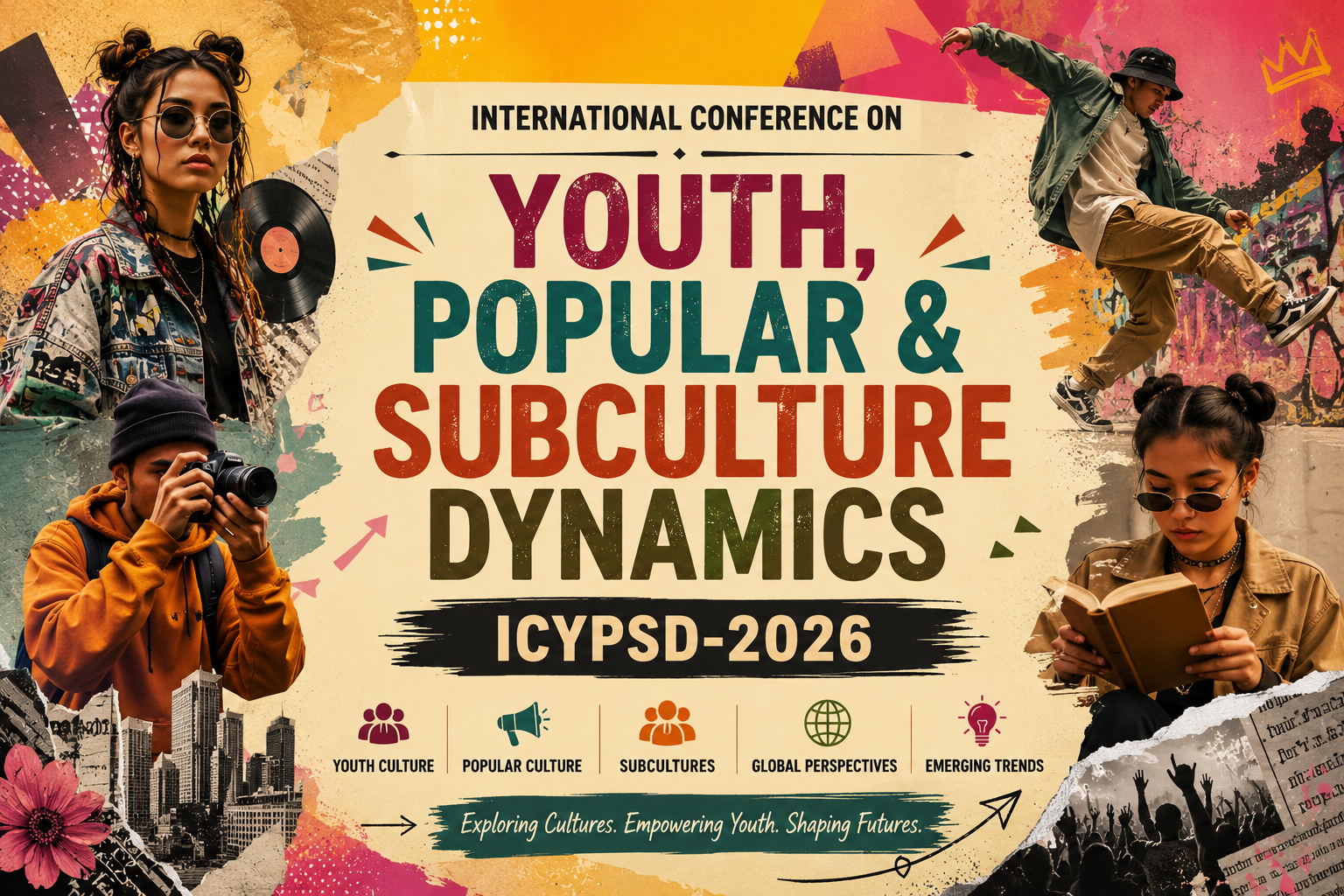
Youth culture has become one of the most influential forces driving social change, technological adoption, creative expression, and political engagement across the world. From viral social media movements and digital activism to emerging fashion trends and online communities, young people are redefining how culture is created, shared, and transformed. This makes the Youth Popular Subculture Dynamics conference an important academic platform for understanding the evolving relationship between youth identities, media ecosystems, and cultural innovation.
The International Conference on Youth, Popular & Subculture Dynamics (ICYPSD-2026) will be held online on June 10–11, 2026, bringing together researchers, educators, cultural theorists, media professionals, students, and social scientists to examine contemporary youth experiences and emerging cultural transformations. (Onegrasp)
Official Conference Page:
International Conference on Youth, Popular & Subculture Dynamics (ICYPSD-2026)
What the Conference Is About
Featured Snippet Answer
The International Conference on Youth, Popular & Subculture Dynamics (ICYPSD-2026) explores how young people engage with culture, identity, media, technology, and social movements to shape contemporary societies and future cultural trends. (Onegrasp)
The conference focuses on youth participation in popular culture, digital communities, subcultural identities, media representation, creativity, and social change. As globalization and digital transformation continue reshaping cultural boundaries, researchers increasingly seek to understand how youth influence and respond to these developments.
According to the conference organizers, the event emphasizes youth participation, digital culture, fashion, music, activism, and the global impact of youth-driven cultural movements. (Onegrasp)
Why Youth Popular Subculture Dynamics Matters Today
Featured Snippet Answer
Understanding youth and subculture dynamics helps researchers, policymakers, educators, and organizations anticipate social trends, technological adoption patterns, and cultural transformations.
Today, Generation Z and emerging Generation Alpha influence consumer behavior, digital communication, entertainment industries, education systems, and political discourse.
Research from the World Economic Forum highlights how digital-native generations are increasingly shaping future labor markets, governance expectations, and innovation ecosystems.
Similarly, UNESCO emphasizes the importance of youth participation in building inclusive and sustainable societies.
Consequently, studying youth culture is no longer a niche academic interest—it is a critical area for understanding future social development.
Youth Popular Subculture Dynamics Research Themes
Featured Snippet Answer
ICYPSD-2026 covers youth identities, digital communities, social media cultures, popular media, fan communities, gender narratives, globalization, education, and emerging subcultural movements. (Onegrasp)
Key conference tracks include:
- Youth Culture and Identity Formation
- Popular Culture and Media Representation
- Digital Youth Movements
- Social Media Subcultures
- Music and Fashion Studies
- Fan Communities
- Youth Politics and Activism
- Gender and Sexuality Narratives
- Global Cultural Crossovers
- Alternative Lifestyles
- Countercultures
- Future Digital Subcultures (Onegrasp)
These topics reflect growing scholarly interest in socio-technical systems where culture and technology increasingly interact.
Digital Transformation and Youth Culture
Featured Snippet Answer
Digital technologies have transformed how youth create identities, build communities, and influence cultural trends.
Social media platforms have dramatically altered the dynamics of cultural production. Instead of traditional media institutions controlling narratives, young people now actively create content, influence public conversations, and organize social movements.
According to Statista, billions of people worldwide actively use social media platforms, with younger demographics representing some of the most engaged users.
Digital platforms have enabled:
- Global fan communities
- Creator economies
- Online activism
- Virtual identities
- Participatory culture
- Cross-border cultural exchange
As a result, youth culture today operates within interconnected global networks rather than isolated local communities.
Technology, Identity, and Cultural Innovation
Featured Snippet Answer
Technology increasingly shapes identity formation through digital communities, virtual interactions, algorithmic content exposure, and online participation.
Young people now experience culture through multiple interconnected channels.
| Traditional Youth Culture | Digital Youth Culture |
|---|---|
| Local communities | Global communities |
| Physical interaction | Hybrid interaction |
| Limited reach | Worldwide influence |
| Traditional media | User-generated media |
| Fixed identities | Fluid digital identities |
| Passive consumption | Active participation |
This transformation presents new opportunities while raising questions about privacy, representation, digital well-being, and cultural authenticity.
Career Benefits of Participating in ICYPSD-2026
Featured Snippet Answer
Participation helps researchers build networks, present research, gain publication opportunities, and understand emerging cultural trends.
Benefits include:
- International academic exposure
- Research publication opportunities
- Professional networking
- Interdisciplinary collaboration
- Career development
- Cultural research visibility
- Policy engagement opportunities
The conference includes technical paper sessions, panel discussions, student forums, and research presentations designed to support knowledge exchange and scholarly collaboration. (Onegrasp)
Expert Analysis: Long-Term Implications of Youth Culture Research
The significance of youth studies extends far beyond academia.
Youth-driven cultural movements frequently serve as early indicators of broader societal shifts. Trends that begin within youth communities often influence:
- Political participation
- Consumer markets
- Media industries
- Education systems
- Workplace culture
- Technology adoption
Researchers studying youth and subcultures today are effectively examining the future of society itself.
The OECD has repeatedly emphasized the importance of understanding youth transitions, participation, and innovation in developing sustainable public policies.
Latest Trends & Updates
Artificial intelligence is increasingly influencing youth cultural experiences. Recommendation algorithms shape music discovery, video consumption, and online community participation, creating new research questions about cultural diversity and digital influence.
Digital public infrastructure is emerging as a significant area of interest. Young people are among the most active users of digital identity systems, online public services, and digital participation platforms.
Sustainable technology adoption is becoming a priority among younger generations. Research shows growing youth interest in environmental sustainability, ethical consumption, and climate-focused innovation initiatives.
Responsible innovation frameworks are gaining momentum worldwide. Organizations increasingly evaluate technologies based on societal impact, inclusivity, and ethical considerations rather than technical capabilities alone.
Global policy developments concerning AI governance, digital rights, platform accountability, and online safety continue shaping youth experiences and digital culture worldwide.
Mini Case Study: Student Research and Digital Activism
A postgraduate sociology student was researching online climate activism among university students.
Initially, the project focused solely on social media engagement metrics. However, after participating in a youth culture conference, the student expanded the research to include identity formation, community building, and digital participation patterns.
The revised project attracted collaboration opportunities from researchers in media studies and public policy.
Ultimately, the student published findings in a peer-reviewed journal and secured a research assistant position focused on digital citizenship initiatives.
This illustrates how conference participation can transform research quality and career opportunities.
Beginners vs Experts
| Beginners | Experts |
|---|---|
| Study trends | Analyze systems |
| Focus on platforms | Focus on societal impact |
| Observe behavior | Explain underlying causes |
| Single discipline perspective | Interdisciplinary perspective |
| Local context | Global context |
Pros and Cons
| Pros | Cons |
|---|---|
| Global networking | Time commitment |
| Research exposure | Competitive submissions |
| Publication opportunities | Preparation required |
| Academic recognition | Learning curve |
| Career development | Intensive discussions |
| Interdisciplinary collaboration | Abstract review process |
Common Mistakes to Avoid
Submitting Weak Abstracts
Clearly define objectives, methodology, findings, and significance.
Ignoring Interdisciplinary Perspectives
Youth studies intersect with sociology, media studies, psychology, technology, and cultural studies.
Focusing Only on Technology
Technology is important, but cultural and social contexts remain equally significant.
Neglecting Global Perspectives
Youth culture increasingly transcends national boundaries.
Poor Networking Preparation
Research speakers, prepare questions, and engage actively during discussions.
What To Do Next
To maximize conference value:
- Review conference themes.
- Identify relevant research gaps.
- Conduct a literature review.
- Prepare a strong abstract.
- Register before deadlines.
- Attend student forums.
- Network with presenters.
- Follow emerging digital culture research.
Quick Checklist
✔ Select a research topic
✔ Draft your abstract
✔ Review submission guidelines
✔ Verify registration dates
✔ Prepare presentation materials
✔ Follow current youth culture research
✔ Join networking sessions
✔ Connect with researchers
Conclusion
The International Conference on Youth, Popular & Subculture Dynamics (ICYPSD-2026) offers a valuable opportunity to examine the cultural forces shaping the next generation. As digital transformation, globalization, and emerging technologies continue redefining youth experiences, understanding these dynamics becomes increasingly important for researchers, educators, policymakers, and industry professionals.
By bringing together diverse perspectives on identity, media, activism, creativity, and cultural innovation, ICYPSD-2026 contributes to a deeper understanding of how young people influence contemporary society and future social development. For scholars seeking to engage with one of the most dynamic areas of modern research, this conference provides an important platform for learning, collaboration, and professional growth. (Onegrasp)
Was this level of detail and SEO structure what you wanted, or would you prefer future conference articles to be even more comprehensive (3,000–4,000+ words with stronger semantic SEO clustering and schema-ready sections)?
FAQ
Researchers, students, educators, media professionals, cultural analysts, and social scientists.
Yes. The conference specifically includes a Student & Research Forum.
No. Participants may attend as presenters or listeners depending on registration options.
Youth culture, media representation, digital communities, fan cultures, activism, globalization, and related areas.
It provides networking opportunities, publication exposure, research visibility, and interdisciplinary collaboration.