June 9, 2026
  9 Min
9 Min  No Comment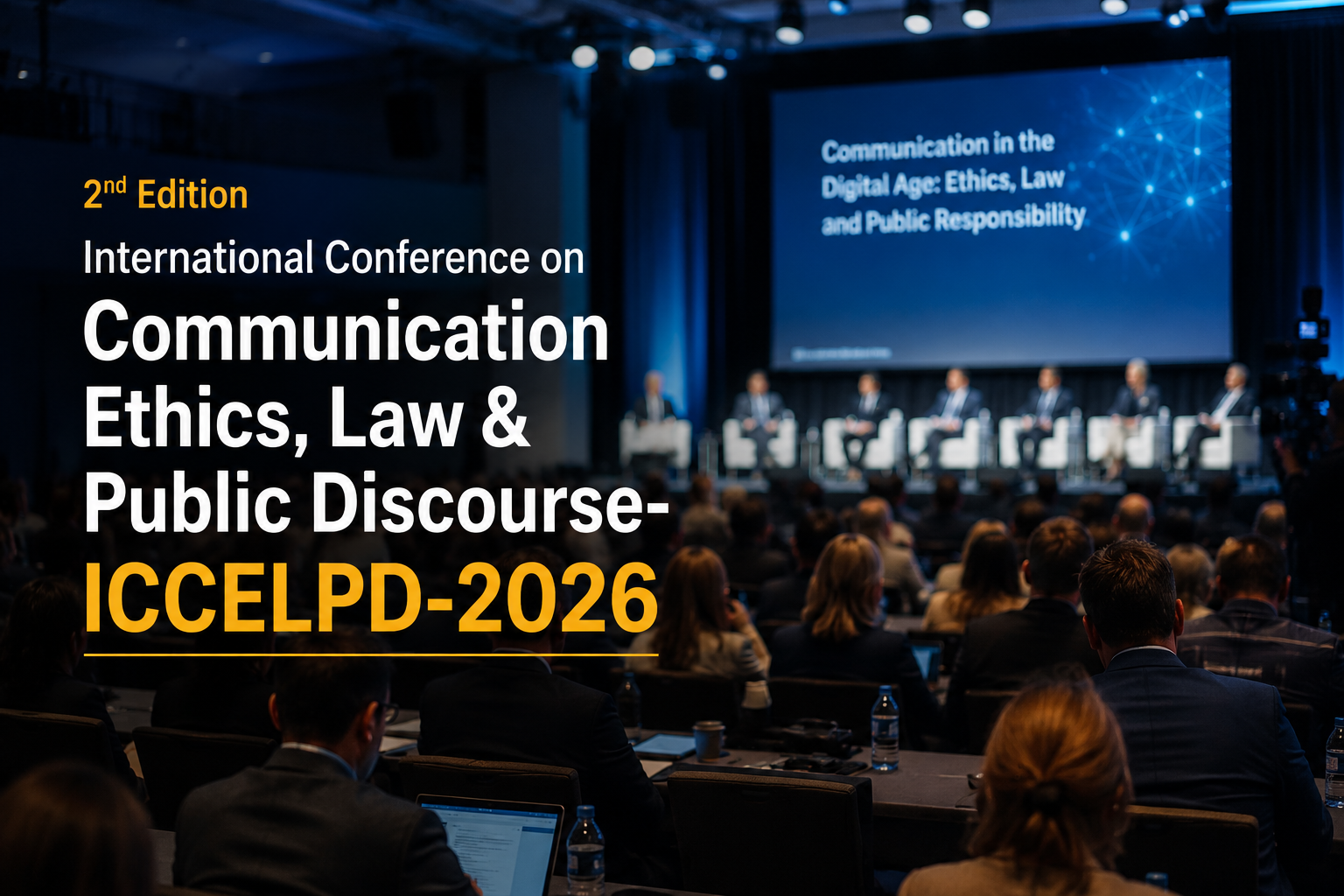
In an age where information travels faster than ever before, communication has become one of the most influential forces shaping societies, economies, and democracies. Social media platforms, digital journalism, artificial intelligence, and global communication networks have transformed how people consume information, form opinions, and participate in public discussions. However, this transformation has also raised critical questions about ethics, regulation, misinformation, privacy, accountability, and freedom of expression.
The Communication Ethics Law Public conference, officially known as the 2nd Edition International Conference on Communication Ethics, Law & Public Discourse (ICCELPD-2026), provides a global platform for researchers, media professionals, policymakers, legal experts, educators, and students to examine the evolving relationship between communication, ethics, law, and democratic participation.
As societies continue to grapple with misinformation, algorithmic influence, digital rights, and media accountability, ICCELPD-2026 offers a timely opportunity to explore solutions that promote responsible communication and informed public dialogue.
Official Conference Information: ICCELPD-2026 Official Conference Page
For additional conference opportunities and academic events, researchers can also explore the broader conference ecosystem available through OneGrasp Conferences. The platform hosts conferences across multiple disciplines and encourages interdisciplinary collaboration among scholars worldwide. (Onegrasp)
What the Conference Is About
Featured Snippet Answer
The 2nd Edition International Conference on Communication Ethics, Law & Public Discourse (ICCELPD-2026) focuses on communication ethics, media regulation, public discourse, digital governance, journalism standards, freedom of expression, AI-driven communication, and responsible information sharing.
The conference brings together experts from communication studies, media research, journalism, law, political science, public policy, and digital technology. Participants explore how communication systems influence society while addressing ethical and legal challenges emerging in the digital era.
Topics include media ethics, communication governance, public trust, misinformation, social media influence, digital rights, and the future of democratic dialogue. These discussions are increasingly relevant as digital communication platforms continue reshaping public discourse worldwide. (Onegrasp)
Why Communication Ethics Matters Today
Featured Snippet Answer
Communication ethics helps ensure accuracy, accountability, transparency, and fairness in information sharing while protecting democratic values and public trust.
The digital age has significantly expanded access to information. However, it has also created challenges related to misinformation, disinformation, deepfakes, algorithmic bias, and information overload.
According to the World Economic Forum, misinformation and disinformation remain among the most significant global risks affecting social cohesion and institutional trust.
Ethical communication frameworks help organizations and individuals balance freedom of expression with social responsibility. They provide guidance for journalists, policymakers, educators, and technology companies seeking to promote informed public discourse.
Consequently, communication ethics has become a critical field of study for understanding the responsibilities associated with modern information ecosystems.
Communication Ethics Law Public Conference Themes
Featured Snippet Answer
ICCELPD-2026 explores communication ethics, media law, digital governance, public opinion, AI communication systems, journalism standards, and freedom of expression.
Major conference themes include:
- Communication Ethics and Accountability
- Media Law and Regulation
- Digital Journalism
- Public Discourse and Democracy
- Social Media Influence
- Artificial Intelligence and Communication
- Freedom of Expression
- Digital Rights and Privacy
- Misinformation and Fact-Checking
- Political Communication
- Media Literacy
- Strategic Communication
- Public Relations Ethics
- Communication Policy and Governance
These themes reflect the growing complexity of communication environments and the need for interdisciplinary approaches to governance and ethical decision-making. (Onegrasp)
The Relationship Between Communication, Law, and Democracy
Featured Snippet Answer
Communication law and ethics help protect democratic institutions by promoting transparency, accountability, informed participation, and fair access to information.
Healthy democracies depend on informed citizens.
Communication laws establish frameworks for media operations, freedom of expression, privacy rights, and public accountability. Ethical standards complement these legal protections by encouraging responsible communication practices beyond regulatory requirements.
Key democratic functions supported by ethical communication include:
| Communication Principle | Democratic Impact |
|---|---|
| Transparency | Public trust |
| Accountability | Institutional legitimacy |
| Accuracy | Informed decision-making |
| Freedom of Expression | Civic participation |
| Media Independence | Democratic oversight |
As digital communication channels continue expanding, maintaining these principles becomes increasingly important for preserving democratic resilience.
Digital Transformation and Public Discourse
Featured Snippet Answer
Digital technologies have transformed public discourse by increasing participation, accelerating information sharing, and creating new challenges for communication governance.
Social media platforms, online communities, and AI-powered communication tools have fundamentally changed how public conversations occur.
Benefits include:
- Faster information exchange
- Greater public participation
- Expanded global communication
- Increased access to knowledge
- Enhanced citizen engagement
However, challenges include:
- Misinformation
- Algorithmic bias
- Polarization
- Privacy concerns
- Content moderation disputes
According to OECD Digital Policy Research, effective digital governance requires balancing innovation with accountability and public trust.
Therefore, conferences such as ICCELPD-2026 are essential for discussing how societies can navigate these challenges responsibly.
Ethical AI and Communication Governance
Featured Snippet Answer
Ethical AI governance seeks to ensure transparency, fairness, accountability, and responsible use of artificial intelligence in communication systems.
Artificial intelligence is increasingly influencing media production, content recommendation, audience targeting, and public communication.
Emerging issues include:
- AI-generated content
- Deepfakes
- Algorithmic transparency
- Data privacy
- Automated moderation
- Digital manipulation
Research published by organizations such as Harvard Business Review and McKinsey & Company highlights the importance of responsible AI governance frameworks that balance innovation with ethical safeguards.
As AI adoption accelerates, communication professionals must understand both the opportunities and risks associated with these technologies.
Opportunities for Researchers and Students
Featured Snippet Answer
ICCELPD-2026 provides researchers and students with opportunities to present research, publish findings, build professional networks, and engage with global experts.
Conference participation offers numerous benefits:
- Research dissemination
- Publication opportunities
- International networking
- Interdisciplinary collaboration
- Professional development
- Policy engagement
- Academic recognition
Students and early-career researchers particularly benefit from exposure to current debates surrounding media ethics, communication law, digital governance, and public discourse.
These experiences can significantly strengthen academic and professional development.
Expert Insight: Long-Term Implications for Society
The future of communication will be shaped by ongoing interactions between technology, governance, law, and public trust.
Several long-term challenges require continued attention:
- Regulating AI-generated content
- Protecting democratic discourse
- Combating misinformation
- Ensuring digital inclusion
- Strengthening media literacy
- Preserving freedom of expression
- Balancing privacy and transparency
At the same time, significant opportunities exist.
Responsible communication policies can strengthen democratic institutions, improve public trust, enhance civic engagement, and support more inclusive information ecosystems.
Research presented at conferences like ICCELPD-2026 contributes directly to these important societal conversations.
Latest Trends & Updates
Artificial intelligence continues transforming communication systems globally. News organizations, governments, and private companies increasingly use AI for content generation, audience engagement, translation services, and information analysis. At the same time, concerns about transparency and accountability remain central policy discussions.
Digital public infrastructure is becoming an important topic within communication governance. Governments are exploring secure digital platforms that support public communication while protecting privacy, accessibility, and democratic participation.
Media literacy initiatives are expanding worldwide. Educational institutions increasingly recognize the need to equip citizens with skills that help identify misinformation, evaluate sources, and engage responsibly in online discussions.
Regulatory frameworks addressing platform accountability continue evolving. Policymakers are debating how social media companies should manage harmful content while protecting freedom of expression and encouraging innovation.
Responsible innovation has emerged as a major priority across communication industries. Researchers are examining how ethical design principles, transparency requirements, and stakeholder engagement can improve trust in digital communication systems.
Global discussions surrounding digital rights, data protection, and algorithmic governance are also shaping new research directions. These developments highlight the growing importance of interdisciplinary collaboration between communication scholars, legal experts, technologists, and policymakers.
Real-Life Example: University Media Literacy Initiative
A university communication department noticed that students increasingly struggled to distinguish reliable information from misleading online content.
Faculty members participated in a communication ethics conference and learned about innovative media literacy frameworks, fact-checking methodologies, and digital citizenship programs.
Following the conference, the university launched a media literacy initiative that combined communication theory, digital ethics, and practical verification exercises.
Within two academic years, students demonstrated improved critical thinking skills, stronger source evaluation abilities, and greater awareness of ethical communication practices.
The project later expanded into community outreach programs, benefiting local schools and civic organizations.
This example demonstrates how conference-driven knowledge sharing can generate meaningful educational and societal impact.
Traditional Communication vs Ethical Communication
| Traditional Communication | Ethical Communication |
|---|---|
| Information delivery focus | Responsibility and transparency |
| Limited stakeholder consideration | Inclusive engagement |
| Reactive reputation management | Proactive trust-building |
| Short-term objectives | Long-term credibility |
| Platform-centered strategies | Human-centered communication |
Beginners vs Experts
| Beginners | Experts |
|---|---|
| Learn communication principles | Shape communication governance |
| Focus on media tools | Focus on societal impact |
| Study communication theories | Develop policy frameworks |
| Analyze messages | Evaluate systems and ecosystems |
| Understand ethics concepts | Lead ethical decision-making |
Pros and Cons of Conference Participation
| Pros | Cons |
|---|---|
| International networking | Time commitment |
| Research exposure | Competitive submissions |
| Publication opportunities | Registration costs |
| Professional recognition | Preparation requirements |
| Policy engagement | Intensive schedules |
| Interdisciplinary collaboration | Learning curve for newcomers |
Common Mistakes to Avoid
Submitting Weak Abstracts
Clearly articulate research objectives, methodology, findings, and practical significance.
Ignoring Legal Perspectives
Communication research often benefits from integrating regulatory and legal analysis.
Focusing Only on Technology
Human behavior, ethics, governance, and societal impact are equally important.
Overlooking Interdisciplinary Approaches
Communication challenges increasingly require expertise from law, sociology, psychology, technology, and public policy.
Poor Networking Preparation
Research speakers, institutions, and fellow participants before attending to maximize collaboration opportunities.
What To Do Next
To maximize your conference experience:
- Review conference themes thoroughly.
- Select a relevant research topic.
- Conduct a comprehensive literature review.
- Prepare a strong abstract submission.
- Register before deadlines.
- Attend keynote presentations.
- Participate in panel discussions.
- Build meaningful professional connections.
- Follow emerging communication policy developments.
- Engage with interdisciplinary research communities.
Quick Checklist
✔ Choose a conference theme
✔ Complete literature review
✔ Prepare abstract submission
✔ Verify formatting requirements
✔ Register before deadlines
✔ Prepare presentation materials
✔ Research keynote speakers
✔ Define networking goals
✔ Follow emerging communication trends
Conclusion
The 2nd Edition International Conference on Communication Ethics, Law & Public Discourse (ICCELPD-2026) arrives at a crucial moment in the evolution of global communication systems. As societies navigate the challenges of misinformation, AI-generated content, digital governance, and public trust, the conference provides a valuable forum for exploring evidence-based solutions and ethical frameworks.
By bringing together scholars, media professionals, legal experts, policymakers, and students, ICCELPD-2026 encourages meaningful dialogue about the future of communication in a rapidly changing world. Whether you are conducting research, developing policy, working in media, or studying communication systems, the conference offers an opportunity to contribute to conversations that will shape public discourse for years to come. (Onegrasp)
If you’d like, I can also create a matching SEO feature image prompt (1536×1024) in the same premium style you’ve been using for OneGrasp conference articles.
FAQ
Researchers, journalists, communication professionals, policymakers, educators, legal experts, students, and digital media practitioners.
Yes. Students interested in communication studies, media ethics, journalism, law, public policy, and digital governance can benefit significantly.
No. Participants may attend sessions, workshops, and networking activities without presenting research.
Accepted submissions may be considered for conference proceedings and related publication opportunities according to conference guidelines. (Onegrasp)
Participation enhances professional visibility, strengthens networks, supports research dissemination, and provides exposure to emerging communication trends.