Pick a service, choose your date & time slot — our expert will call you.
Booking Confirmed!
Thank you! We've received your request. Our counsellor will reach out to confirm your slot shortly.
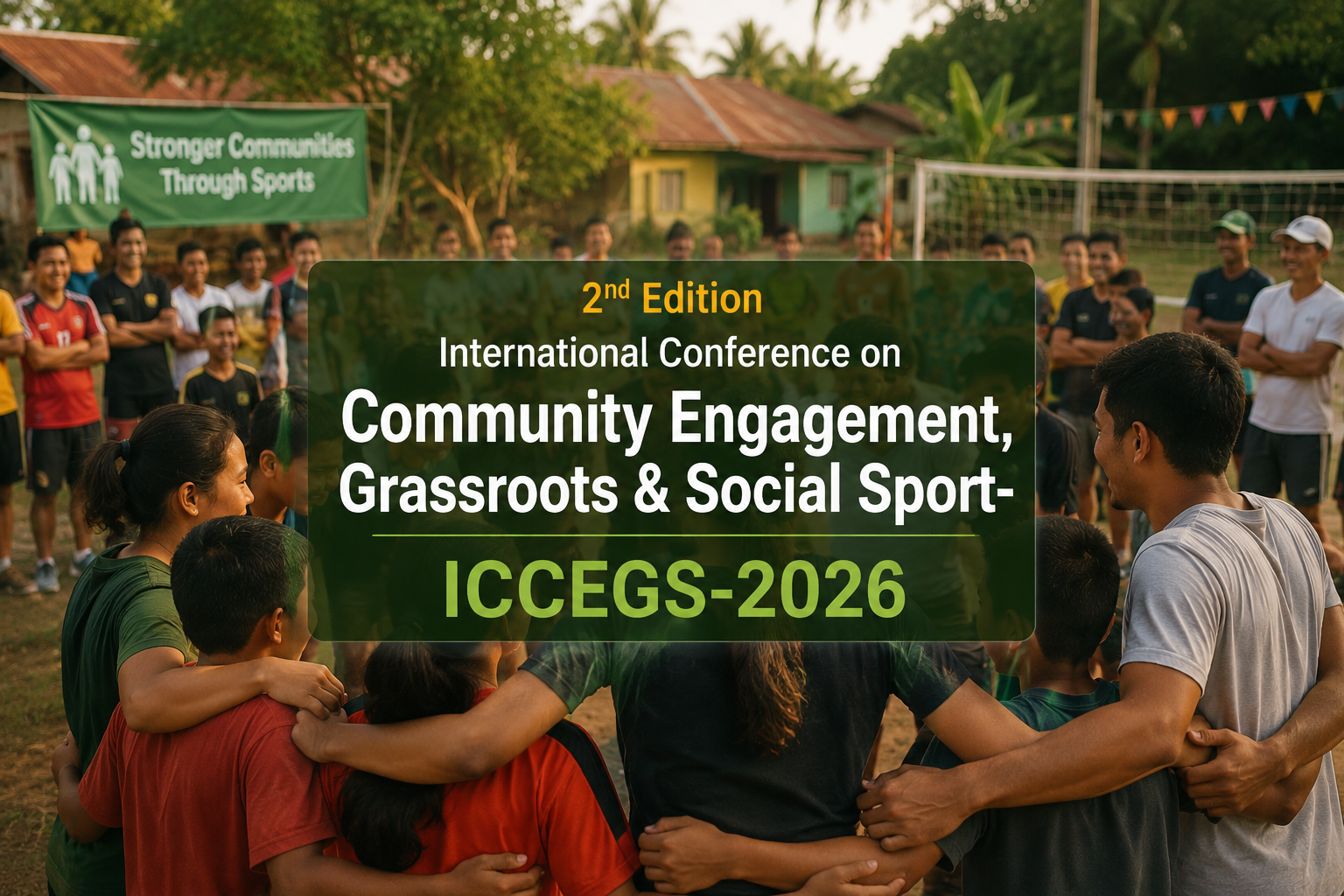
2nd Edition International Conference on Community Engagement, Grassroots & Social Sport (ICCEGS-2026): Building Stronger Communities Through the Power of Sport
Sport has always been more than competition. Across communities worldwide, grassroots and social sports initiatives are helping people build connections, improve health, promote inclusion, and create opportunities for personal and community development. Whether through local football programs, youth engagement projects, adaptive sports initiatives, or community recreation schemes, sport continues to serve as a powerful catalyst for social change.
The Community Engagement Grassroots Sport conference, officially known as the 2nd Edition International Conference on Community Engagement, Grassroots & Social Sport (ICCEGS-2026), provides a global platform for researchers, educators, sports administrators, community leaders, NGOs, policymakers, and practitioners to explore how sports can foster social cohesion, empowerment, education, and sustainable development. The conference focuses on community-driven sports programs, public participation, and innovative approaches that strengthen grassroots sport ecosystems worldwide.
As governments, educational institutions, and civil society organizations increasingly recognize the social value of sport, ICCEGS-2026 arrives at a crucial time for advancing research and practical solutions that maximize sport’s positive impact on society.
The 2nd Edition International Conference on Community Engagement, Grassroots & Social Sport (ICCEGS-2026) focuses on grassroots sports development, social inclusion, youth empowerment, community participation, sports governance, public health, and sustainable community-based sport initiatives.
The conference brings together academics and practitioners who share a common goal: leveraging sport as a tool for positive social transformation. It explores how community-driven sports programs can address societal challenges while creating opportunities for education, leadership, health improvement, and social cohesion.
According to the conference organizers, ICCEGS-2026 specifically emphasizes community engagement, social inclusion, public participation, and sustainable grassroots development through sport.
Why Community Engagement Through Sport Matters Today
Featured Snippet Answer
Community-based sports programs strengthen social bonds, improve public health, empower youth, and promote inclusive participation across diverse populations.
Communities worldwide face challenges including social isolation, health inequalities, youth disengagement, and limited access to recreational opportunities.
Sport offers a unique solution because it naturally brings people together around shared experiences and goals.
According to the World Health Organization, physical activity contributes significantly to physical and mental well-being while supporting healthier communities.
Similarly, the United Nations Sustainable Development Goals recognize sport as an important contributor to health, education, gender equality, social inclusion, and sustainable development.
Consequently, grassroots sports initiatives have become increasingly important tools for community development worldwide.
Community Engagement Grassroots Sport Conference Themes
Featured Snippet Answer
ICCEGS-2026 explores grassroots sports development, social inclusion, youth empowerment, sports governance, disability inclusion, public health, and community participation.
The conference’s call for papers includes several important themes:
Grassroots Sports Development Programs
Community Engagement Through Sport
Social Inclusion and Equality
Sport for Peace and Development
Public Health and Well-being
Youth Empowerment Through Physical Activity
Community Sports Governance
Role of NGOs in Sports Development
Gender Equality in Sport
Inclusive Sports for People with Disabilities
Rural and Cultural Sports Models
Corporate Social Responsibility in Sports
Measuring Social Impact Through Sport
Sustainability in Community Sports
These themes highlight the growing recognition of sport as a multidimensional tool for social progress.
The Role of Grassroots Sport in Sustainable Development
Featured Snippet Answer
Grassroots sport supports sustainable development by improving health outcomes, promoting inclusion, strengthening communities, and creating opportunities for lifelong participation.
Unlike elite sports, grassroots programs focus on broad participation rather than competition alone.
Benefits include:
Grassroots Sport Benefit
Community Impact
Physical Activity
Improved public health
Youth Participation
Leadership development
Inclusive Programming
Social integration
Community Events
Stronger social cohesion
Volunteer Engagement
Civic participation
Local Partnerships
Sustainable development
Research from community sport initiatives worldwide consistently demonstrates that well-designed grassroots programs can generate significant social returns on investment.
Therefore, strengthening local sports ecosystems remains a priority for policymakers and development organizations.
Social Sport and Youth Empowerment
Featured Snippet Answer
Social sport programs help young people develop confidence, leadership skills, teamwork abilities, and positive social connections.
Youth engagement is one of the most powerful outcomes of community sport initiatives.
Programs focused on social sport often provide:
Safe recreational environments
Positive mentorship opportunities
Leadership development
Educational support
Community involvement
Healthy lifestyle promotion
Recent grassroots sports initiatives across multiple countries have shown that participation in structured community sports can improve educational engagement and reduce social exclusion.
As a result, youth-focused sports programs continue attracting attention from governments, NGOs, and educational institutions.
Inclusive Sport and Community Well-Being
Featured Snippet Answer
Inclusive sports programs promote equal participation regardless of age, gender, ability, socioeconomic status, or cultural background.
Modern community sports initiatives increasingly emphasize accessibility and inclusion.
Effective programs often include:
Adaptive sports opportunities
Gender-inclusive participation
Multicultural engagement strategies
Affordable access models
Community outreach initiatives
Inclusive sport strengthens communities by creating environments where individuals from diverse backgrounds can participate, collaborate, and develop mutual understanding.
This aligns closely with broader goals related to social equity and community well-being.
Emerging Trends in Community Engagement Grassroots Sport
Featured Snippet Answer
Technology, social innovation, impact measurement, and partnership-driven models are reshaping grassroots sports development.
Several emerging trends are transforming community sport ecosystems:
Trend
Impact
Digital Community Platforms
Increased participation
Data-Driven Program Evaluation
Better impact measurement
Social Innovation Models
Improved sustainability
Public-Private Partnerships
Expanded resources
Adaptive Sports Programs
Greater inclusion
Community Health Integration
Stronger well-being outcomes
Organizations are increasingly using analytics and evidence-based frameworks to evaluate social outcomes and improve program effectiveness.
Expert Insight: Long-Term Impact of Grassroots and Social Sport
The future of community sport extends far beyond recreation.
Over the coming decade, grassroots sports programs are expected to play increasingly important roles in:
Public health promotion
Mental health support
Youth development
Social integration
Community resilience
Sustainable urban development
Inclusive recreation
As communities seek cost-effective solutions to complex social challenges, sport-based interventions offer unique advantages due to their accessibility, scalability, and ability to engage diverse populations.
Conferences such as ICCEGS-2026 provide essential opportunities for researchers and practitioners to share evidence, evaluate outcomes, and develop innovative approaches for maximizing social impact.
Latest Trends & Updates
Sport-for-development initiatives are increasingly being integrated into national and regional policy frameworks. Governments are recognizing that community sports can contribute to public health, education, and social inclusion objectives simultaneously.
Data-driven impact assessment is becoming more common across grassroots sports programs. Organizations now use participation metrics, health outcomes, and social indicators to evaluate program effectiveness and guide future investment decisions.
Digital technologies are transforming community engagement strategies. Mobile applications, virtual communities, and online training platforms are helping organizations reach wider audiences and improve participant experiences.
Inclusive sport remains a major global priority. Programs focused on disability inclusion, gender equality, and equitable access are receiving growing support from public institutions and development agencies.
Partnership-based delivery models are expanding rapidly. Collaboration among schools, nonprofits, local governments, healthcare providers, and private-sector organizations is helping create more sustainable and impactful sports ecosystems.
Researchers are also increasingly studying the relationship between sport, mental health, community resilience, and social cohesion. These emerging areas of inquiry are likely to shape future policy and practice in the field.
Real-Life Example: Transforming a Community Through Sport
A local nonprofit organization in a semi-rural region struggled to engage teenagers who had limited access to recreational activities.
After participating in an international grassroots sports conference, program leaders implemented a community football initiative that combined sports participation with educational workshops and mentorship programs.
The project attracted hundreds of young participants within its first year.
School attendance improved, community involvement increased, and several participants emerged as youth leaders who later helped organize future activities.
The initiative eventually secured partnerships with local businesses and government agencies, demonstrating how community sport can create sustainable social impact when supported by evidence-based practices.
Traditional Sports Development vs Community-Centered Sports Development
Traditional Sports Development
Community-Centered Sports Development
Performance-focused
Participation-focused
Elite athlete pathways
Inclusive access
Short-term outcomes
Long-term social impact
Limited stakeholder involvement
Community collaboration
Competition-centered
Human-centered development
Beginners vs Experts
Beginners
Experts
Learn community sport concepts
Design sustainable sport ecosystems
Focus on participation
Focus on measurable social impact
Understand program delivery
Develop policy frameworks
Study individual projects
Analyze systems and networks
Explore engagement strategies
Lead large-scale initiatives
Pros and Cons of Conference Participation
Pros
Cons
International networking
Time commitment
Research exposure
Competitive submissions
Publication opportunities
Registration costs
Collaboration opportunities
Preparation requirements
Professional development
Intensive schedules
Access to global expertise
Learning curve for newcomers
Common Mistakes to Avoid
Submitting Weak Abstracts
Clearly articulate objectives, methodology, findings, and practical significance.
Focusing Only on Competition
Community sport research should consider social outcomes alongside athletic development.
Ignoring Inclusion
Programs should address accessibility and participation barriers.
Overlooking Impact Measurement
Evidence-based evaluation strengthens program effectiveness and funding opportunities.
Poor Networking Preparation
Identify researchers, organizations, and speakers before attending.
What To Do Next
To maximize your ICCEGS-2026 experience:
Review conference themes carefully.
Identify a relevant research topic.
Conduct a literature review.
Prepare a high-quality abstract.
Register before submission deadlines.
Attend keynote presentations.
Participate in networking sessions.
Explore community sport case studies.
Connect with NGOs and practitioners.
Follow emerging sport-for-development research.
Quick Checklist
✔ Select a research topic
✔ Review conference themes
✔ Prepare abstract submission
✔ Verify formatting requirements
✔ Register early
✔ Prepare presentation materials
✔ Research keynote speakers
✔ Set networking goals
✔ Follow current grassroots sport trends
Conclusion
The 2nd Edition International Conference on Community Engagement, Grassroots & Social Sport (ICCEGS-2026) highlights the growing recognition of sport as a powerful instrument for social change. By focusing on inclusion, participation, youth development, public health, and sustainable community engagement, the conference addresses some of the most important challenges facing modern societies.
For researchers, practitioners, policymakers, educators, and students, ICCEGS-2026 offers a valuable opportunity to share knowledge, develop partnerships, and contribute to the future of community-centered sport. As grassroots initiatives continue shaping healthier and more connected communities worldwide, the insights generated through this conference will help advance both research and real-world impact.
Was this level of detail and structure aligned with what you want for these conference articles, or would you prefer future ones to be even more publication-focused with longer sections and additional internal-link placement?
FAQ
Researchers, educators, sports administrators, community leaders, NGOs, policymakers, students, and practitioners interested in community sport and social development.
Yes. Students can present research, attend sessions, network with experts, and gain valuable insights into grassroots sports development.
Community engagement, grassroots sports, social inclusion, youth empowerment, sports governance, public health, disability inclusion, and sustainability.
Yes. Presented papers may be eligible for publication and DOI support based on conference review outcomes and submission requirements.
Participation expands professional networks, enhances research visibility, strengthens expertise, and supports future collaborations.

 June 9, 2026
  9 Min
9 Min  No Comment