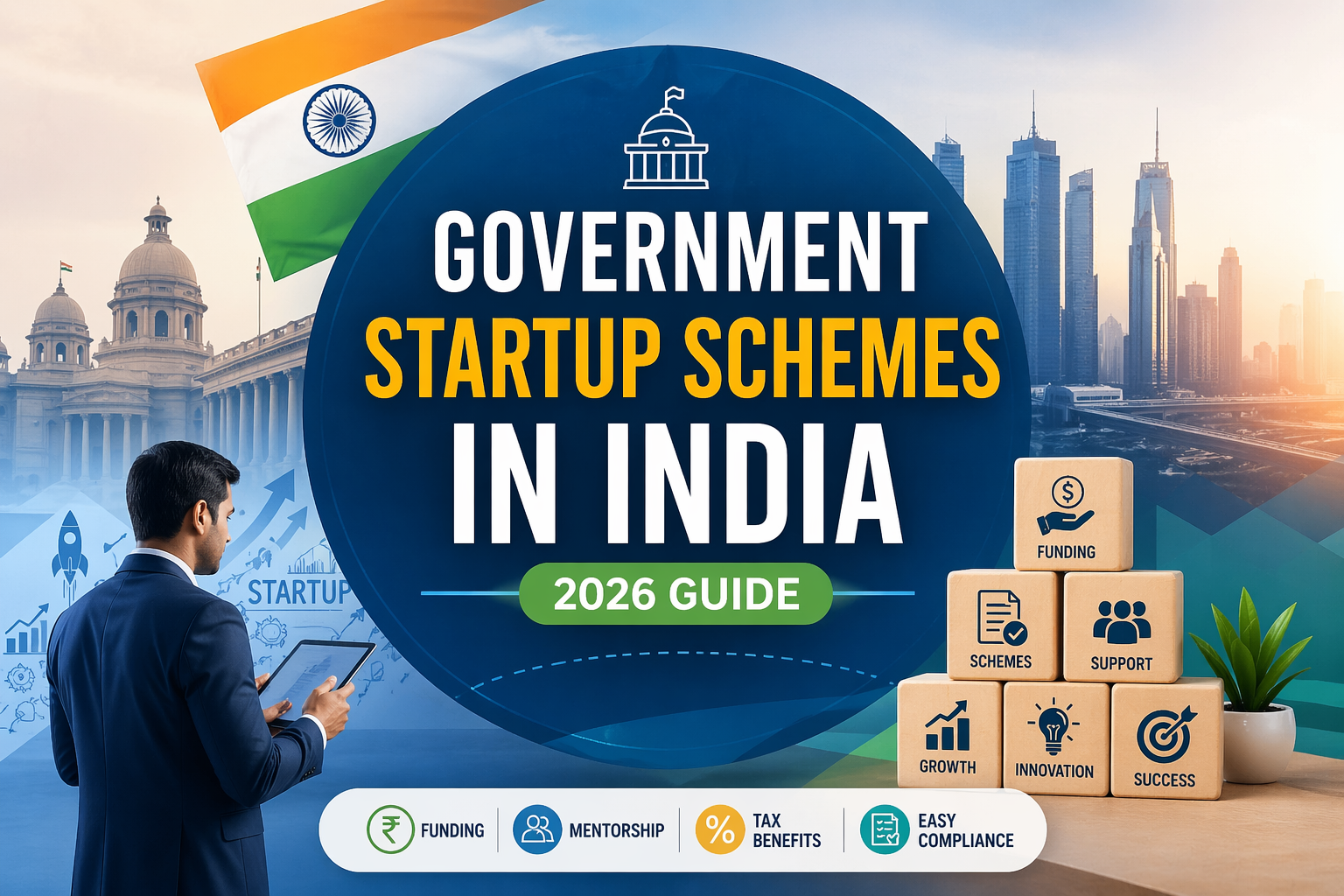
Starting a business in India sounds exciting—until funding, compliance, and risk hit you all at once. Many aspiring entrepreneurs give up before they even begin. That’s exactly where government startup schemes India come into play.
India’s startup ecosystem is booming, with over 1 lakh recognized startups as of 2025. However, most founders still don’t fully utilize government support. If you’re planning to launch your venture in 2026, understanding these schemes can be the difference between struggling and scaling.
The Indian government has actively pushed entrepreneurship through multiple initiatives. Programs like Startup India, MSME schemes, and Digital India have reduced barriers for first-time founders.
According to the DPIIT (Department for Promotion of Industry and Internal Trade), startups registered under Startup India receive tax exemptions, easier compliance, and funding support.
Moreover, these schemes are not just for tech startups. Whether you’re starting a small business, a social enterprise, or a scalable venture, there’s likely a scheme designed for you.
Consider access to funding and mentorship networks
In addition, don’t hesitate to connect with current students or alumni before making a decision.
Common Mistakes to Avoid
Many students and early entrepreneurs make avoidable errors:
Ignoring eligibility criteria: Not all schemes fit every business
Late applications: Missing deadlines can cost opportunities
Poor documentation: Incomplete paperwork leads to rejection
Overdependence on funding: Focus on business fundamentals first
Lack of research: Not comparing schemes before applying
Avoiding these mistakes can significantly improve your chances of success.
Career Impact of Startup Schemes
Government startup schemes are not just financial tools—they shape careers.
Build entrepreneurial mindset early
Gain hands-on business experience
Improve employability even if the startup fails
Open doors to investor networks and accelerators
In fact, many successful founders started with government-backed support before scaling globally.
Practical Decision-Making Tips
Before applying to any scheme, ask yourself:
Is my business idea scalable?
Do I meet eligibility requirements?
Which scheme aligns with my industry?
Can I manage compliance requirements?
Moreover, always compare multiple schemes instead of applying blindly.
FAQs
1. What are government startup schemes in India? These are initiatives by the Indian government that provide funding, tax benefits, and support to entrepreneurs.
2. Who is eligible for startup schemes? Eligibility varies, but most schemes require a registered business and innovation-driven idea.
3. Are startup loans in India collateral-free? Yes, schemes like MUDRA and CGTMSE offer collateral-free loans for eligible applicants.
4. Can students apply for startup schemes? Yes, especially through incubation programs and student-focused initiatives like Atal Innovation Mission.
5. Which is the best startup scheme in India? Startup India is the most comprehensive, but the best scheme depends on your business needs.
Conclusion
India is one of the fastest-growing startup ecosystems in the world. However, success doesn’t come from ideas alone—it comes from using the right resources at the right time.
Government startup schemes India offers in 2026 are powerful tools—but only if you understand and use them wisely. From funding to mentorship, these programs can transform your entrepreneurial journey.
If you’re serious about building your future, don’t navigate this alone.
Start your career planning today with expert guidance.
Frequently Asked Questions
What are the main government startup schemes available in India for 2026?
Key schemes include Startup India Initiative, MUDRA Loans, Stand-Up India, Atal Innovation Mission, and the Credit Guarantee Scheme, each offering specific funding, tax, and support benefits.
Who can apply for these government startup schemes?
Most schemes are open to registered businesses with an innovative idea; many also target specific groups such as women, SC/ST entrepreneurs, and student startups.
Are the loans under MUDRA and CGTMSE collateral‑free?
Yes, both MUDRA (PMMY) and the Credit Guarantee Scheme provide collateral‑free loans for eligible micro, small and medium enterprises.
How does the Startup India Initiative help new ventures?
Startup India offers a three‑year tax holiday, fast‑track patent processing, self‑certification compliance, and access to funding and mentorship networks.
Can college students benefit from these schemes?
Students can leverage incubation centers, mentorship, and grants through programs like Atal Innovation Mission and university‑linked Startup India initiatives.

 April 24, 2026
  5 Min
5 Min  No Comment