June 11, 2026
 8 Min
 No Comment
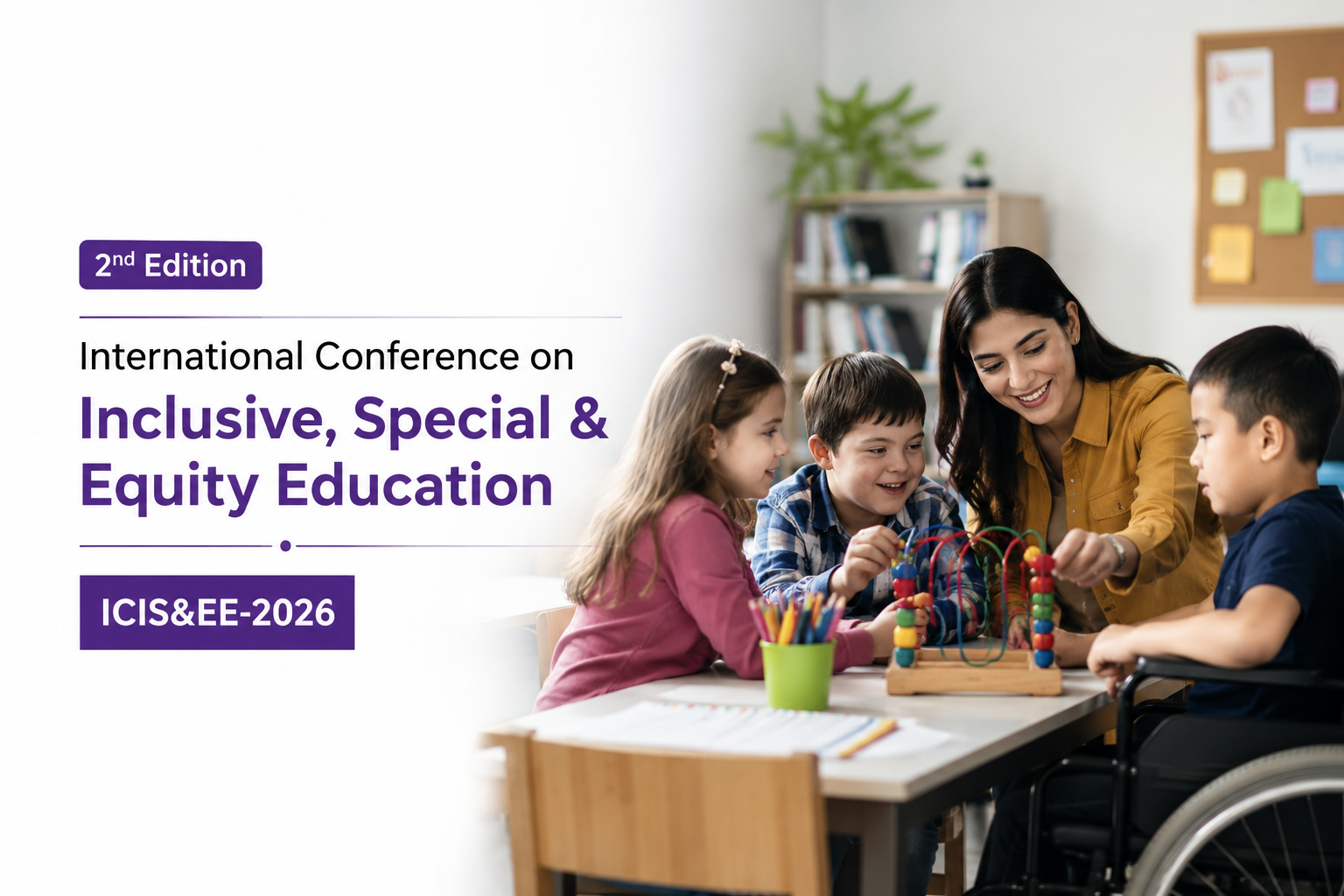
Education has the power to transform lives, but true transformation happens only when learning opportunities are accessible to everyone. Across the world, educators, policymakers, researchers, and institutions are working toward systems that embrace diversity, remove barriers, and ensure equitable access to quality education. The Inclusive Special Equity Education movement has become one of the most important priorities in modern educational development.
The 2nd Edition International Conference on Inclusive, Special & Equity Education (ICIS&EE-2026) provides a global platform for discussing innovative educational practices, inclusive policies, accessibility solutions, and strategies that support learners from diverse backgrounds and abilities. As educational systems continue evolving to meet the needs of all students, this conference serves as an important forum for collaboration, research exchange, and professional development.
Researchers, educators, and practitioners interested in contributing to this important conversation can Register Here: https://onegrasp.com/events/education/2nd-editioninternational-conference-on-inclusive-special-equity-education-icisee-2026/
What the Conference Is About
Direct Answer: ICIS&EE-2026 is an international conference dedicated to inclusive education, special education, educational equity, accessibility, and innovative teaching practices that support diverse learners.
The conference brings together academics, teachers, educational leaders, researchers, policymakers, psychologists, and inclusion advocates to explore how educational systems can better serve all learners regardless of ability, socioeconomic background, language, culture, or learning needs.
Globally, inclusive education continues to gain importance as governments and institutions recognize the value of equitable learning environments that promote participation and achievement for every student. Educational conferences focused on inclusion increasingly emphasize accessibility, equity, and evidence-based teaching practices.
Why Inclusive Special Equity Education Matters Today
Direct Answer: Inclusive and equitable education ensures that all learners have access to meaningful educational opportunities and support systems.
According to UNESCO and international education research, millions of learners worldwide continue to face barriers related to disability, socioeconomic inequality, language differences, and limited educational resources. Inclusive education seeks to address these challenges by creating learning environments where every student can participate and succeed.
Research consistently shows that inclusive educational systems improve academic outcomes, social development, and long-term opportunities for diverse student populations. Moreover, equitable education contributes directly to broader social and economic development goals.
Inclusive Special Equity Education Research Areas
Direct Answer: The conference covers a broad range of topics related to inclusive learning, accessibility, equity, special education, and educational innovation.
Major themes include:
- Inclusive Education Policies
- Special Education Practices
- Educational Equity
- Universal Design for Learning (UDL)
- Disability Inclusion
- Accessible Learning Technologies
- Teacher Professional Development
- Educational Leadership
- Student Well-being
- Inclusive Assessment Methods
- Early Childhood Inclusion
- Higher Education Accessibility
- Digital Learning Inclusion
- Community Engagement in Education
These themes reflect growing global efforts to ensure educational systems accommodate diverse learners and evolving societal needs.
The Role of Equity in Modern Education
Direct Answer: Educational equity focuses on providing every learner with the resources and support needed to achieve success.
While equality aims to provide the same opportunities to all students, equity recognizes that learners have different needs and may require varying levels of support.
Educational equity involves:
- Removing systemic barriers
- Providing accessible learning resources
- Supporting diverse learning styles
- Addressing socioeconomic disparities
- Promoting inclusive classroom practices
Educational institutions worldwide are increasingly adopting equity-centered approaches to improve student outcomes and foster more inclusive communities.
Technology and Inclusive Learning
Direct Answer: Technology is becoming a powerful tool for improving accessibility and inclusion in education.
Assistive technologies, digital learning platforms, AI-powered educational tools, and adaptive learning systems are helping educators create more personalized learning experiences.
Examples include:
- Speech-to-text tools
- Screen readers
- Adaptive assessments
- Accessible e-learning platforms
- AI-supported learning assistance
- Virtual learning accommodations
As educational technology continues evolving, its role in supporting inclusion and accessibility is expected to expand significantly.
Inclusive Special Equity Education and Sustainable Development
Direct Answer: Inclusive education contributes directly to sustainable development by expanding opportunities and reducing inequality.
The United Nations Sustainable Development Goal 4 emphasizes inclusive and equitable quality education for all. Educational inclusion supports broader social goals including poverty reduction, workforce participation, community development, and social cohesion.
Educational systems that prioritize inclusion help build stronger societies by ensuring that all individuals can contribute their talents and abilities.
For more information on global education goals, educators can explore:
https://www.un.org/sustainabledevelopment/education/
Opportunities for Researchers, Educators, and Students
Direct Answer: ICIS&EE-2026 provides opportunities for networking, collaboration, publication, and professional growth.
Participants can benefit from:
- Presenting research findings
- Learning innovative teaching strategies
- Exploring inclusive education policies
- Connecting with global experts
- Discovering new technologies
- Building collaborative partnerships
Educational professionals increasingly rely on conferences like ICIS&EE to stay informed about emerging research and best practices.
Interested participants can Join ICIS&EE-2026 Here: https://onegrasp.com/events/education/2nd-editioninternational-conference-on-inclusive-special-equity-education-icisee-2026/
Career Benefits of Participating
Participation offers significant professional advantages.
Benefits include:
- Enhanced academic visibility
- Professional networking opportunities
- Access to emerging educational research
- Exposure to innovative teaching methods
- Improved leadership skills
- Increased publication opportunities
For early-career educators and researchers, conference participation often leads to valuable collaborations and career advancement opportunities.
Expert Insight / Analysis
From an expert perspective, the future of education will be defined not only by technological innovation but also by how effectively institutions create inclusive and equitable learning environments.
Historically, educational systems often focused on standardization. Today, educators increasingly recognize that learners possess diverse strengths, challenges, backgrounds, and aspirations. This shift has led to greater emphasis on personalized learning, accessibility, and inclusive educational design.
The long-term significance of ICIS&EE-2026 lies in its ability to bring together researchers, practitioners, and policymakers who are committed to building educational systems that leave no learner behind. As societies become more diverse and interconnected, inclusive education will continue to play a central role in promoting social progress and economic development.
Latest Trends & Updates
Artificial intelligence is increasingly being integrated into educational platforms to provide personalized learning experiences and support diverse learning needs.

Universal Design for Learning (UDL) frameworks are gaining wider adoption as schools and universities seek to create more flexible and accessible educational environments.

Educational institutions are investing in digital accessibility initiatives to ensure online learning platforms accommodate students with disabilities.

Governments and international organizations are placing greater emphasis on equity-focused education policies that address achievement gaps and promote inclusive participation.

Assistive technologies continue evolving rapidly, enabling greater independence and engagement for learners with diverse abilities.

Teacher professional development programs increasingly include training on inclusive pedagogy, accessibility, and culturally responsive teaching practices.

Research on social-emotional learning and student well-being is influencing the design of more supportive and inclusive educational environments.
Real-Life Example / Mini Case Study
Consider a university implementing a new inclusive learning initiative.
Initially, many students with diverse learning needs struggled to access course materials effectively. After faculty members attended an international inclusion-focused education conference, they adopted Universal Design for Learning principles and integrated accessible digital resources.
Within two academic years, student engagement improved, retention rates increased, and satisfaction surveys indicated stronger feelings of inclusion among learners.
This example demonstrates how knowledge gained through professional conferences can lead to meaningful educational improvements.
Traditional Education vs Inclusive Education
| Traditional Education | Inclusive Education |
|---|---|
| Standardized instruction | Flexible learning approaches |
| One-size-fits-all methods | Learner-centered strategies |
| Limited accommodations | Comprehensive support systems |
| Focus on uniformity | Embraces diversity |
| Reactive intervention | Proactive inclusion planning |
Beginner vs Expert Comparison
| Beginners | Experts |
|---|---|
| Focus on accessibility tools | Focus on inclusive systems |
| Learn basic accommodations | Design equitable learning environments |
| Address individual barriers | Address systemic challenges |
| Understand inclusion concepts | Implement evidence-based practices |
| Focus on classroom changes | Drive institutional transformation |
Pros and Cons
| Pros | Cons |
|---|---|
| Global networking opportunities | Requires preparation |
| Access to current research | Time commitment |
| Professional development | Competitive submissions |
| Exposure to innovative practices | Travel and registration costs |
| Collaboration opportunities | Extensive topic coverage |
Common Mistakes to Avoid
Many participants reduce the value of conference attendance through avoidable mistakes.
One common error is focusing only on special education while overlooking broader equity and inclusion issues.
Another mistake is failing to connect research findings with practical classroom implementation.
Some attendees neglect networking opportunities, limiting the long-term benefits of participation.
Others overlook interdisciplinary perspectives that can strengthen educational research and practice.
What to Do Next (Actionable Steps)
- Review the conference themes.
- Identify a relevant research topic.
- Prepare an abstract or presentation.
- Explore recent inclusion research.
- Register early for participation.
- Connect with educational professionals.
- Study emerging accessibility technologies.
- Follow current education policy developments.
- Participate in networking sessions.
- Continue collaboration after the conference.
Official Registration: https://onegrasp.com/events/education/2nd-editioninternational-conference-on-inclusive-special-equity-education-icisee-2026/
Quick Checklist
✔ Review conference themes
✔ Select a research topic
✔ Prepare an abstract
✔ Complete registration
✔ Explore inclusion strategies
✔ Study emerging education technologies
✔ Prepare networking goals
✔ Connect with fellow researchers
✔ Follow educational policy trends
Conclusion
The 2nd Edition International Conference on Inclusive, Special & Equity Education (ICIS&EE-2026) represents an important opportunity to advance conversations surrounding educational accessibility, equity, and inclusion.
As educational systems continue adapting to diverse learner needs and technological change, the importance of inclusive practices becomes increasingly clear. Conferences such as ICIS&EE-2026 provide valuable platforms for sharing knowledge, fostering collaboration, and developing innovative solutions that improve educational outcomes for all learners.
For educators, researchers, policymakers, and advocates committed to building more equitable learning environments, ICIS&EE-2026 offers an opportunity to learn, collaborate, and contribute to meaningful educational transformation.
Register Here: https://onegrasp.com/events/education/2nd-editioninternational-conference-on-inclusive-special-equity-education-icisee-2026/
FAQ
Educators, researchers, policymakers, school leaders, psychologists, special education professionals, and students interested in inclusive and equitable education.
Yes. Students are encouraged to attend, present research, and engage with experts in the field.
Topics include inclusive education, educational equity, special education, accessibility, educational technology, and teacher development.
Absolutely. Participants gain insights into best practices, innovative research, and emerging educational trends.
The conference provides networking opportunities, research exposure, collaboration possibilities, and access to global expertise.