The idea of building a startup has always attracted ambitious people. The freedom to create something meaningful, earn independently, and build wealth sounds exciting. However, many aspiring entrepreneurs also wonder whether launching a business is still practical in today’s competitive market.
In 2026, the startup world is evolving faster than ever. Artificial intelligence, remote work, digital commerce, and automation are creating huge opportunities. At the same time, competition is increasing, customer expectations are changing, and funding environments are becoming more selective.
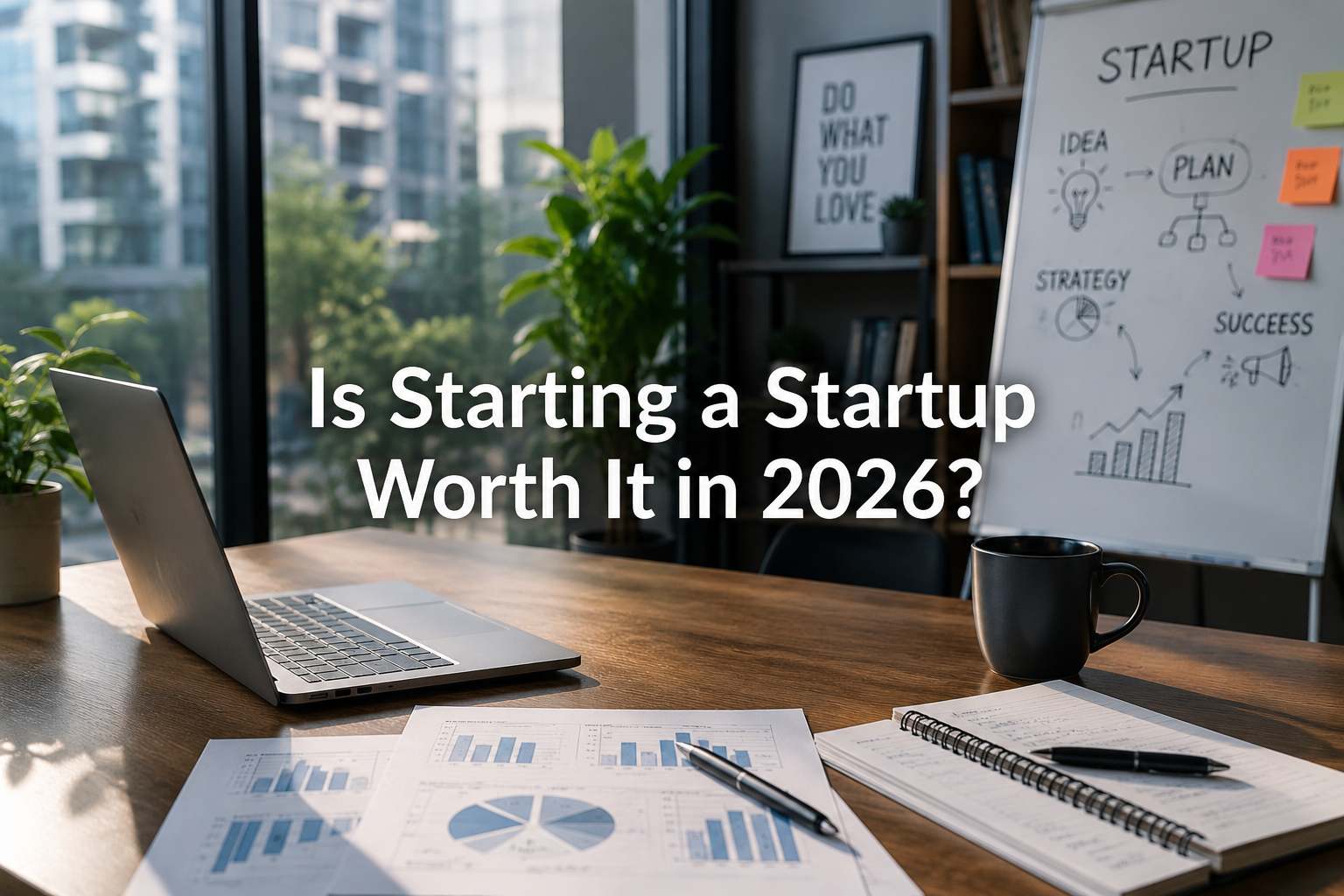
So, is starting startup worth it in 2026? The short answer is yes — but only for people willing to adapt, learn continuously, and solve real problems consistently.
According to Statista, global startup investments remain strong in industries like AI, fintech, health tech, sustainability, and SaaS. This shows that investors still believe startups can create massive long-term value.
If you want more startup insights, entrepreneur guides, and business growth content, visit OneGrasp Startups.
The biggest reason entrepreneurship is growing is accessibility. Years ago, starting a company required large investments, office spaces, and huge teams. Today, one person with a laptop can launch a global business.
Platforms like Shopify, Canva, and Notion make it easier to build brands, market products, and manage businesses efficiently.
Moreover, AI tools are reducing operational costs significantly. Entrepreneurs can now automate:
Customer support
Content creation
Email marketing
Analytics
Scheduling
Market research
This means startups can grow faster with smaller teams.
Starting a startup in 2026 is worth it for entrepreneurs who focus on solving real problems, adapting quickly, and building scalable digital-first businesses.
The Biggest Advantages of Starting a Startup in 2026
Entrepreneurship today offers opportunities that were almost impossible a decade ago.
Access to Global Markets
Startups no longer depend only on local customers. A digital business can sell products or services worldwide from day one.
Lower Startup Costs
Cloud software, AI tools, and remote work have reduced operating expenses dramatically.
More Learning Resources
Founders now have access to free business education through YouTube, online communities, and startup blogs.
AI and Automation
Businesses can automate repetitive work and focus more on growth strategies.
Flexible Work Culture
Remote work allows startups to hire talent globally instead of depending on one location.
These advantages make entrepreneurship more accessible than ever before.
The Real Challenges of Startups in 2026
Although opportunities are growing, entrepreneurship is still difficult.
Many startups fail because founders underestimate the emotional and financial pressure involved.
According to CB Insights, common startup failure reasons include:
No market need
Running out of cash
Poor team management
Weak business models
Competitive pressure
In addition, AI is increasing competition in many industries. Businesses must now differentiate themselves through customer experience, innovation, and brand trust.
Another challenge is attention overload. Customers see thousands of advertisements daily, making marketing more difficult.
Therefore, startups in 2026 require stronger strategy and clearer positioning.
Starting Startup Worth It for Young Entrepreneurs?
For students and young professionals, startups can provide incredible learning opportunities.
Unlike traditional jobs, entrepreneurship teaches:
Problem-solving
Leadership
Sales
Marketing
Communication
Financial management
Even if the startup does not become massively successful, the experience itself can create valuable career opportunities.
Moreover, younger founders often adapt faster to new technology trends. Many successful startups today are created by entrepreneurs who started experimenting early.
However, beginners should avoid unrealistic expectations. Startup success usually takes years, not months.
Startups are worth considering for young entrepreneurs because they provide skills, independence, and long-term growth opportunities.
Real-Life Example of Startup Growth
Imagine a college student launching a niche productivity app in 2026.
Initially, the founder struggles to gain users. Instead of quitting, they improve the product based on customer feedback and begin publishing educational content on social media.
Gradually, the app attracts loyal users. A subscription model creates recurring revenue, and the founder expands features using AI tools.
Within three years, the startup grows into a profitable remote business.
This example reflects how modern startups often grow: slowly at first, then rapidly once product-market fit improves.
Startup Opportunities That Are Growing Fast in 2026
Several industries are showing strong startup potential.
AI-Based Services
Businesses using AI for automation, productivity, and analytics continue growing rapidly.
Health Tech
Digital healthcare platforms and wellness apps are expanding globally.
Sustainable Products
Consumers increasingly support eco-friendly businesses.
Tools supporting influencers, creators, and freelancers are growing quickly.
Entrepreneurs who identify growing markets early often gain competitive advantages.
Beginner vs Expert Entrepreneur Mindset
Beginner Founder
Experienced Founder
Focuses mainly on ideas
Focuses on execution
Expects fast success
Thinks long-term
Avoids failure
Learns from mistakes
Tries to do everything alone
Builds systems and teams
Chases trends blindly
Solves customer problems deeply
Experienced entrepreneurs understand that consistency matters more than hype.
Pros and Cons of Starting a Startup in 2026
Pros
Cons
High income potential
Financial uncertainty
Creative freedom
Stress and pressure
Flexible work style
Long working hours
Opportunity to build impact
Risk of failure
Fast learning and growth
Competitive market
Startups can create life-changing opportunities, but they also require discipline and resilience.
Common Mistakes New Founders Make
One major mistake is building products nobody actually wants. Many entrepreneurs fall in love with ideas without validating customer demand.
Another mistake is overspending too early. Startups should focus on lean growth instead of unnecessary expenses.
Some founders also ignore branding and customer trust. In crowded markets, strong branding matters significantly.
In addition, many entrepreneurs quit too quickly. Startup growth often takes longer than expected.
Expert Insight and Analysis
Many startup experts believe 2026 will reward founders who combine technology with authentic customer understanding.
AI tools are becoming widely available, which means technology alone is no longer enough. Businesses must differentiate through creativity, user experience, and emotional connection.
Experts also emphasize recurring revenue models. Subscription businesses, memberships, and SaaS platforms often create more stable income than one-time sales.
Moreover, founders who build personal brands alongside startups usually gain stronger audience trust.
The future belongs to startups that remain adaptable and customer-focused.
Latest Trends Shaping Startups in 2026
Several trends are transforming entrepreneurship right now.
AI-Powered Businesses
AI-driven startups are expanding across industries.
Remote-First Companies
Many businesses now operate fully remotely.
No-Code Development
Entrepreneurs can build apps and websites without advanced coding skills.
Creator-Led Brands
Personal branding is becoming a major business advantage.
Subscription Models
Recurring revenue continues becoming more important.
According to Forbes, startups using automation and digital-first strategies are scaling faster than traditional businesses.
Tools and Resources Modern Founders Use
Modern startups rely heavily on productivity and automation tools.
Popular platforms include:
Notion for planning
Canva for branding
Trello for workflow management
HubSpot for CRM and marketing
Google Trends for market research
These tools help startups reduce costs and improve efficiency.
What to Do Next If You Want to Start a Startup
If you are considering entrepreneurship in 2026, begin by identifying problems people genuinely face.
Then:
Validate your idea with real users
Study competitors carefully
Build a simple minimum viable product (MVP)
Focus on customer feedback
Improve consistently
Most importantly, avoid waiting for perfection. Many successful startups began with imperfect products but improved over time.
Quick Startup Readiness Checklist
Identify a real market problem
Research competitors deeply
Validate customer demand
Create a simple launch strategy
Build strong branding
Learn basic marketing
Track financial performance
Stay adaptable to change
Conclusion
So, is starting a startup worth it in 2026? For many ambitious entrepreneurs, the answer is absolutely yes.
The business world is changing rapidly, creating opportunities that previous generations never had. AI, automation, digital platforms, and remote work have made entrepreneurship more accessible and scalable.
However, startups are not shortcuts to easy money. Success requires patience, learning, adaptability, and strong problem-solving skills.
The founders who succeed in 2026 will not necessarily be the ones with the biggest budgets. Instead, they will be the people who understand customers deeply, adapt quickly, and continue improving consistently.
If you are willing to learn, experiment, and stay committed during difficult phases, entrepreneurship can become one of the most rewarding journeys of your life.
Frequently Asked Questions
Yes, startups always involve risk. However, modern tools and digital opportunities reduce many traditional barriers.
AI, SaaS, health tech, sustainability, and creator economy startups are growing rapidly.
Not always. Many digital startups begin with relatively low costs using online tools and remote operations.
It depends on personal goals, risk tolerance, and lifestyle preferences.
Understanding customer problems and executing consistently are often the most important factors.

 May 9, 2026
 8 Min
 No Comment