May 7, 2026
 6 Min
 No Comment
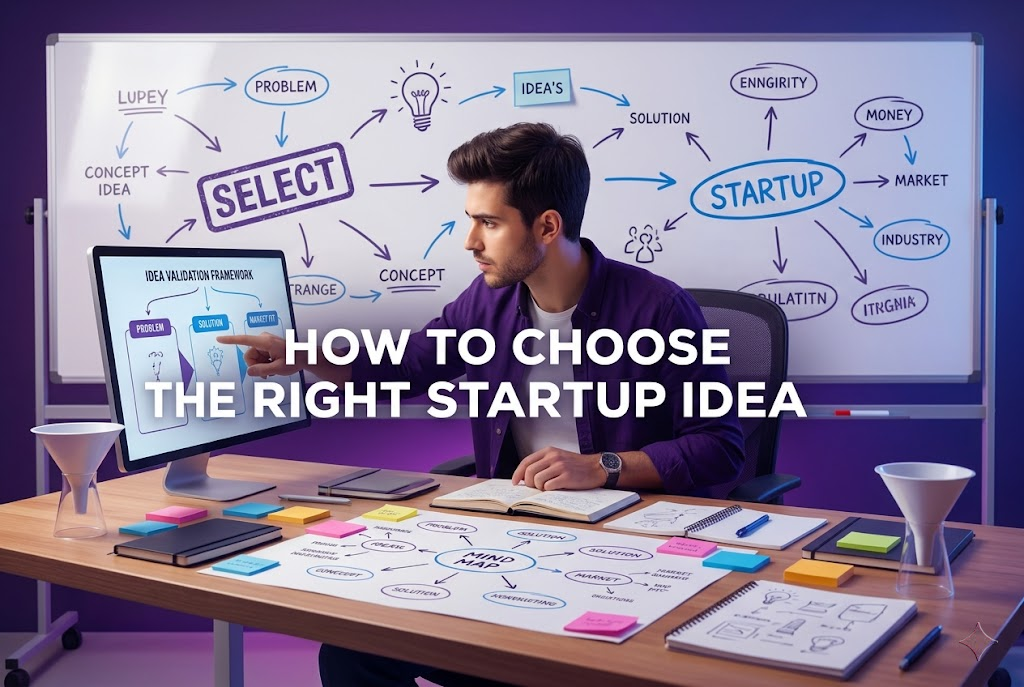
Understanding how to choose the right startup idea is one of the most important decisions for any entrepreneur. Many startups fail not because founders lacked motivation, but because they selected ideas without strong demand, scalability, or long-term potential.
In 2026, opportunities for startups are growing rapidly across AI, SaaS, fintech, creator economy, healthcare, education, and digital commerce. However, competition is also increasing.
This means choosing the right startup idea requires more than excitement. It requires strategy, market understanding, and problem-solving ability.
The best startup ideas are not always the most complicated. They are usually the ideas that solve real problems consistently and can scale over time.
If you’re exploring startup systems, business models, and growth strategies, you can also explore more startup-focused insights on https://onegrasp.com/startups/ to understand how modern startups identify scalable opportunities.
Why Choosing the Right Startup Idea Matters
The startup idea determines:
- Market potential
- Revenue opportunities
- Scalability
- Competition level
- Customer demand
- Long-term sustainability
A weak idea can make even strong execution difficult.
Meanwhile, a strong idea creates:
- Better customer interest
- Easier growth
- Stronger monetization potential
- Better investor attraction
According to startup research from https://www.cbinsights.com/, lack of market demand remains one of the biggest reasons startups fail.
Step 1: Focus on Real Problems
The first step in how to choose the right startup idea is identifying real-world problems.
Successful startups usually solve:
- Expensive problems
- Time-consuming tasks
- Frustrating experiences
- Operational inefficiencies
The stronger the customer pain point, the stronger the startup opportunity.
Instead of asking:
“What startup should I build?”
Ask:
“What problems do people repeatedly struggle with?”
Problem-first thinking leads to stronger startup ideas.
Step 2: Choose Markets With Growing Demand
Some industries naturally create larger startup opportunities because demand is increasing rapidly.
High-growth sectors in 2026 include:
- Artificial intelligence
- SaaS software
- Fintech
- Creator economy tools
- HealthTech
- EdTech
- Cybersecurity
- Automation platforms
Choosing growing markets improves long-term startup potential.
According to technology industry analysis from https://www.forbes.com/, AI and automation remain among the fastest-growing startup sectors globally.
Step 3: Solve Problems You Understand
Many successful founders build startups in industries they already understand.
This provides:
- Better customer insights
- Faster execution
- Stronger decision-making
- Industry connections
For example:
- Developers build software tools
- Marketers build marketing platforms
- Educators build learning systems
Understanding user behavior deeply creates stronger products.
Step 4: Validate Market Demand Early
Learning how to choose the right startup idea also means validating ideas before investing heavily.
Validation methods include:
- Customer interviews
- Landing pages
- Waitlists
- MVP testing
- Surveys
- Community discussions
The goal is proving people genuinely care about the problem.
Platforms like:
Can help founders understand trends and customer conversations.
Step 5: Avoid Oversaturated Ideas Without Differentiation
Some startup ideas already face intense competition.
Competing directly against large companies becomes difficult unless your startup offers:
- Better pricing
- Faster execution
- Strong niche focus
- Superior customer experience
Differentiation is critical.
Instead of copying large startups directly, many successful founders focus on:
- Specific industries
- Smaller customer groups
- Regional problems
- Underserved markets
Step 6: Consider Scalability
A good startup idea should grow without requiring massive increases in cost.
Scalable startup models include:
- SaaS products
- Marketplaces
- Digital products
- AI platforms
- Subscription services
Scalability matters because:
- Revenue can grow faster
- Operations become more efficient
- Investors prefer scalable businesses
If you’re also exploring scalable business systems and startup growth models, you can discover more startup-focused insights on https://onegrasp.com/startups/.
Step 7: Evaluate Monetization Potential
Some ideas attract users but struggle to generate revenue.
This is why founders must evaluate:
- Will customers pay?
- Is the pricing sustainable?
- Can revenue scale over time?
Common startup monetization models include:
- Subscriptions
- Freemium systems
- Advertising
- Marketplace commissions
- Enterprise pricing
According to business model research from https://hbr.org/, startups that validate monetization early often scale more effectively.
Step 8: Assess Long-Term Potential
Trendy ideas may generate temporary attention but disappear quickly.
Strong startup ideas usually:
- Solve ongoing problems
- Remain useful long term
- Adapt with technology changes
Founders should think beyond short-term hype cycles.
Long-term thinking improves sustainability.
Step 9: Match the Idea With Your Strengths
One overlooked part of how to choose the right startup idea is founder alignment.
Startups require:
- Consistency
- Long working hours
- Problem-solving ability
- Emotional resilience
Working on ideas connected to your strengths and interests improves long-term execution quality.
Step 10: Start Small and Improve Gradually
Many founders delay launching because they want perfect ideas.
However, startup success often comes through:
- Testing quickly
- Learning from feedback
- Improving continuously
Some of the world’s largest startups began with extremely simple initial products.
The goal is progress, not perfection.
Common Mistakes Founders Make
While learning how to choose the right startup idea, many founders:
- Chase trends blindly
- Ignore market validation
- Build without customer feedback
- Choose ideas with weak monetization
- Overcomplicate products
The strongest startup ideas are usually simple, practical, and demand-driven.
How AI is Changing Startup Opportunities
AI is reshaping startup creation in 2026.
Founders can now:
- Build faster using AI tools
- Automate workflows
- Reduce operational costs
- Launch SaaS products more easily
This creates opportunities for smaller teams to build scalable startups faster than before.
AI-powered startups are growing rapidly across:
- Marketing
- Education
- Customer support
- Productivity
- Analytics
Strategic Insight
The process of how to choose the right startup idea is ultimately about combining:
- Problem-solving
- Market demand
- Scalability
- Founder strengths
- Long-term sustainability
According to startup ecosystem analysis from https://www.mckinsey.com/, startups that deeply understand customer problems often build stronger long-term competitive advantages.
In 2026, founders who focus on solving meaningful problems rather than chasing trends are more likely to build sustainable businesses.
If you’re also exploring startup growth systems, business frameworks, and scalable opportunities, you can discover more startup-focused resources on https://onegrasp.com/startups/.
Conclusion
Learning how to choose the right startup idea is one of the most important steps in entrepreneurship.
The best startup ideas usually:
- Solve real problems
- Address growing markets
- Have scalable potential
- Match founder strengths
- Validate demand early
Choosing the right startup idea does not guarantee success, but it significantly improves the chances of building a sustainable business.
FAQs
A strong startup idea solves a real problem and shows clear market demand.
Passion helps, but market demand and scalability are more important.
AI, SaaS, fintech, creator economy, cybersecurity, and HealthTech are growing rapidly.
You can validate through customer interviews, MVPs, landing pages, and market research.
Yes, many successful startups began by solving simple but important problems.