May 23, 2026
 7 Min
 No Comment
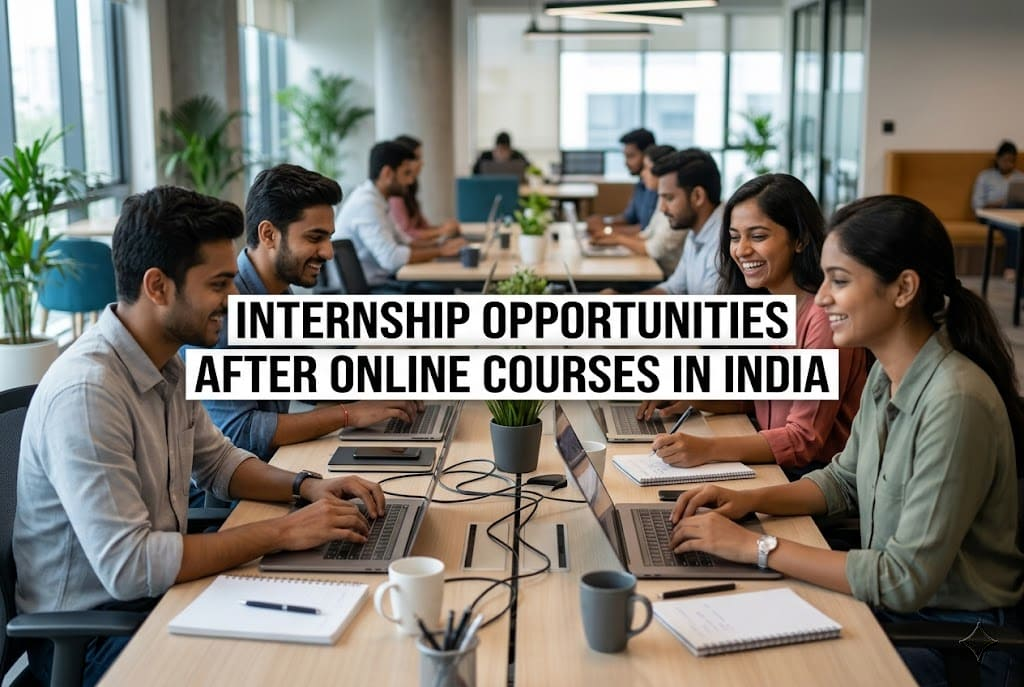
Online learning has changed the way students and professionals build careers in India. Today, people can learn digital marketing, data analytics, AI, graphic design, coding, finance, and communication skills directly from home. However, many learners still wonder whether internships after online courses are actually possible.
The answer is yes — and increasingly common.
Companies today are becoming more skill-focused than ever before. Many startups and modern businesses now value practical ability, portfolios, and project experience more than traditional classroom credentials alone. As a result, online learners who develop strong practical skills can absolutely secure internships and career opportunities.
The challenge is that simply completing a course certificate is usually not enough. Employers want proof that candidates can apply skills in real-world situations.
According to hiring trend discussions from LinkedIn Workforce Insights, skill-based hiring is growing rapidly across modern industries.
Students and professionals exploring career growth opportunities can also discover practical guidance through OneGrasp Career Insights.
Why Internships Matter After Online Courses
Internships bridge the gap between learning and real work experience.
They help learners:
- Apply practical skills
- Build confidence
- Improve resumes
- Understand industry workflows
- Expand professional networks
Most importantly, internships often become pathways toward full-time jobs.
For beginners especially, practical experience matters enormously.
Online Courses Alone Are Not Enough
One of the biggest misconceptions is believing certificates automatically guarantee internships or jobs.
In reality, employers usually evaluate:
- Practical skills
- Portfolio quality
- Communication ability
- Problem-solving skills
- Learning attitude
This means learners should focus on applying skills instead of collecting random certifications.
Example
| Weak Approach | Strong Approach |
|---|---|
| Completing 20 random courses | Building 3 strong projects |
| Focusing only on certificates | Showing practical results |
| Passive learning | Active experimentation |
Practical work creates stronger employer trust.
Best Internship Fields After Online Courses
Certain industries actively hire online learners because they value practical ability heavily.
Popular internship fields include:
- Digital marketing
- Content writing
- Graphic design
- Video editing
- Data analytics
- Web development
- UI/UX design
- Social media management
- AI tools and automation
These industries often prioritize portfolios over traditional academic backgrounds.
Build a Portfolio Before Applying
A portfolio is one of the most powerful tools for securing internships.
Even beginners can create projects independently.
Portfolio Examples
| Skill Area | Portfolio Idea |
|---|---|
| Digital Marketing | Instagram campaign analysis |
| Web Development | Personal website |
| Graphic Design | Social media creatives |
| Data Analytics | Dashboard projects |
| Content Writing | Blog articles |
A strong portfolio immediately separates serious candidates from casual learners.
Professionals building career-ready skills can also explore practical learning resources through OneGrasp Skill Development Resources.
Use Internship Platforms Strategically
Several online platforms help students and freshers find internships.
Popular internship sources include:
- Internshala
- Wellfound
- Indeed
- Company career pages
However, competition can be high.
Therefore, personalized applications perform better than mass applications.
Smart Application Tips
- Customize resumes
- Mention relevant projects
- Write clear cover emails
- Highlight practical skills
- Show enthusiasm to learn
Small personalization often increases response rates significantly.
Remote Internships Are Growing Rapidly
Remote work has expanded internship opportunities across India.
Students from smaller cities and towns can now work with:
- Startups
- International companies
- Freelance agencies
- Digital businesses
without relocating physically.
This trend is creating massive opportunities for online learners with strong digital skills.
Networking Improves Internship Chances
Many internships are filled through referrals and professional relationships.
Networking can help learners:
- Discover hidden opportunities
- Gain mentorship
- Learn industry expectations
- Build credibility
LinkedIn has become especially important for online learners.
Students should:
- Share projects
- Connect with professionals
- Participate in discussions
- Build visible expertise
Networking increases visibility beyond resumes alone.
Freelancing Can Lead to Internships
Freelancing and internships often overlap in modern industries.
Small freelance projects can help learners:
- Gain confidence
- Build experience
- Earn income
- Create portfolio examples
Even unpaid personal projects can demonstrate initiative and practical ability effectively.
Expert Insight / Analysis
One of the biggest shifts in hiring today is that employers increasingly value demonstrable skills over theoretical knowledge alone.
Earlier, degrees dominated hiring decisions. Today, portfolios, practical projects, and adaptability are becoming equally important.
Experts increasingly recommend “learning by building.”
This means:
- Applying skills immediately
- Creating projects consistently
- Solving practical problems
- Showcasing work publicly
Another important trend is micro-specialization.
Instead of being generic, candidates with focused practical expertise often stand out faster.
For example:
- SEO-focused content writing
- Data visualization analytics
- AI-assisted digital marketing
- E-commerce design
Specialization improves employability significantly.
Common Mistakes Learners Make
Many online learners struggle to secure internships because of avoidable mistakes.
Common issues include:
- Depending only on certificates
- Applying without portfolios
- Sending generic resumes
- Ignoring networking
- Learning too many unrelated skills
- Avoiding practical projects
Another major mistake is waiting until courses are “fully complete” before applying.
Practical experience itself accelerates learning.
Latest Trends / Updates
Remote internships are rapidly increasing across digital industries in India.

Companies are increasingly hiring candidates based on portfolios and practical projects instead of only degrees.

AI-powered productivity tools are changing internship expectations across marketing, analytics, and content creation roles.

Startup ecosystems are creating flexible internship opportunities for online learners and freshers.

Micro-internships and short-term project collaborations are becoming popular for skill-based hiring.

LinkedIn visibility and personal branding are increasingly influencing internship opportunities and recruiter outreach.
Real-Life Example / Mini Case Study
Consider the example of Neha, a commerce student from Mumbai.
While studying online digital marketing courses, she started creating small Instagram content campaigns for local businesses free of cost. She documented her work carefully and shared project results on LinkedIn.
After several months, a startup founder noticed her work online and offered her a remote social media internship.
That internship later converted into a full-time digital marketing role.
Her journey demonstrates that practical work and visibility often matter more than certificates alone.
Pros and Cons of Internships After Online Courses
| Pros | Cons |
|---|---|
| Practical industry experience | Competitive applications |
| Portfolio development | Initial unpaid opportunities possible |
| Better employability | Requires self-discipline |
| Networking opportunities | Learning curve challenges |
| Potential full-time offers | Quality varies across companies |
Beginner vs Expert Internship Strategy
| Beginner Thinking | Expert Thinking |
|---|---|
| Focuses only on certificates | Builds practical projects |
| Applies randomly | Targets specific industries |
| Waits for confidence | Learns through action |
| Uses generic resumes | Customizes applications |
| Avoids networking | Builds professional visibility |
Best Skills for Internship Opportunities
Some of the strongest internship-friendly skills today include:
- Digital marketing
- SEO optimization
- Content writing
- Data analytics
- Graphic design
- Video editing
- Web development
- Social media management
- AI productivity tools
These fields continue expanding rapidly across startups and digital businesses.
What to Do Next (Actionable Steps)
If you want internships after online courses, follow these practical steps:
- Choose one high-demand skill.
- Build 2–3 practical projects.
- Create a LinkedIn profile.
- Apply consistently to internships.
- Customize resumes for each role.
- Network with professionals online.
- Keep improving skills through real work.
Small practical actions create momentum quickly.
Quick Checklist
- Complete one valuable skill course
- Build portfolio projects
- Optimize LinkedIn profile
- Apply consistently
- Customize applications
- Network actively
- Stay patient and adaptable
Conclusion
Internship opportunities after online courses are becoming increasingly accessible across India’s evolving digital economy. However, success depends less on certificates alone and more on practical application, portfolio quality, networking, and consistent learning.
The smartest learners focus on building real skills, showcasing projects, and gaining practical exposure instead of simply collecting certifications. In today’s job market, demonstrable ability often matters more than traditional pathways alone.
Whether you are a student, fresher, or working professional exploring new opportunities, online learning combined with internships can become a powerful foundation for long-term career growth. Platforms like OneGrasp can also help learners stay updated with skill development insights, internship trends, and future-ready career opportunities in India.
FAQs
Yes. Many companies now value practical skills and portfolios alongside certifications.
Digital marketing, analytics, design, coding, AI tools, and content creation courses are highly valuable.
Not always. Many startups and digital companies focus more on practical ability than formal degrees.
Yes. Remote internships are growing rapidly across technology, marketing, and creative industries.
Very important. Portfolios help employers evaluate real skills and practical capability.