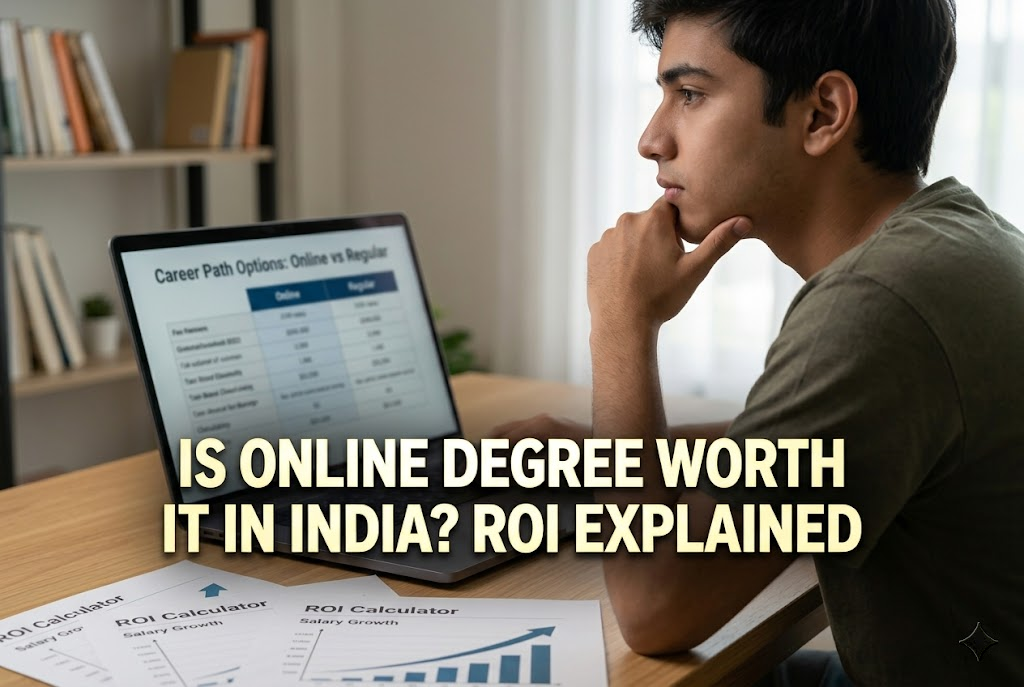
Online education has transformed dramatically in India over the last few years. What was once considered a secondary option is now becoming a mainstream pathway for students, working professionals, and career changers. Still, many people continue asking whether an online degree worth india students invest in actually delivers real career value.
The answer depends on several important factors — including the university, industry, career goals, and how effectively the degree is used.
Today, many respected Indian universities offer UGC-approved online degrees in fields such as business, computer applications, commerce, data analytics, and management. Meanwhile, companies are increasingly focusing on skills and practical capability instead of judging candidates solely based on traditional classroom education.
As industries evolve rapidly because of AI, automation, and digital transformation, flexibility and continuous learning are becoming more valuable than ever.
According to higher education trends discussed by University Grants Commission (UGC) India, officially approved online education is becoming increasingly integrated into India’s learning ecosystem.
Students and professionals exploring modern education and career growth can also discover guidance through OneGrasp Education Insights.
One of the biggest changes in India’s job market is the shift toward skill-based hiring.
Earlier, companies focused heavily on college reputation and traditional degrees. Today, many employers increasingly prioritize:
Practical knowledge
Problem-solving ability
Communication skills
Technical expertise
Project experience
This means online degree holders can absolutely compete effectively if they also develop strong practical skills.
Example
Weak Candidate
Strong Candidate
Degree only
Degree + practical projects
Theoretical learning
Real-world application
Passive learning
Skill-focused growth
Employability depends far more on capability than learning mode alone.
Online Degrees Work Best for Certain Groups
Online education may not suit everyone equally.
However, it works especially well for:
Working professionals
Career switchers
Students in smaller cities
Freelancers
Entrepreneurs
People balancing family responsibilities
Flexibility becomes a major advantage in these situations.
Cost Advantage Is Significant
One major reason online degrees are becoming popular is affordability.
Approximate Cost Comparison
Education Type
Typical Cost Range
Traditional Private Degree
₹3–10 lakh
Online Degree
₹50,000–₹2 lakh
Students also save additional costs on:
Hostel fees
Transportation
Food expenses
Relocation
As a result, online education can provide better ROI for many learners.
Professionals comparing affordable learning and career-focused education can also explore resources through OneGrasp Career Resources.
Networking and Campus Exposure Can Be Limited
Despite many benefits, online degrees also have limitations.
Traditional colleges often provide:
Campus networking
Student clubs
In-person mentorship
Social exposure
Physical placement events
Online learners may need to build professional networks independently through:
LinkedIn
Internships
Online communities
Freelancing
Networking events
Therefore, self-motivation becomes very important.
Online Degrees Are Strongest When Combined With Skills
A degree alone is no longer enough in today’s economy — whether online or offline.
The most successful professionals combine:
Formal education
Technical skills
Communication ability
Practical experience
Portfolio projects
This hybrid approach improves employability significantly.
Expert Insight / Analysis
One of the biggest transformations in India’s education landscape is that flexibility is becoming nearly as important as formal qualification itself.
Experts increasingly believe online education will continue growing because industries now evolve faster than traditional education systems can adapt.
Another important trend is employer normalization.
Earlier, online degrees faced stronger skepticism. Today, as top universities and corporations adopt digital learning, acceptance is improving steadily.
However, experts also warn students against assuming all online degrees provide equal value.
The strongest outcomes usually depend on:
University credibility
Skill development
Practical exposure
Industry relevance
Personal discipline
Online education rewards self-driven learners more than passive learners.
Common Mistakes Students Make
Many students struggle to maximize online degree value because of avoidable mistakes.
Common issues include:
Choosing unapproved universities
Ignoring practical skills
Depending only on degrees
Avoiding networking
Learning passively
Following cheap advertisements blindly
Another major mistake is expecting online degrees alone to guarantee jobs automatically.
Career growth still requires effort, skill-building, and adaptability.
Latest Trends / Updates
UGC-approved online degrees are gaining wider acceptance across private industries in India.

AI-powered learning platforms are improving online education quality and personalization.

Hybrid learning models combining online and practical experiences are becoming increasingly popular.

Companies are focusing more on skill-based hiring instead of judging candidates solely by learning format.

Working professionals are increasingly choosing online degrees for career growth and promotions.

Digital certifications, portfolios, and practical projects are becoming important alongside formal online degrees.
Real-Life Example / Mini Case Study
Consider the example of Priya, a customer support executive from Chennai.
Due to financial responsibilities, she could not leave her job to pursue a full-time MBA. Instead, she enrolled in a UGC-approved online MBA program while continuing to work.
Alongside her studies, she learned business analytics and presentation skills through online certifications.
Within three years, she transitioned into an operations management role with a significant salary increase.
Her journey demonstrates how online degrees can become highly valuable when combined with practical upskilling.
Pros and Cons of Online Degrees in India
Pros
Cons
Flexible learning schedule
Requires self-discipline
Lower overall costs
Limited campus experience
Suitable for working professionals
Networking requires extra effort
Accessible nationwide
Quality varies across institutions
Career-friendly learning
Some industries still prefer offline education
Beginner vs Expert Online Learning Approach
Beginner Thinking
Expert Thinking
Focuses only on degree completion
Focuses on employability
Learns passively
Builds practical projects
Ignores networking
Builds professional visibility
Chooses cheapest option blindly
Verifies credibility carefully
Expects instant success
Invests in continuous growth
Who Should Consider an Online Degree?
Online degrees may be especially valuable for:
Working professionals
Budget-conscious students
Career switchers
Learners in smaller towns
People needing flexible schedules
However, students seeking strong campus life and traditional networking may still prefer offline education.
What to Do Next (Actionable Steps)
If you are considering an online degree in India, follow these practical steps:
Verify UGC-DEB approval.
Compare university reputation carefully.
Choose industry-relevant programs.
Build practical skills alongside studies.
Create projects and portfolios.
Improve networking through LinkedIn.
Stay updated with future industry trends.
Strategic learning improves degree value significantly.
Quick Checklist
Verify university approval
Research career ROI carefully
Compare total costs
Build practical skills
Focus on employability
Improve networking
Stay adaptable and consistent
Conclusion
Online degrees are becoming increasingly valuable in India’s evolving education and employment landscape. While they may not completely replace traditional education for everyone, they offer strong advantages in flexibility, affordability, accessibility, and career-friendly learning.
The real value of an online degree depends not just on the certificate itself, but on how effectively students combine education with practical skills, networking, and continuous learning. In today’s rapidly changing economy, adaptability and employability matter more than ever.
Whether you are a student, working professional, or career switcher, a well-chosen online degree can absolutely support long-term growth when approached strategically. Platforms like OneGrasp can also help learners stay informed about online education trends, skill development, and future-ready career opportunities in India.
FAQs
Yes, if they are offered by officially recognized and UGC-approved universities.
Many private companies increasingly accept online degrees, especially when combined with practical skills.
It can be valuable for working professionals seeking promotions, management skills, or career transitions.
Yes. Online degrees generally cost significantly less than traditional campus programs.
Yes. Employability depends more on skills, projects, internships, and practical ability than learning mode alone.

 May 23, 2026
 7 Min
 No Comment