May 20, 2026
 7 Min
 No Comment
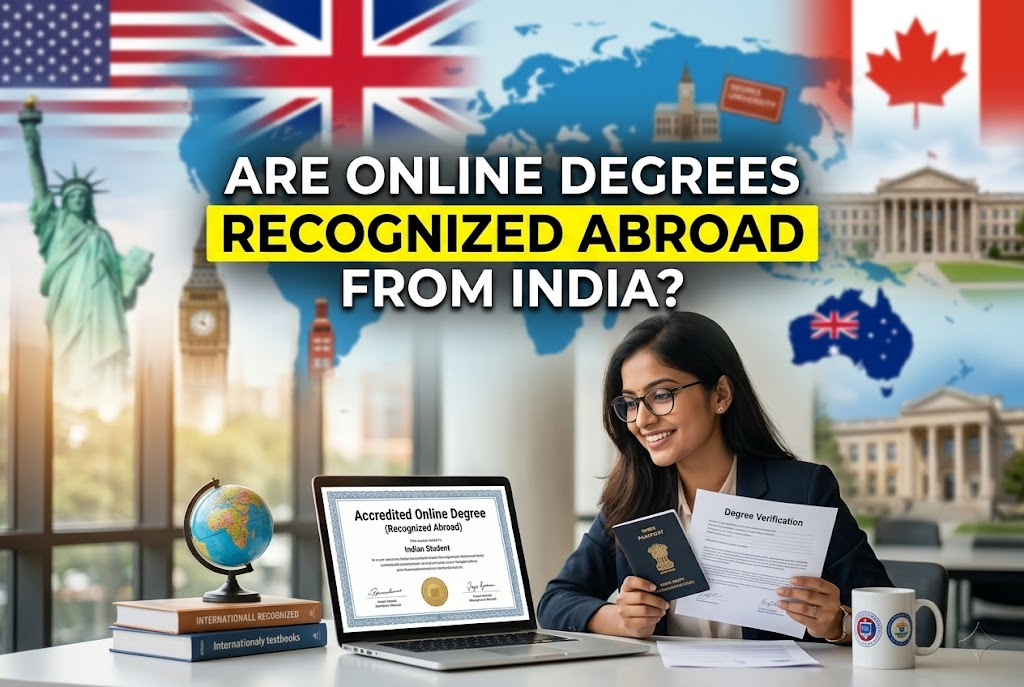
Online education has changed the global learning landscape dramatically. Indian students and working professionals now regularly enroll in online degrees because of flexibility, affordability, and accessibility. However, one critical concern continues to create confusion:
“Are Indian online degrees recognized abroad?”
The answer is yes — many online degrees from India are recognized internationally, but recognition depends on several important factors such as university accreditation, country-specific regulations, employer policies, and immigration requirements.
This guide explains online degrees abroad recognition, how foreign universities and employers evaluate Indian online qualifications, and what students should verify before investing in an online program.
According to guidelines shared by UNESCO Higher Education Resources, recognition of qualifications increasingly depends on institutional accreditation and educational standards rather than only the mode of study.
Why Online Degrees Are Becoming Globally Accepted
The perception of online education has changed significantly after the pandemic era.
Top global universities such as Harvard University Online Learning and MIT Open Learning now offer online and hybrid programs themselves. As a result, international acceptance of digital education has improved rapidly.
Meanwhile, employers worldwide increasingly prioritize:
- Skills
- Experience
- Practical capabilities
- Project portfolios
- Problem-solving ability
This shift has helped online learning gain credibility across industries.
Online Degrees Abroad Recognition: What Actually Matters?
International recognition depends on multiple factors rather than simply whether the degree was online.
University Accreditation
The most important factor is whether the Indian university is officially recognized by authorities such as:
- UGC (University Grants Commission)
- AICTE
- NAAC
- Distance Education Bureau
Foreign institutions often evaluate accreditation first before considering the learning mode.
Students can verify approved institutions through UGC India Official Website
Country-Specific Evaluation Rules
Different countries follow different recognition systems.
| Country | Recognition Approach |
|---|---|
| USA | Depends on university evaluation agencies |
| Canada | Credential assessment required |
| UK | Often recognition-based and institution-specific |
| Australia | Qualification assessment required |
| Germany | Strong emphasis on accreditation |
Therefore, students planning international careers should research destination-country requirements carefully.
Purpose of the Degree
Recognition may vary depending on whether the degree is used for:
- Higher studies
- Employment
- Immigration
- Professional licensing
For example, a degree accepted for employment may still require additional evaluation for immigration purposes.
Are Indian Online Degrees Accepted for Jobs Abroad?
In many cases, yes.
International employers increasingly care more about practical capability than classroom format. Companies especially value skills in:
- Software development
- AI and analytics
- Business management
- Marketing
- Cybersecurity
- Finance
- Project management
However, highly regulated professions such as medicine, law, and licensed engineering may have stricter rules.
For learners exploring global education pathways and professional growth opportunities, OneGrasp’s education resources also provide useful guidance on modern career and study trends.
Do Foreign Universities Accept Indian Online Degrees?
Many universities abroad accept recognized online degrees for higher education applications, especially when:
- The institution is accredited
- Academic performance is strong
- English proficiency requirements are met
- Supporting documents are complete
However, some elite institutions or highly specialized programs may still prefer traditional full-time degrees.
Students should always check official admission requirements directly through university websites before applying.
According to insights from QS Top Universities, global higher education is increasingly embracing flexible and hybrid learning models.
Common Misconceptions About Online Degrees Abroad
Online Degrees Are Automatically Rejected
This is outdated thinking. Recognition now depends more on accreditation and quality standards.
Foreign Employers Only Prefer Traditional Degrees
Many companies prioritize skills, portfolios, and practical experience over study mode.
Every Online Degree Is Internationally Valid
Not all institutions hold equal credibility. Recognition varies significantly.
Cheap Degrees Always Mean Low Quality
Some affordable online programs from recognized universities provide strong global value.
Expert Insight: The Future of Education Is Hybrid
Global education is moving toward hybrid learning ecosystems combining online flexibility with practical experience.
This transformation is happening because modern employers increasingly value:
- Continuous learning
- Digital adaptability
- Independent learning ability
- Technology familiarity
- Remote collaboration skills
Ironically, online learners often develop stronger self-management and digital communication abilities compared to traditional students.
However, reputation still matters.
Students should prioritize:
- Accredited institutions
- Strong curriculum quality
- Practical learning outcomes
- Industry relevance
- International credibility
The strongest combination remains: recognized degree + practical skills + professional experience.
Latest Trends and Updates
International universities are increasingly accepting hybrid and online qualifications as digital education becomes mainstream worldwide.

Credential evaluation agencies are modernizing assessment systems for online and distance education qualifications.

Remote work growth has reduced stigma around online learning because digital collaboration is now standard in global workplaces.

AI-powered learning platforms and virtual classrooms are improving the quality and interactivity of online education programs.

Indian universities are expanding globally recognized online degree offerings in fields such as AI, business analytics, cybersecurity, and management.
Real-Life Example: Using an Indian Online Degree Abroad
Karthik, a working IT professional from Chennai, completed an online MCA program from a UGC-recognized Indian university while working full-time.
After building cloud computing and cybersecurity certifications alongside his degree, he applied for technology roles in Canada.
His degree underwent credential evaluation successfully because the institution held valid recognition in India. Combined with practical experience and technical certifications, this helped him secure interview opportunities abroad.
His journey demonstrates that credibility, skill development, and strategic planning matter more than outdated assumptions about online education.
Common Mistakes Students Should Avoid
Ignoring Accreditation
Students sometimes enroll in globally unrecognized institutions due to attractive marketing.
Assuming Every Country Has the Same Rules
Recognition standards differ widely between countries and professions.
Focusing Only on Degrees
Practical experience and skills remain equally important internationally.
Not Checking Credential Evaluation Requirements
Countries like Canada and Australia often require formal qualification assessments.
Beginner vs Smart Learner Approach
| Beginner Approach | Smart Learner Approach |
|---|---|
| Chooses based only on fees | Researches accreditation carefully |
| Assumes all degrees are globally valid | Checks country-specific requirements |
| Ignores practical skills | Builds portfolios and certifications |
| Depends only on academics | Gains work experience simultaneously |
| Believes old myths about online learning | Understands modern hiring trends |
Pros and Cons of Indian Online Degrees Abroad
| Pros | Cons |
|---|---|
| Flexible learning options | Recognition varies by country |
| Affordable compared to foreign degrees | Some institutions lack credibility |
| Supports working professionals | Credential evaluation may be required |
| Increasing global acceptance | Regulated professions have stricter rules |
| Helps continuous upskilling | Requires strong self-discipline |
What to Do Next (Actionable Steps)
If you plan to use an Indian online degree abroad:
- Verify university accreditation carefully
- Research destination-country recognition rules
- Build practical experience alongside academics
- Develop strong communication skills
- Add globally relevant certifications
- Maintain proper academic documentation
- Focus on industry-relevant skills
Most importantly, think long-term. International career growth depends on continuous skill development, adaptability, and credibility.
Quick Checklist
- Verify UGC recognition
- Check international acceptance requirements
- Research credential evaluation systems
- Build practical project experience
- Improve communication skills
- Maintain official transcripts
- Add professional certifications
- Stay updated with global education trends
Conclusion
Indian online degrees are increasingly recognized abroad, especially when offered by accredited universities and supported by strong practical skills and professional experience. The global education system is evolving rapidly, and employers as well as universities are becoming more open to flexible learning models.
However, recognition is not automatic everywhere. Students must carefully verify accreditation, understand country-specific regulations, and combine academic qualifications with real-world capabilities.
In 2026, success in international education and careers depends less on where you studied physically and more on what you can actually contribute professionally.
The future belongs to adaptable learners who combine recognized qualifications with modern digital skills and continuous learning.
FAQs
Yes, many accredited Indian online degrees are recognized abroad depending on country and institution-specific rules.
UGC-approved degrees from recognized universities generally have stronger international credibility.
Yes, many foreign universities accept recognized online degrees for higher studies.
Many employers focus on practical skills, experience, and accreditation rather than study mode alone.
You should check university accreditation, credential evaluation requirements, and official guidelines in your destination country.