May 25, 2026
 7 Min
 No Comment
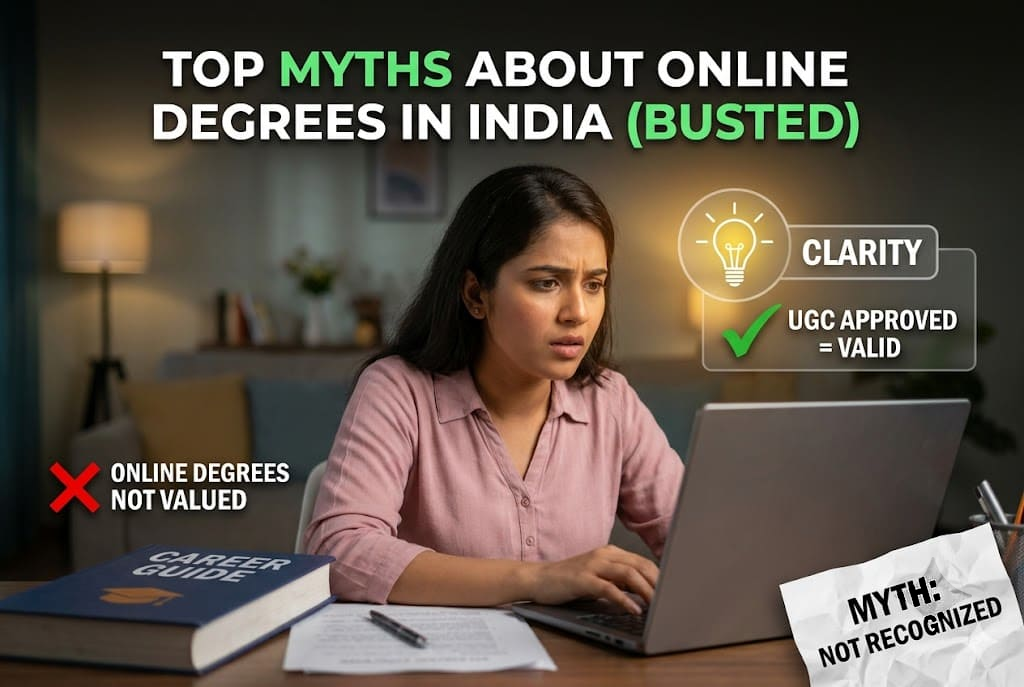
Online education in India has grown rapidly over the last decade. What was once considered an alternative learning method is now becoming a mainstream educational pathway for students, working professionals, entrepreneurs, and career switchers.
Despite this growth, many misconceptions still surround digital learning. Families, students, and even some employers continue believing outdated assumptions about online education quality and career value.
These online degree myths India learners frequently encounter often create unnecessary confusion and fear while choosing higher education pathways.
Some people still believe online degrees are not valid. Others assume online students cannot get jobs, build practical skills, or pursue government opportunities. Meanwhile, the rapid growth of technology, AI-powered learning systems, and industry acceptance is already changing the educational landscape dramatically.
The reality is that online education is evolving faster than many traditional perceptions.
Understanding the truth behind these myths can help students make more informed educational decisions and avoid missing valuable opportunities.
Myth 1: Online Degrees Are Not Valid in India
This is one of the most common myths students still hear.
The Reality
UGC-approved online degree programs offered by recognized universities are generally valid for many educational and employment purposes in India.
According to the University Grants Commission, recognized universities can offer approved online degree programs under specific regulatory guidelines.
However, students must verify:
- University recognition
- Program approval
- Accreditation status
Validity depends on institutional approval, not whether the degree is online or offline.
Students can also explore educational guidance and digital learning resources through OneGrasp Education Resources before selecting online programs.
Myth 2: Employers Do Not Accept Online Degrees
Many students worry that employers reject online education qualifications.
The Reality
Modern employers increasingly focus on:
- Skills
- Practical knowledge
- Communication ability
- Problem-solving
- Portfolio quality
In technology, marketing, analytics, business, and creative industries, practical ability often matters more than learning format alone.
According to World Economic Forum Future of Jobs Report, adaptability, digital literacy, and technical skills are becoming increasingly important in hiring decisions.
Many companies now actively recruit candidates with online learning backgrounds.
Myth 3: Online Degrees Are Easier Than Regular Degrees
Some people assume online education requires minimal effort.
The Reality
Online learning often requires stronger:
- Time management
- Self-discipline
- Independent learning ability
- Consistency
Without classroom supervision, many students actually find online learning more challenging.
Success in online education depends heavily on personal responsibility and learning discipline.
Myth 4: Online Students Cannot Build Practical Skills
This myth became common because early online education systems focused heavily on theory.
The Reality
Modern online programs increasingly include:
- Live projects
- Virtual labs
- Case studies
- Simulations
- Industry assignments
Students can also build practical skills through:
- Freelancing
- Certifications
- Internships
- Open-source projects
In many industries, self-built portfolios matter more than classroom attendance.
Myth 5: Online Degrees Are Only for Weak Students
This outdated stereotype still exists in some social circles.
The Reality
Today, online learners include:
- Working professionals
- Entrepreneurs
- International learners
- Career changers
- Skilled professionals upgrading careers
Many highly motivated learners choose online education specifically because it offers flexibility and continuous learning opportunities.
The growth of executive online MBA programs and professional certifications reflects this shift clearly.
Myth 6: Online Degrees Have No Value for Government Jobs
Students preparing for public sector careers often worry about this issue.
The Reality
Recognized online degrees may be accepted for many government-related opportunities depending on:
- University recognition
- Specific recruitment rules
- Program approval status
Students should always verify eligibility criteria for individual examinations or recruitment notifications carefully.
Recognition matters far more than the learning format itself.
Myth 7: Online Education Lacks Interaction
Some people imagine online learning as isolated and inactive.
The Reality
Modern digital education platforms now provide:
- Live classes
- Discussion forums
- Faculty interaction
- Peer collaboration
- Group projects
AI-powered learning systems are also improving student engagement significantly.
Meanwhile, many students actively network through:
- Student communities
- Online workshops
- Professional forums
Online Degree Myths India: Why These Misconceptions Still Exist
Many myths continue because earlier distance education systems lacked modern digital infrastructure.
| Old Perception | Modern Reality |
|---|---|
| Limited learning quality | Interactive digital platforms |
| Minimal employer acceptance | Growing industry recognition |
| Theory-heavy learning | Practical skill integration |
| Weak technology use | AI-powered education systems |
| Low flexibility | Personalized learning models |
Technology has transformed how online education operates today.
Expert Insight: Why Online Education Is Becoming Mainstream
Experts believe digital learning will become increasingly integrated into mainstream higher education globally.
Several reasons are driving this shift:
- Flexible learning demand
- Industry skill gaps
- AI-driven education systems
- Remote work culture
- Continuous upskilling needs
Many universities now combine:
- Online learning
- Hybrid classrooms
- Industry certifications
- Skill-based education
The future of higher education may become more flexible, modular, and technology-driven than traditional systems alone.
Common Mistakes Students Make Because of These Myths
| Mistake | Consequence |
|---|---|
| Ignoring online education entirely | Missed career opportunities |
| Believing social stereotypes | Delayed skill development |
| Choosing only traditional degrees blindly | Financial burden |
| Ignoring accreditation verification | Recognition issues |
| Underestimating online learning discipline | Poor academic performance |
Students should base decisions on verified information rather than outdated assumptions.
Latest Trends and Updates
Artificial intelligence and digital transformation are rapidly improving the quality and credibility of online education systems across India.

Modern online degree programs increasingly include AI-powered assessments, adaptive learning systems, virtual labs, and industry-focused project-based learning.

Employers are also shifting toward skills-first hiring models where practical ability, portfolio quality, and adaptability matter more than traditional educational formats alone.

Several universities are now collaborating with technology companies to integrate real-world tools, certifications, and digital workplace training into online programs.

Meanwhile, growing internet accessibility and affordable digital learning platforms are making higher education more accessible across urban and rural India.
Real-Life Example: Breaking the Online Degree Stereotype
Consider the example of Priya, a commerce graduate from Andhra Pradesh who pursued an online digital marketing degree while working part-time.
Initially, some relatives discouraged her, believing online education lacked value. However, during the program she built practical skills in:
- SEO
- Social media marketing
- Analytics
- Content strategy
She also completed freelance projects and internships alongside her studies.
Within a year, she secured a digital marketing role with a startup despite not attending a traditional classroom program.
Her journey reflects how practical skills and consistency often matter more than outdated educational stereotypes.
Beginner vs Expert Thinking About Online Degrees
| Beginner Thinking | Expert Thinking |
|---|---|
| Believes social myths | Verifies official information |
| Focuses only on degree format | Evaluates skills and outcomes |
| Assumes online learning is easy | Understands discipline required |
| Ignores digital opportunities | Leverages flexible learning |
| Follows outdated assumptions | Studies industry trends |
Experienced learners focus on educational value rather than social perceptions.
Pros and Cons of Online Degrees
| Pros | Cons |
|---|---|
| Flexible learning | Requires self-discipline |
| Accessible from anywhere | Quality varies by institution |
| Affordable compared to many traditional programs | Internet dependency |
| Suitable for working professionals | Reduced campus exposure |
| Technology-integrated learning | Practical exposure varies |
What Students Should Do Next
Students considering online education should take a research-driven approach.
Practical next steps include:
- Verify university recognition
- Ignore social myths
- Evaluate curriculum quality
- Build practical skills
- Focus on long-term goals
- Develop digital adaptability
- Research industry demand
Students should also verify accreditation through official bodies like National Assessment and Accreditation Council (NAAC) before enrolling.
Quick Checklist
- Verify UGC approval
- Research university reputation
- Build practical projects
- Focus on skill development
- Ignore outdated myths
- Develop consistent study habits
- Stay updated with industry trends
Conclusion
The rapid evolution of digital learning has changed the reality of higher education in India. Many online degree myths India students still hear today are based on outdated perceptions rather than modern educational systems.
UGC-approved online degrees are increasingly accepted across industries, supported by advanced learning technologies, AI-driven platforms, and growing employer recognition.
However, the true value of online education ultimately depends on the learner’s discipline, practical skill-building, career planning, and ability to adapt continuously in a technology-driven world.
As industries continue prioritizing skills, digital literacy, and lifelong learning, online education is likely to become an even more important part of India’s future higher education ecosystem.
FAQs
Yes, UGC-approved online degrees from recognized universities are generally valid for many educational and employment purposes.
Many employers increasingly focus on skills, projects, and practical ability rather than only learning format.
Not necessarily. Online learning often requires strong self-discipline and time management skills.
Recognized online degrees may be accepted for many government opportunities depending on eligibility requirements.
Yes, online education is highly suitable for working professionals because of flexible schedules and remote accessibility.