One of the biggest concerns students and working professionals have before enrolling in online education is simple but extremely important: “Will this degree be valid for government jobs?”
As online learning becomes more mainstream, millions of students are now considering digital degree programs for flexibility, affordability, and career growth. However, uncertainty around the online degree validity govtjobs issue still creates confusion across India.
Many students worry whether online degrees are accepted for UPSC, SSC, banking exams, railway recruitment, state government jobs, or public sector employment. Others fear that employers may treat online education differently from traditional classroom programs.
The good news is that recognized online degrees from approved universities are generally valid for many government jobs and higher education opportunities in India. However, there are important conditions students must understand before enrolling.
Choosing the wrong university or ignoring regulatory approvals can create serious problems later. Therefore, understanding official recognition rules is essential before making any academic decision.
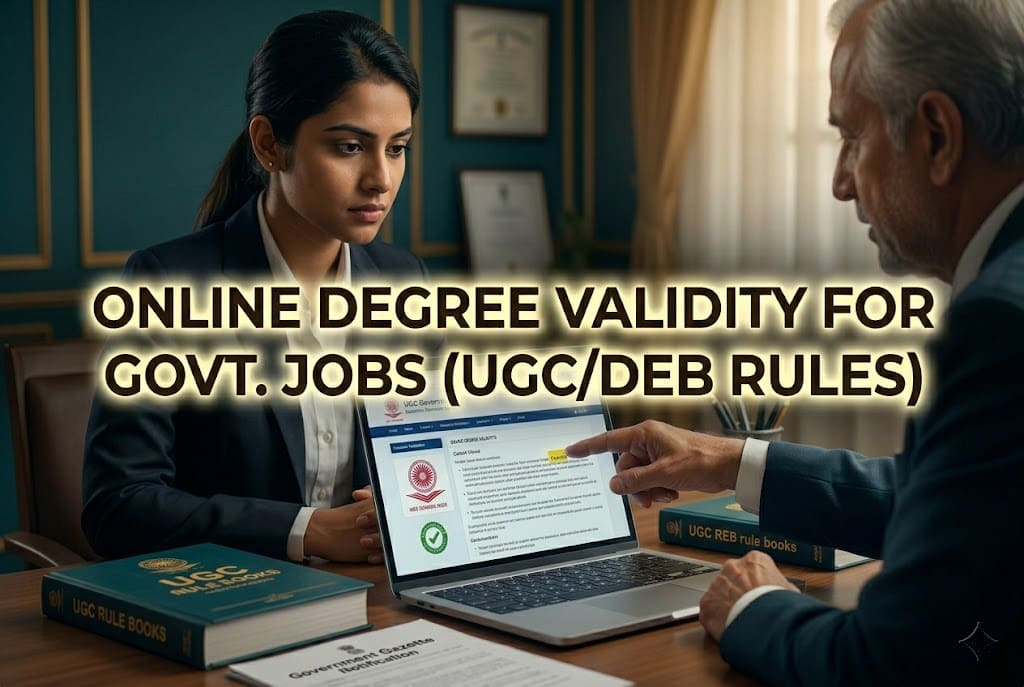
Yes, online degrees from recognized universities approved by the University Grants Commission are generally valid for many government jobs in India.
The key requirement is that:
The university must be recognized by UGC
The online program must be approved under UGC regulations
The degree should comply with applicable government recruitment rules
According to UGC Official Online Education Guidelines, recognized online degrees hold validity similar to conventional degrees for many educational and employment purposes.
This means students with approved online degrees may apply for:
UPSC examinations
SSC recruitment
Banking exams
State government jobs
Public sector positions
Railway recruitment
However, eligibility can vary depending on the specific recruitment notification and department requirements.
Students can also explore educational guidance and admission-related resources through OneGrasp Education Resources for better academic planning.
Difference Between Valid and Invalid Online Degrees
Not every online degree is automatically recognized.
Students must understand the difference carefully.
Valid Online Degree
Invalid Online Degree
UGC-approved university
Unrecognized institution
Approved online program
Unauthorized course
Follows UGC regulations
No regulatory approval
Accepted for many exams
May face rejection
Recognized nationwide
Limited or no validity
Many students make the mistake of assuming all online universities are officially approved. This can create major problems during document verification stages in government recruitment.
Therefore, checking official recognition status is critical before enrollment.
Online Degree Validity GovtJobs: Important Government Rules
UGC Recognition Matters Most
The UGC is the primary authority regulating higher education recognition in India.
Students should verify:
University approval status
Online course authorization
Degree recognition validity
Recruitment Notification Rules Apply
Some government jobs specify detailed eligibility conditions.
For example:
Technical roles may require AICTE-approved programs
Teacher recruitment may require NCTE recognition
Certain professional positions may have additional licensing requirements
Therefore, students must always read official recruitment notifications carefully.
Distance and Online Degrees Are Increasingly Accepted
The perception of online education has improved significantly over the past decade.
Many government recruitment boards now focus more on university recognition than learning mode.
Government Exams Where Online Degrees Are Usually Accepted
Students with valid online degrees are commonly eligible for several competitive exams.
UPSC Civil Services
Candidates with recognized bachelor’s degrees can generally apply for UPSC exams.
SSC Exams
Staff Selection Commission exams usually accept recognized degrees regardless of learning mode.
Banking Exams
IBPS and SBI recruitment processes generally accept valid UGC-recognized degrees.
Railway Recruitment
Several railway recruitment categories accept recognized online graduation degrees.
State Public Service Commissions
Most state PSC examinations also recognize approved degrees.
However, candidates should still verify eligibility from official notifications before applying.
Common Myths About Online Degrees
Many misconceptions still exist regarding online education.
Myth 1: Online Degrees Are Fake
This is incorrect. UGC-approved online degrees from recognized universities are legitimate.
Myth 2: Government Jobs Reject Online Degrees
Most government jobs focus on recognition status rather than whether the degree was completed online.
Myth 3: Online Students Cannot Pursue Higher Education
Students with recognized online degrees can often apply for postgraduate programs and competitive examinations.
Myth 4: Employers Always Prefer Traditional Degrees
In many sectors today, practical skills and experience matter as much as degree format.
Expert Insight: Why Online Degrees Are Becoming More Accepted
India’s education ecosystem is changing rapidly.
Digital learning infrastructure, AI-enabled classrooms, virtual assessments, and remote education platforms have improved the credibility of online education significantly.
Moreover, employers and government systems increasingly recognize that online learning can provide:
Flexibility
Accessibility
Skill-based education
Career continuity
Affordable learning opportunities
Experts believe hybrid and online education models will continue expanding as India pushes toward digital transformation goals under the National Education Policy.
Additionally, working professionals pursuing career advancement now rely heavily on online degrees because they allow learning without leaving employment.
Common Mistakes Students Should Avoid
Students often face problems because of poor research before enrollment.
Mistake
Consequence
Ignoring UGC approval
Degree validity risks
Choosing unknown universities
Recruitment complications
Not reading job notifications
Eligibility confusion
Assuming all online degrees are accepted
Verification rejection
Ignoring accreditation details
Reduced credibility
Students should always verify recognition through official regulatory websites before taking admission.
Latest Trends and Updates
Artificial intelligence and digital verification systems are increasingly being integrated into university and recruitment processes across India.

Several government recruitment bodies now use automated document verification systems to validate degree authenticity faster and reduce fraud.

UGC-approved online degree programs are expanding rapidly as more universities adopt digital learning infrastructure and AI-powered education tools.

Hybrid education models combining online learning with practical workshops are also becoming more popular among universities and employers.

Meanwhile, employers are gradually focusing more on practical skills, certifications, and adaptability rather than only traditional classroom attendance.
Real-Life Example: Working Professional Preparing for Government Exams
Consider the example of Mahesh, a banking employee from Andhra Pradesh who wanted to prepare for state government examinations while continuing his job.
Instead of leaving employment to attend regular college, he enrolled in a UGC-approved online degree program. This allowed him to study flexibly during evenings and weekends.
After graduation, he successfully applied for competitive government examinations because his university and course were officially recognized.
His experience reflects why many working professionals now choose online education for career advancement and exam eligibility.
Beginner vs Expert Approach to Online Degree Selection
Beginner Approach
Expert Approach
Chooses cheapest university
Verifies approvals carefully
Ignores recognition status
Researches UGC guidelines
Relies on advertisements
Checks official websites
Focuses only on fees
Evaluates long-term validity
Assumes all degrees are equal
Reviews recruitment rules
Experienced students prioritize legitimacy and accreditation over marketing claims.
Pros and Cons of Online Degrees for Government Jobs
Pros
Cons
Flexible learning
Requires self-discipline
Suitable for working professionals
Some technical roles may have restrictions
Affordable education
Recognition confusion exists
Nationwide accessibility
Need careful university verification
Accepted for many exams
Practical exposure may vary
What Students Should Do Next
Students planning to pursue online degrees for government jobs should take careful and informed steps.
Practical next actions include:
Verify UGC approval status
Check university accreditation
Read recruitment notifications carefully
Compare course validity requirements
Keep official recognition documents safely
Build additional practical skills
Stay updated on education policies
Students should also verify accreditation through official bodies like National Assessment and Accreditation Council (NAAC) before confirming admissions.
Quick Checklist
Verify UGC approval
Check course authorization
Read official recruitment rules
Save recognition documents
Compare universities carefully
Avoid unknown institutions
Monitor policy updates
Conclusion
The rapid growth of digital education has transformed how students and working professionals pursue higher studies in India. Today, the online degree validity govtjobs issue is far clearer than it was a decade ago.
Recognized online degrees from approved universities are generally accepted for many government jobs, competitive exams, and higher education opportunities. However, students must choose institutions carefully and verify official approvals before enrollment.
The most important factor is not whether the degree is online or offline, but whether the university and program comply with UGC and applicable regulatory guidelines.
As India’s education and recruitment systems continue modernizing, online learning is likely to become even more widely accepted in both public and private sector employment.
For students, the smartest strategy is simple: research carefully, choose recognized institutions, and focus on building both qualifications and practical skills for long-term career success.
FAQs
Yes, UGC-approved online degrees from recognized universities are generally valid for many government jobs.
Yes, candidates with recognized bachelor’s degrees can usually apply for UPSC examinations.
Both may be valid if approved by the appropriate regulatory authorities, but rules can vary by institution and recruitment body.
Most government recruiters focus on official recognition and eligibility criteria rather than learning mode alone.

 May 25, 2026
 8 Min
 No Comment