May 25, 2026
 7 Min
 No Comment
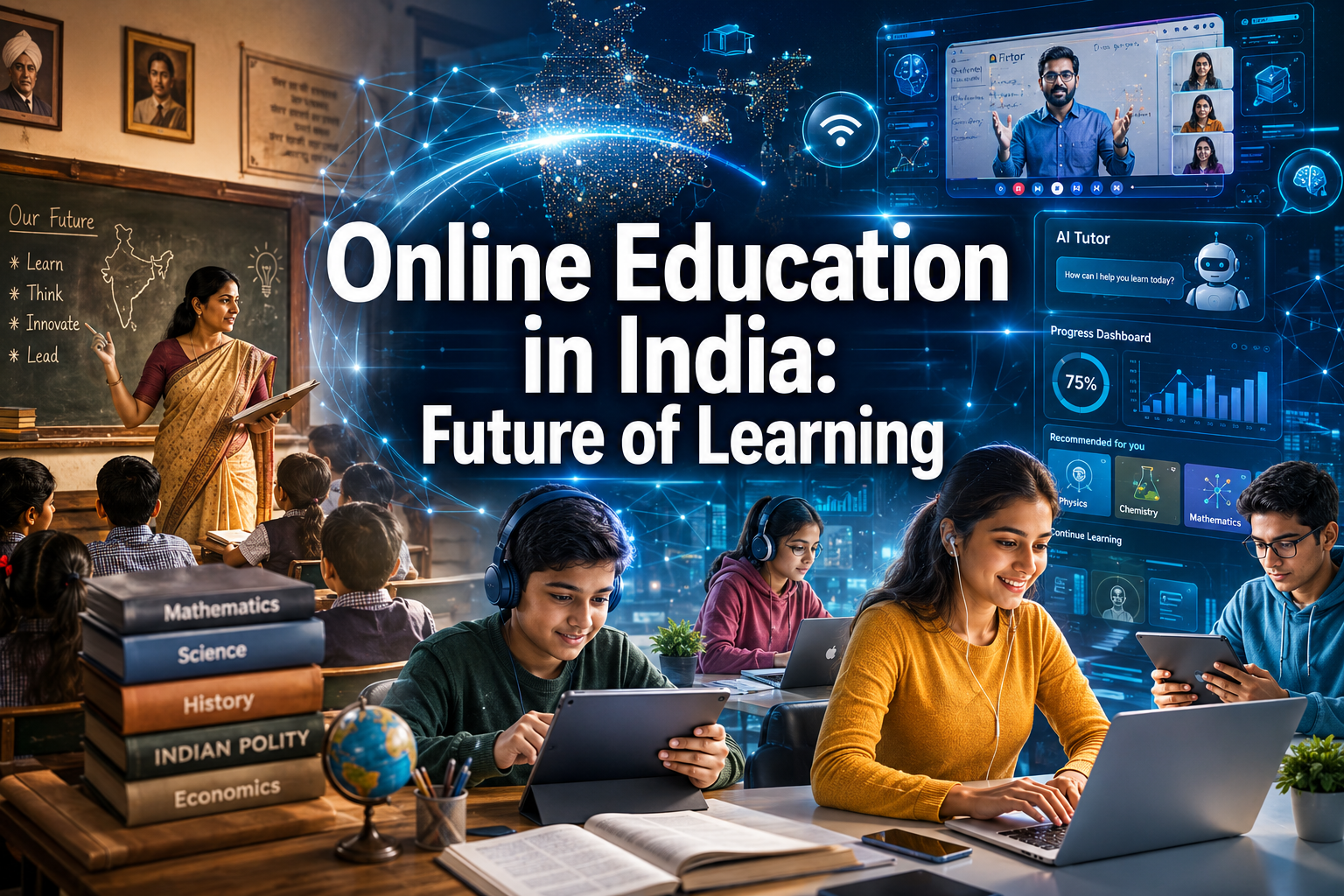
Education in India is experiencing one of the biggest digital transformations in its history. What once depended almost entirely on physical classrooms, blackboards, and fixed schedules has now expanded into smartphones, laptops, AI-powered learning systems, and virtual classrooms. Today, online education in India is no longer considered an alternative option. It is becoming a mainstream learning model for millions of students and professionals.
From school students attending virtual classes to working professionals pursuing online MBA programs, digital learning has reshaped how education is delivered and consumed across the country.
The shift accelerated rapidly after 2020, but the momentum has continued because online education solves several long-standing challenges in India’s traditional education system. Accessibility, affordability, flexibility, and skill-based learning opportunities are attracting learners from metropolitan cities as well as smaller towns.
At the same time, technological advancements such as AI learning assistants, adaptive learning platforms, and virtual mentoring are changing the quality and personalization of education itself.
Understanding how online education works in India today can help students, parents, and professionals make smarter academic and career decisions in an increasingly digital world.
What Is Online Education?
Online education refers to learning delivered primarily through digital platforms instead of traditional classroom environments.
Students usually access:
- Live virtual classes
- Recorded lectures
- Online assignments
- Digital examinations
- Learning management systems
Online education in India now includes:
- School learning
- College degrees
- Professional certifications
- Competitive exam preparation
- Skill-based courses
According to the University Grants Commission, several universities in India now offer officially recognized online degree programs.
Students can also explore educational guidance and digital learning resources through OneGrasp Education Resources for better academic planning.
Why Online Education Is Growing Rapidly in India
The rapid expansion of online education is being driven by multiple factors.
| Traditional Education | Online Education |
|---|---|
| Fixed classroom schedules | Flexible learning |
| Daily commuting required | Learn from anywhere |
| Limited access in remote areas | Nationwide accessibility |
| Higher living expenses | More affordable learning |
| Physical attendance mandatory | Digital participation |
According to India’s Ministry of Education Digital Learning Initiatives, digital education adoption increased sharply because of internet expansion and technology-driven learning platforms.
Several other factors are contributing to this growth:
- Affordable smartphones
- Cheaper internet access
- Growth of EdTech platforms
- Rising remote work culture
- Demand for continuous upskilling
Meanwhile, students increasingly prefer flexible education models that fit around work, internships, or competitive exam preparation.
Types of Online Education Available in India
Online Degree Programs
Universities now offer online:
- BA
- BCom
- BBA
- MBA
- MCA
- MA programs
These degrees are typically delivered through structured digital learning platforms.
Skill-Based Learning
Short-term courses focus on practical skills such as:
- Digital marketing
- Coding
- Graphic design
- Data analytics
- AI tools
These programs often prioritize employability and freelancing opportunities.
Competitive Exam Preparation
Many students use online platforms for:
- UPSC preparation
- SSC coaching
- Banking exams
- NEET and JEE preparation
Digital learning has made quality coaching accessible beyond major cities.
School Education
Schools increasingly use hybrid and digital classroom models supported by virtual assignments and online assessments.
Online Education in India: Major Benefits
Accessibility
Students from rural and smaller urban regions can now access quality education from reputed institutions without relocating.
Flexibility
Online education allows students and professionals to learn according to their schedules.
Lower Costs
Students save money on:
- Hostel accommodation
- Transportation
- Printed materials
- Relocation expenses
Skill-Based Learning Opportunities
Online platforms frequently update courses based on industry demand, helping learners stay relevant in evolving job markets.
Challenges Facing Online Education
Despite rapid growth, online learning still faces several challenges in India.
Digital Divide
Internet access and device availability remain uneven across regions.
Self-Discipline Issues
Without physical classrooms, many learners struggle with consistency and time management.
Quality Variations
Not all online courses or institutions provide the same educational quality.
Reduced Social Interaction
Students may miss networking and collaborative campus experiences available in traditional education.
According to Statista’s India EdTech Insights, India’s online education market is growing rapidly, but digital infrastructure and engagement challenges still exist.
Expert Insight: The Future of Digital Learning in India
The future of online education in India looks highly promising.
Universities and EdTech companies are increasingly integrating:
- Artificial intelligence
- Personalized learning systems
- Adaptive testing
- Virtual mentoring
- AI-based performance analytics
Experts believe hybrid education models combining online flexibility with offline practical exposure will become the dominant format in the coming years.
Moreover, employers are increasingly valuing practical skills, digital adaptability, and continuous learning ability alongside traditional qualifications.
This shift is encouraging learners to pursue education as an ongoing process rather than a one-time academic milestone.
Common Mistakes Students Should Avoid
Students often make avoidable mistakes while choosing online education pathways.
| Mistake | Consequence |
|---|---|
| Ignoring course credibility | Poor educational quality |
| Choosing random platforms | Limited career value |
| Weak study discipline | Incomplete learning |
| Focusing only on certificates | Lack of practical skills |
| Ignoring accreditation | Degree validity concerns |
Students should always verify institution recognition and course relevance before enrollment.
Latest Trends and Updates
Artificial intelligence is increasingly transforming online education through adaptive learning systems, AI tutors, and personalized learning dashboards.

Several Indian universities are now offering industry-oriented online programs that combine traditional academics with modern digital skills such as analytics, AI tools, and cybersecurity.

Mobile-first learning platforms are becoming more popular, allowing students to attend classes and complete assignments entirely through smartphones.

Hybrid education models that combine virtual learning with optional offline workshops and internships are also gaining rapid acceptance.

Meanwhile, employers are increasingly focusing on skill-based hiring, encouraging students to combine online degrees with practical certifications and project-based learning.
Real-Life Example: Learning Beyond Geographic Limits
Consider the example of Kavya, a student from a small town in Andhra Pradesh who wanted to study digital marketing but lacked access to quality local institutions.
Instead of relocating to a metro city, she enrolled in online certification programs and attended virtual mentorship sessions. Over time, she built freelance experience while continuing her regular studies.
Eventually, she secured remote work opportunities with startups outside her city.
Her journey reflects how online education is helping students overcome geographic and financial limitations.
Beginner vs Expert Approach to Online Learning
| Beginner Approach | Expert Approach |
|---|---|
| Learns inconsistently | Maintains structured routine |
| Chooses trendy courses blindly | Studies industry demand carefully |
| Focuses only on certificates | Builds practical portfolio |
| Ignores networking | Engages in professional communities |
| Avoids skill practice | Applies learning regularly |
Successful learners treat online education strategically rather than casually.
Pros and Cons of Online Education
| Pros | Cons |
|---|---|
| Flexible learning schedule | Requires self-discipline |
| Affordable education | Internet dependency |
| Learn from anywhere | Reduced physical interaction |
| Wide course variety | Quality varies by platform |
| Suitable for working professionals | Screen fatigue possible |
What Students Should Do Next
Students interested in online learning should approach education strategically.
Practical next steps include:
- Verify university or platform credibility
- Choose career-aligned courses
- Build practical projects
- Maintain study consistency
- Develop communication skills
- Track industry trends
- Combine academics with real-world applications
Students should also verify accreditation through official bodies like National Assessment and Accreditation Council (NAAC) before enrolling in degree programs.
Quick Checklist
- Verify course credibility
- Research industry demand
- Build practical skills
- Maintain study routine
- Create portfolio projects
- Track digital learning trends
- Combine learning with execution
Conclusion
The rapid growth of online education in India is transforming how students, professionals, and institutions approach learning in the digital era. What began as an alternative learning model has now become a mainstream educational ecosystem offering flexibility, accessibility, and career-oriented opportunities.
From online degrees and competitive exam coaching to AI-powered skill development programs, digital education is creating pathways that were previously inaccessible for many learners across India.
However, long-term success still depends on choosing credible platforms, maintaining consistency, and focusing on practical application rather than certificates alone.
As artificial intelligence, hybrid learning systems, and industry-integrated education continue evolving, online learning will likely become even more central to India’s educational future.
For students and professionals alike, the smartest strategy is simple: stay adaptable, keep learning continuously, and use digital education as a tool for long-term personal and career growth.
FAQs
Yes, recognized online education programs from approved institutions are generally valid for many educational and career purposes.
Online education offers flexibility, affordability, accessibility, and opportunities for continuous skill development.
Many employers now accept online degrees from recognized universities, especially when candidates demonstrate practical skills.
Popular options include digital marketing, coding, MBA programs, data analytics, AI tools, and competitive exam preparation.
Yes, online education is highly suitable for working professionals because it allows flexible learning alongside employment.