May 25, 2026
 7 Min
 No Comment
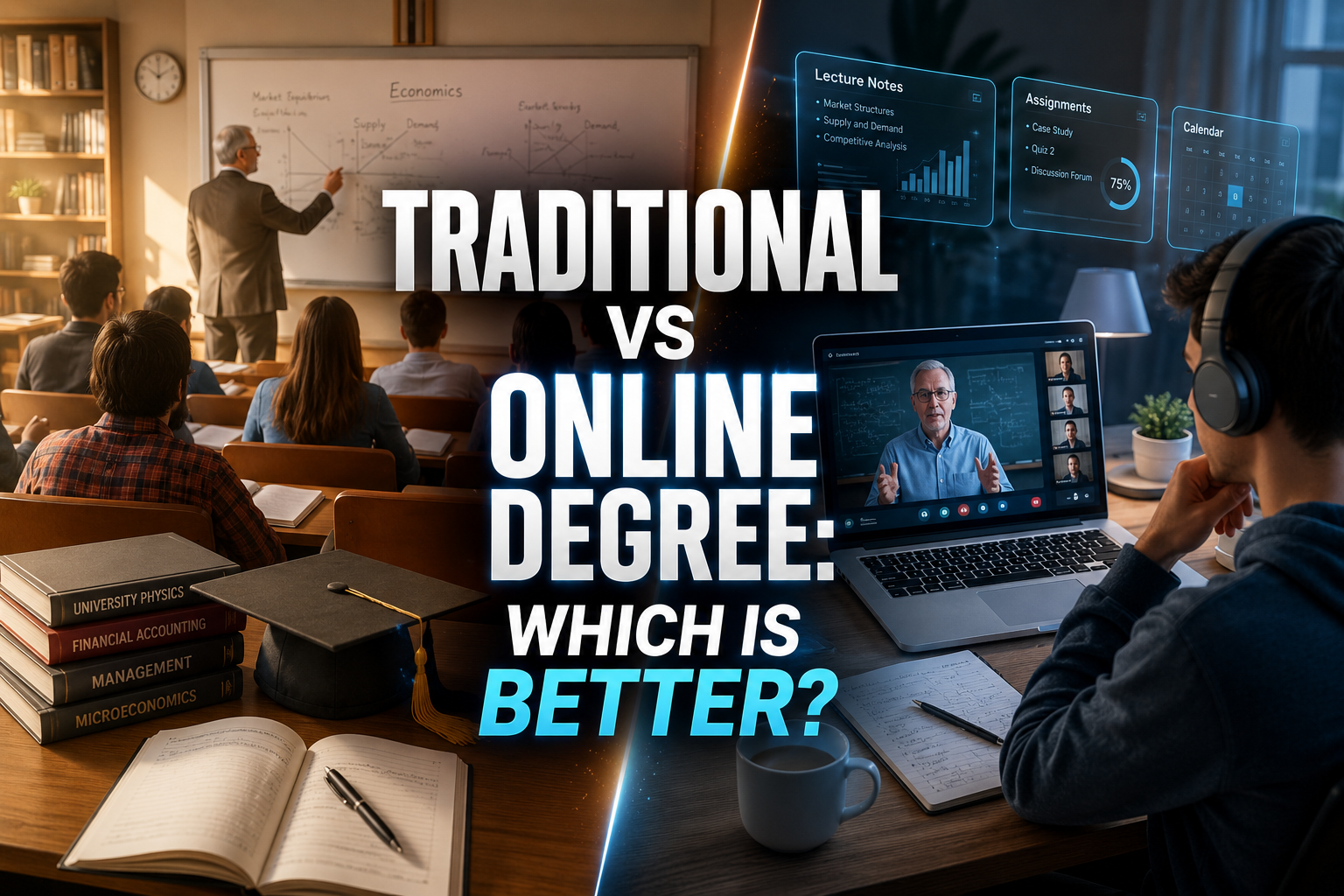
Higher education is changing rapidly across India and around the world. A few decades ago, traditional classroom education was considered the only serious pathway to academic and professional success. Today, however, digital learning platforms, AI-powered education systems, and flexible online universities are transforming how students learn and build careers.
This shift has sparked an important discussion around the traditional online degree comparison and which educational pathway offers better long-term value in the modern world.
Some students still prefer physical classrooms, campus experiences, and face-to-face interaction. Meanwhile, many working professionals and digital learners are choosing online degree programs because of flexibility, affordability, and career convenience.
Both systems have strengths and limitations. The right choice depends on learning style, career goals, financial situation, discipline level, and industry requirements.
Understanding how traditional and online degrees differ can help students make more informed educational decisions instead of following outdated assumptions or trends blindly.
What Is a Traditional Degree?
A traditional degree refers to classroom-based education delivered through physical colleges or universities.
Students typically attend:
- In-person lectures
- Campus activities
- Physical examinations
- Group discussions
- Practical lab sessions
Traditional education often includes structured academic schedules and direct interaction with faculty and classmates.
India’s traditional higher education system includes:
- Government universities
- Private colleges
- IITs
- IIMs
- Professional institutions
What Is an Online Degree?
An online degree is a digitally delivered academic program that students can complete remotely through internet-based learning systems.
Online programs generally include:
- Live virtual classes
- Recorded lectures
- Digital assignments
- Online assessments
- Interactive learning platforms
According to the University Grants Commission, recognized universities can offer approved online degree programs under specific guidelines.
Students can also explore educational guidance and digital learning resources through OneGrasp Education Resources for better academic planning.
Traditional Online Degree Comparison: Core Differences
Although both systems aim to provide higher education, the learning experience differs significantly.
| Traditional Degree | Online Degree |
|---|---|
| Physical classroom learning | Digital learning platforms |
| Fixed schedules | Flexible schedules |
| Campus interaction | Remote accessibility |
| Higher living expenses | More affordable overall |
| Face-to-face faculty interaction | Virtual interaction |
| Location-dependent | Learn from anywhere |
Students should evaluate which environment matches their learning style and career goals.
Flexibility and Convenience
Traditional Degrees
Traditional education follows structured schedules and physical attendance requirements.
This works well for students who:
- Prefer classroom discipline
- Learn better through direct interaction
- Want campus life experiences
However, traditional systems may be difficult for:
- Working professionals
- Parents
- Full-time employees
- Remote learners
Online Degrees
Online education provides greater flexibility because students can often study from anywhere.
Benefits include:
- Flexible schedules
- Self-paced learning
- Career continuation
- Geographic freedom
This flexibility is one of the biggest reasons online learning is growing rapidly across India.
Cost Comparison
Educational affordability has become a major concern for families.
| Cost Factor | Traditional Degree | Online Degree |
|---|---|---|
| Tuition Fees | Often higher | Usually lower |
| Hostel Expenses | Additional cost | Not required |
| Travel Costs | Frequent | Minimal |
| Living Expenses | High in metro cities | Lower overall |
Online education often reduces indirect expenses significantly.
However, students should still verify institutional quality carefully rather than choosing programs only because they are cheaper.
Learning Experience and Interaction
Traditional Classroom Experience
Traditional education provides:
- Face-to-face discussions
- Campus networking
- Physical events
- Direct mentorship
- Structured routines
Many students value campus experiences because they support social development and networking.
Online Learning Experience
Modern online platforms increasingly provide:
- Live virtual classes
- AI-powered dashboards
- Recorded sessions
- Digital discussion forums
- Interactive assignments
Technology has improved online engagement significantly compared to earlier distance education systems.
Career Opportunities and Employer Perception
Traditional Degrees
Traditional degrees continue holding strong value in:
- Government sectors
- Research-oriented careers
- Campus placement systems
Some industries still prefer classroom-based graduates for specific roles.
Online Degrees
Online degrees are increasingly accepted because industries now focus more on:
- Skills
- Practical knowledge
- Communication
- Problem-solving
- Digital adaptability
According to World Economic Forum Future of Jobs Report, digital literacy and continuous learning are becoming essential future workforce skills.
Employers increasingly value practical ability alongside academic qualifications.
Expert Insight: Why Hybrid Education May Become the Future
Experts believe the future of education may combine elements of both systems.
Hybrid learning models increasingly include:
- Online lectures
- Practical workshops
- Virtual collaboration
- Industry certifications
- AI-supported learning systems
This blended approach combines flexibility with practical engagement.
Meanwhile, remote work culture and global digital collaboration are making online learning more acceptable across industries.
The debate is gradually shifting from “traditional vs online” toward “how effectively students build skills and adaptability.”
Common Mistakes Students Should Avoid
Many learners make emotional or uninformed educational decisions.
| Mistake | Consequence |
|---|---|
| Choosing only based on social pressure | Poor learning fit |
| Ignoring accreditation | Degree validity risks |
| Believing online degrees are automatically easier | Academic struggle |
| Choosing programs only by low fees | Weak educational quality |
| Ignoring practical skill-building | Reduced employability |
Students should prioritize educational outcomes rather than stereotypes.
Latest Trends and Updates
Artificial intelligence and digital transformation are rapidly reshaping both traditional and online education systems across India.

Many universities now combine classroom teaching with online learning platforms, recorded lectures, virtual labs, and AI-powered academic support systems.

Online degree programs are also increasingly integrating practical projects, industry certifications, and interactive learning technologies to improve employability outcomes.

Meanwhile, employers are gradually shifting toward skills-first hiring models where practical abilities, communication skills, and adaptability often matter more than educational format alone.

Hybrid learning systems that combine flexibility with real-world skill development are expected to become increasingly common in future higher education ecosystems.
Real-Life Example: Choosing the Right Educational Format
Consider the example of Meera, a student from Andhra Pradesh who wanted to pursue a business degree while supporting her family financially.
Initially, she planned to attend a traditional college. However, balancing travel, living costs, and family responsibilities became difficult.
She eventually selected a UGC-approved online BBA program that allowed her to study while working part-time.
Meanwhile, her cousin pursuing engineering preferred a traditional campus because of laboratory access and campus placements.
Both students benefited because they selected learning systems aligned with their personal goals and circumstances.
Beginner vs Expert Educational Thinking
| Beginner Thinking | Expert Thinking |
|---|---|
| Follows trends blindly | Evaluates long-term value |
| Focuses only on degree format | Focuses on skills and outcomes |
| Ignores learning style | Matches education with personality |
| Believes myths easily | Verifies facts carefully |
| Avoids research | Compares ROI and flexibility |
Experienced learners understand that success depends more on skill development and consistency than educational format alone.
Pros and Cons of Traditional Degrees
| Pros | Cons |
|---|---|
| Campus networking | Higher overall costs |
| Face-to-face interaction | Fixed schedules |
| Structured learning | Geographic limitations |
| Practical labs and facilities | Less flexibility |
| Strong campus culture | Career breaks possible |
Pros and Cons of Online Degrees
| Pros | Cons |
|---|---|
| Flexible learning | Requires self-discipline |
| Affordable overall | Reduced campus exposure |
| Learn from anywhere | Internet dependency |
| Suitable for working professionals | Quality varies by university |
| Technology-integrated learning | Practical exposure may vary |
What Students Should Do Next
Students comparing traditional and online degrees should make strategic decisions.
Practical next steps include:
- Clarify career goals
- Evaluate learning preferences
- Verify university recognition
- Compare total educational costs
- Research curriculum quality
- Build practical skills alongside academics
- Focus on long-term employability
Students should also verify accreditation through official bodies like National Assessment and Accreditation Council (NAAC) before enrollment.
Quick Checklist
- Verify university recognition
- Compare flexibility needs
- Evaluate total costs
- Understand career goals
- Build practical skills
- Research curriculum quality
- Avoid educational myths
Conclusion
The debate around the traditional online degree comparison is no longer about which system is universally superior. Instead, the better option depends on personal learning style, career goals, financial situation, flexibility needs, and industry requirements.
Traditional degrees continue offering valuable campus experiences, structured learning, and physical networking opportunities. Meanwhile, online degrees provide flexibility, affordability, digital adaptability, and access to modern technology-driven education systems.
As AI, hybrid learning, and digital transformation continue reshaping global education, the future is likely to combine the strengths of both models rather than treating them as opposites.
Students who focus on practical skill development, continuous learning, adaptability, and informed educational planning are more likely to succeed regardless of the learning format they choose.
FAQs
UGC-approved online degrees are generally valid, but acceptance may vary depending on industry and employer expectations.
Online degrees are usually more affordable because they reduce travel, hostel, and living expenses.
Many employers increasingly focus on skills and practical ability rather than only educational format.
Yes, online education is highly suitable for working professionals because of flexible schedules.
Traditional education may offer advantages for highly practical or laboratory-intensive fields, depending on the program structure.