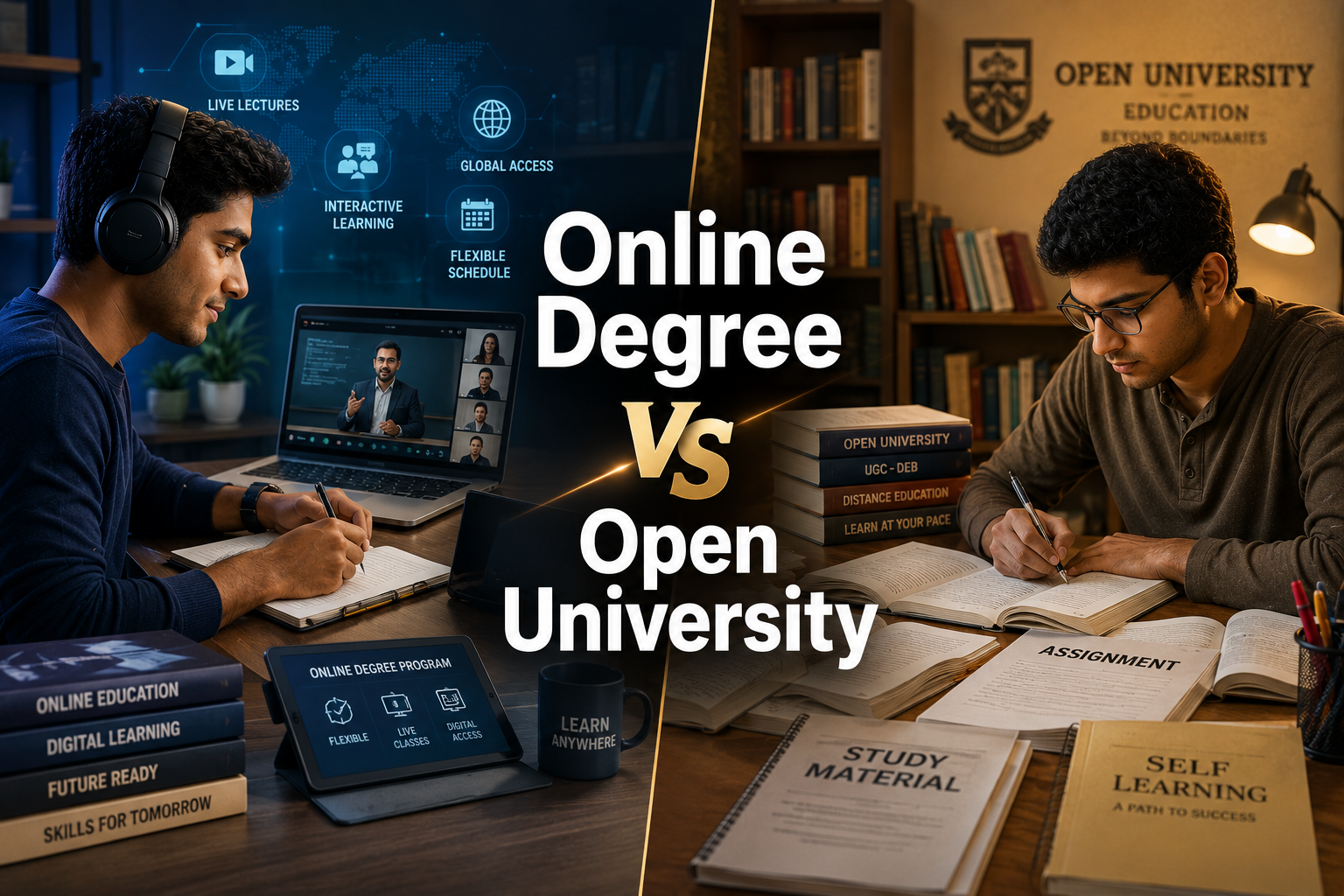
Higher education in India has changed dramatically with the rise of digital learning, remote education, and flexible study models. Students today are no longer limited to traditional campus-based education. Instead, they can now choose between modern online degree programs and open university systems depending on their goals, schedules, and financial situations.
This growing shift has sparked an important discussion around online degree open university education models and which option is better for students in modern India.
At first glance, both systems may seem similar because they allow flexible learning from home. However, they differ significantly in teaching methods, technology integration, student experience, examinations, and industry perception.
Many learners choose the wrong system simply because they do not fully understand how online degrees differ from open universities.
Some prioritize flexibility, others focus on affordability, while many students want career-focused digital learning. Therefore, understanding the strengths and limitations of both pathways is essential before making educational decisions.
Affordability is a major factor influencing educational choices.
Factor
Online Degree
Open University
Tuition Fees
Moderate
Usually lower
Technology Costs
Internet/device required
Lower digital dependency
Study Materials
Digital access
Printed materials included
Flexibility
High
Very High
Open universities are often more affordable overall, especially for financially constrained students.
Career Value and Industry Perception
Online Degrees
Modern online degrees are increasingly accepted because they integrate:
Digital learning systems
Industry-relevant curriculum
Technical exposure
Interactive assessments
Many companies now value digitally adaptable graduates.
Open Universities
Open universities continue holding strong value, especially for:
Government exam aspirants
Working professionals
Long-term academic completion
However, some industries may perceive online degrees as more technologically aligned.
Expert Insight: Why Hybrid Education Is Growing
India’s education system is moving toward blended learning models.
Experts believe future education will combine:
Academic flexibility
Digital interaction
Industry certifications
Practical skill-building
Online degrees are evolving rapidly because of AI-driven learning systems, virtual classrooms, and interactive education platforms.
Meanwhile, open universities continue playing a crucial role in expanding affordable education access across India.
Both systems serve important educational purposes rather than competing directly.
Common Mistakes Students Should Avoid
Many learners misunderstand the differences between online and open education.
Mistake
Consequence
Assuming both systems are identical
Wrong educational choice
Ignoring accreditation
Degree validity risks
Choosing only based on low fees
Poor career alignment
Ignoring learning style preference
Reduced academic performance
Avoiding skill-building
Weak employability
Students should choose based on career goals, discipline level, and preferred learning methods.
Latest Trends and Updates
Artificial intelligence and digital learning technologies are rapidly transforming online higher education systems across India.

Online degree programs increasingly include AI-powered learning dashboards, recorded lectures, interactive assignments, and virtual student engagement systems.

Meanwhile, open universities are also gradually integrating digital platforms and online student support services alongside traditional distance-learning models.

Hybrid education models combining online classes, practical certifications, and flexible examinations are becoming increasingly common across Indian higher education.

Employers are also showing growing acceptance toward flexible learning pathways, especially when students demonstrate practical skills, communication ability, and technological adaptability.
Real-Life Example: Choosing the Right Learning Model
Consider the example of Ramesh, a working professional from Andhra Pradesh employed in retail operations.
Initially, he considered an open university because of affordability. However, after evaluating his goals, he realized he wanted stronger digital exposure and interactive learning.
He eventually enrolled in a UGC-approved online BCom program that offered live lectures, recorded sessions, and placement-oriented learning support.
Meanwhile, his cousin preparing for government exams preferred an open university system because it allowed highly flexible self-paced study.
Both students succeeded because they selected education models aligned with their personal goals and lifestyles.
Beginner vs Expert Decision-Making
Beginner Approach
Expert Approach
Chooses based only on fees
Evaluates long-term value
Ignores accreditation
Verifies recognition carefully
Follows trends blindly
Aligns education with career goals
Focuses only on degree title
Considers learning experience
Avoids research
Compares curriculum and flexibility
Experienced learners focus on educational outcomes rather than assumptions.
Pros and Cons of Online Degrees
Pros
Cons
Interactive digital learning
Internet dependency
Modern technology integration
Slightly higher costs
Industry-focused exposure
Requires digital comfort
Flexible schedules
Self-discipline needed
Live faculty interaction
Quality varies by university
Pros and Cons of Open Universities
Pros
Cons
Affordable education
Limited interaction
Highly flexible learning
Self-study challenges
Suitable for working learners
Less digital exposure
Widely accessible
Slower curriculum updates
Government-recognized systems
Practical exposure may vary
What Students Should Do Next
Students choosing between online degrees and open universities should take a strategic approach.
Practical next steps include:
Clarify career goals
Compare university recognition
Evaluate learning preferences
Check curriculum relevance
Understand industry expectations
Build additional practical skills
Research long-term educational plans
Students should also verify accreditation through official bodies like National Assessment and Accreditation Council (NAAC) before enrollment.
Quick Checklist
Verify UGC approval
Compare learning models
Understand career goals
Evaluate flexibility needs
Research industry relevance
Build practical skills
Compare long-term value
Conclusion
The debate around online degree open university education models is not about which system is universally superior. Instead, the right choice depends on individual learning preferences, financial situations, career goals, and lifestyle flexibility.
Online degrees offer interactive digital learning, modern industry exposure, and technology-driven education systems. Meanwhile, open universities continue providing affordable and highly flexible education opportunities for millions of learners across India.
As India’s education ecosystem continues evolving through AI, digital transformation, and hybrid learning models, both pathways are expected to remain highly relevant.
Students who make informed decisions, verify accreditation carefully, and continuously build practical skills alongside academic learning are likely to achieve stronger long-term career outcomes regardless of the learning format they choose.
FAQs
It depends on career goals, learning preferences, and flexibility requirements.
Yes, recognized open university degrees are generally valid for higher education and many employment opportunities.
UGC-approved online degrees are increasingly accepted by many employers, especially in digital industries.
Open universities are generally more affordable than modern online degree programs.
Yes, both online degrees and open universities are suitable for working professionals because of flexible learning structures.

 May 25, 2026
 7 Min
 No Comment