May 20, 2026
 6 Min
 No Comment
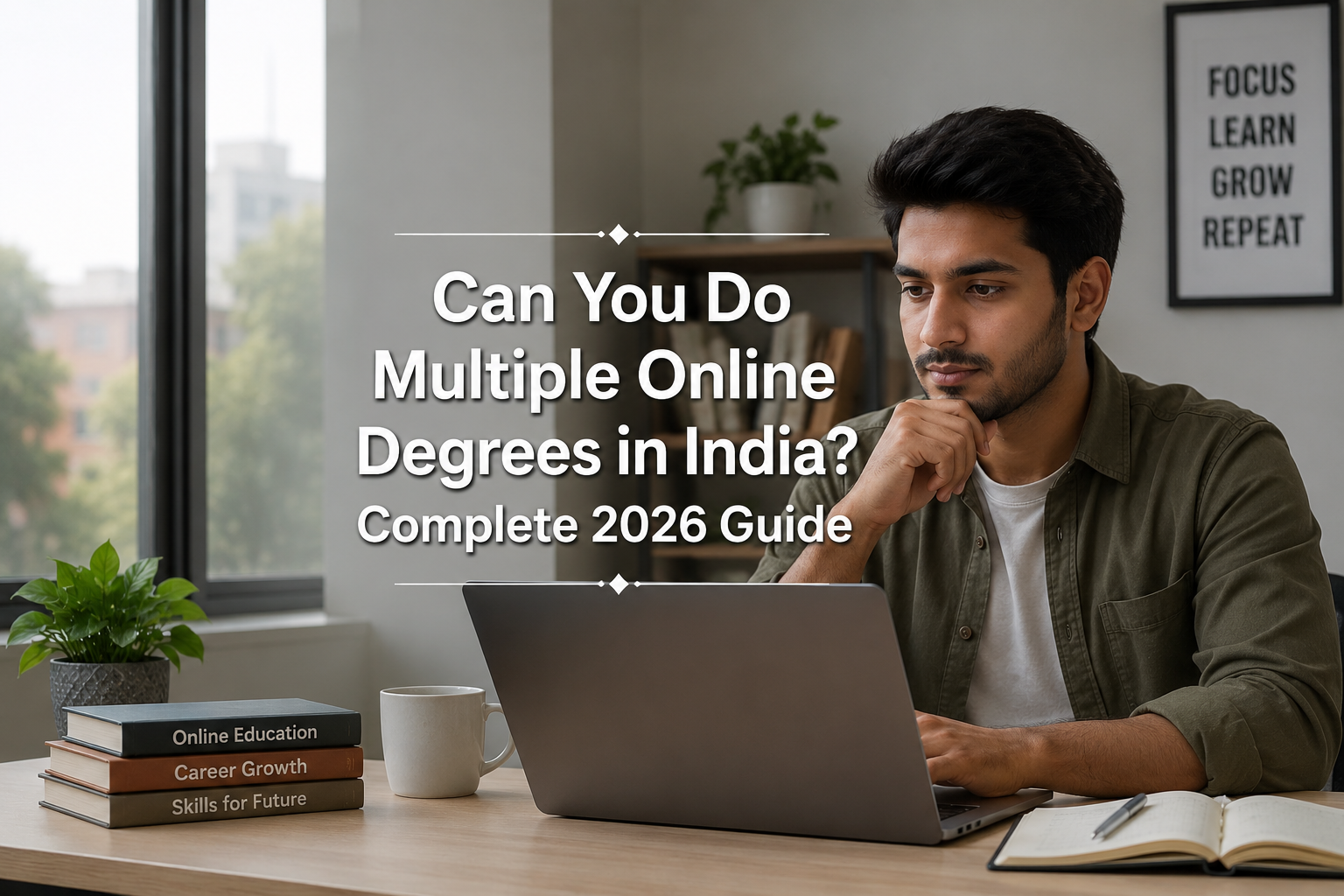
Online education has made learning more flexible than ever before. Students and working professionals now frequently explore combinations such as BCA + Data Science certifications, MBA + Analytics programs, or even dual online degrees to improve career opportunities.
This growing trend has created one major question:
“Can you legally and practically pursue multiple online degrees in India?”
The short answer is yes — in many cases, students can pursue multiple online degrees or combine online programs with certifications. However, there are important UGC rules, workload realities, and career considerations that students should understand before enrolling.
This guide explains everything about multiple online degrees India students and professionals should know in 2026.
According to updated UGC regulations, students in India are now allowed to pursue two academic programs simultaneously under certain conditions. (ugc.gov.in)
Is It Legal to Pursue Multiple Online Degrees in India?
Yes — UGC permits students to pursue two academic programs simultaneously under specific guidelines.
Students may:
- Pursue two online degrees simultaneously
- Combine online and offline programs
- Combine degree and diploma programs
- Pursue skill certifications alongside formal education
However, institutions must be officially recognized and approved.
You can verify recognized universities through the UGC Official Website
Multiple Online Degrees India Students Commonly Choose
Many students strategically combine programs to improve employability.
Popular Degree Combinations
| Combination | Career Goal |
|---|---|
| BBA + Digital Marketing | Business & marketing careers |
| BCA + Data Analytics | IT and analytics roles |
| MBA + Business Analytics | Leadership and data-driven management |
| BA + UPSC Preparation | Government job preparation |
| MCA + Cloud Certifications | Advanced IT careers |
| BCom + Financial Certifications | Finance and banking careers |
Interestingly, employers increasingly value multi-disciplinary skills.
For example:
- A marketer with analytics knowledge
- A developer with management understanding
- A finance graduate with AI skills
often gains stronger career opportunities.
For students exploring flexible online learning pathways and certifications, OneGrasp’s education resources also provide useful guidance on career-focused online education.
Should You Actually Do Multiple Online Degrees?
Legally possible does not always mean strategically beneficial.
Students should evaluate:
- Time management
- Career goals
- Learning capacity
- Financial investment
- Long-term value
Sometimes, one strong degree plus practical skills provides better results than multiple academic qualifications.
When Multiple Degrees Make Sense
Career Transition Goals
Working professionals changing careers may benefit from combining management and technical programs.
Building Specialized Skills
Students combining technology with business skills often gain competitive advantages.
Government Exam Preparation
Some students pursue flexible online degrees while preparing for competitive exams.
International Career Aspirations
Combining degrees with global certifications may strengthen profiles for international opportunities.
When Multiple Degrees May Not Be Worth It
Collecting Degrees Without Skills
Employers increasingly value implementation ability over certificates alone.
Overloading Your Schedule
Too many simultaneous programs often reduce learning quality.
Following Trends Blindly
Not every degree combination creates practical career value.
Ignoring Real Experience
Internships, freelancing, projects, and communication skills remain equally important.
Online Degrees vs Certifications: What Is Better?
In many modern industries, certifications and practical skills sometimes provide faster outcomes than additional degrees.
| Online Degrees | Certifications |
|---|---|
| Long-term academic value | Faster skill acquisition |
| Broader curriculum | Industry-focused learning |
| Useful for higher studies | Practical implementation |
| Stronger formal qualification | Quick upskilling |
| More time investment | Flexible learning pace |
The smartest approach often combines both strategically.
Expert Insight: The Future Belongs to Hybrid Skill Profiles
The modern economy increasingly rewards professionals with blended skills.
For example:
- AI + Marketing
- Finance + Analytics
- Coding + Design
- Management + Technology
These hybrid combinations are becoming more valuable because businesses increasingly need professionals who can work across multiple domains.
However, depth still matters.
A student with shallow knowledge across five degrees may struggle more than someone with one strong specialization and practical expertise.
Therefore, balance is critical.
Latest Trends and Updates
UGC’s flexible education policies are encouraging students to pursue interdisciplinary and simultaneous learning pathways.

Online universities are increasingly offering integrated programs combining management, analytics, AI, and business specializations.

Working professionals are combining online MBAs with technical certifications to improve promotion and leadership opportunities.

Micro-certifications and industry-focused short courses are becoming more valuable alongside formal degrees.

Employers increasingly prefer candidates with practical hybrid skill combinations instead of only traditional academic qualifications.
Real-Life Example: Smart Combination Strategy
Anjali completed an online BCom degree while simultaneously learning financial analytics and Power BI certifications online.
Instead of enrolling in multiple unrelated degrees, she focused on building one strong specialization around finance and analytics.
By graduation, she secured an analyst role because she combined:
- Academic foundation
- Technical skills
- Practical dashboards
- Communication ability
Her strategy proved more effective than simply collecting multiple unrelated qualifications.
Common Mistakes Students Should Avoid
Pursuing Too Many Degrees Simultaneously
This often causes burnout and poor academic performance.
Ignoring Accreditation
Always verify UGC recognition carefully.
Chasing Social Media Trends
Not every “popular” course creates actual career opportunities.
Focusing Only on Certificates
Practical implementation remains extremely important.
Beginner vs Strategic Learner Approach
| Beginner Approach | Strategic Learner Approach |
|---|---|
| Collects random degrees | Builds targeted skill combinations |
| Focuses only on certificates | Builds projects and portfolios |
| Ignores workload reality | Manages learning strategically |
| Studies without career planning | Aligns education with goals |
| Follows trends blindly | Researches market demand |
Pros and Cons of Multiple Online Degrees
| Pros | Cons |
|---|---|
| Multi-disciplinary learning | Time management challenges |
| Flexible education options | Higher workload |
| Better career adaptability | Risk of burnout |
| Improved knowledge diversity | Financial investment |
| Supports career transitions | Skills may become shallow |
What to Do Next (Actionable Steps)
If you are considering multiple online degrees:
- Identify long-term career goals first
- Verify UGC recognition carefully
- Avoid unrelated degree combinations
- Balance academics with practical skills
- Prioritize internships and projects
- Maintain realistic schedules
- Focus on quality over quantity
Most importantly, build expertise — not just certificates.
Quick Checklist
- Verify accreditation
- Define career goals
- Choose complementary courses
- Avoid overload
- Build practical projects
- Improve communication skills
- Gain experience alongside study
- Stay consistent
Conclusion
Yes, students and working professionals in India can legally pursue multiple online degrees under UGC guidelines. However, the smartest educational strategy is not simply collecting qualifications — it is building meaningful, career-aligned expertise.
In 2026, employers increasingly value professionals who combine formal education with practical skills, adaptability, communication ability, and real-world problem-solving.
A well-planned combination of one strong degree, targeted certifications, and practical experience often creates far better outcomes than multiple unrelated academic programs.
The future belongs to learners who study strategically, not just extensively.
FAQs
Yes, UGC allows students to pursue two academic programs simultaneously under specific guidelines. (ugc.gov.in)
Yes, degrees from UGC-approved universities are valid.
A balanced combination of one strong degree and practical certifications is often more effective.
Yes, online learning flexibility makes it possible for professionals to manage multiple programs strategically.
Combinations such as MBA + Analytics, BCA + Data Science, and Finance + AI skills currently show strong demand.