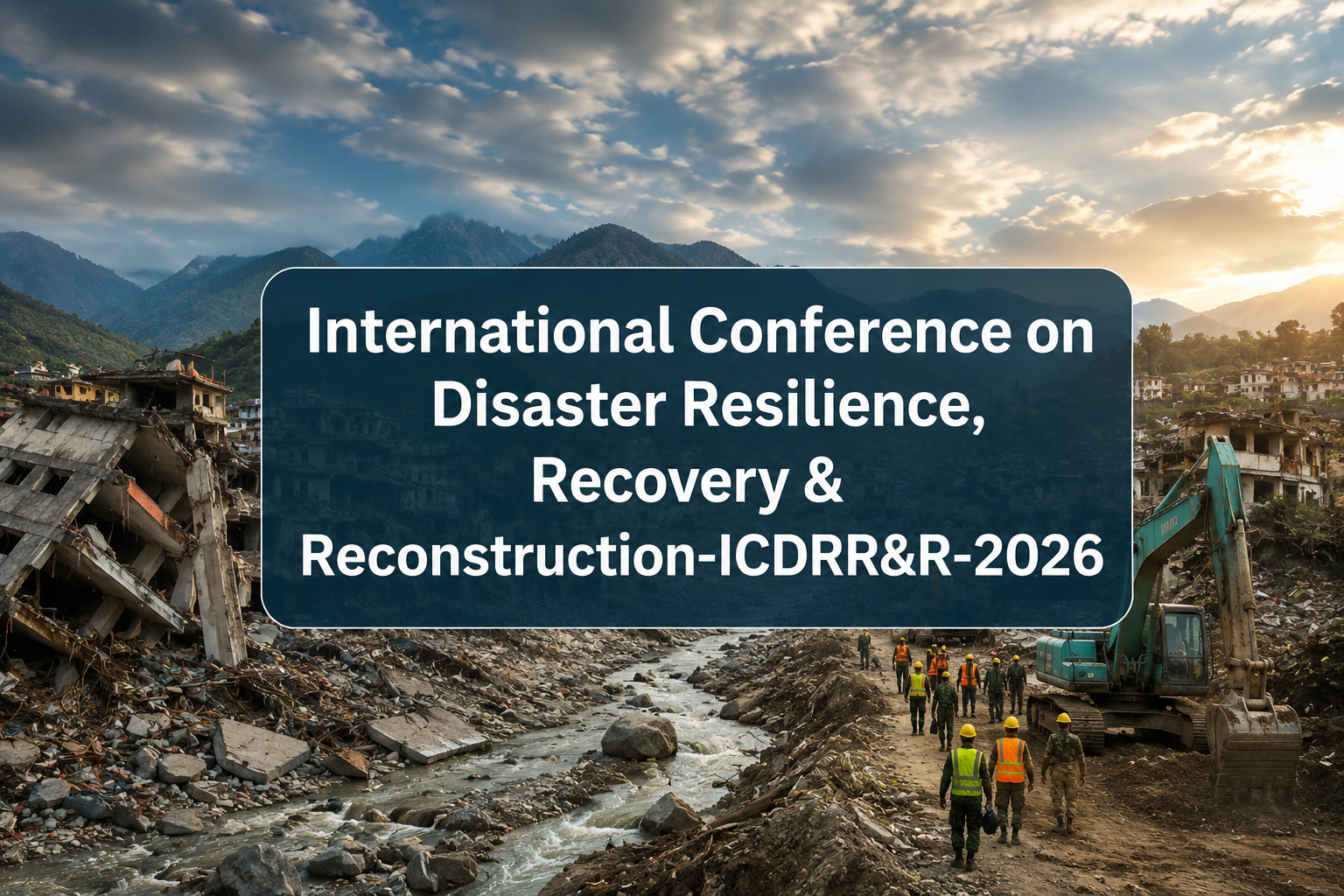
The Disaster Resilience Conference 2026 brings together experts to showcase cutting‑edge solutions for disaster preparedness, recovery, and sustainable reconstruction.
Why the Disaster Resilience Conference Matters Today
Natural disasters, climate-related emergencies, pandemics, infrastructure failures, and humanitarian crises have become increasingly frequent and complex. Around the world, governments, communities, researchers, and organizations are working to strengthen resilience, improve disaster preparedness, and develop sustainable recovery strategies that minimize long-term impacts.
The Disaster Resilience Recovery Reconstruction conference, officially known as the International Conference on Disaster Resilience, Recovery & Reconstruction (ICDRR&R-2026), serves as a global platform for experts, policymakers, engineers, urban planners, disaster management professionals, researchers, and students to explore innovative approaches to disaster preparedness, resilience building, recovery planning, and sustainable reconstruction.
As climate risks continue to intensify and urban populations grow, the importance of disaster resilience has become a central priority for sustainable development worldwide. Research and collaboration in this field are essential for protecting lives, infrastructure, economies, and ecosystems. Disaster resilience conferences worldwide increasingly emphasize sustainable recovery, community engagement, resilient infrastructure, and climate adaptation strategies.
The International Conference on Disaster Resilience, Recovery & Reconstruction (ICDRR&R-2026) focuses on disaster preparedness, resilience building, post-disaster recovery, sustainable reconstruction, risk reduction, climate adaptation, and resilient infrastructure development.
The conference aims to facilitate interdisciplinary discussions among experts working across disaster management, engineering, public policy, urban planning, environmental science, social development, and emergency response sectors.
Participants explore practical strategies for reducing disaster risks, strengthening community resilience, rebuilding affected regions, and promoting sustainable development after crises. Similar global resilience conferences highlight collaboration among governments, researchers, industry professionals, and communities to improve preparedness and recovery outcomes.
Disaster resilience and recovery planning help communities reduce vulnerability, protect critical infrastructure, accelerate recovery, and improve long-term sustainability after disasters.
Climate change has increased the frequency and intensity of many natural hazards, including floods, droughts, wildfires, storms, and extreme weather events.
According to the United Nations Sustainable Development Goals framework, resilient infrastructure, sustainable cities, climate action, and disaster risk reduction are critical components of global development efforts.
Meanwhile, the global resilience community increasingly emphasizes proactive risk management rather than reactive disaster response. Building resilience before disasters occur can significantly reduce economic losses and human suffering.
Consequently, research in resilience, recovery, and reconstruction has become one of the most important interdisciplinary fields addressing modern societal challenges.
Disaster Resilience Recovery Reconstruction Research Themes
Featured Snippet Answer
ICDRR&R-2026 explores disaster risk reduction, resilient infrastructure, climate adaptation, emergency management, sustainable recovery, community resilience, and reconstruction planning.
Key research areas include:
Disaster Risk Reduction
Climate Change Adaptation
Community Resilience
Emergency Response Systems
Sustainable Reconstruction
Infrastructure Resilience
Urban Disaster Planning
Humanitarian Logistics
Post-Disaster Recovery
Public Health Emergencies
Disaster Governance
Early Warning Systems
Risk Assessment and Modeling
Resilient Cities and Communities
These themes align closely with international efforts focused on reducing disaster vulnerability while promoting sustainable development and long-term resilience.
The Growing Importance of Resilient Infrastructure
Featured Snippet Answer
Resilient infrastructure is designed to withstand, adapt to, and recover quickly from disasters while maintaining essential services.
Infrastructure resilience has become a major global priority.
Transportation systems, energy networks, healthcare facilities, communication systems, and water infrastructure all play critical roles during emergencies.
The International Conference on Disaster Resilient Infrastructure (ICDRI) and similar global initiatives emphasize investments in resilient infrastructure as a key strategy for climate adaptation and sustainable development.
Examples of resilient infrastructure include:
Traditional Infrastructure
Resilient Infrastructure
Reactive maintenance
Preventive planning
Limited hazard assessment
Multi-hazard design
Short-term investment focus
Lifecycle resilience focus
Isolated systems
Integrated resilience systems
Vulnerable to disruptions
Adaptive and flexible design
As a result, engineers and policymakers increasingly prioritize resilience in infrastructure planning and investment decisions.
Community Resilience and Sustainable Recovery
Featured Snippet Answer
Community resilience strengthens the ability of individuals, organizations, and local governments to prepare for, respond to, and recover from disasters.
Recovery is not simply about rebuilding structures.
Effective recovery also involves restoring livelihoods, healthcare systems, education services, social cohesion, and economic stability.
Research consistently demonstrates that communities with strong social networks, effective governance, and inclusive planning processes recover more successfully after disasters.
Moreover, sustainable recovery strategies can create opportunities to rebuild safer, stronger, and more equitable communities.
The concept of “Build Back Better” has become a guiding principle in disaster recovery and reconstruction efforts worldwide.
Technology and Innovation in Disaster Management
Featured Snippet Answer
Emerging technologies are transforming disaster management through predictive analytics, early warning systems, remote sensing, and real-time decision support.
Technological innovation is revolutionizing disaster resilience.
Key technologies include:
Technology
Application
Artificial Intelligence
Risk prediction
GIS Mapping
Hazard assessment
Drones
Damage assessment
Satellite Monitoring
Environmental surveillance
IoT Sensors
Early warning systems
Big Data Analytics
Emergency planning
According to the World Economic Forum, digital technologies are increasingly supporting resilience, sustainability, and risk management initiatives worldwide.
These innovations enable faster decision-making, more accurate forecasting, and improved disaster response capabilities.
Career Benefits of Participating in ICDRR&R-2026
Featured Snippet Answer
Participation in ICDRR&R-2026 can improve research visibility, strengthen professional networks, and create opportunities for interdisciplinary collaboration.
Benefits include:
International networking
Research dissemination
Publication opportunities
Policy engagement
Professional recognition
Collaboration development
Career advancement
Researchers, students, urban planners, emergency managers, environmental scientists, and policymakers can all benefit from exposure to current research and best practices.
Many disaster-focused conferences also provide opportunities for interdisciplinary partnerships that can lead to future research projects and funding opportunities.
Expert Insight: The Future of Disaster Resilience
The future of disaster resilience will depend on integrated approaches that combine science, technology, governance, infrastructure, and community engagement.
Several trends are expected to shape the next decade:
Climate-resilient infrastructure
Nature-based solutions
AI-driven risk forecasting
Community-centered resilience planning
Smart emergency management systems
Sustainable reconstruction frameworks
Resilience financing mechanisms
The OECD and international development organizations increasingly emphasize resilience as a foundation for sustainable economic growth and societal stability.
Research presented at conferences like ICDRR&R-2026 can contribute directly to policy innovation and practical implementation.
Latest Trends & Updates
Artificial intelligence is rapidly improving disaster forecasting capabilities. Machine learning models are increasingly used to predict floods, wildfires, storms, and infrastructure vulnerabilities before disasters occur.
Climate adaptation strategies are receiving greater attention worldwide. Governments and organizations are investing in resilient infrastructure, ecosystem restoration, and climate-smart planning to reduce future disaster risks.
Digital public infrastructure is becoming an important component of emergency management systems. Integrated digital platforms support real-time communication, resource coordination, and disaster response operations.
Nature-based solutions are gaining momentum as cost-effective resilience strategies. Wetland restoration, urban green spaces, mangrove conservation, and watershed management projects provide both environmental and disaster mitigation benefits.
Global policy frameworks continue evolving toward proactive resilience planning. International initiatives increasingly focus on reducing vulnerability, strengthening adaptive capacity, and promoting sustainable reconstruction after disasters.
Real-Life Example: A Coastal Community Recovery Initiative
Consider a university research team collaborating with a coastal community vulnerable to flooding.
Initially, the project focused on flood defense infrastructure. After engaging with resilience experts through academic conferences, the team expanded its approach to include ecosystem restoration, community preparedness programs, and climate adaptation planning.
The integrated strategy improved flood protection while enhancing biodiversity, strengthening community engagement, and supporting sustainable economic development.
As a result, the project attracted government support and became a model for resilient coastal planning.
This example illustrates how interdisciplinary collaboration can generate more effective and sustainable resilience solutions.
Traditional Recovery vs Resilient Recovery
Traditional Recovery
Resilient Recovery
Rebuild previous systems
Improve and strengthen systems
Short-term focus
Long-term sustainability
Infrastructure-centered
Community-centered
Reactive planning
Proactive resilience planning
Limited stakeholder engagement
Inclusive participation
Beginners vs Experts
Beginners
Experts
Learn disaster concepts
Design resilience frameworks
Focus on response
Focus on systems resilience
Study individual hazards
Manage multi-hazard risks
Analyze impacts
Develop strategic solutions
Understand policies
Influence governance frameworks
Pros and Cons of Conference Participation
Pros
Cons
Global networking
Time commitment
Research exposure
Competitive submissions
Publication opportunities
Registration costs
Professional development
Intensive schedules
Collaboration opportunities
Preparation requirements
Policy engagement
Learning curve for newcomers
Common Mistakes to Avoid
Submitting Weak Abstracts
Clearly define objectives, methodology, findings, and practical significance.
Ignoring Interdisciplinary Perspectives
Disaster resilience requires collaboration across engineering, social sciences, environmental studies, and public policy.
Focusing Only on Emergency Response
Long-term resilience and recovery planning are equally important.
Neglecting Community Engagement
Local participation strengthens resilience outcomes and recovery effectiveness.
Poor Networking Preparation
Research key speakers, organizations, and potential collaborators before attending.
What To Do Next
To maximize conference participation:
Review conference themes carefully.
Identify relevant research gaps.
Conduct a comprehensive literature review.
Prepare a high-quality abstract.
Register before deadlines.
Participate in technical sessions.
Engage in networking opportunities.
Follow emerging resilience and recovery trends.
Quick Checklist
✔ Select a research topic
✔ Prepare your abstract
✔ Review submission guidelines
✔ Register early
✔ Prepare presentation materials
✔ Research keynote speakers
✔ Build networking goals
✔ Follow resilience research developments
Conclusion
The International Conference on Disaster Resilience, Recovery & Reconstruction (ICDRR&R-2026) addresses one of the most critical challenges facing modern societies: how to prepare for, respond to, and recover from increasingly complex disasters. By bringing together researchers, practitioners, policymakers, and students, the conference creates opportunities to share knowledge, develop innovative solutions, and strengthen global resilience.
As climate risks, urbanization pressures, and environmental uncertainties continue to grow, resilience-focused research and collaboration will become even more important. Whether your interests lie in disaster risk reduction, sustainable reconstruction, resilient infrastructure, or community recovery, ICDRR&R-2026 offers a valuable platform for learning, collaboration, and meaningful impact.

 June 8, 2026
  9 Min
9 Min  No Comment