Pick a service, choose your date & time slot — our expert will call you.
Booking Confirmed!
Thank you! We've received your request. Our counsellor will reach out to confirm your slot shortly.
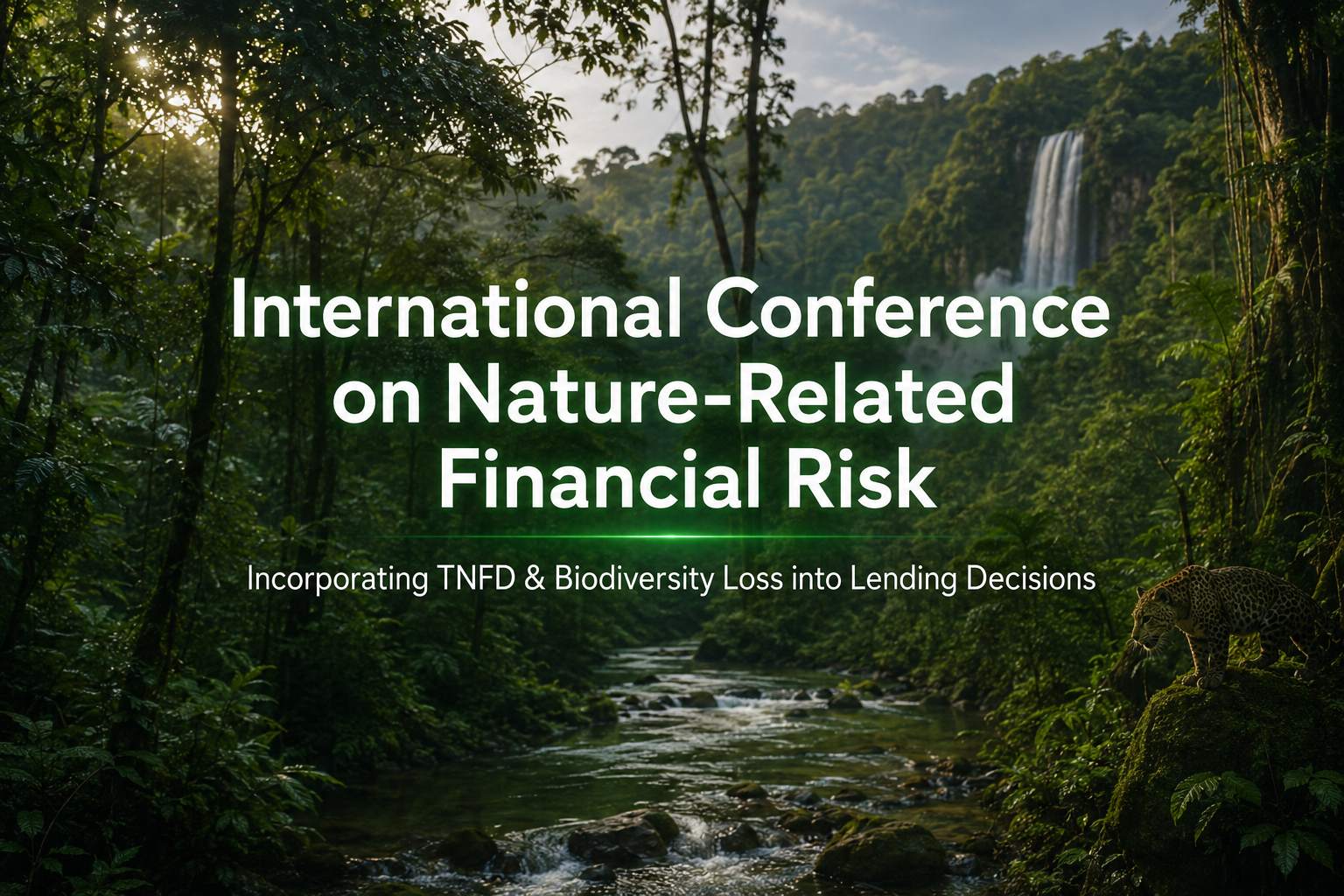
International Conference on Nature-Related Financial Risk: Incorporating TNFD & Biodiversity Loss into Lending Decisions (2026): A Practical Guide for Students and Researchers
Financial systems are increasingly recognizing that environmental risks are not separate from economic and investment risks. Climate change, biodiversity loss, ecosystem degradation, and resource scarcity are now directly affecting financial stability and business decision-making.
This is where nature-related financial risk and sustainability frameworks become highly important.
The International Conference on Nature-Related Financial Risk: Incorporating TNFD & Biodiversity Loss into Lending Decisions (2026) is designed for students, researchers, professionals, and policymakers who want to understand how environmental risks are being integrated into financial systems and lending decisions.
Participants interested in sustainable finance and biodiversity frameworks may also explore the Taskforce on Nature-related Financial Disclosures: https://tnfd.global/
Students and researchers interested in biodiversity and environmental sustainability may also explore the United Nations Environment Programme: https://www.unep.org/
Environmental disclosure and regulatory compliance
These topics are highly relevant as governments, financial institutions, and investors increasingly prioritize sustainability and environmental accountability.
The conference may also examine how financial institutions are integrating environmental data into lending policies and long-term investment planning.
Participants interested in sustainability and business strategy research may also explore Harvard Business Review: https://hbr.org/
Who Should Attend
This conference is a strong fit for:
Finance, economics, and environmental studies students
MBA students interested in ESG and sustainable finance
Researchers in climate risk, biodiversity, or financial systems
Professionals in banking, investment, or sustainability roles
Policymakers and individuals interested in environmental governance
Even if you are at an early stage, attending can help you understand how environmental risks are becoming integrated into global financial systems.
Call for Papers
Participants can present research in areas such as:
Nature-related financial risk assessment
TNFD disclosure frameworks
Biodiversity economics and sustainability finance
ESG lending and investment systems
Abstract Guidelines
300 to 350 words
Include:
Title
Author details
Keywords
If you are not ready to present, you can attend as a listener.
Researchers interested in academic publishing and sustainability research may also explore: https://www.springer.com/
Benefits of Attending
Attending this conference offers practical value:
Certificate of participation
Exposure to international sustainability and finance trends
Opportunity to present your work
Improved academic and professional profile
Networking with global participants
Participants can also gain insight into how environmental sustainability and financial systems are becoming increasingly interconnected.
Why This Matters for Your Career
For Indian students, sustainable finance and ESG systems are emerging as important career areas.
Understanding nature-related financial risks can help you:
Build a career in sustainable finance or ESG consulting
Work in banking, investment, or environmental policy sectors
Strengthen your profile for higher studies abroad
Develop expertise in sustainability-focused financial systems
Knowledge of TNFD frameworks, biodiversity risk assessment, and sustainable finance is becoming increasingly valuable across industries.
Why Virtual Conferences Are a Good Option
Virtual conferences make participation easier:
No travel or accommodation costs
Access from anywhere
Flexible participation
International networking opportunities
This allows students and professionals to gain global exposure without high expenses.
How to Participate
If you are interested in understanding how biodiversity loss and environmental risks are influencing financial systems and lending decisions, this conference is worth exploring.
Environmental sustainability is increasingly becoming a financial and economic issue.
Participating in conferences like this helps you understand how biodiversity, environmental risks, and financial systems are interconnected.
If you are serious about building a career in sustainable finance, ESG strategy, environmental policy, or risk management, this conference provides valuable global exposure, practical learning, and academic networking opportunities.
FAQs
Yes, beginners can attend as listeners and learn.
No, presenting is optional.
Yes, participants receive certificates.
Yes, it provides valuable insights into sustainability finance, TNFD frameworks, and environmental risk management.
You can use the official event page link provided above.

 May 13, 2026
 5 Min
 No Comment