May 18, 2026
 7 Min
 No Comment
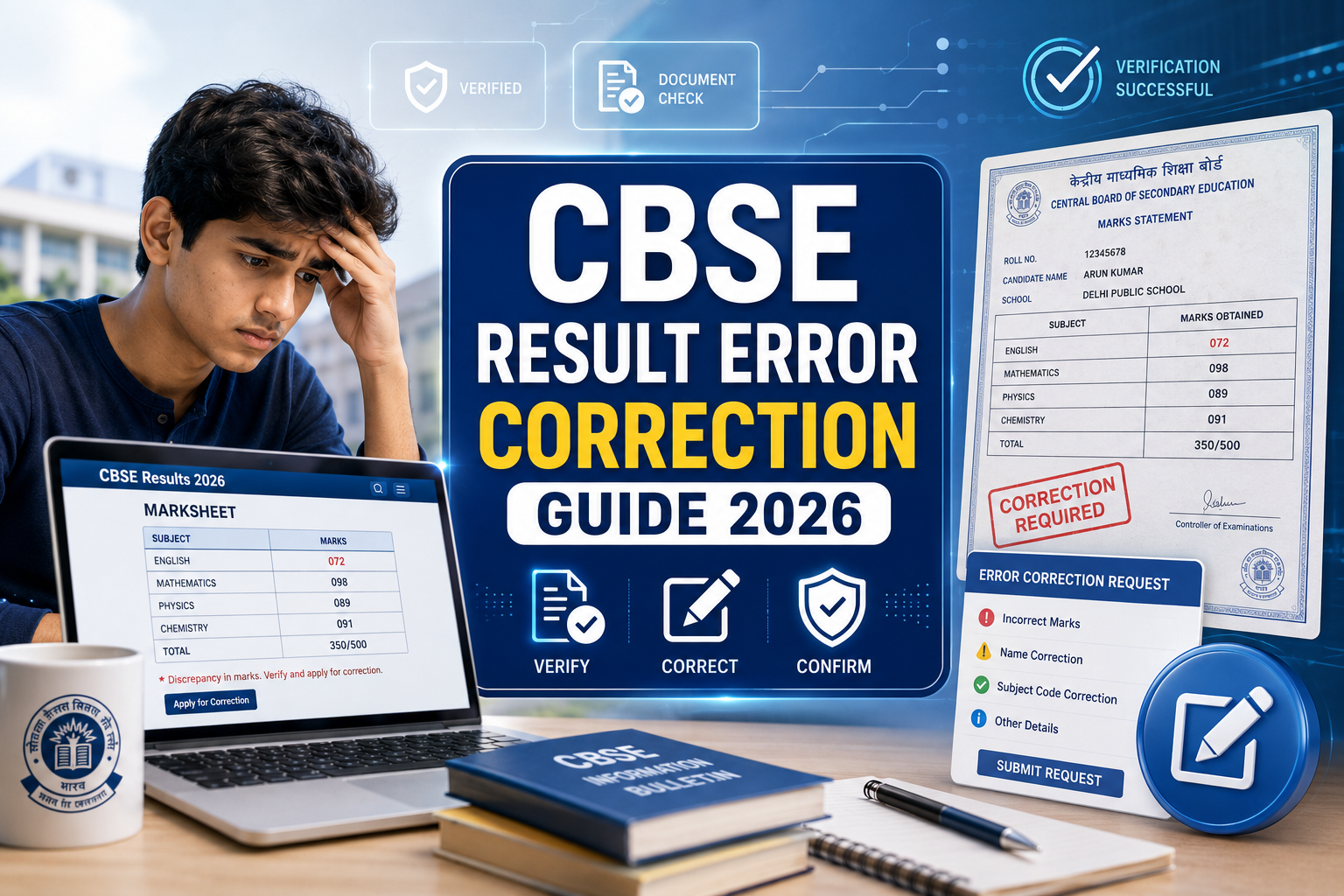
Every year, thousands of students across India discover mistakes in their CBSE board results. Sometimes the error is small, like a spelling issue in the name, while in other cases students notice incorrect marks, wrong dates of birth, or missing subject details. These issues may seem minor initially, but they can later create problems during college admissions, scholarship applications, passport verification, and job recruitment.
That is why understanding the CBSE result error correction process is extremely important in 2026.
Recent education trend reports show that searches related to marksheet correction and result verification increase sharply within days of CBSE results being declared. Many students rush the process without proper guidance, which leads to delays and unnecessary stress.
Fortunately, CBSE has improved its digital systems over the past few years. However, students still need to follow the correct process carefully to ensure fast approval.
Why CBSE Result Errors Happen
Result-related errors usually occur because of:
- Incorrect school data entries
- Typing mistakes during registration
- Mismatched documents
- Technical upload issues
- Human verification errors
For example, if the school admission record contains a spelling variation compared to the Aadhaar card, the same mismatch may appear in the final certificate.
Similarly, marks discrepancies can happen during tabulation or practical assessment uploads.
Types of Errors Students Can Correct
Students are generally allowed to request corrections for:
| Error Type | Correction Possible | Required Proof |
|---|---|---|
| Name spelling mistake | Yes | Aadhaar or school records |
| Date of birth error | Yes | Birth certificate |
| Parent’s name issue | Yes | Government ID |
| Subject marks discrepancy | Yes | Result copy |
| Gender/category error | Yes | Supporting documents |
| Photograph issue | Sometimes | School verification |
Most correction requests must be processed through the student’s school.
CBSE Result Error Correction Process
Step 1: Verify the Error Carefully
Before applying, students should confirm whether the mistake appears only in the online scorecard or also in official documents.
Sometimes temporary online glitches are corrected automatically later.
Students should check official records through:
Step 2: Contact Your School Immediately
Schools play a major role in the correction process.
Students should:
- Inform the examination department
- Submit correction requests quickly
- Attach supporting documents
- Keep acknowledgement receipts safely
Education experts recommend applying within the first few days after results are released.
Step 3: Submit Required Documents
Commonly required documents include:
- Aadhaar card
- Birth certificate
- School admission form
- Passport-size photos
- Previous academic records
- Result copy
If students apply for marks verification, they may also need payment receipts and verification forms.
Step 4: Pay Applicable Fees
CBSE may charge nominal fees depending on the correction type.
| Service | Estimated Fee |
|---|---|
| Name correction | ₹200–₹1000 |
| Marks verification | ₹500+ |
| Duplicate certificate | ₹250–₹2000 |
| Migration certificate correction | Variable |
Fee structures may differ depending on regional office guidelines.
How to Correct Marks in CBSE Results
Many students think marks correction and re-evaluation are the same. However, these are different procedures.
Marks Verification
This checks whether total marks were calculated correctly.
Re-evaluation
This allows examiners to review answer sheets again.
Photocopy Request
Students can request scanned copies of answer sheets before applying for re-evaluation.
Reports from education portals suggest that re-evaluation requests increase every year because competition for admissions has become much stricter.
Important Deadlines Students Should Not Miss
One of the biggest mistakes students make is waiting too long.
CBSE usually allows correction requests only within limited windows such as:
- 7 days
- 15 days
- 30 days
depending on the issue type.
Therefore, students should monitor official announcements carefully instead of relying on social media rumors.
Expert Insight: Why Result Accuracy Matters More in 2026
Educational verification systems are becoming increasingly digital.
Universities, recruiters, and visa authorities now use automated systems to match educational records with government IDs. Even small mismatches can trigger verification problems.
Experts also note that foreign universities have become stricter regarding identity consistency.
As a result, correcting errors quickly is no longer optional — it is essential for future academic and career opportunities.
Common Mistakes to Avoid
- Ignoring Small Errors
- Uploading Poor Documents
- Missing Deadlines
- Trusting Unofficial Agents
- Not Keeping Copies
Real-Life Example
A student from Delhi preparing for engineering admissions discovered that her father’s name was misspelled on the CBSE marksheet.
Initially, she ignored the issue because the online counseling portal accepted her documents. However, during final verification, authorities detected the mismatch between Aadhaar and academic certificates.
Fortunately, her school had preserved original admission records, and the correction was completed within three weeks.
This example clearly shows why early action is important.
Latest Trends in CBSE Result Corrections
The correction process for CBSE results has evolved significantly in recent years, becoming more student-friendly, technology-driven, and transparent. Several modern trends are now shaping how students apply for corrections and how requests are processed.
Increased Digital Processing
Central Board of Secondary Education has expanded its online services to simplify the correction process for students across the country. Most applications for name corrections, date of birth updates, subject changes, and mark verification can now be submitted digitally through official portals. This shift has reduced paperwork, minimized delays, and made the process more accessible for students and parents.
Faster Verification Methods
CBSE regional offices are increasingly adopting digital record-matching systems to verify student information quickly and accurately. Schools can now upload supporting documents electronically, allowing authorities to cross-check records in less time than traditional manual methods. As a result, correction requests are being processed more efficiently, especially during admission seasons.
Higher Student Awareness
The rise of educational content on social media platforms, YouTube channels, and student guidance portals has significantly improved awareness about correction rights and procedures. Students today are more informed about:
- Re-evaluation opportunities
- Mark verification procedures
- Document correction timelines
- Legal rights related to academic records
This increased awareness has encouraged students to take timely action whenever discrepancies appear in their results or certificates.
Greater Importance of Accurate Documentation
Accurate academic records have become more important than ever due to growing competition in higher education and global career opportunities. Universities, scholarship providers, visa authorities, and international institutions now conduct stricter document verification processes. Even minor errors in names, dates of birth, or marks can create complications during:
- College admissions
- Entrance examinations
- Passport applications
- Visa processing
- International education applications
Because of this, students and parents are paying closer attention to ensuring that all CBSE records are accurate and consistent with official identity documents.
Beginner vs Expert Approach
| Beginner Approach | Expert Approach |
|---|---|
| Delays the process | Applies immediately |
| Uses incomplete documents | Verifies records carefully |
| Depends on rumors | Checks official notifications |
| Ignores receipts | Maintains proof properly |
| Panics during delays | Follows escalation process calmly |
Pros and Cons of the CBSE Correction System
| Pros | Cons |
|---|---|
| Increasingly digital | Regional delays still exist |
| Transparent verification | Some paperwork remains |
| Online portals available | Limited correction windows |
| Multiple support systems | Students often lack awareness |
Useful Tools & Resources
Students can use several tools to stay organized during the correction process:
- Canva
- Notion
- Trello
- HubSpot
- Google Trends
These tools help students manage deadlines, organize documents, and track updates efficiently.
What To Do Next
After submitting your request:
- Track acknowledgement numbers regularly
- Stay connected with school authorities
- Monitor CBSE announcements
- Download corrected certificates immediately
- Verify updated details carefully
Quick Checklist
- Verify the exact error
- Download official marksheet
- Collect valid documents
- Inform school authorities quickly
- Save payment receipts
- Track deadlines carefully
- Keep digital backups
FAQs
Most corrections take between 2–6 weeks depending on the issue type.
Yes, marks can change if errors are found during re-evaluation.
Yes, private candidates may apply through regional CBSE offices.
Late requests may require affidavits and additional verification.
No. Students should ensure official certificates are updated as well.
Conclusion
Mistakes in CBSE Class 12 results may look small initially, but they can create serious issues later during admissions, employment verification, and official documentation processes.
The good news is that the CBSE result error correction process in 2026 is more organized and digitally accessible than before. However, students must act quickly, submit proper documents, and follow official procedures carefully.
If you notice any mistake in your marksheet or certificate, start the correction process immediately instead of waiting for future complications.