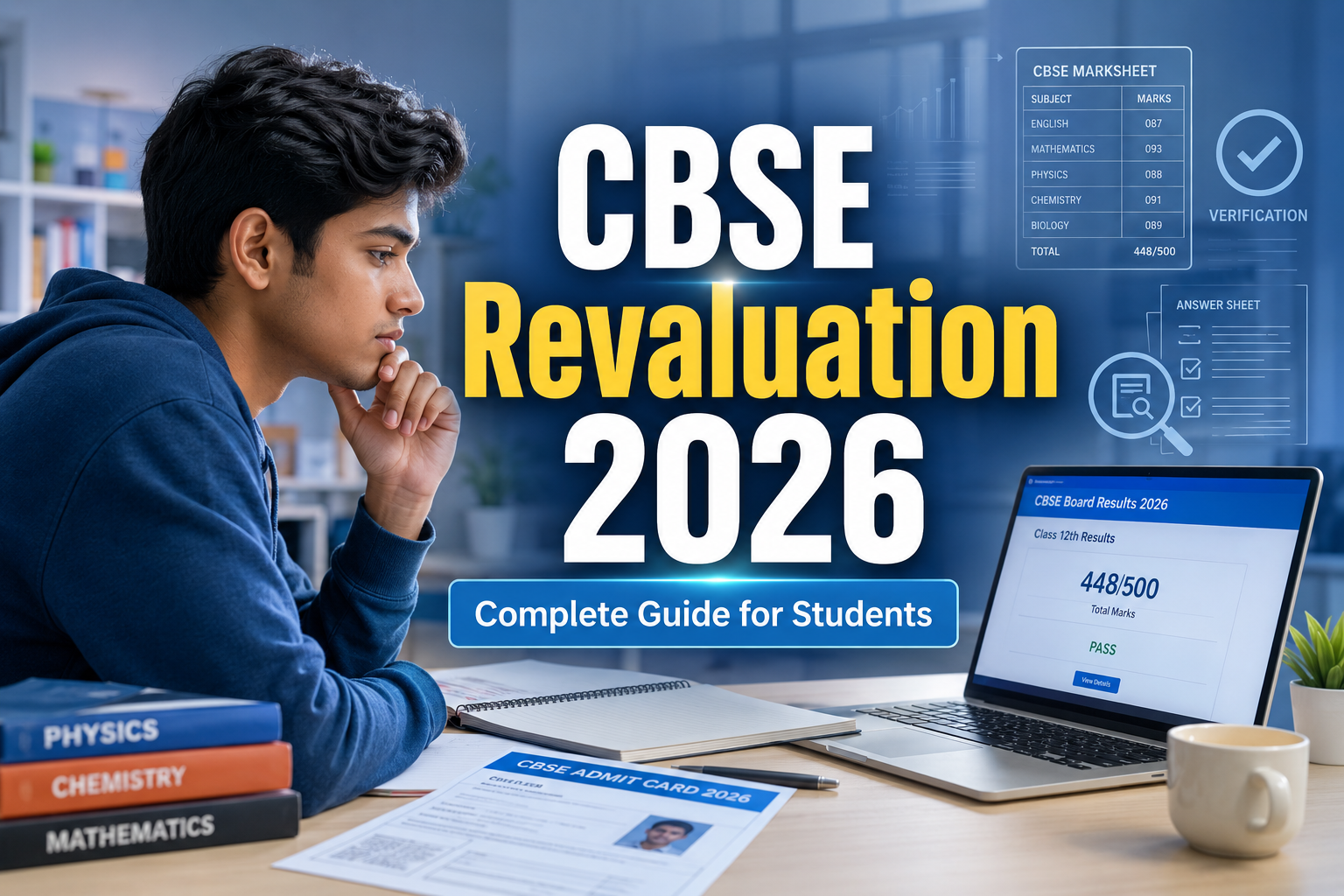
When board exam results are announced, emotions run high. Some students celebrate excellent marks, while others sit in disbelief staring at scores that simply do not reflect their hard work. This is exactly why the CBSE Revaluation 2026 Process matters more than ever.
Every year, thousands of students apply for rechecking, verification, or photocopies of answer sheets after the Central Board of Secondary Education releases Class 10 and Class 12 results. In many cases, marks actually increase after review. For students aiming for top colleges, scholarships, or competitive exams, even a small difference in marks can completely change future opportunities.
However, many students and parents still misunderstand how the revaluation system works. Some miss deadlines, while others apply for the wrong process entirely. This guide explains everything clearly — from verification and photocopy requests to expert strategies, common mistakes, and the latest updates shaping the future of board exam evaluation systems.
The CBSE revaluation system is designed to ensure transparency and fairness in board exam results. It gives students an opportunity to request a review if they believe there may have been an error in evaluation.
Typically, the process happens in three stages:
Stage
Purpose
Verification of Marks
Checks totaling errors or missing marks
Photocopy of Answer Sheet
Allows students to view evaluated copies
Revaluation
Rechecks specific answers identified by students
This structured approach helps reduce unnecessary disputes while giving students more confidence in the examination system.
According to past CBSE data trends and education analysts, a significant percentage of revaluation requests result in mark changes every year. Even a 2–5 mark increase can impact cutoffs for prestigious universities.
Many students assume revaluation is only for low scorers. In reality, even high-performing students often apply because competitive admissions have become extremely intense.
For example, Delhi University and top engineering institutions sometimes see cutoffs differing by less than 1%. A single mark can influence admission outcomes.
Students commonly apply when:
Marks feel unexpectedly low
Specific subjects appear incorrectly evaluated
Internal expectations differ drastically from results
Competitive exam eligibility depends on percentages
Scholarship criteria require higher scores
Moreover, students today are more informed than previous generations. Social media discussions, teacher feedback, and online answer analysis videos encourage students to verify their scores carefully rather than accepting them blindly.
Step-by-Step Application Process
The CBSE Revaluation 2026 Process is expected to remain online for convenience and faster handling.
Here’s how students usually apply:
Step 1: Verification of Marks
Students first submit an application for verification. This stage checks whether:
All answers were evaluated
Totals were calculated correctly
Marks were transferred accurately
Step 2: Obtain Answer Sheet Photocopy
If students still suspect discrepancies, they can request a scanned copy of their evaluated answer sheet.
This step is extremely valuable because it helps identify unchecked answers or marking inconsistencies.
Step 3: Apply for Revaluation
Students can then request re-evaluation of specific questions.
Unlike older systems, CBSE now allows more targeted review processes, improving efficiency and transparency.
Students should always monitor deadlines carefully because missing even one stage can cancel eligibility for the next.
Important Fees and Expected Deadlines
While official dates for 2026 may vary slightly, experts expect timelines similar to previous years.
Process
Expected Fee Range
Verification of Marks
₹500–₹700
Answer Sheet Photocopy
₹500–₹800
Revaluation per Question
₹100–₹150
Most applications are typically processed within a few weeks after result announcements.
Students should regularly check notifications through CBSE Results Portal.
Expert Insight: Why Transparency Matters More Than Ever
India’s education ecosystem is changing rapidly. Earlier, students accepted board marks without questioning evaluation standards. Today, transparency has become essential.
Educational experts believe digital evaluation systems, AI-assisted moderation, and scanned answer sheet access are transforming how trust is built between students and examination authorities.
Meanwhile, competition for university seats has intensified dramatically. According to multiple education surveys, over 70% of students experience high stress during result season. Therefore, transparent revaluation systems help reduce anxiety and improve confidence.
The long-term implication is significant. Boards that adopt fair and transparent evaluation policies are more likely to gain public trust and credibility.
In addition, educational technology platforms now offer answer-analysis tools and performance benchmarking systems that help students make informed revaluation decisions instead of emotional ones.
Common Mistakes Students Must Avoid
One of the biggest problems during revaluation season is panic-driven decision-making.
Here are common mistakes students frequently make:
Mistake
Better Approach
Applying emotionally without analysis
Compare answers carefully first
Missing deadlines
Set reminders immediately
Ignoring photocopy stage
Always review answer sheets
Expecting huge mark jumps
Stay realistic
Following rumors on social media
Trust official notices only
Another major mistake is assuming revaluation guarantees higher marks. Scores can remain unchanged and, in rare cases, even decrease after review.
Therefore, students should apply strategically rather than impulsively.
Real-Life Example: How One Student Improved Admission Chances
Consider a realistic scenario.
A Class 12 commerce student from Hyderabad scored 93 in Business Studies but expected around 97 based on pre-board performance and coaching assessments.
Instead of reacting emotionally, the student first requested a photocopy of the answer sheet. After reviewing it with a teacher, they identified an unchecked 5-mark answer.
The student applied for revaluation, and the final marks increased to 98.
That seemingly small correction improved the overall percentage enough to strengthen eligibility for top university admissions.
This example highlights why careful review matters.
Beginner vs Expert Approach to Revaluation
Beginner Thinking
Expert Thinking
“My marks are unfair”
“Let’s verify systematically”
Applies instantly
Reviews answer patterns first
Depends on social media rumors
Uses official CBSE updates
Ignores deadlines
Tracks every stage carefully
Expects dramatic score increase
Understands realistic outcomes
Students who approach revaluation strategically generally make better academic decisions.
Latest Trends / Updates
CBSE and other educational boards are increasingly moving toward digital evaluation ecosystems to reduce human error and improve speed.
AI-assisted answer analysis tools are also becoming popular among coaching institutes. These systems help students estimate expected scores before official results arrive.
Another major trend is the rising use of scanned answer-sheet access, which improves transparency and reduces disputes between students and examination authorities.
Meanwhile, educational platforms are integrating predictive analytics to help students decide whether revaluation is statistically worthwhile based on historical trends.
Experts also believe future board systems may include partially automated evaluation checks using machine learning for objective sections, especially in large-scale exams.
Pros and Cons of CBSE Revaluation
Pros
Cons
Improves transparency
Additional fees involved
Corrects evaluation errors
Time-consuming process
Helps students gain confidence
Marks may remain unchanged
Useful for competitive admissions
Emotional stress during waiting
Encourages accountability
Limited scope for subjective answers
What Students Should Do Next
If you are considering revaluation, take these practical steps immediately:
Download and save your result copy
Compare expected marks subject-wise
Discuss concerns with teachers
Track official CBSE notifications daily
Apply within deadlines
Avoid relying on unofficial YouTube rumors
Stay emotionally balanced during the process
Strategic action matters far more than panic.
Quick Checklist
Verify official CBSE dates
Analyze score discrepancies
Apply for answer sheet photocopy
Track all payment receipts
Save login credentials securely
Consult subject experts before revaluation
Monitor final updated results
Conclusion
The CBSE revaluation system is no longer just a backup option for disappointed students. It has become an essential transparency mechanism in India’s highly competitive education landscape.
The most important thing students must understand is that successful revaluation decisions are based on analysis, not emotion. Careful review of answer sheets, understanding official procedures, and acting within deadlines can make a meaningful difference.
As competition for higher education opportunities continues to grow, students who stay informed and proactive will always have an advantage. Whether your marks change or not, approaching the process strategically ensures confidence, clarity, and better academic decision-making.
FAQs
Yes, especially if students strongly believe evaluation mistakes occurred or if admission cutoffs depend on small mark differences.
Yes, although rare, marks may decrease if evaluators identify over-marking during review.
The process usually takes a few weeks after result announcements.
Normally, students must first complete verification and answer-sheet photocopy stages.
Yes, students can request scanned copies of evaluated answer sheets after verification.

 May 19, 2026
 7 Min
 No Comment