May 22, 2026
 7 Min
 No Comment
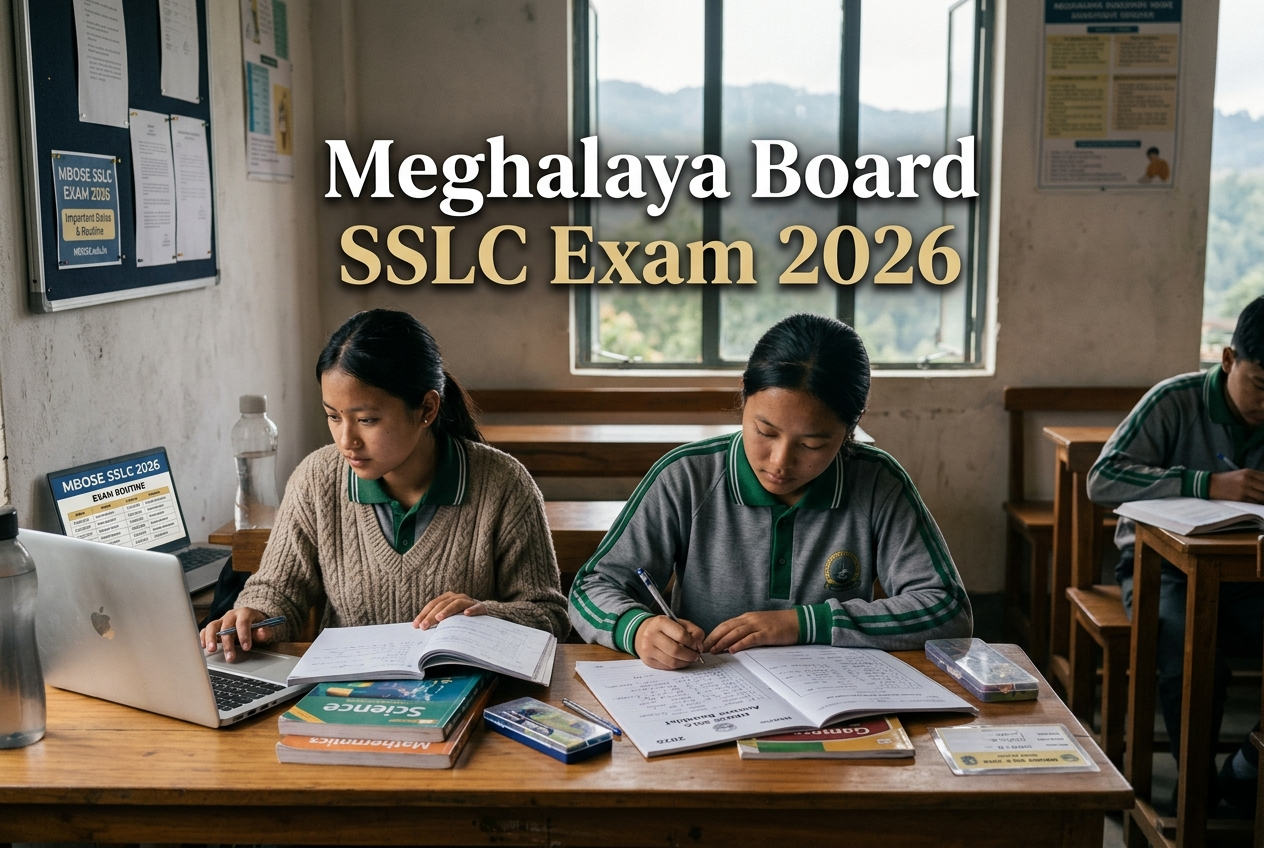
The Meghalaya Board SSLC Exam is one of the most important academic milestones for Class 10 students across the state. Conducted by the Meghalaya Board of School Education (MBOSE), the Secondary School Leaving Certificate examination plays a major role in shaping future academic choices, stream selection, scholarship opportunities, and career direction.
Every year, thousands of students appear for the examination with the goal of securing strong marks and building a solid academic foundation. In 2026, the examination cycle has drawn even more attention because of updated schedules, supplementary exam reforms, and increasing digital access to results and study resources.
According to official updates published on MBOSE Official Website, the board has continued modernizing its examination and result systems to improve accessibility and transparency for students across Meghalaya.
This complete guide explains everything students should know about the Meghalaya Board SSLC Exam 2026, including exam dates, preparation strategies, result updates, expert insights, and the latest education trends.
Meghalaya Board SSLC Exam 2026 Overview
The Meghalaya Board SSLC Exam is conducted annually for Class 10 students studying in schools affiliated with MBOSE.
The examination generally includes subjects such as:
- English
- Mathematics
- Science
- Social Science
- Regional languages
- Elective subjects
The 2026 examination cycle followed an earlier schedule compared to some previous years. Reports indicate the board conducted exams from January 30 to February 11, 2026.
Meanwhile, the board has also expanded supplementary examination opportunities so students can avoid losing an academic year after failing one or more subjects.
Meghalaya Board SSLC Result 2026 Highlights
The Meghalaya Board SSLC result for 2026 was officially declared on April 7 at 11 AM through online portals.
According to official result reports:
| Category | Details |
|---|---|
| Result Date | April 7, 2026 |
| Overall Pass Percentage | 86.84% |
| Students Appeared | 48,623 |
| Students Passed | 42,228 |
The board also introduced a stronger supplementary examination system in 2026, helping students reappear quickly instead of waiting an entire academic year. (IE Education)
Meghalaya Board SSLC Exam Schedule and Routine
The MBOSE routine remains one of the most important documents for students preparing for board examinations.
Students should regularly monitor official announcements because changes in exam schedules can affect preparation plans significantly.
Typical examination cycle:
| Activity | Timeline |
|---|---|
| Routine Release | December–January |
| Admit Card Distribution | January |
| Board Exams | January–February |
| Result Declaration | April |
| Supplementary Exams | May |
Reports also confirmed that supplementary examinations were conducted from May 1 to May 8, 2026. (https://www.careerindia.com)
Students should always download official routines from MBOSE Portal instead of depending entirely on social media screenshots.
Best Preparation Strategy for Meghalaya Board SSLC Exam
Success in the Meghalaya Board SSLC Exam depends more on consistency than last-minute studying.
Experts generally recommend dividing preparation into three stages:
- Concept learning
- Revision planning
- Mock test practice
Students should prioritize Mathematics and Science because these subjects often influence overall percentages significantly.
Moreover, solving previous-year question papers helps students understand:
- Question patterns
- Time management
- Frequently repeated topics
- Writing structure expectations
According to learning research discussed by HubSpot Research, active revision methods and structured practice improve long-term retention more effectively than passive reading.
Smart Study Techniques That Actually Work
Many students spend long hours studying without using effective methods. However, productive study techniques matter more than study duration alone.
Recommended techniques include:
| Traditional Method | Modern Method |
|---|---|
| Passive textbook reading | Active recall practice |
| Random revision | Timed revision schedules |
| Memorization-only approach | Concept-based learning |
| Studying without analysis | Weekly performance tracking |
| Last-minute preparation | Daily mock practice |
Meanwhile, students should also improve answer presentation quality because structured answers often receive better marks in board examinations.
Common Mistakes Students Must Avoid
Several students lose marks because of avoidable preparation mistakes rather than lack of intelligence.
Here are some common issues:
| Common Mistake | Better Alternative |
|---|---|
| Ignoring previous papers | Practice regularly |
| Over-memorization | Focus on understanding |
| Skipping revision | Revise weekly |
| Studying without timetable | Use structured planning |
| Panic before exams | Practice exam simulation |
Another major issue is exam stress. Students often perform below their potential because anxiety affects concentration and memory during exams.
Therefore, maintaining healthy sleep schedules and balanced study routines is equally important.
Expert Insight: Why MBOSE Is Changing Its Exam System
Education experts believe the Meghalaya Board is gradually shifting toward a more student-friendly and flexible examination structure.
One of the biggest changes in 2026 was the supplementary examination model introduced shortly after the main examination cycle. This system reduces academic pressure because students can improve failed subjects without losing an entire year. (IE Education)
Experts also expect future examinations to focus more on:
- Application-based learning
- Analytical thinking
- Competency-based assessment
- Real-world problem-solving
According to studies discussed by McKinsey & Company, education systems worldwide are increasingly prioritizing adaptability, digital literacy, and conceptual understanding over rote memorization.
Latest Trends and Updates
Digital learning has become a major part of Meghalaya Board SSLC preparation in 2026. Students are increasingly using online mock tests, YouTube educational channels, AI-powered learning tools, and digital revision platforms alongside traditional textbooks.

Meanwhile, MBOSE has accelerated online result systems and supplementary examination processes to reduce delays and improve accessibility for students across Meghalaya.

Another important trend is the growing emphasis on competency-based questions that test conceptual clarity instead of simple memorization. Experts believe future board examinations may include more analytical and application-oriented patterns.

Schools are also adopting hybrid preparation systems that combine classroom learning with digital assessment tools. This approach helps teachers monitor student performance more effectively and identify weak areas earlier.

Students are additionally relying on peer-learning communities and online discussion groups for revision support, exam updates, and preparation guidance during the board examination season.
Real-Life Example: How Structured Revision Improved Performance
A student from Shillong struggled initially with Mathematics and Science during early SSLC preparation. Despite studying long hours, performance in mock tests remained weak.
Instead of increasing study time further, the student switched to a structured revision approach involving:
- Daily formula revision
- Previous-year paper practice
- Timed mock tests
- Weekly chapter analysis
Within three months, mock test scores improved significantly. The student eventually secured distinction marks in the final board examination.
This example highlights how strategic preparation often produces better results than unstructured long study sessions.
Beginner vs Expert Preparation Approach
| Beginner Approach | Expert Approach |
|---|---|
| Studies randomly | Uses planned timetable |
| Reads passively | Solves questions actively |
| Avoids mock exams | Practices exam simulation |
| Focuses only on favorite subjects | Balances all subjects |
| Panics near exams | Revises consistently |
Students who approach preparation systematically usually manage stress more effectively and perform better during examinations.
Pros and Cons of Board Examination Systems
| Pros | Cons |
|---|---|
| Standardized evaluation | High academic pressure |
| Encourages discipline | Stress among students |
| Helps stream selection | Marks-focused competition |
| Builds academic foundation | Limited flexibility |
| Useful for scholarships | Performance anxiety |
Although board examinations can create pressure, they also help students develop consistency, time management, and academic discipline.
What Students Should Do Next
Students preparing for future Meghalaya Board SSLC examinations should begin preparation early rather than waiting for the final months.
Recommended steps include:
- Download latest syllabus
- Follow official routine updates
- Solve previous-year papers regularly
- Strengthen weak subjects first
- Practice writing within time limits
- Revise formulas weekly
- Avoid unhealthy study pressure
In addition, students should regularly track updates related to supplementary exams and result announcements through official sources.
Quick Checklist
- Download official syllabus
- Follow MBOSE updates regularly
- Practice mock tests weekly
- Improve answer-writing speed
- Revise weak chapters repeatedly
- Maintain healthy sleep schedule
- Avoid last-minute panic studying
Conclusion
The Meghalaya Board SSLC Exam 2026 marked another important step in the modernization of school education and assessment systems in Meghalaya.
With improved supplementary examination opportunities, faster digital result access, and growing focus on conceptual learning, the board is gradually creating a more student-focused academic environment.
However, success in the SSLC examination still depends heavily on consistent preparation, disciplined revision, and smart study strategies. Students who maintain balance, practice regularly, and stay informed through official sources are more likely to perform confidently during examinations.
Most importantly, board exams should not be viewed only as marks-based competition. They are also an opportunity for students to build strong learning habits, resilience, and academic confidence for future educational goals.
FAQs
The result was officially declared on April 7, 2026, at 11 AM.
The overall pass percentage was 86.84%.
The exams were conducted from January 30 to February 11, 2026.
Students should visit MBOSE Official Website for official announcements.
They help students understand question patterns, improve time management, and strengthen exam confidence.