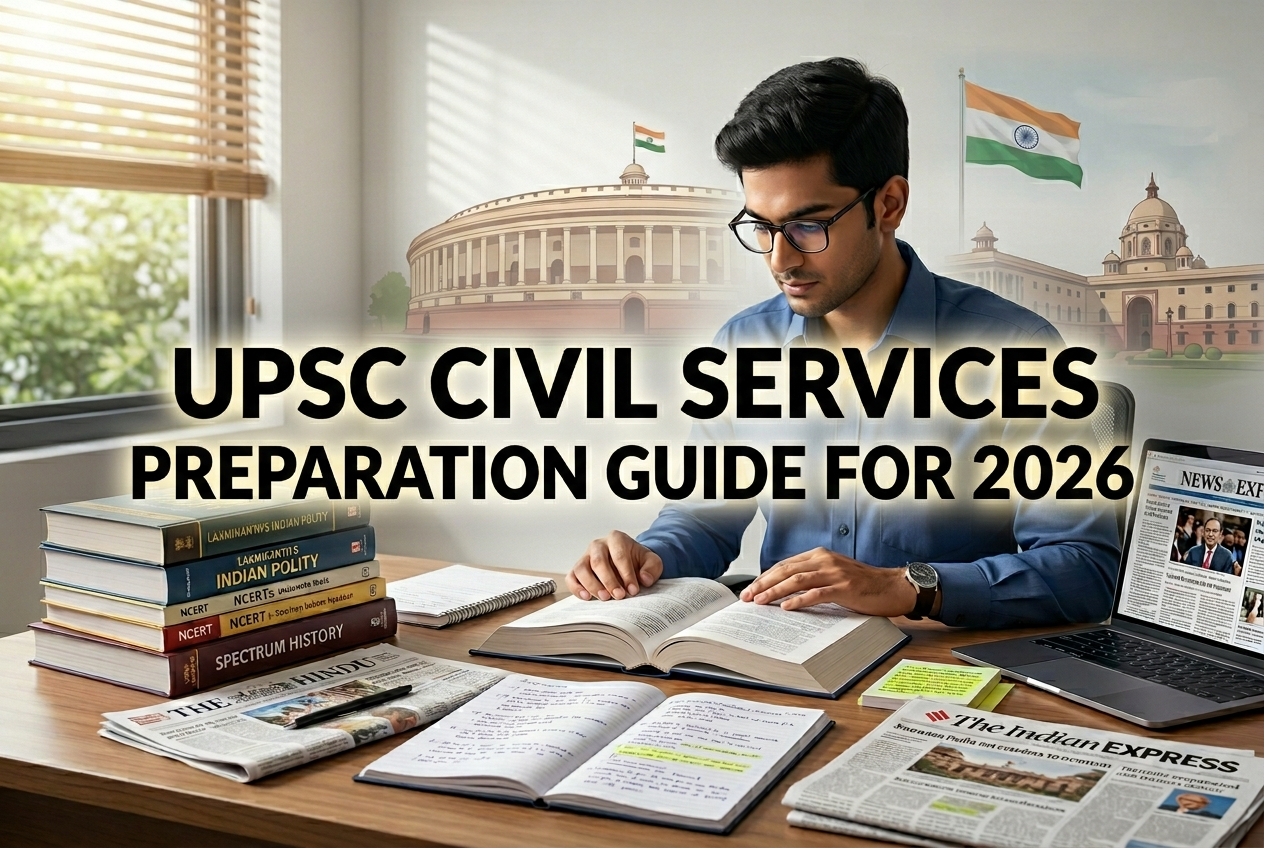
Every year, millions of ambitious candidates dream of securing a prestigious position in India’s civil services. Yet only a small percentage succeed. The difference is rarely intelligence alone—it often comes down to strategy, consistency, and a clear understanding of the examination process.
UPSC Civil Services Preparation is one of the most challenging academic journeys in India. The examination tests not only knowledge but also analytical thinking, decision-making ability, leadership qualities, and emotional resilience.
For many aspirants, the journey begins with enthusiasm but quickly becomes overwhelming due to the vast syllabus and intense competition. However, with the right roadmap and a disciplined approach, success becomes significantly more achievable.
This guide explores practical preparation methods, expert insights, common mistakes, emerging trends, and actionable strategies to help aspirants maximize their chances of success in 2026.
Understanding the structure is the first step toward effective UPSC Civil Services Preparation.
Why UPSC Civil Services Preparation Requires a Different Approach
UPSC tests understanding and application rather than rote memorization.
Unlike many competitive examinations, UPSC emphasizes:
Critical thinking
Governance understanding
Current affairs awareness
Ethical reasoning
Analytical writing
A candidate may know facts, but success often depends on connecting those facts with real-world issues.
For example, environmental policies, international relations, economic reforms, and technological advancements are frequently interconnected in UPSC questions.
Therefore, preparation must focus on conceptual clarity rather than isolated facts.
Building a Strong Foundation for UPSC Success
Direct Answer: NCERT books and standard reference materials form the foundation of successful preparation.
Most toppers recommend beginning with:
NCERT textbooks (Class 6–12)
Indian Polity by M. Laxmikanth
Spectrum Modern History
Standard Geography resources
Economic Survey and Budget Highlights
Additionally, aspirants should regularly consult official government resources such as:
Deep learning and repeated retrieval practice significantly improve performance in complex examinations.
The lesson is simple: smarter preparation beats harder preparation.
Latest Trends and Updates The UPSC preparation ecosystem has evolved significantly in recent years.
AI-powered learning tools are helping aspirants identify weak areas more efficiently.
Adaptive mock-test platforms now personalize question difficulty based on performance.
Digital current-affairs consolidation tools are reducing information overload.
Government reports, PIB summaries, and policy analysis platforms have become more accessible online.
Additionally, many successful candidates now combine traditional books with structured digital learning systems, creating a hybrid preparation model that improves efficiency and retention.
Real-Life Example: How Structured Preparation Changed the Outcome
Consider a candidate named Arjun.
During his first attempt, he studied from more than twenty resources and frequently changed strategies. Despite working hard, he failed to clear Prelims.
Before his second attempt, he simplified his approach:
Limited resources
Daily answer writing
Weekly revisions
Monthly mock tests
Within a year, his performance improved dramatically.
He eventually cleared both Prelims and Mains before securing a strong interview score.
The lesson is clear: structure often matters more than effort alone.
Traditional Preparation vs Modern Preparation
Traditional Method
Modern Method
Static note-making
Digital note systems
Random mock tests
Data-driven analytics
Generic study plans
Personalized schedules
Manual revision tracking
AI-assisted revision tools
Limited peer discussion
Online mentorship communities
Modern methods can enhance efficiency, but fundamentals remain unchanged.
Pros and Cons of UPSC Preparation
Pros
Cons
Prestigious career opportunities
Extremely competitive
Opportunity to serve society
Long preparation cycle
Diverse career paths
High stress levels
Personal growth and discipline
Uncertain outcomes
Strong knowledge development
Requires sustained commitment
Beginner vs Expert Preparation Approach
Beginner
Expert
Focuses on collecting resources
Focuses on mastering resources
Reads passively
Practices active recall
Studies without planning
Uses strategic schedules
Avoids mock tests
Uses regular testing
Learns new topics continuously
Prioritizes revision
Understanding this shift can significantly improve preparation efficiency.
What to Do Next (Actionable Steps)
If you are starting UPSC preparation today:
Download and understand the syllabus.
Complete NCERT basics.
Select limited standard resources.
Build a realistic study timetable.
Start current affairs tracking immediately.
Practice answer writing weekly.
Attempt mock tests regularly.
Review mistakes and refine strategy.
Consistency over the next twelve months can create remarkable results.
Quick Checklist
✅ Understand the UPSC syllabus
✅ Build a study schedule
✅ Complete NCERT books
✅ Follow daily current affairs
✅ Practice answer writing
✅ Attempt mock tests
✅ Revise regularly
✅ Track performance metrics
Conclusion
UPSC Civil Services Preparation is not merely an academic challenge—it is a test of discipline, patience, adaptability, and strategic thinking. While the examination remains highly competitive, success becomes achievable when aspirants focus on clarity, consistency, and continuous improvement.
The most successful candidates are not necessarily those who study the longest hours. Instead, they are the ones who build strong fundamentals, revise effectively, practice regularly, and stay committed throughout the journey.
As the examination evolves, combining traditional preparation methods with modern tools can create a significant advantage. Start with a clear plan, stay focused on the syllabus, learn from mistakes, and maintain steady progress.
The path may be demanding, but for those who persist with purpose and discipline, the rewards can be life-changing.
Frequently Asked Questions
Most successful candidates study between 6 and 10 focused hours consistently rather than pursuing unsustainable schedules.
Yes. Many successful candidates clear the examination through self-study using standard resources and disciplined planning.
The Hindu and The Indian Express are widely recommended for current affairs and analytical understanding.
Most candidates spend one to two years preparing seriously before achieving success.
Yes. A well-chosen optional subject can significantly influence Mains performance and overall ranking.

 June 9, 2026
 7 Min
 No Comment