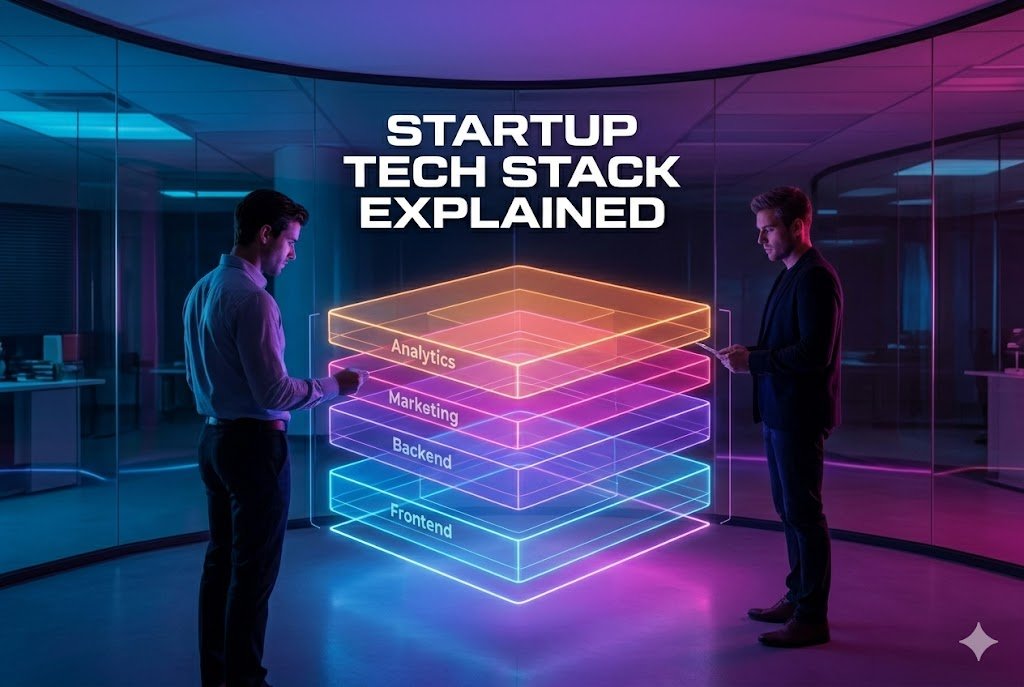
Technology plays a major role in modern startup growth. Whether a startup is building an app, managing customers, or scaling operations, having the right tech stack can improve productivity, reduce costs, and simplify workflows.
In simple terms, a startup tech stack refers to the combination of technologies, software tools, frameworks, and platforms a business uses to operate and grow.
Modern startups rely heavily on cloud computing, automation, analytics, collaboration tools, and scalable infrastructure. Therefore, understanding the right technology stack is essential for founders building efficient businesses.
A startup tech stack is the complete collection of digital tools and technologies used to build and run a startup.
It usually includes:
Frontend technologies
Backend infrastructure
Databases
Cloud hosting
Analytics tools
CRM systems
Marketing platforms
Collaboration software
The right stack helps startups operate faster and scale more efficiently.
Moreover, startups with optimized technology systems often reduce operational complexity and development costs.
Why Tech Stack Matters for Startups
Choosing the right technology stack affects nearly every part of a startup.
A strong stack can help businesses:
Launch products faster
Improve team collaboration
Reduce technical issues
Scale efficiently
Automate repetitive tasks
Improve customer experience
However, poor technology decisions can slow growth and increase long-term costs.
Startup experts often recommend prioritizing scalability, simplicity, and flexibility when selecting tools.
Core Components of a Startup Tech Stack
Frontend Technologies
Frontend technologies control what users see and interact with.
Popular frontend frameworks include:
React
Vue.js
Angular
React remains one of the most widely used frameworks because of its flexibility and large ecosystem.
Backend Technologies
The backend handles servers, databases, APIs, and application logic.
Popular backend technologies include:
Node.js
Python
Django
Ruby on Rails
Many startups choose backend systems based on speed, scalability, and developer availability.
Cloud Infrastructure
Cloud platforms help startups avoid expensive physical servers.
Popular cloud providers include:
AWS
Google Cloud
Microsoft Azure
Cloud infrastructure allows businesses to scale resources based on demand.
Databases
Databases store and manage startup data.
Common options include:
PostgreSQL
MySQL
MongoDB
The database choice usually depends on scalability requirements and product architecture.
Best Startup Tools in Modern Tech Stacks
Slack
Slack improves communication between startup teams and remote employees.
Notion
Notion helps startups manage documentation, planning, and internal workflows.
HubSpot
HubSpot supports CRM management, customer tracking, and marketing automation.
Figma
Figma is widely used for UI/UX design collaboration.
GitHub
GitHub helps developers manage code repositories and collaborate efficiently.
These tools improve productivity while supporting fast-moving startup environments.
Startup Tech Stack Explained for Different Business Types
Different startups require different technology stacks.
SaaS Startups
SaaS businesses often prioritize:
Cloud infrastructure
Subscription systems
API integrations
Analytics platforms
E-Commerce Startups
E-commerce businesses focus heavily on:
Payment gateways
Inventory systems
Marketing automation
Customer support tools
AI Startups
AI startups typically require:
GPU infrastructure
Machine learning frameworks
Large-scale data systems
AI development platforms
The ideal stack depends heavily on business goals and product requirements.
Expert Insight and Analysis
Startup experts believe founders should avoid overcomplicating technology during early stages.
Many startups fail because they spend too much time building complex systems instead of validating products quickly.
Experts recommend:
Starting with scalable but simple systems
Prioritizing speed over perfection
Using cloud-based infrastructure
Avoiding unnecessary custom development early
Lean technology systems often help startups iterate faster and reduce operational risk.
Latest Trends in Startup Tech Stacks
Several major trends are shaping startup technology ecosystems in 2026.
AI Integration
AI-powered tools are becoming standard across operations, customer support, and analytics.
No-Code and Low-Code Platforms
Many startups now build MVPs using no-code systems before investing heavily in development.
API-First Architecture
Businesses increasingly prefer tools that integrate easily with other platforms.
Remote Collaboration Systems
Cloud collaboration platforms continue growing because of remote-first work models.
Cybersecurity Focus
As startups handle more digital data, cybersecurity tools are becoming essential.
These trends show that modern startups prioritize flexibility, speed, and automation.
Common Mistakes Startups Should Avoid
Choosing overly complex technology too early
Ignoring scalability requirements
Using too many disconnected tools
Neglecting cybersecurity practices
Building custom systems unnecessarily
What Startups Should Do Next
Audit your current software systems
Choose scalable cloud-based tools
Focus on automation and efficiency
Prioritize cybersecurity from the beginning
Build simple MVP-friendly infrastructure
Conclusion
Understanding startup tech stack explained is essential for founders building scalable businesses in 2026. The right combination of tools, infrastructure, and software systems can improve efficiency, reduce operational complexity, and accelerate growth.
Modern startups increasingly rely on cloud computing, automation, AI tools, and collaborative platforms to compete effectively in fast-changing markets.
Instead of focusing on complicated systems immediately, startups should prioritize flexible, scalable, and efficient technology ecosystems that support long-term growth.
FAQs
A startup tech stack is the combination of technologies and software tools used to build and operate a startup.
The right tech stack improves scalability, productivity, operational efficiency, and development speed.
React is one of the most widely used frontend frameworks for startups.
AWS, Google Cloud, and Microsoft Azure are popular cloud providers.
Many startups use no-code tools for MVP development and faster product validation.

 May 11, 2026
 5 Min
 No Comment