May 7, 2026
 5 Min
 No Comment
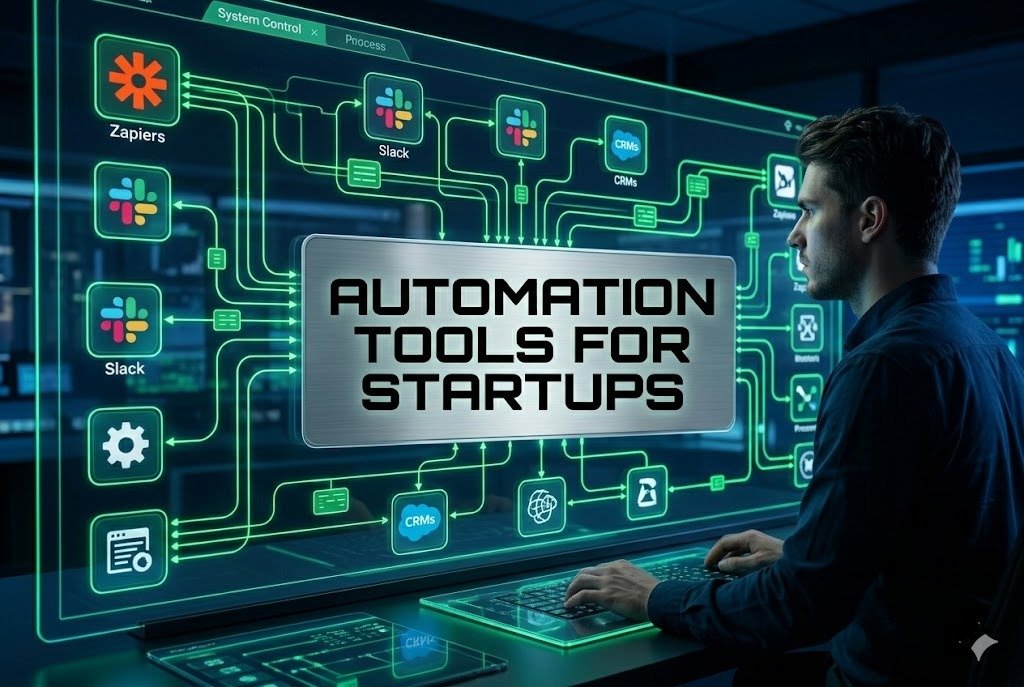
The best automation tools for startups are transforming how modern businesses operate, grow, and scale. In 2026, startups are expected to move faster than ever while managing smaller teams, tighter budgets, and increasing competition.
This is why automation has become one of the most important advantages for startup founders.
Instead of spending hours on repetitive tasks, startups now automate workflows related to communication, customer support, marketing, sales, project management, and operations.
Automation allows founders to focus more on growth, product development, and decision-making instead of manual work.
If you’re exploring startup systems, AI-driven workflows, and operational growth strategies, you can also explore more startup-focused insights on https://onegrasp.com/startups/ to understand how modern startups improve efficiency and scalability.
Why Automation Matters for Startups
Startups usually struggle with:
- Limited manpower
- Operational overload
- Time constraints
- Rapid scaling challenges
The right automation tools for startups help businesses:
- Save time
- Reduce repetitive work
- Improve productivity
- Increase operational efficiency
- Scale faster with smaller teams
Automation is no longer optional for digital businesses—it is becoming a core operational strategy.
According to startup productivity research from https://www.mckinsey.com/, businesses using workflow automation often improve efficiency significantly while reducing operational bottlenecks.
1. Zapier – Workflow Automation
Zapier is one of the most widely used startup automation platforms.
It connects different apps and automates workflows without coding.
Startups use Zapier for:
- Lead management
- Email automation
- CRM updates
- Customer onboarding
- Task creation
For example:
- A form submission can automatically create a CRM lead
- New customers can trigger onboarding emails
- Tasks can be added automatically to project boards
Zapier helps startups reduce manual coordination work.
2. Make (Formerly Integromat)
Make is another powerful automation platform used by startups.
Compared to simpler automation systems, Make offers:
- Advanced workflow customization
- Visual automation builders
- Multi-step integrations
Startups often use Make for:
- Complex operational workflows
- API-based automation
- E-commerce operations
- Internal data synchronization
Automation-focused startup communities frequently recommend Make for advanced startup workflows because of its flexibility and scalability. (reddit.com)
3. HubSpot CRM Automation
HubSpot CRM helps startups automate customer relationship management.
Features include:
- Lead tracking
- Automated follow-ups
- Email sequences
- Sales pipeline management
As startups scale, customer communication becomes harder to manage manually. CRM automation improves consistency and customer organization.
According to startup growth research from https://blog.hubspot.com/, CRM automation improves sales efficiency and customer retention.
4. Mailchimp – Email Marketing Automation
Mailchimp remains one of the most widely used email automation platforms.
Startups use it for:
- Newsletter automation
- Welcome email sequences
- Marketing campaigns
- Audience segmentation
Email automation remains highly effective because startups can maintain engagement without manually sending updates.
5. Notion AI – Productivity and Documentation
Notion AI combines AI support with startup workflow management.
Founders use it for:
- Meeting summaries
- Task generation
- Startup documentation
- Internal workflows
Instead of spending time organizing information manually, teams can automate operational documentation and planning.
If you’re also exploring startup productivity systems, you can discover more startup growth insights on https://onegrasp.com/startups/.
6. Slack Automation
Slack is not only a communication tool—it also supports workflow automation.
Startups automate:
- Team notifications
- Customer alerts
- Workflow updates
- Task reminders
Automation inside communication systems reduces operational confusion and improves coordination.
7. Calendly – Scheduling Automation
Calendly automates meeting scheduling.
Instead of exchanging multiple emails, startups can:
- Share booking links
- Automate appointment scheduling
- Organize sales calls efficiently
This improves professionalism and saves time.
8. Intercom – Customer Support Automation
Intercom helps startups automate customer support using AI chat systems.
Features include:
- Automated responses
- Customer onboarding
- Support ticket workflows
- AI-powered assistance
Customer support automation becomes increasingly valuable as startups scale.
According to customer service industry reports from https://www.gartner.com/, AI-driven support systems are becoming standard across digital businesses.
9. Buffer – Social Media Automation
Buffer helps startups automate social media posting and scheduling.
Startups use Buffer for:
- Content scheduling
- Social media planning
- Multi-platform publishing
- Audience management
Consistent content publishing becomes easier with automation systems.
10. QuickBooks – Financial Automation
QuickBooks helps startups automate financial tracking and accounting tasks.
Automation includes:
- Expense tracking
- Invoice generation
- Financial reporting
- Tax preparation support
Financial automation reduces operational errors and improves business organization.
How Automation Helps Startup Growth
The best automation tools for startups improve:
- Workflow speed
- Team efficiency
- Operational clarity
- Customer experience
- Scalability
Automation allows small teams to handle larger workloads without increasing operational complexity.
Many startups now operate efficiently with fewer employees because repetitive work is automated.
Common Automation Mistakes Startups Make
Many startups fail to benefit fully from automation because they:
- Automate poor workflows
- Use too many tools simultaneously
- Ignore team adoption
- Overcomplicate systems
The goal is not maximum automation—the goal is smarter workflows.
Strategic Insight
The automation tools for startups are becoming operational infrastructure for modern businesses.
According to startup operations research from https://www.forbes.com/, companies that automate repetitive workflows early often scale faster and reduce operational inefficiencies significantly.
In 2026, startups competing in digital markets need speed, organization, and execution efficiency. Automation directly supports all three.
If you’re also exploring startup systems, operational scaling, and AI-driven productivity, you can discover more startup-focused resources on https://onegrasp.com/startups/.
Conclusion
The best automation tools for startups help founders improve productivity, reduce repetitive work, and scale operations efficiently.
Platforms like Zapier, Make, HubSpot CRM, Mailchimp, Slack, Calendly, and Intercom simplify workflows that once required large teams and extensive manual coordination.
The startups that scale successfully in 2026 will not necessarily be the ones with the biggest teams—they will be the ones with the most efficient systems.
FAQ
They save time, improve productivity, and reduce repetitive work.
Zapier and Make are among the most widely used startup automation platforms.
Yes, automation reduces manual operational workload and improves efficiency.
Marketing, sales, customer support, scheduling, finance, and communication can all be automated.
Most modern automation platforms are designed for non-technical users and require little or no coding.