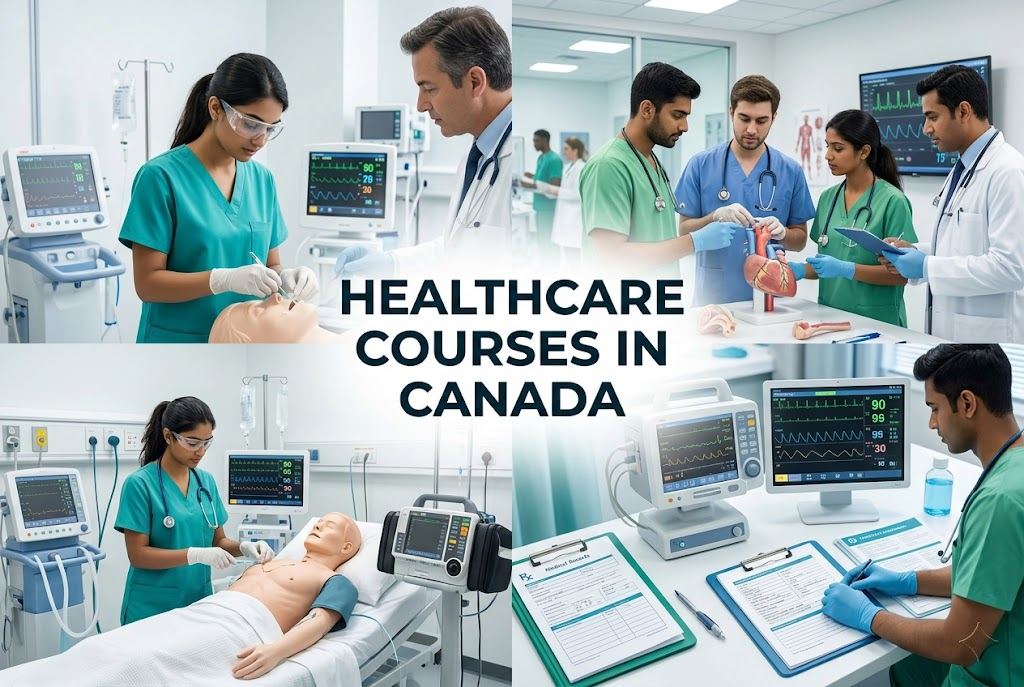
Canada has become one of the world’s leading destinations for healthcare education because of its advanced medical infrastructure, practical learning systems, and growing demand for healthcare professionals. International students increasingly choose Canada for healthcare-related programs due to excellent career opportunities, strong salaries, and long-term immigration pathways. Understanding the scope of Canada healthcare study courses is extremely important for students planning healthcare careers in 2026.
Canada’s healthcare industry is expanding rapidly because of population growth, aging demographics, and rising demand for medical services. As a result, healthcare professionals are among the most in-demand workers across multiple provinces. Canadian colleges and universities now offer a wide range of healthcare programs including nursing, public health, healthcare administration, health informatics, biotechnology, physiotherapy, medical laboratory sciences, and healthcare management.
According to healthcare education institutions and Canadian labor market reports, healthcare and allied medical sectors continue experiencing strong employment demand across the country. (Michener Institute)
Why International Students Choose Healthcare Courses in Canada
Healthcare education in Canada combines theoretical learning with clinical practice, internships, simulations, and hospital exposure. This practical approach helps students become job-ready after graduation.
Main reasons students prefer healthcare programs in Canada:
Strong job demand
High salary potential
Practical training opportunities
Globally recognized qualifications
PR-friendly career pathways
Modern healthcare infrastructure
Healthcare careers also provide long-term stability because medical services remain essential in every economic condition.
Nursing Courses in Canada
Nursing remains one of the most popular healthcare career paths for international students. Canada continues facing major nursing shortages, especially in provinces like Ontario, British Columbia, and Alberta.
Popular nursing programs:
Practical Nursing
Bachelor of Nursing
Registered Nursing
Mental Health Nursing
Average salary:
CAD 70,000–110,000 annually depending on specialization and province
Nursing professionals often receive strong immigration opportunities due to healthcare labor shortages.
Public Health Programs
Public health programs focus on disease prevention, community health systems, healthcare policy, and population wellness.
Students learn about:
Epidemiology
Health promotion
Healthcare systems
Community health management
Global health policies
Public health graduates can work in:
Government health departments
NGOs
Research organizations
Community healthcare systems
Public health careers have expanded significantly after the global focus on healthcare preparedness.
Healthcare Management Courses
Healthcare management combines business administration with healthcare operations. These programs prepare students for leadership and administrative roles in hospitals, clinics, and healthcare organizations.
Healthcare management programs teach:
Healthcare finance
Hospital operations
Human resource management
Healthcare policies
Leadership and communication
Programs such as healthcare administration are becoming increasingly popular among international students. (St. Lawrence College)
Health Informatics and Digital Healthcare
Health informatics is one of the fastest-growing healthcare fields in Canada because hospitals and clinics increasingly rely on digital systems and data management.
Students study:
Electronic health records
Healthcare analytics
Medical data systems
Digital healthcare technologies
Information security
Health informatics professionals help improve healthcare efficiency through technology and analytics. Canadian institutions are increasingly offering specialized programs in this field. (George Brown Polytechnic)
Medical Laboratory and Diagnostic Programs
Medical laboratory sciences and diagnostic technologies are highly important in Canada’s healthcare system.
Popular areas include:
Medical laboratory technology
Diagnostic imaging
Cardiac sonography
Radiology assistance
These careers provide strong employment opportunities because diagnostic services remain essential across hospitals and clinics. Specialized diagnostic programs continue expanding in Canadian institutions. (Humber Health Sciences)
Physiotherapy and Rehabilitation Sciences
Physiotherapy and rehabilitation programs focus on improving mobility, injury recovery, and long-term patient care.
Career opportunities include:
Rehabilitation centers
Sports clinics
Hospitals
Community healthcare organizations
Canada’s aging population is increasing demand for rehabilitation professionals and physiotherapy services.
Biotechnology and Biomedical Sciences
Biotechnology combines healthcare with scientific innovation and research. Students in this field work on medical technologies, pharmaceuticals, diagnostics, and healthcare research.
Career paths include:
Laboratory research
Pharmaceutical companies
Biotech startups
Medical research institutions
Biotechnology careers are growing because of advancements in medical research and healthcare innovation.
Best Healthcare Courses for PR in Canada
Several healthcare careers offer strong immigration pathways because of labor shortages.
Popular PR-friendly healthcare fields:
Nursing
Healthcare administration
Public health
Medical laboratory technology
Physiotherapy
Health informatics
Healthcare professionals often qualify under Express Entry and Provincial Nominee Programs because Canada actively seeks skilled healthcare workers.
Top Canadian Cities for Healthcare Careers
Toronto
Toronto offers opportunities in hospitals, biotechnology, healthcare administration, and medical research.
Vancouver
Vancouver provides strong demand for healthcare workers and growing opportunities in digital healthcare systems.
Calgary
Calgary offers opportunities in healthcare management, nursing, and community health services.
Montreal
Montreal is expanding rapidly in biotechnology, healthcare technology, and medical research sectors.
Ottawa
Ottawa has strong healthcare infrastructure with government health organizations and research facilities.
Cost of Healthcare Courses in Canada
Tuition fees vary depending on institution and program type.
Approximate annual tuition:
Diploma programs: CAD 15,000–25,000
Bachelor’s programs: CAD 20,000–40,000
Master’s programs: CAD 25,000–50,000
Additional costs include:
Accommodation
Health insurance
Books and supplies
Transportation
Licensing examinations
Students should also consider internship and clinical placement expenses in some programs.
Skills Required for Healthcare Careers
Healthcare employers in Canada increasingly value both technical and interpersonal skills.
Important skills include:
Communication and empathy
Team collaboration
Clinical accuracy
Time management
Problem-solving
Digital healthcare knowledge
Strong communication abilities are especially important because healthcare professionals interact directly with patients and teams.
Challenges International Students May Face
Although healthcare careers are rewarding, students may face some challenges.
Common challenges:
Licensing and certification requirements
Competitive admissions in some programs
Clinical placement pressures
Communication adaptation
Emotional demands of healthcare work
Students who prepare properly and improve communication skills generally adapt successfully.
Latest Trends in Healthcare Courses in Canada (2026)
Massive Demand for Nurses and Healthcare Workers
Canada continues experiencing severe shortages of nurses, healthcare assistants, mental health professionals, and allied healthcare workers. Hospitals and healthcare systems across multiple provinces are actively recruiting trained professionals to meet growing patient demand.
Digital Healthcare and AI Integration Expanding
Healthcare institutions are rapidly adopting Artificial Intelligence, electronic medical records, telemedicine systems, and healthcare analytics tools. Programs related to health informatics, digital healthcare, and healthcare technology are becoming increasingly popular among students.
Public Health and Mental Health Careers Growing
Governments and healthcare organizations are investing more in public health systems, mental health services, and community healthcare initiatives. Careers focused on prevention, mental wellness, and healthcare outreach are expanding significantly.
More Colleges Offering Industry-Focused Healthcare Programs
Canadian colleges and universities are introducing specialized healthcare programs with co-op placements, internships, and practical clinical training. Institutions are increasingly aligning healthcare education with labor market shortages. (The Times of India)
Immigration Pathways for Healthcare Professionals Strengthening
Canada continues prioritizing healthcare workers in immigration systems because of long-term labor shortages. Specialized Express Entry categories and healthcare-focused immigration pathways are creating strong PR opportunities for qualified graduates. (The Times of India)
Growth of Healthcare Administration and Informatics
Healthcare systems increasingly require professionals who understand administration, healthcare operations, analytics, and digital systems. As a result, healthcare management and health informatics programs are becoming major career choices for international students.
Expert Insight: Why Healthcare Careers Are Future-Proof in Canada
Career experts suggest that healthcare remains one of the safest and most future-focused industries in Canada. Unlike many sectors affected by automation, healthcare careers continue requiring human interaction, empathy, and clinical judgment.
Experts recommend:
Choosing accredited healthcare programs
Improving communication skills early
Participating in internships and clinical placements
Understanding licensing requirements
Building healthcare technology skills
Students who combine healthcare knowledge with digital and management skills often receive stronger long-term opportunities.
Real-Life Example
Priya from Hyderabad joined a healthcare administration program in Ontario after completing her bachelor’s degree in India. During her studies, she completed internships in hospital administration and learned healthcare data management systems.
Initially, she worked as an administrative coordinator in a healthcare clinic. Later, after gaining Canadian work experience and certifications, she secured a healthcare operations role with a significantly higher salary. Her journey demonstrates how healthcare management programs can create strong career growth opportunities in Canada.
Healthcare courses in Canada continue offering excellent opportunities for international students in 2026. With growing demand for healthcare professionals, strong salaries, practical education systems, and supportive immigration pathways, healthcare remains one of the most promising industries for long-term career growth.
Students who strategically choose accredited programs, gain practical experience, improve communication skills, and understand licensing requirements can build highly rewarding healthcare careers in Canada.
FAQs
Nursing, healthcare administration, public health, health informatics, and medical laboratory sciences are among the most popular options.
Yes, Canada continues facing major shortages in healthcare and allied medical professions.
Yes, many healthcare careers are highly favorable for immigration pathways and PR opportunities.
Tuition fees vary depending on program and institution, but healthcare education can be relatively expensive due to clinical training requirements.
Toronto, Vancouver, Calgary, Montreal, and Ottawa offer strong healthcare career opportunities.

 May 14, 2026
 9 Min
 No Comment